Two teams can track the same call metrics and still come away with completely different ideas about what needs fixing.
One might focus on talk time. Another might zero in on discovery quality. But whatever that aspect may be, the metric they measure only becomes meaningful when it helps explain the outcome your team is actually trying to improve.
That is what makes choosing the best voice analytics software more nuanced than comparing dashboards or feature lists. Different platforms are built to surface different kinds of conversation data, and the right fit depends on what you need those signals to help you understand.
In this guide, we’ll compare the top seven voice analytics platforms based on how they analyze conversations, what kinds of insights they surface, and how those findings can support better decisions for sales, service, and contact center teams.
These are the seven best voice analytics software platforms to consider in 2026:
Voice analytics software can give you access to dozens of call metrics. The real question is whether the metrics you are tracking actually help explain the outcome you want to improve.
Insight7’s high-ticket insurance research shows why that distinction matters.
After analyzing hundreds of real insurance sales calls, the study found a 204% gap in Funnel Performance between top and bottom performers, while Objection Handling showed a much smaller 21% gap.
Bottom-performing agents, on the other hand, often failed to progress far enough through the sales conversation to reach objections in the first place.
So if a sales leader focused heavily on objection-handling scores alone, they could easily spend coaching time on a metric that was not addressing the larger performance gap in those conversations.
The point is not that Funnel Performance should be the priority for every team.
It is that there is no universal set of voice metrics that deserves equal attention in every operation. The measures worth prioritizing depend on the problem you are trying to understand and the result you want to change.
That is also why choosing voice analytics software starts with understanding what each platform is designed to help you measure.
The right software should help you collect the signals relevant to your goal, make sense of what those findings mean, and give your team a practical way to act on them.
Here’s a quick breakdown of the top seven voice analytics tools:
Software | Overview | Key Capabilities | Pricing |
Insight7 | AI call intelligence and coaching platform that connects conversation analysis with evaluation, coaching, and skills practice. |
| Free: $0/month |
CallMiner | Enterprise conversation intelligence platform for analyzing customer interactions and identifying trends that affect CX and performance. |
| No public pricing |
Verint Speech Analytics | Enterprise speech analytics software for analyzing voice interactions and identifying customer or operational patterns. |
| No public pricing |
NiCE Interaction Analytics | Interaction analytics software within the NiCE CXone environment for analyzing voice and digital customer conversations. |
| No public pricing for Interaction Analytics. |
Observe.AI | Contact center interaction intelligence platform that connects conversation analysis with QA and performance workflows. |
| No public pricing |
Talkdesk Interaction Analytics | Conversation analytics software within the Talkdesk contact center environment for understanding customer interactions and recurring patterns. |
| No public pricing for Interaction Analytics. |
Genesys Cloud Speech and Text Analytics | Conversational analytics capabilities within Genesys Cloud CX for understanding customer interactions and agent performance. |
| No public pricing specifically for Speech and Text Analytics. |
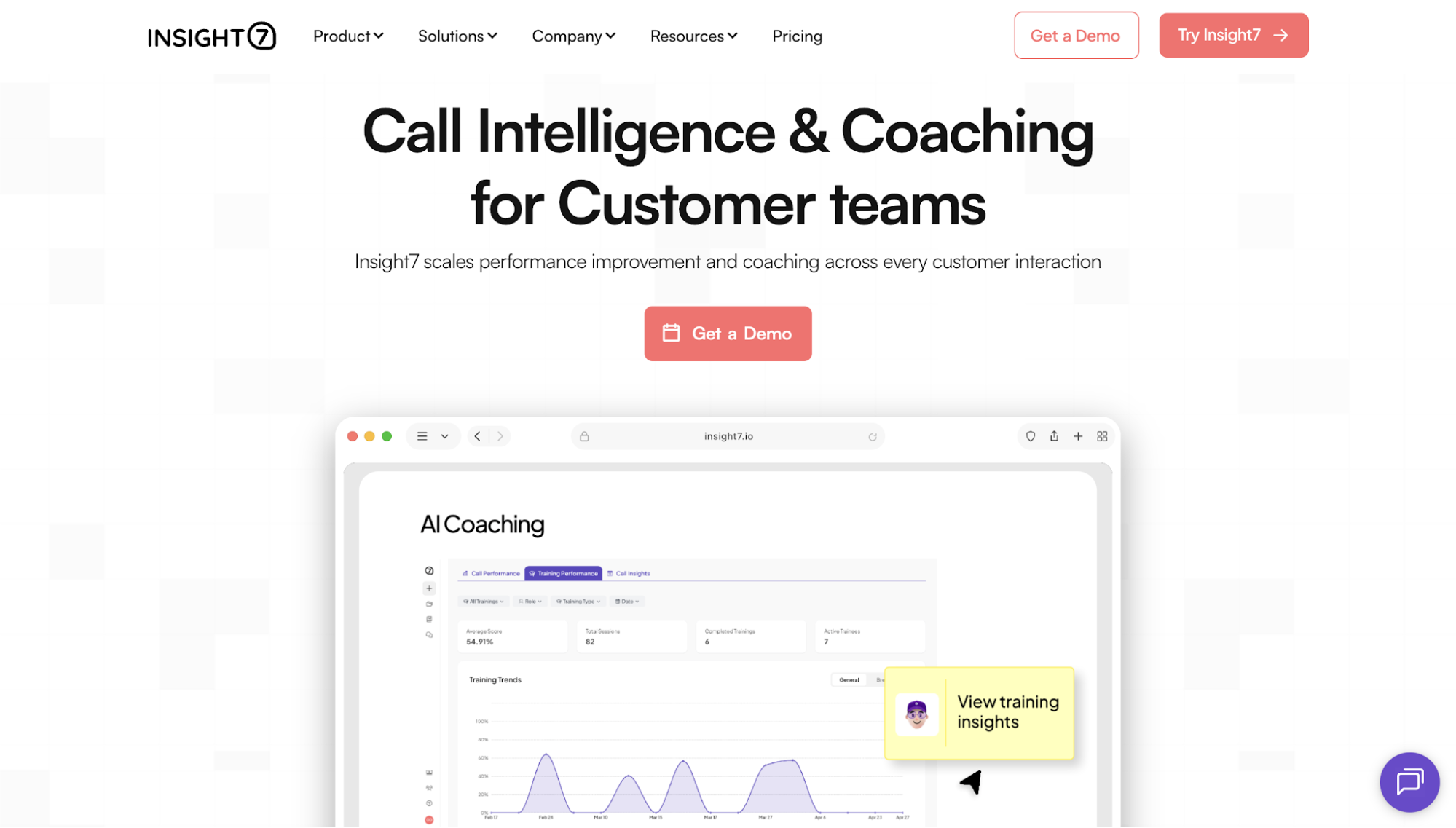
Insight7 is an AI call intelligence and coaching platform that supports AI-powered speech analytics for customer-facing teams. It analyzes conversations and evaluates performance against criteria defined by the organization.
Its approach to voice analytics centers on connecting conversation insights with employee performance. Teams can score calls against custom criteria and identify performance patterns.
These findings can then feed into sales coaching, giving managers a way to work on the specific behaviors identified during call evaluation. Reps can also practice those skills through AI roleplay before applying them in future customer conversations.
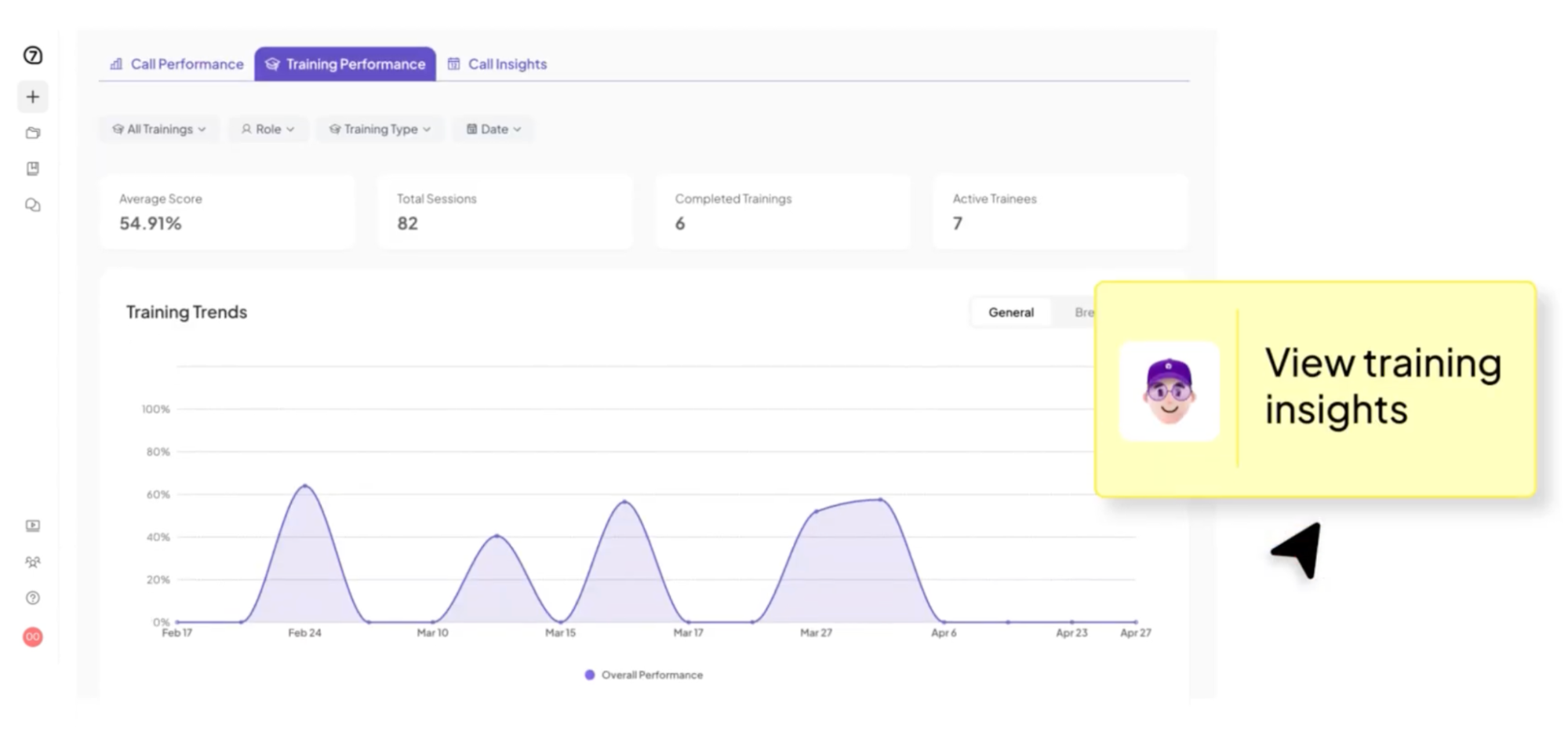
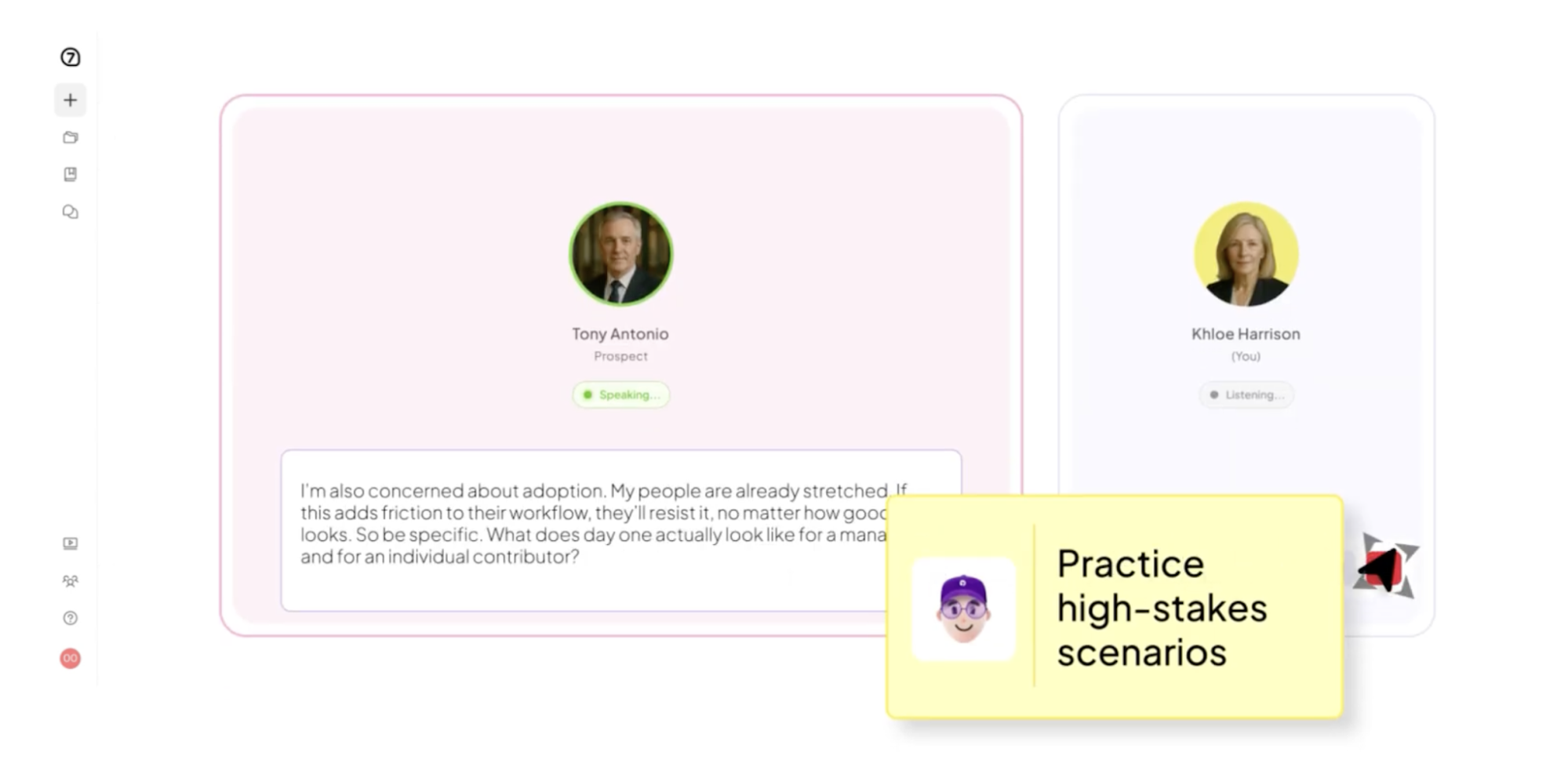
Insight7 connects post-call analysis directly with the work that follows once a performance gap is found. Managers can see which behaviors are affecting a rep’s performance, use those findings to focus their coaching, and give reps a way to practice the same skills through AI roleplay.
For example, if call evaluations consistently show that a rep struggles with discovery, the finding doesn’t have to stay as another score on a dashboard.
It can become the focus of their coaching and a skill they practice before their next customer conversation. Future calls can then show managers whether that behavior is actually improving.
There is also evidence of how teams are using Insight7’s conversation analysis in practice.
Insight7 has a 4.7/5 rating on G2, where one telecommunications user noted that the platform gives their team an objective perspective during call QA while still allowing them to document areas that need improvement.
Insight7 customer Elise Dietrich of TripleTen also reports evaluating more than 6,000 calls each month with the platform.
Insight7 plans are as follows:
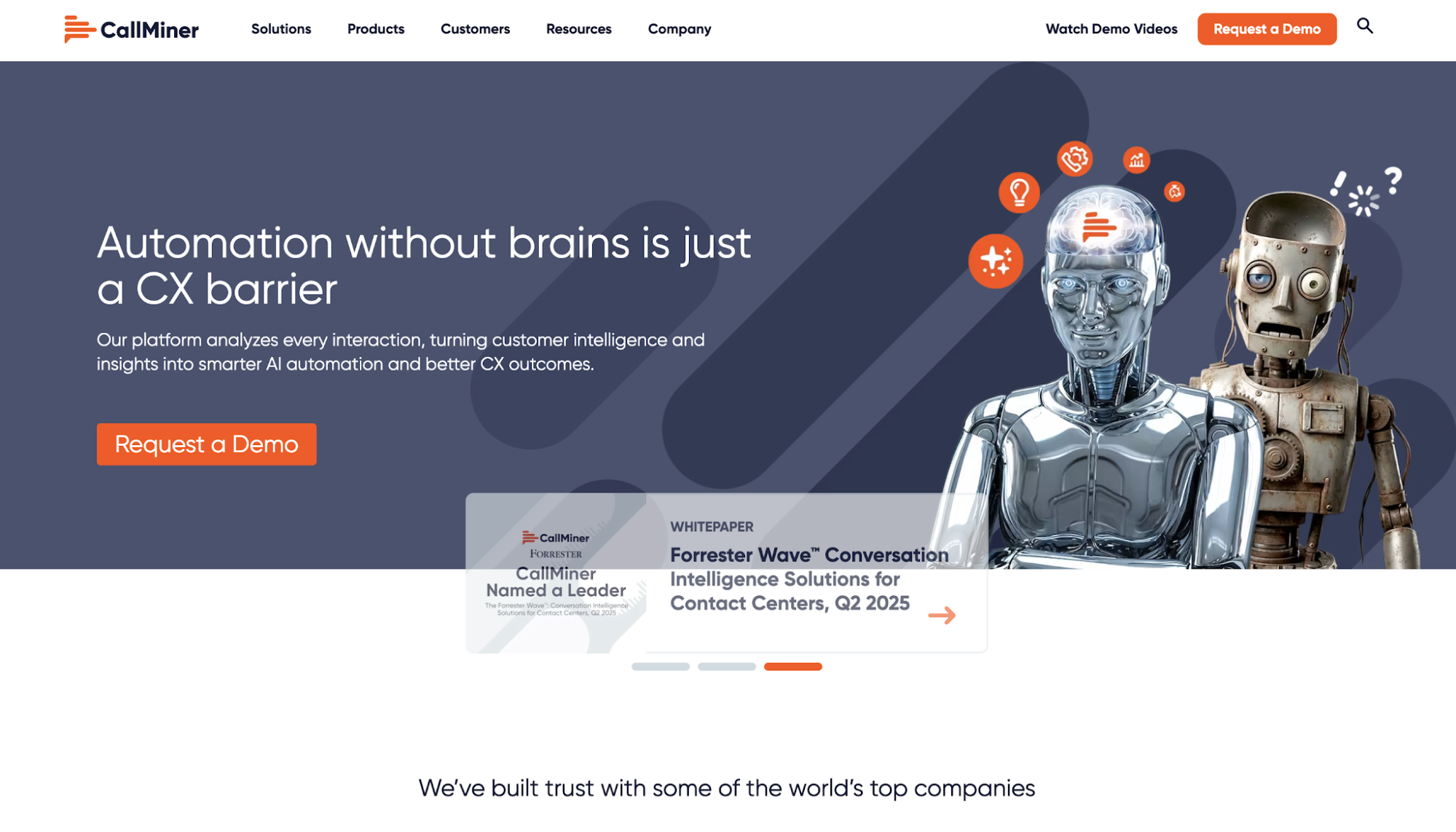
Image source: callminer.com
CallMiner is an enterprise conversation intelligence and customer experience management platform. Its Eureka platform analyzes customer interactions to surface patterns in customer experience, agent productivity, and employee performance.
CallMiner speech analytics uses natural language processing to examine voice and other interaction channels for signals such as intent, emotion, and customer behavior.
This gives teams a way to investigate what is happening within large volumes of conversations and explore the factors behind those patterns.
CallMiner does not publish public pricing.
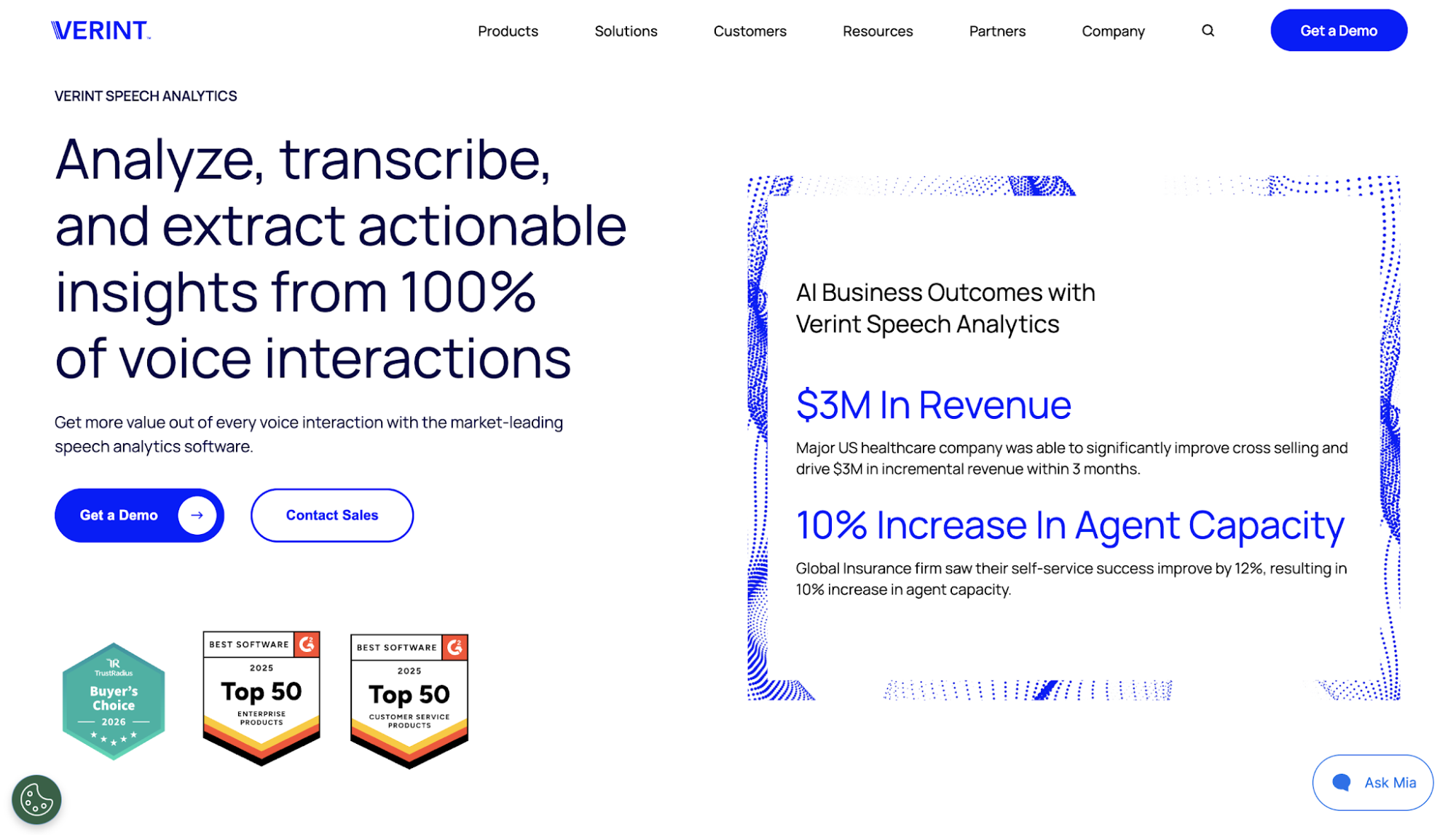
Image source: verint.com
Verint Speech Analytics is an enterprise call center speech analytics solution. It analyzes voice interactions to identify words, phrases, themes, sentiment, and other patterns within customer conversations.
The platform is designed to help enterprise contact centers understand customer behavior while also identifying trends that can inform agent performance and quality management.
Verint does not publish public pricing.
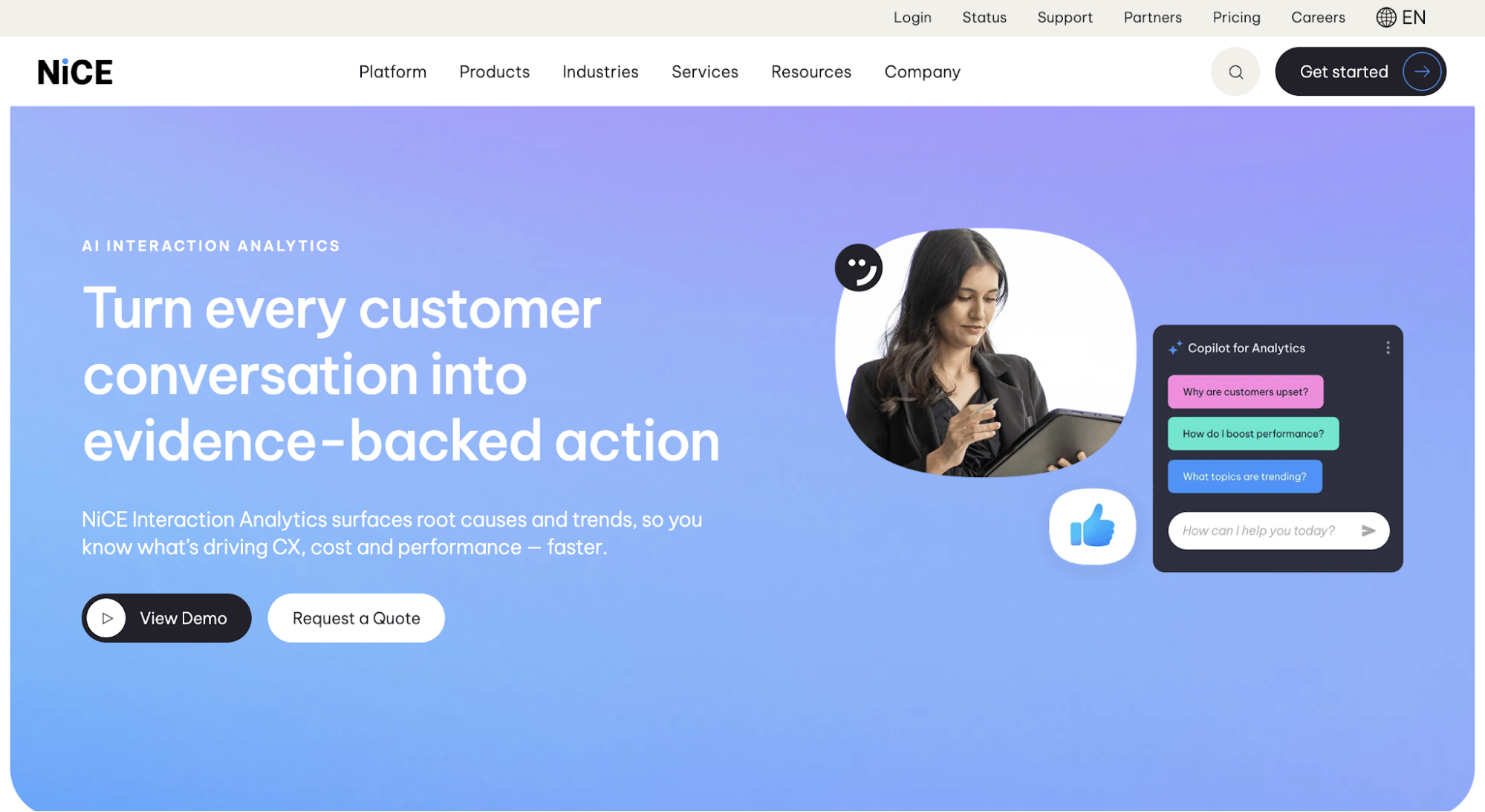
Image source: nice.com
NiCE Interaction Analytics analyzes customer conversations within the broader NiCE CXone environment. Its scope includes voice and digital channels, allowing contact center teams to examine customer and agent behavior within the same analytics environment.
Teams can use it to investigate customer intent and sentiment, including conversation patterns that may affect customer satisfaction. This makes the analytics part of a broader contact center platform rather than a standalone voice analytics environment.
NiCE does not publish public pricing for Interaction Analytics.
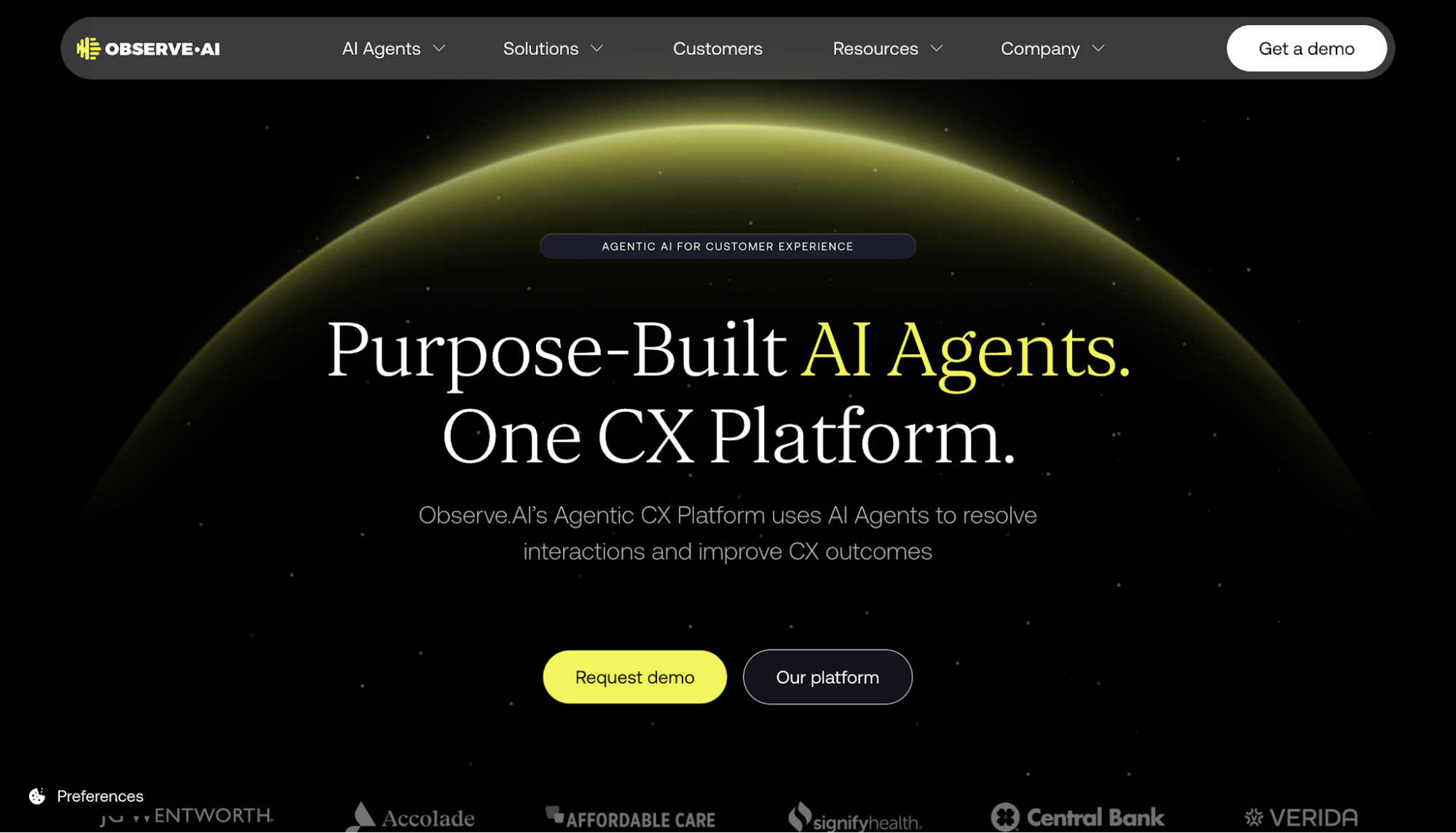
Image source: observe.ai
Observe.AI is an AI platform built around customer experience operations. Its Interaction Intelligence layer turns voice and digital conversations into structured signals that support quality and performance workflows.
The platform analyzes interactions for intent, sentiment, outcomes, and quality scores. It can also connect calls, chats, and emails related to the same issue into a continuous customer record, giving teams more context around what happened beyond an individual conversation.
Observe.AI does not publish public pricing.
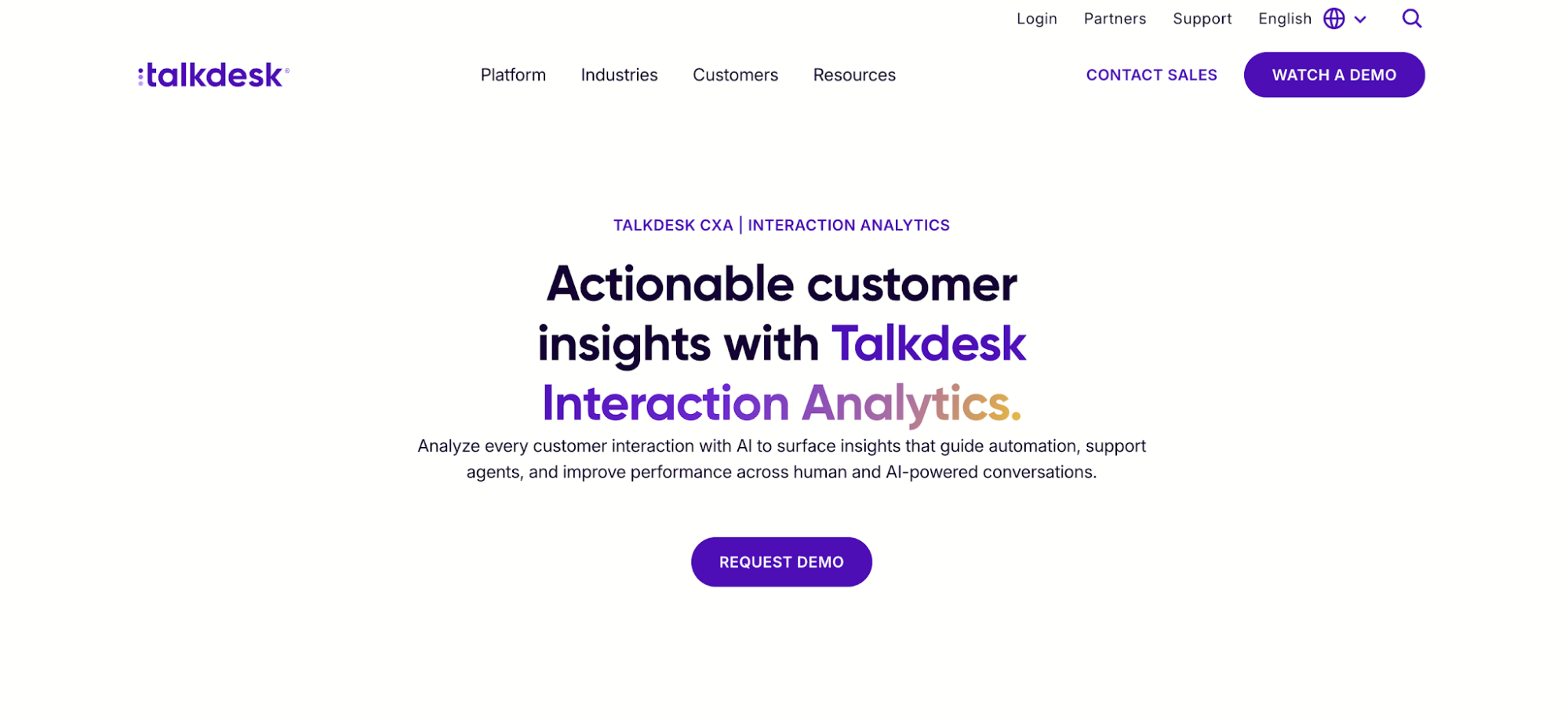
Image source: talkdesk.com
Talkdesk Interaction Analytics is part of the company’s wider contact center software. It captures and transcribes meetings and analyzes customer interactions to identify patterns within conversations.
The software focuses on signals such as customer intent, sentiment, topics, and emerging trends.
Talkdesk also connects conversation intelligence with operational data through CX Insights, helping teams examine how conversation patterns relate to contact center performance and opportunities to improve operational efficiency.
Talkdesk does not publish public pricing for Interaction Analytics.
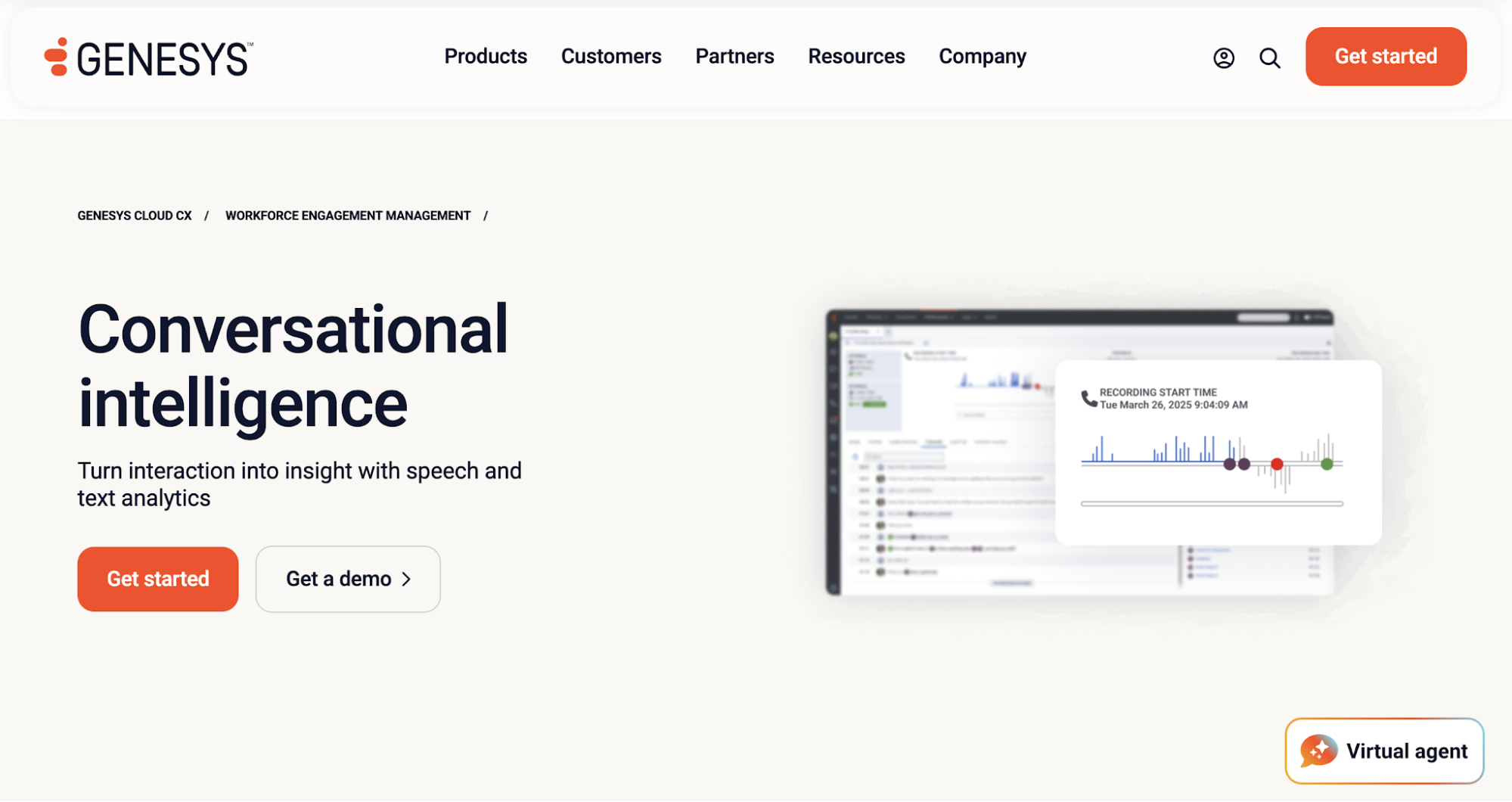
Image source: genesys.com
Genesys Cloud Speech and Text Analytics provides conversation analytics within the broader Genesys Cloud CX platform. It analyzes voice and digital interactions to help contact center leaders measure customer experience and agent performance.
Its speech analytics capabilities cover conversation signals such as sentiment, topics, interaction categories, and agent empathy.
Since these capabilities sit within Genesys Cloud, they are designed to work as part of a broader contact center environment rather than as a standalone voice analytics platform.
Genesys does not publish public pricing specifically for Speech and Text Analytics.
The following features will help you assess whether a voice analytics tool can measure what matters to your team and help you act on what it finds.
Every team has different reasons for analyzing customer calls, whether that’s improving performance or identifying compliance risk, so the metrics built into a platform may not always reflect what you need to measure.
If you’re trying to improve sales performance, for example, you may want to evaluate whether reps complete discovery or move conversations toward the next step.
This is why customization matters. Look for software that lets you define scorecards and evaluation criteria around the behaviors you actually expect from your team.
Insight7, for instance, supports this through custom scorecards. Teams can build their own evaluation criteria or upload an existing scorecard, then use it to evaluate calls consistently.
This gives managers more control over what the platform measures rather than limiting evaluations to predefined metrics.
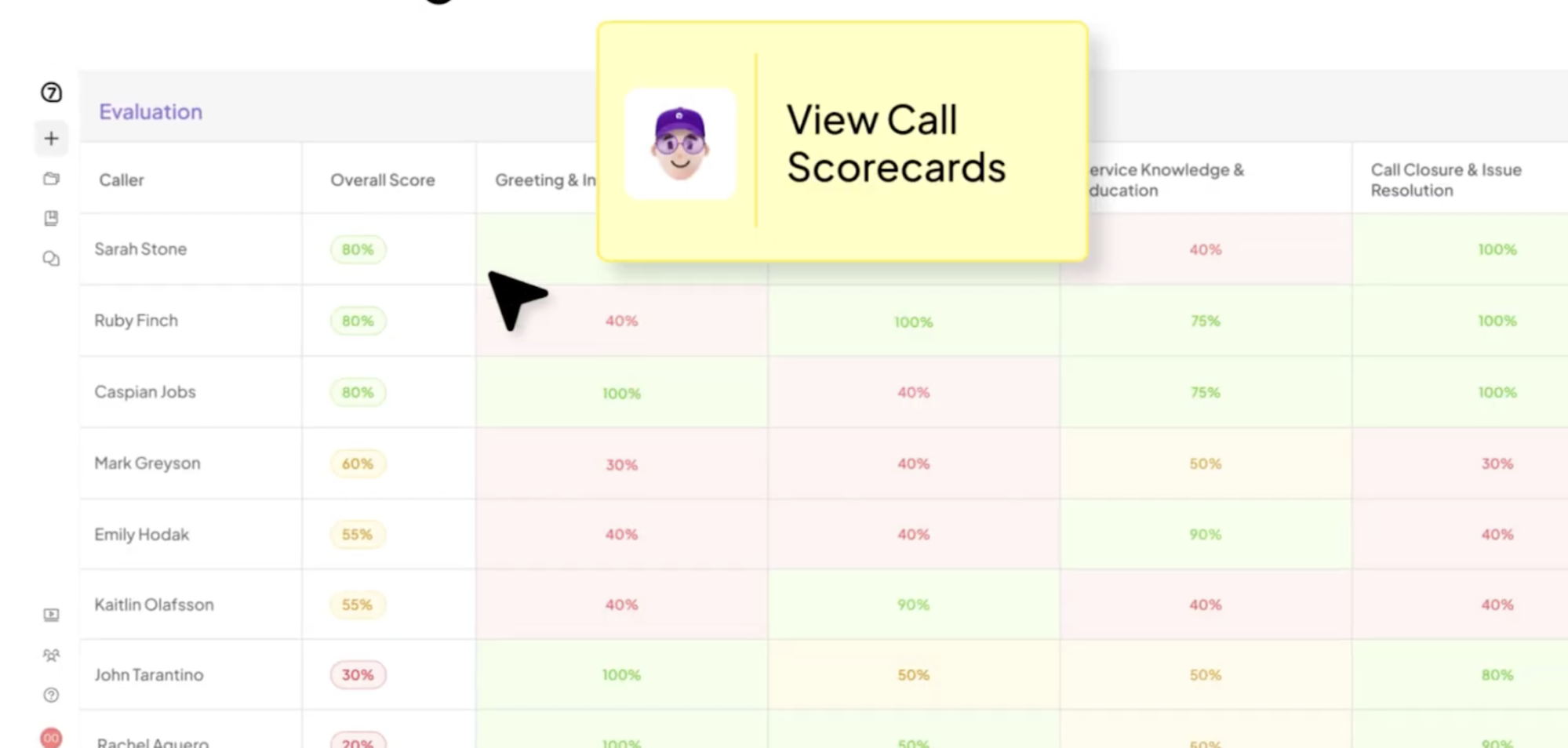
A score can tell you where performance differs. You still need enough detail from the conversation to understand how those calls differ in practice.
That is why behavioral analysis is worth looking at when comparing voice analytics software. Depending on what you’re trying to improve, you may need to examine signals or behavioral data such as questioning, speaker balance, sentiment, or conversation outcomes alongside the scores themselves.
Insight7’s health and wellness research shows what that additional context can reveal. The study found a 36% gap in Emotional Connection & Trust between top and bottom performers.
It also found that bottom-tier advisors spoke for more than 80% of their consultations, which now gives managers another observable difference to examine when comparing how those conversations unfolded.
So, when evaluating a platform’s capabilities, look at whether it can surface the conversation behaviors relevant to your goals and connect them with the performance measures you’re already tracking.
Insight7, for example, analyzes behavioral and conversation signals alongside call evaluations so managers can investigate the calls behind the scores.
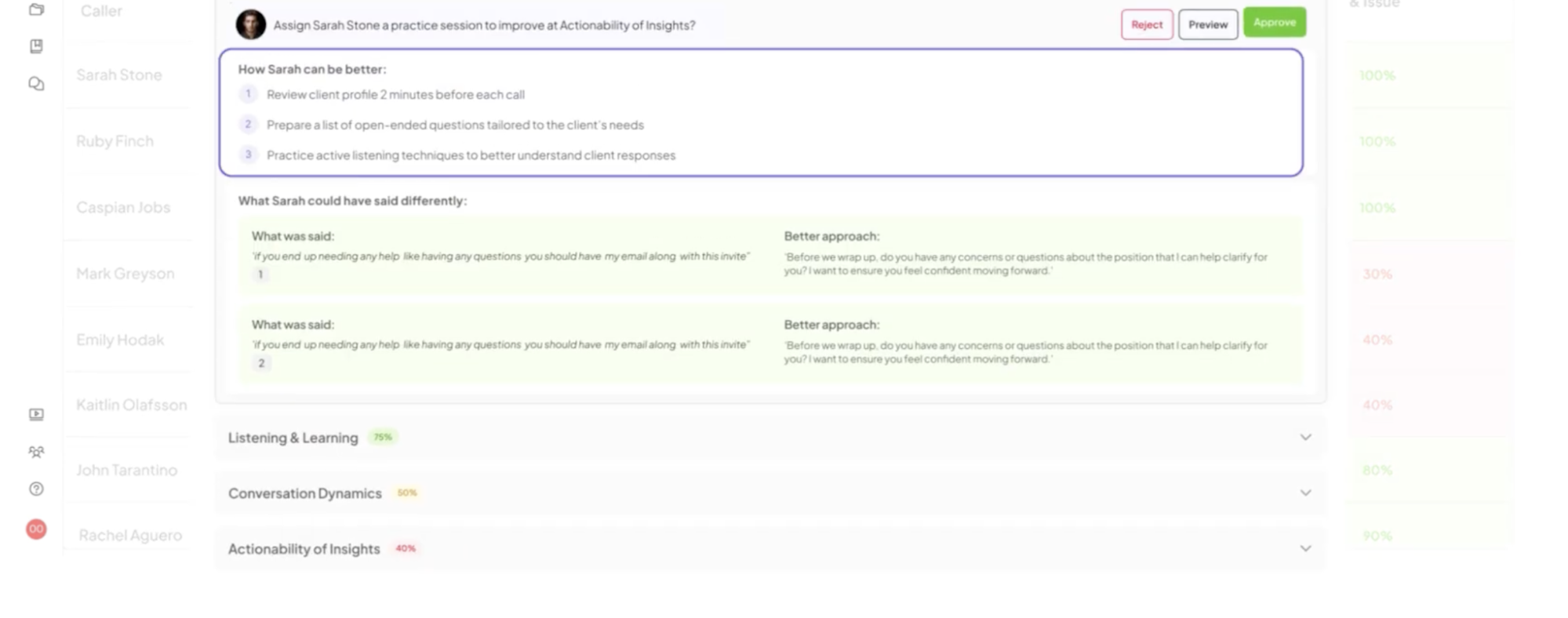
Looking at one call can tell you what happened in that conversation. But reports are what help you see broader conversation trends and whether the same issue keeps happening elsewhere.
If performance data shows discovery scores are falling, for example, managers need to know whether the problem affects one rep or a larger part of the team. They also need enough context to understand which behaviors are contributing to the change.
That said, when considering your speech analytics software options, choose a platform with dashboard reports that make speech analytics insights easy to trace back to the conversations behind them.
This way, you’ll also have a record of the conversations behind them, giving you concrete evidence to review if the same pattern appears again.
Lastly, consider what your team can do after identifying a problem.
If performance management is one of the reasons you’re investing in voice analytics, look at whether findings can feed into agent coaching and whether the platform provides a way to reinforce the skills that need work.
This will help you distinguish software that primarily reports what happened from software that can support what your team needs to improve next.
Insight7, for one, connects these steps through AI coaching and roleplay. Its Coaching Autopilot can use scorecard results to identify weaker skills and recommend targeted roleplay sessions that managers can review before assigning.
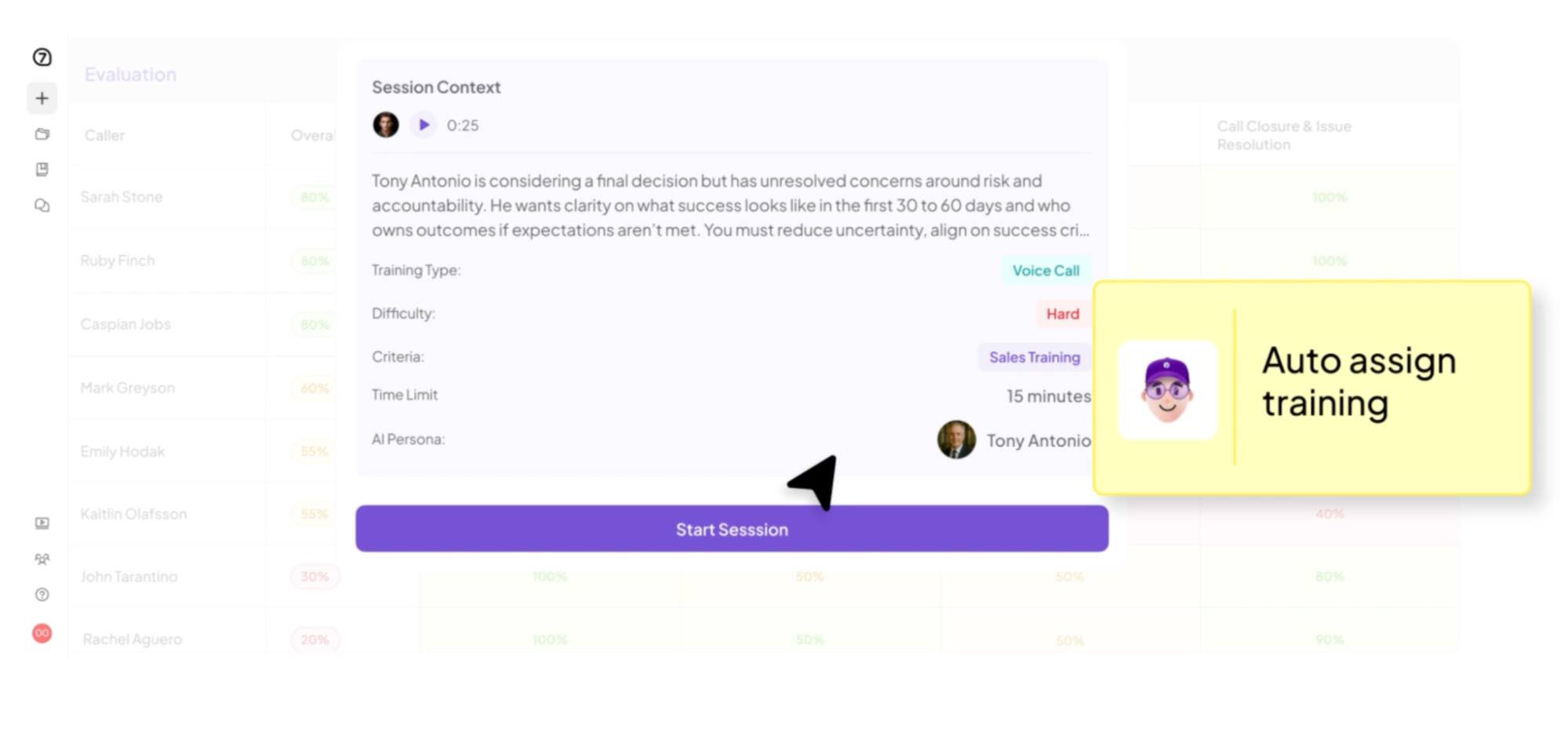
Finding the right insight only gets you so far. If your voice analytics software tells you that reps are consistently struggling with discovery, for example, you now know what needs attention. But the performance problem itself hasn’t changed yet.
Someone still has to decide how to address it. Managers need to turn these findings into focused coaching, while reps need a way to work on the behavior before their next customer conversation.
If that process happens separately from your post-call analytics, there is more work between identifying the problem and actually improving it.
This is why it is worth looking beyond what a voice analytics platform can measure. Consider what it lets your team do once it finds something that needs attention.
A platform that connects those findings with coaching and practice can shorten the path between knowing what needs to improve and helping your team work on it.
It also creates a clearer way to measure progress. When future conversations are evaluated against the same criteria, managers can see whether the behavior they addressed is improving or whether it still needs attention.
So as you weigh your options, don’t stop at “Will this platform give us the insights we need?” Ask “What can our team do with those insights once we have them?”
If you’re investing in voice analytics to improve how your team performs, finding critical insights should lead to something your team can actually work on.
This is where Insight7 brings the pieces together. It analyzes real customer conversations against the criteria that matter to your operation, helping managers identify the specific behaviors affecting performance.
Those findings can then become focused coaching priorities, while AI roleplay gives reps a place to practice the skills they need to improve before applying them in another customer conversation.
Future calls complete that process. Managers can continue evaluating the same behaviors to see whether coaching and practice are leading to improvement or whether more work is needed.
So when choosing the best voice analytics software, think beyond what you’ll be able to measure. Consider how quickly your team can move from finding something worth improving to actually working on it.
Insight7 is the best voice analytics software for customer-facing teams that want to turn call insights into performance improvement. It analyzes real conversations, scores them against custom criteria, and helps managers identify the behaviors that need attention.
Those findings can then feed into AI coaching and roleplay, giving teams a way to work on what the analytics uncover.
The best speech analytics tools include Insight7, CallMiner, Verint Speech Analytics, NiCE Interaction Analytics, Observe.AI, Talkdesk Interaction Analytics, and Genesys Cloud Speech and Text Analytics.
Speech analytics focuses on what is said, while voice analytics can also examine how conversations unfold, including talk time, silence, and other behavioral signals. The two overlap heavily, so many modern platforms usually support both.
There is no single voice LLM that is considered the best for every use case. The right model depends on what you’re building, such as a real-time voice agent, transcription system, or another voice application.
Voice analytics focuses on analyzing spoken customer interactions for signals such as sentiment, topics, behaviors, and performance patterns.
Conversation intelligence typically goes further by connecting those findings with broader context and workflows that help teams understand what happened and decide what to do next.
Voice analytics can support measurable business outcomes by helping teams identify the conversation behaviors linked to the results they want to change.
The key is acting on what the analytics reveal. When findings guide coaching and performance improvement, teams have a clearer way to address the behaviors affecting their results and measure whether those behaviors improve over time.

