


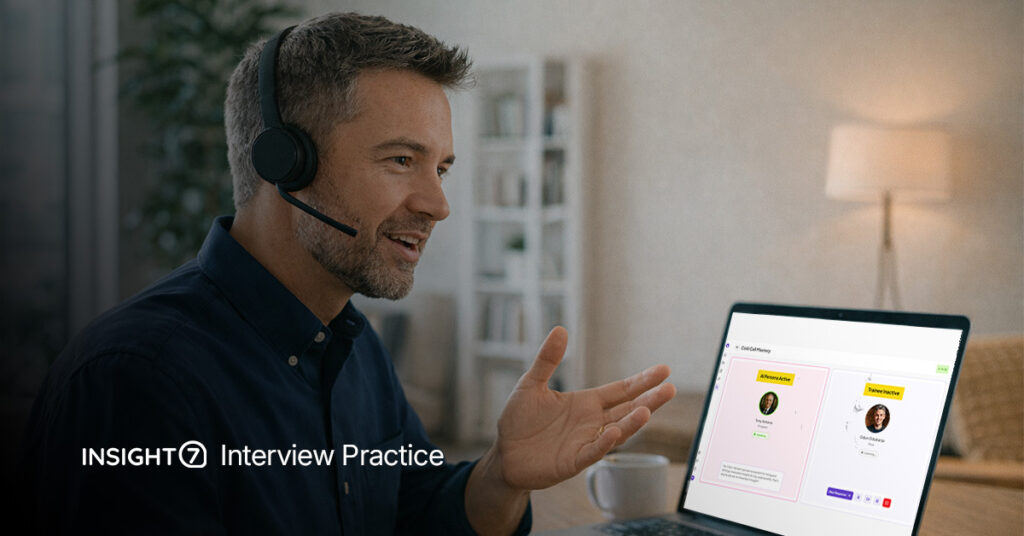
Microsoft People and HR interviews test whether you develop talent with a growth mindset, meaning you build systems that grow people's capability rather than just assess it, you steward an inclusive culture that enables learn-it-all behavior rather than know-it-all behavior, and you demonstrate genuine learning from workforce interventions that did not produce the expected outcome. The as-ap culture round specifically evaluates whether your HR approach is itself growth-oriented: curious about the workforce problem before prescribing a solution.
Start your free Microsoft People and HR practice session.
What interviewers actually evaluate
Growth Mindset, Talent Development & Inclusive Culture Leadership
Microsoft People and HR interviews test whether your HR philosophy reflects the Growth Mindset Culture at the core of Microsoft's operating model. Interviewers evaluate whether you develop people with genuine curiosity about their potential rather than through standardized programs, whether your workforce interventions are designed from a diagnosis of what the specific talent system is failing to do, and whether you steward an inclusive culture that creates psychological safety for learn-it-all behavior.
Growth mindset, Talent development, Inclusive leadership, Culture stewardship, Learn from failure, Workforce impact
What gets scored in every session
Specific, sentence-level feedback.
| Dimension | What it measures | How to answer |
|---|---|---|
| Growth Mindset Signal | Does your answer demonstrate curiosity about the workforce system and learning from HR interventions? We flag know-it-all HR framing and answers with no failure or learning. | Learning language, system curiosity demonstrated, failure acknowledged |
| Intervention Design | Did you design the solution based on a specific workforce diagnosis? We score whether your HR approach was tailored rather than programmatic. | Custom design rationale, specific workforce problem named |
| Execution Ownership | Were you the designer and implementer, or the coordinator? We detect "we rolled out" language and probe whether you were the actor or the sponsor. | Personal action verbs, decision authority named |
| Workforce Impact | What changed in the workforce after your intervention? We flag results expressed as program launch rather than workforce outcome. | Retention delta, capability change, engagement lift, culture metric |
How a session works
Step 1: Get your Microsoft People and HR question
You are assigned questions based on where candidates for this role typically struggle most, which for Microsoft People and HR means growth mindset demonstration alongside workforce problem diagnosis and measurable talent outcomes rather than program descriptions. Each session starts fresh with a new question targeting a different evaluation dimension.
Step 2: Answer by voice
Speak your answer as you would in a real interview. The AI listens for STAR structure and evaluation signal alignment, specifically whether your workforce problem is diagnosed before your solution, your design is tailored to the specific context, and your Result includes a workforce outcome alongside what you learned.
Step 3: Get scored dimension by dimension
Instant scores across all four rubric dimensions. Each gets a score, a flagged weakness, and a specific sentence-level fix. Microsoft People and HR interviewers probe for programmatic HR answers with no diagnosis and for talent development stories where the candidate designed and launched a program but cannot name what changed in the workforce.
Step 4: Re-answer and track improvement
Revise based on feedback and answer again. See the before/after score change across Growth Mindset Signal, Intervention Design, Execution Ownership, and Workforce Impact. Your weakness profile updates across sessions so if you consistently underdemonstrate growth mindset through workforce system curiosity and learning language, that becomes the focus of your next question assignment.
Frequently Asked Questions
How do you prepare for a Microsoft People and HR interview?
Prepare 4-6 STAR stories covering a talent development initiative you designed from a specific workforce diagnosis, a culture or inclusion intervention you led with a measurable outcome, a people decision where you were wrong and what you learned, and a situation where you influenced a business leader on a talent decision without formal authority. For each story, explicitly name what the workforce data showed, position your intervention as a hypothesis rather than a program, and include what the outcome revealed about the workforce system. The as-ap round will specifically probe whether your HR approach is grow-oriented rather than compliance-oriented.
What are the 5 C's of interviewing for Microsoft People and HR?
In Microsoft People and HR interview contexts, the 5 C's map to: Curiosity (genuine investigation of the workforce problem before designing the solution), Collaboration (how you partnered with business leaders, managers, and employees to understand and address the talent system failure), Change (the specific initiative you designed and personally led), Consequence (the workforce outcome in retention, capability, engagement, or inclusion terms), and Change-Again (what the intervention revealed about the workforce system that you would address next). For Microsoft People and HR interviews, Curiosity and Change-Again are most often underdeveloped.
What are the 5 hardest interview questions for Microsoft People and HR?
The most challenging Microsoft People and HR questions require you to demonstrate growth mindset and workforce problem-solving rigor simultaneously. They typically include: a talent initiative that did not produce the expected outcome and what you learned about the workforce system from the failure; a situation where your assumptions about a workforce problem were wrong and how you discovered that; a culture or inclusion initiative you led with a measurable outcome; a people decision you made that you would approach differently with what you know now; and a story about developing a team member who initially did not respond to your approach and what you changed.
What are the Microsoft People and HR interview questions for freshers?
Microsoft HR interviews for early-career candidates probe learning agility and growth mindset evidence more heavily than functional experience. Common questions include: a situation where you changed your approach based on feedback from a person you were trying to help; a time you discovered your initial understanding of a problem was wrong; how you would approach diagnosing a talent problem in a business unit you had never worked in; and what specifically draws you to developing people at the scale and complexity of a global technology company. Early-career candidates should prepare examples from academic, internship, or volunteer contexts that demonstrate genuine curiosity and learning orientation.
What are the most common failure modes in Microsoft People and HR interviews?
The most consistent failures are:
- Talent initiatives described as programs launched rather than as hypotheses tested: Microsoft HR interviewers look for candidates who treat their interventions as experiments with expected outcomes to be measured
- Workforce problem diagnosis skipped: jumping from "we had a retention problem" to "we launched a development program" without naming what the data showed about why retention was failing
- Results expressed as program completion or employee satisfaction without a downstream workforce outcome: retention rate, capability metric, engagement score, or culture measurement
- No failure story, or a failure story where the program's underperformance was attributed to budget, leadership support, or team execution rather than the candidate's diagnostic assumptions
- Fixed mindset signals in the as-ap round: positioning HR expertise as the reason for the intervention's design rather than the workforce data and genuine curiosity
Also practice
All eight Microsoft role interview practice pages.
- Sales
- Customer Service
- Product Management
- Marketing
- Finance
- Operations
- Leadership
- Legal & Compliance
One full session free. No account required. Real, specific feedback.








