


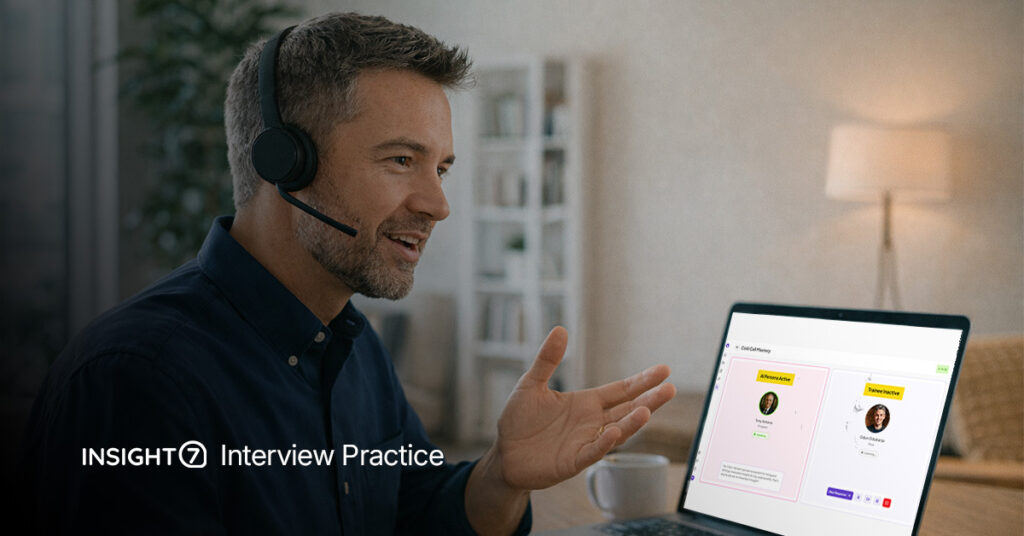
Microsoft Marketing interviews test whether you approach campaigns with a growth mindset, meaning you start from genuine customer insight rather than channel preference, you measure what actually changes for customers rather than what is easy to report, and you learn from campaigns that missed their target rather than defending them. The as-ap culture round specifically evaluates whether you are a learn-it-all, someone who treats underperforming campaigns as data rather than as someone else's fault.
Start your free Microsoft Marketing practice session.
What interviewers actually evaluate
Growth Mindset, Customer Insight & Measurable Marketing Impact
Microsoft Marketing interviews test whether your marketing judgment reflects the Growth Mindset Culture that defines Microsoft's operating philosophy. Interviewers evaluate whether you start from deep customer insight, whether you choose KPIs that measure what actually matters for the business rather than what is easy to track, and whether you treat campaign results, including failures, as learning rather than as outcomes to defend.
Growth mindset, Customer insight, Experimentation mindset, Measurable impact, Learn from failure, Cross-team collaboration
What gets scored in every session
Specific, sentence-level feedback.
| Dimension | What it measures | How to answer |
|---|---|---|
| Growth Mindset Signal | Does your answer demonstrate curiosity, experimentation, and learning from outcomes? We flag answers where marketing expertise is positioned as certainty rather than hypothesis. | Learning language, experimentation demonstrated, failure acknowledged |
| Customer-Back Strategy | Do you start from genuine customer insight or from channel preference? We score whether your audience understanding precedes your campaign design. | Customer insight as starting point, audience problem clarity |
| Metric Discipline | We evaluate whether you chose KPIs tied to real business impact rather than vanity metrics. Reach and impressions without downstream outcomes signal fixed-metric thinking. | Business-impact metrics, pipeline or adoption outcome |
| Performance Impact | Results need a before/after with a number, plus what you learned from the result. We check for quantified lift and explicit learning. | Lift delta, before/after, business outcome, learning named |
How a session works
Step 1: Get your Microsoft Marketing question
You are assigned questions based on where candidates for this role typically struggle most, which for Microsoft Marketing means growth mindset demonstration and measurable business impact rather than awareness metrics alongside what was learned from the result. Each session starts fresh with a new question targeting a different evaluation dimension.
Step 2: Answer by voice
Speak your answer as you would in a real interview. The AI listens for STAR structure and evaluation signal alignment, specifically whether your customer insight precedes your channel decision, your KPIs connect to business impact, and your Result includes both a quantified lift and an explicit learning.
Step 3: Get scored dimension by dimension
Instant scores across all four rubric dimensions. Each gets a score, a flagged weakness, and a specific sentence-level fix. Microsoft Marketing interviewers probe for campaigns described by channel or creative concept rather than customer insight, and for results that report impressions or reach without connecting to a business outcome or learning.
Step 4: Re-answer and track improvement
Revise based on feedback and answer again. See the before/after score change across Growth Mindset Signal, Customer-Back Strategy, Metric Discipline, and Performance Impact. Your weakness profile updates across sessions so if you consistently underdemonstrate growth mindset through experimentation and learning language, that becomes the focus of your next question assignment.
Frequently Asked Questions
What are the 5 C's of interviewing for Microsoft Marketing?
In Microsoft Marketing interview contexts, the 5 C's map to: Curiosity (the depth of customer insight that preceded your campaign design), Collaboration (how you worked with product, sales, and engineering to ensure message and timing alignment), Campaign (the specific experiment you ran and the hypothesis it was testing), Consequence (the measurable business outcome: pipeline, adoption, or revenue), and Change (what you learned from the campaign result and what you would do differently). For Microsoft Marketing interviews, Curiosity and Change are most often underdeveloped.
What questions are asked at the Microsoft PMM interview?
Microsoft Product Marketing Manager interviews specifically probe the intersection of product depth and marketing execution. Common questions include:
- "Tell me about a product launch where the customer insight you started with turned out to be wrong and how you discovered that"
- "Describe a campaign you ran as an experiment and what the data revealed about the audience or the message"
- "Walk me through how you worked with product and engineering teams to ensure the marketing message reflected what the product actually delivered"
- "Tell me about a campaign that underperformed and specifically what you changed as a result"
Each question tests whether your marketing judgment is customer-back, data-grounded, and learning-oriented.
What type of questions are asked in a Microsoft Marketing interview?
Microsoft Marketing interviews are behaviorally structured and probe Growth Mindset alongside marketing competencies. Common questions include customer insight stories, campaign experimentation stories, measurement and learning stories, and cross-functional collaboration stories. Interviewers specifically look for candidates who treat every campaign as a hypothesis and every result, positive or negative, as data that informs the next decision. The as-ap round evaluates whether your marketing approach is genuinely experimental or just optimistic.
What are the 3 C's of a Microsoft Marketing interview?
The 3 C's in Microsoft Marketing interview contexts cover: Competency (the specific marketing skill being evaluated, such as audience segmentation or campaign attribution), Culture Fit (whether your marketing approach reflects Microsoft's Growth Mindset: experimentation, customer obsession, and learning from failure), and Contribution (what you specifically designed, tested, or optimized and what the measurable business or pipeline outcome was). Microsoft Marketing interviewers probe most consistently for Culture Fit, since many experienced marketers present with certainty-framing that signals a fixed rather than growth orientation.
What are the most common failure modes in Microsoft Marketing interviews?
The most consistent failures are:
- Campaign stories that describe a strategy and report a result without naming a hypothesis that was tested or a learning that came from the outcome
- Vanity metrics as primary results: reporting impressions, brand awareness, or social engagement without connecting them to pipeline, product adoption, or revenue
- Customer insight described as audience research done at the start rather than as ongoing curiosity that shaped the campaign direction throughout
- No underperformance story, or an underperformance story where the campaign's failure was attributed to external factors rather than the candidate's assumptions or approach
- Fixed mindset signals in the as-ap round: defending a failed campaign as correct in concept and blaming execution, data quality, or the audience for the miss
Also practice
All eight Microsoft role interview practice pages.
- Sales
- Customer Service
- Product Management
- Finance
- Operations
- People & HR
- Leadership
- Legal & Compliance
One full session free. No account required. Real, specific feedback.








