
Turning Your Call Transcripts Into a Knowledge Base
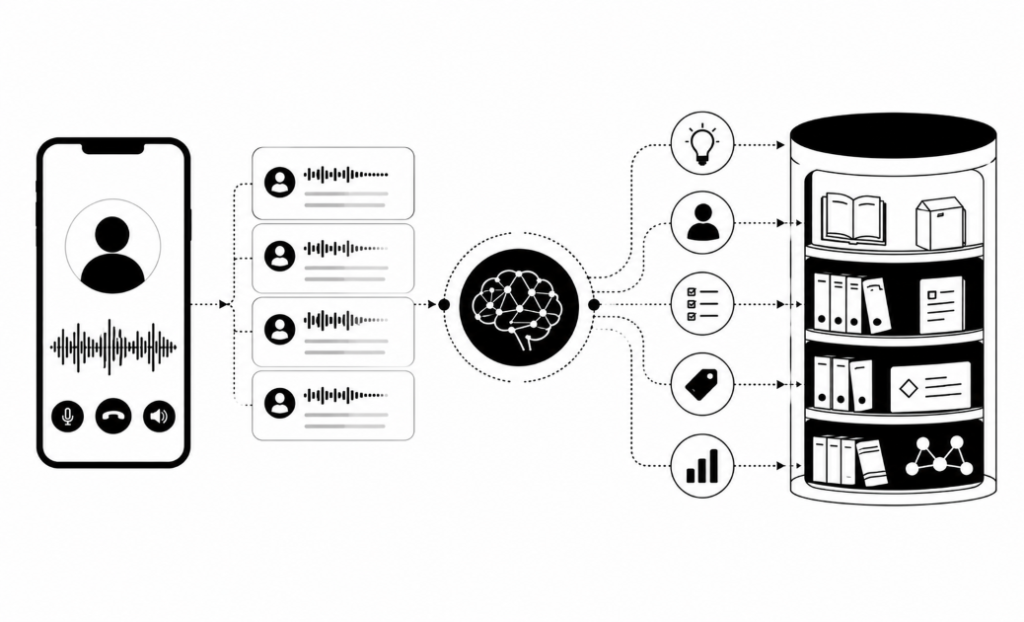
Every time an experienced rep handles a difficult customer question, they produce something valuable. A correct answer, delivered in context, backed by real product knowledge. That answer is spoken once. Then it disappears. The next rep who gets the same question starts from zero and they figure it out on a live call with a real customer, which is the most expensive way to learn. This is happening on every team that has call recordings and no system for turning them into something accessible. The knowledge exists. It is just not in a form anyone can reach when they need it. What Recordings Without a Knowledge Base Look Like Thousands of transcripts covering every question your customers asked, every situation your reps have navigated, every edge case someone had figured out and handled well. None of it is in a knowledge base. New reps are onboarding into a situation where the answers already exist. They are spending their first weeks asking colleagues and learning on live calls with real customers because the institutional knowledge of the team is locked inside recordings nobody is systematically reading. The recordings are there and the answers are in them. The gap is purely structural. The Harder Problem Extracting knowledge from existing recordings is the first problem. Most teams stop there when they think about this. The harder problem is what comes after: keeping the knowledge base current as the product changes, as questions evolve and new situations emerge. A knowledge base that isn’t updated becomes inaccurate. And an inaccurate knowledge base is worse than no knowledge base, because reps trust it. Most knowledge bases go stale for one reason: the update is manual and it competes with everything else the team is doing. Someone has to notice the answer has changed, draft the update, get it approved, and publish it. That is exactly what Insight7 solves – an AI native system where every call your team has automatically contributes to the knowledge base, surfacing new questions as they emerge and updating answers as the product evolves. What Changes When You Actually Do This At Insight7, the teams we work with that implement a call sourced knowledge base consistently see new reps reaching baseline performance faster than those that onboarded without it. The knowledge that previously lived in the heads of the three most experienced people on the team becomes accessible to everyone. How Insight7 Approaches This At Insight7, our knowledge base solution is built around the assumption that the best source material for what your team needs to know is your own calls. The system takes your transcripts and structures them into searchable, editable articles.Answers drawn from the calls where the question came up, how your best reps answered it, and what the outcome was. Draft articles surface automatically from the call analysis. Designated reviewers see them in a queue. They approve, edit, or reject. What goes live has been through a human who knows the product and trusts the answer. The result is a knowledge base that updates from the work the team is already doing, rather than requiring a separate documentation effort that competes with everything else.
AI Coaching App for Communication: Practice Real Conversations Before They Happen
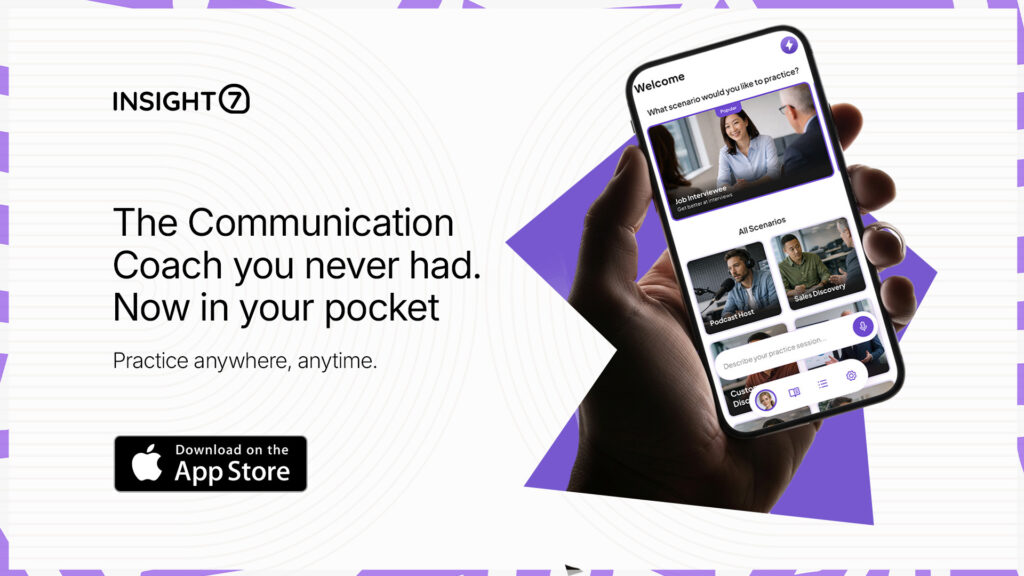
Key Takeaways Negotiating a higher salary. giving a friend uncomfortable feedback, handling a furious client. You’ve rehearsed these exact scenarios a dozen times in your head, yet your words still tangle up when the moment arrives. That failure to execute is just the natural gap between internal thought and real vocal delivery. And it is precisely where an AI communication coach steps in. It gives you a risk-free environment to run through the dialogue, stumble through your words in private, and refine your delivery before you ever have to say it for real. What Does a Badly Handled Conversation Cost? Research from The Harris Poll and Grammarly puts poor communication at an estimated $1.2 trillion a year across US businesses, or roughly $12,506 per employee. Sit with that per-person number for a second. For a lot of teams, that’s close to a month of someone’s salary, burned annually on messages that landed wrong, meetings that needed a second meeting, and instructions that had to be repeated. It compounds from there. 70% of workers regularly avoid hard conversations at work, and 53% deal with toxic situations by ignoring them entirely. The issue isn’t that people communicate badly under pressure. They dodge the conversation entirely, resentment builds, and productivity collapses months later for reasons nobody traces back to the conversation that never happened. Why Mental Rehearsal Doesn’t Work Cognitive psychologist Dr. K. Anders Ericsson spent his career studying how expertise is built. His conclusion: “The hallmark of purposeful or deliberate practice is that you try to do something you cannot do — that takes you out of your comfort zone — and that you practice it over and over again, focusing on exactly how you are doing it, where you are falling short, and how you can get better.” — Dr. K. Anders Ericsson Run your shower rehearsal against that definition and it fails on every clause. You’re doing the version of something that goes well, as opposed to what you really struggle with. The imaginary person agrees with you. And you get zero information about where you fell short, because there’s nobody there to fall short in front of. Deliberate practice needs two things mental rehearsal can’t supply: That’s the entire design brief for an AI coaching app for communication. The Two Kinds of AI Coaching App for Communication Tools in this space fall into one of two camps, and picking the wrong camp is the most common mistake buyers make. Delivery coaching scores how you sound: your pace, filler words, tone, energy. Useful when you know your content is solid and your problem is that you say “um” fourteen times per minute. Behavioral practice scores what you say and how you hold up when the moment turns. The interviewer pushes back. The customer escalates. Your manager goes quiet. This is the camp you want when the conversation itself is the hard part. Quick check: If you’d be fine as long as the other person cooperates, you need delivery coaching. If your fear is what happens when they don’t, choose behavioral practice. 15 AI Communication Coaching Apps Compared To simplify your search, we evaluated 15 top AI communication coaching apps, breaking down their key features, ideal use cases and pricing structures. # Tool Best for Key features Starting price 1 Insight7 Mobile App Rehearsing a specific conversation that’s coming up this week Style quiz, voice roleplay, per-session scorecards, progress history Free (iOS) 2 Insight7 Platform Teams rolling out structured practice across distributed staff Custom rubrics, company-specific personas, manager dashboards, 150+ scenarios Free plan; paid from $99/mo 3 Yoodli Presentation delivery and mock interviews Filler-word and pacing analytics, eye contact scoring, AI roleplay Free; Pro from $8 4 Speeko Building a daily speaking habit Bite-sized voice lessons, tone and clarity feedback From ~$10 5 Orai Beginners who want gamified daily drills Short speaking exercises, streaks, pace and energy scoring From ~$10 6 VirtualSpeech Immersive public speaking practice with coursework VR/simulated audiences, structured courses, heckler scenarios From ~$45 7 ELSA Speak Non-native speakers working on pronunciation Phoneme-level scoring, accent feedback, guided lessons Free; Pro from ~$12 8 BoldVoice Professionals reducing a strong accent Accent coaching from voice coaches, daily drills From ~$12 9 Google Interview Warmup Job seekers who want free question reps Role-specific question banks, transcript and keyword insights Free 10 Hyperbound SDRs and AEs drilling cold calls and objections Buyer personas, cold call sims, ramp scorecards Custom 11 Second Nature AI Enterprise sales enablement programs Conversational AI avatars, certification tracks, manager analytics Custom 12 Zenarate Contact center agent onboarding at volume AI simulation for support scenarios, soft-skill scoring Custom 13 Quantified.ai Enterprise L&D that needs behavioral benchmarking Simulation with competency benchmarking, cohort analytics Custom 14 Exec Managers who want AI practice plus a human coach AI roleplay layered with live 1:1 coaching sessions From ~$300 15 BetterUp Organizations buying human coaching at scale Matched human coaches, assessments, org-level reporting Custom Inside the Insight7 AI Coaching App Insight7’s app is built around one idea: your communication style isn’t generic, so your coaching shouldn’t be either. Find Your Communication Style First Before you practice anything, you take a short quiz. Every lesson, scenario, and piece of feedback after that is built from your specific style, not a one-size-fits-all script written for the average user. Practice the Conversation You’re Dreading Tell your AI coach what’s coming up e.g a performance review, cold outreach call, a boundary-setting conversation with a roommate and it builds the practice session around that specific moment. This is the roleplay engine at the center of the app: a realistic AI partner that responds the way the actual person might, so you’re not just talking to yourself. What “responds like a real person” looks like in practice: An online bootcamp with over 100 learning coaches used Insight7’s AI skills practice to rehearse an awkward scenario e.g telling a student that joining a call from bed isn’t acceptable. The AI student adapted to the coach’s approach. Clear, gentle redirection and the
High Ticket Sales: One Call Close Revenue Intelligence Buyer Guide
In high-ticket, one call close sales, every call is the only call. There is no follow-up sequence. No second meeting. No recovery email. You either close on that call or the opportunity is gone. This reality changes everything about how performance must be measured, coached, and optimized. This buyer guide is written for high-ticket sales leaders evaluating revenue intelligence platforms built specifically for one-call-close environments. It covers: What revenue intelligence means in a one-call-close model Whether your team is ready What to look for in a platform What it actually costs How to evaluate vendors How to implement successfully How to measure ROI So you can make a confident, informed decision before signing a contract. Why One Call Close High-Ticket Sales Is Structurally Different In traditional sales teams, deals unfold over weeks or months. There are multiple touchpoints, pipeline stages, and opportunities to recover from mistakes. In one-call-close sales, the margin for error is effectively zero. The moment a rep hangs up without a commitment, the lead goes cold.There is no nurture sequence. No second shot. This model is common in high-ticket industries such as: Insurance Healthcare services Financial services Manufacturing and equipment sales Because revenue is won or lost inside a single conversation, performance visibility must operate at the call level – and it must be fast. Most revenue intelligence platforms were built for multi-touch B2B environments. They focus on pipeline tracking, deal stages, and long sales cycles. One-call-close teams operate under completely different constraints: Same-day coaching matters Script execution precision matters Objection handling quality matters First-call conversion rate is the core KPI This guide helps you evaluate platforms designed for that reality What Is Revenue Intelligence for One Call Close Sales? Revenue intelligence for high-ticket, one-call-close sales is the use of AI to analyze 100% of sales conversations, identify the exact moments where revenue is won or lost, and turn those insights into actionable coaching before the next live call. In high-ticket environments, a single lost call can represent thousands – sometimes tens of thousands – in revenue. There is no second meeting to recover it. Because the entire sales cycle happens inside one conversation, performance visibility must operate at the call level – and it must move fast. Revenue intelligence in this context must answer operationally critical questions like: What do top closers do in the first 60 seconds that average reps don’t? Which objections are consistently ending high-ticket calls before the close? At what exact point in the conversation are deals being lost? What behaviors correlate with post-sale cancellations? How do we replicate our best rep’s performance across the entire team? Traditional QA processes review 1–3% of calls manually. Revenue intelligence analyzes 100% of conversations using AI. Instead of anecdotal feedback, you get: Pattern recognition across thousands of high-ticket calls Call-level conversion diagnostics Behavior-level performance data Structured practice environments that improve reps before they are live again For high-ticket, one-call-close teams, delayed coaching equals lost revenue. Insights must translate into same-day improvement. Why Most Revenue Intelligence Platforms Aren’t Built for One Call Close Sales Most dominant revenue intelligence tools – including Gong, Chorus.ai, and Clari – were designed for multi-touch B2B sales cycles and long pipeline management. Their architecture prioritizes: Deal progression tracking Forecasting accuracy Pipeline visibility across weeks or months Executive reporting at the opportunity level High-ticket, one-call-close sales operate under different economic constraints: The entire revenue opportunity lives inside a single call First-call conversion rate is the primary KPI Objection handling precision directly impacts revenue Coaching must be immediate to prevent repeat losses When revenue is decided in 30–60 minutes, the platform must treat that call as the complete sales cycle – not as one stage in a longer journey. Is Your High-Ticket Sales Team Ready? Revenue intelligence creates the greatest impact when sufficient call volume and coaching discipline exist. Strong Fit 25+ reps and 1,000+ calls per week High-ticket, close-or-lose model on the first call Top reps outperform average reps by 2x or more Scaling faster than new hires can be trained Post-sale cancellations are eroding booked revenue Call recordings, CRM data, and dialer API access available These conditions generate enough data for AI to identify meaningful patterns in high-ticket conversion performance. Not Ready Yet Fewer than 25 reps or under 500 calls per week No call recordings Managers do not currently coach Leadership expects a “set it and forget it” solution Revenue intelligence amplifies a coaching culture — it does not replace one. What Does Revenue Intelligence for High-Ticket Sales Actually Cost? Most vendors quote per-seat pricing. For a high-ticket sales team with ~100 users, the fully loaded Year 1 cost typically looks like this: Cost Category Typical Range Platform fees $80K–$150K / year Implementation & integration $10K–$50K IT and RevOps time $20K–$40K Manager time $20K–$40K Change management $15K–$40K Year 1 Total $150K–$320K A practical budgeting rule:Plan for 2–2.5x the quoted platform fee in Year 1. This reflects internal time, rollout effort, and change management — not just software. The Hidden Cost: Failed Implementation The largest financial risk is not the platform fee. It is a stalled rollout. Low adoption, minimal behavior change, no measurable ROI — followed by migration to another platform 12–18 months later — can easily double the original investment when you factor: Lost optimization gains Internal rework Management distraction Contract overlap Getting vendor selection and rollout right matters more than negotiating a 10% discount. Benefits and Drawbacks Benefits 1. More Closed Deals at the Same Call Volume In high-ticket, one-call-close sales, a 1–2% lift in first-call conversion rate generates incremental revenue without: More leads More headcount More marketing spend It compounds across thousands of calls. 2. Precision Diagnosis of Call Breakdown AI identifies where deals fall apart: Weak opening Poor objection handling Missed buying signals Mistimed close Coaching becomes targeted instead of anecdotal. 3. 100% Call Coverage Traditional QA reviews 1–3% of calls.Revenue intelligence analyzes all of them. Managers move from sample-based coaching to pattern-based coaching. 4. Faster Ramp Time New hires practice real objections before facing
Insight7 Launches AI Coaching & Roleplay: On-Demand Practice for Workplace Communication
GAINESVILLE, FLA, January 14, 2026 — Insight7, a leading developer of conversational intelligence solutions, today announced the official launch of AI Coaching & Roleplay, an AI-powered practice platform that helps sales professionals, customer support representatives, managers, and leaders develop critical communication skills through realistic conversation simulations and instant, data-driven feedback. Whether the objective is mastering discovery calls, handling difficult customer situations, delivering performance reviews, or practicing executive presence, AI Coaching & Roleplay supports a wide range of use cases and adapts to the unique development needs of each role. Unlike traditional coaching models that rely on manager availability and subjective feedback, or expensive simulation tools designed for enterprise-scale training programs, AI Coaching & Roleplay is an accessible, template-driven solution built for growing teams. The platform uses dynamic AI personas that engage in realistic, unscripted conversations, automatically evaluating communication effectiveness and providing instant coaching tied to specific conversation moments. It delivers value across roles by providing unlimited, on-demand practice environments where skill development happens on each individual’s schedule, not their manager’s calendar. “There’s a fundamental disconnect between how organizations want to develop their people and the limitations of traditional coaching,” said Odun Odubanjo, CEO and Co-founder at Insight7. “Teams don’t need another tool that replaces human judgment with black-box AI. They need accessible practice environments that build real skills through repetition and objective feedback. Our platform delivers exactly that – AI that accelerates human skill development rather than attempting to replace human coaches.” Key Features and Capabilities AI-Powered Roleplay Simulations: Engage in realistic, unscripted conversations with dynamic AI personas that adapt in real time based on communication style and responses. Automated Coaching & Skill Evaluation: Receive instant, objective feedback on empathy, active listening, questioning, tone, clarity, and goal achievement tied to specific conversation moments. Scenario Libraries: Access prebuilt templates for common situations including objection handling, complaint resolution, discovery calls, negotiation, and feedback delivery. Performance Dashboards: Visualize individual and team-level skill progression over time with objective behavioral data and improvement tracking. Multilingual Support: Practice and evaluate conversations in multiple languages to support global teams and diverse customer bases. Transforming Skill Development Across Critical Use Cases Insight7’s AI Coaching platform serves a wide range of applications for customer-facing teams and organizational leaders: Sales Teams practice discovery calls, objection handling, and closing conversations in risk-free environments, accelerating ramp time and building confidence before live prospect interactions. Customer Support and Success Teams rehearse difficult scenarios including complaint resolution, de-escalation, relationship-building, and renewal conversations, improving customer satisfaction and retention without risking customer relationships. Leaders and Managers practice delivering difficult feedback, conducting performance conversations, navigating conflict resolution, and building executive presence for high-stakes communication situations. Enablement and L&D Teams scale consistent, high-quality coaching across distributed teams, standardize training programs, and measure skill development with objective performance data rather than subjective manager assessments. AI Coaching & Roleplay is available immediately for organizations of all sizes. Teams interested in learning more can visit Insight7. ABOUT INSIGHT7 Insight7 is the developer of AI-powered conversation intelligence and coaching platforms built for modern workplace teams. From Call Analytics for extracting insights from customer conversations to AI Coaching & Roleplay for accelerating skill development, Insight7 helps organizations turn conversations into revenue and people growth. Built for everyday business users, the platform empowers teams to standardize training, scale coaching, and drive measurable performance improvement. Founded by former Shopify product leader Odun Odubanjo, Insight7 is based in Gainesville, Florida, with a globally distributed team. Learn more at www.insight7.io
AI Coaching Use Cases: How Teams Improve Performance
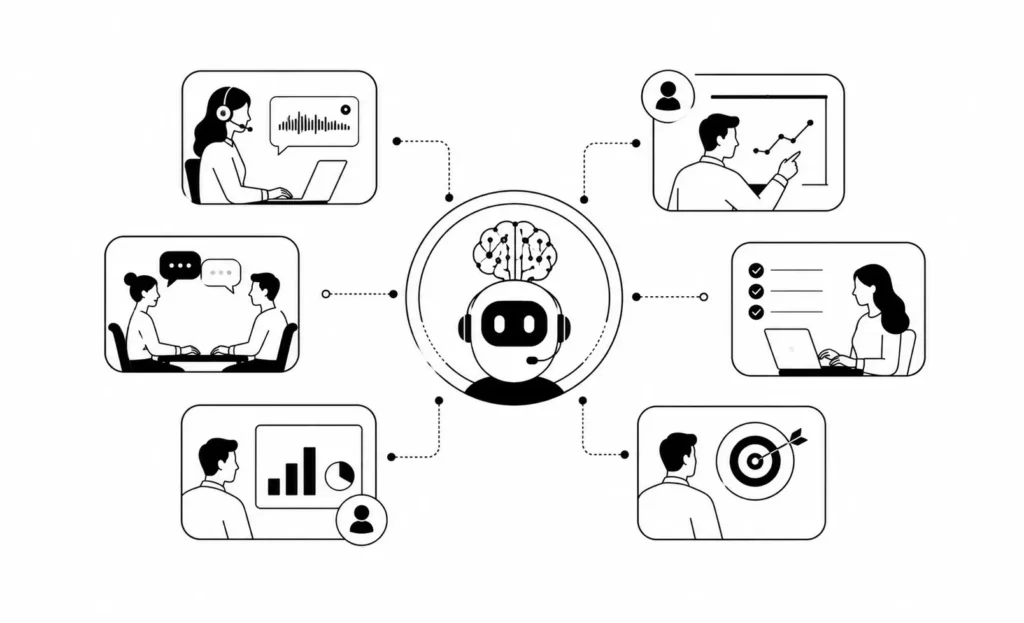
Training teams today is harder than ever and AI coaching solves that. Customers expect faster responses, sales cycles are more complex, and leaders juggle distributed teams with shrinking attention spans. Traditional workshops aren’t enough — people forget up to 70% of what they learn within a week. The solution: AI coaching. Not a replacement for trainers or managers, but a force multiplier. AI lets teams practice real scenarios, build muscle memory, and get instant feedback, helping them perform at their best every day — not just after training. Across Sales, Customer Service, and Leadership, Coaching with AI tackles real challenges teams face every day. Here’s how. AI Coaching In Sales Sales is unpredictable. One missed discovery question, a weak objection response, or a poor pricing explanation can cost a deal. AI gives sales reps the opportunity to practice these moments repeatedly until they become instinctive. Objection Handling Sales reps frequently encounter tough objections — pricing pushback, timing concerns, or competitors. Many freeze or respond defensively under pressure.AI coaching enables realistic objection roleplays and provides targeted feedback, helping reps stay calm, persuasive, and confident. Discovery Calls Reps often miss critical qualification questions or fail to uncover customer needs, leading to lost opportunities. AI coaching guides reps through discovery conversations, ensuring they consistently uncover valuable insights, improving lead quality and deal potential. Prospecting & Cold Calls Initiating conversations with new prospects is challenging and often inconsistent. AI coaching provides scenario-based practice for openings, transitions, and rapport-building, helping reps start strong and build confidence before they even pick up the phone. Product Pitching Inconsistent or unclear presentations reduce effectiveness. AI coaching lets reps practice tailored product pitches, ensuring clarity, relevance, and alignment with customer needs. Negotiation & Pricing Negotiating value and pricing under pressure is a high-stakes skill. AI allows safe negotiation simulations, helping reps build confidence, navigate difficult conversations, and improve win rates. Renewal & Upsell Many reps miss upsell opportunities or fail to communicate value effectively. AI simulates renewal and upsell conversations, increasing retention and account growth. Product & Process Knowledge Testing A deep understanding of products and internal processes is essential. AI reinforces knowledge through scenario-based testing, ensuring reps communicate confidently and accurately. Tool-Specific Knowledge Testing CRM and sales tools are only as effective as the reps using them. AI simulates tool-based tasks to improve proficiency and reduce errors. Post-Training Reinforcement Without follow-up, workshop skills fade quickly. AI provides exercises and roleplays after formal training, reinforcing learning and helping knowledge stick. Customer Service AI Coaching Customer service teams deal with high-pressure interactions every day. Frustrated or angry customers, inconsistent processes, and complex tools can all reduce efficiency and satisfaction. AI helps reps practice empathy, consistency, and proactive support. Customer Complaint Handling Reps often struggle to manage frustrated or angry customers. AI simulates complaint scenarios, providing real-time feedback to improve empathy, de-escalation, and resolution skills. Support Ticket Resolution Following inconsistent processes can cause errors and delays. Coaching wth AI reinforces correct procedures, improving efficiency and service consistency. Proactive Customer Success CS teams often react rather than anticipate customer needs. AI tools offer simulations for proactive engagement, helping reps identify churn signals and increase customer satisfaction. Product & Process Knowledge Testing Reps need accurate knowledge at their fingertips. AI tests understanding through simulated interactions, ensuring correct guidance and reducing errors. Tool-Specific Knowledge Testing Ticketing platforms and internal dashboards can be complex. AI coaching provides hands-on practice, improving tool usage and accuracy. Post-Training Reinforcement Workshops alone are not enough. AI delivers follow-up exercises and roleplays to reinforce skills over time, keeping service quality high. AI Coaching In Leadership Leaders face uniquely challenging conversations — giving feedback, coaching employees, handling conflicts, and motivating teams. AI coaching gives them a safe environment to practice and refine their skills, improving outcomes for the entire organization. Performance Feedback Coaching Conversations Guiding employee performance and development requires skill. Coaching with AI enables realistic coaching roleplays, fostering team growth and engagement. Difficult Conversations Sensitive issues often get avoided. AI simulations allow leaders to practice conflict resolution, improving outcomes while reducing stress. Delegation & Empowerment Poor delegation creates bottlenecks and lowers accountability. coaching with AI guides leaders in assigning tasks and empowering teams, boosting overall performance. Team Conflict Mediation Leaders aren’t trained therapists but must resolve interpersonal disputes. AI simulates conflict scenarios, helping leaders mediate effectively and maintain cohesion. Recognition & Motivation Many leaders under-recognize achievements or fail to motivate. AI provides practice in recognition conversations, enhancing engagement and morale. Post-Training Reinforcement Leadership skills degrade without consistent practice. AI delivers exercises, reflection prompts, and reinforcement to ensure long-term development. Why AI Coaching Matters Now Teams don’t just need more training. They need continuous practice, personalized reinforcement, and actionable feedback that adapts to real-world challenges. AI coaching provides: Safe, realistic practice for high-pressure situations Instant feedback and improvement guidance Reinforcement that turns learning into habit Scalable training across entire organizations When teams practice more, they perform better — faster ramp times, higher productivity, improved customer experiences, and stronger leadership. How Insight7 Makes AI Coaching Actionable At Insight7, we make AI coaching practical and measurable. Our platform: Evaluates calls and interactions across Sales, Customer Service, and Leadership Identifies skill gaps and provides targeted improvement suggestions Delivers scenario-based simulations and roleplays Reinforces skills continuously to ensure long-term retention Insight7 helps you move from theory to real-world impact, helping organizations train smarter, retain knowledge longer, and improve performance faster.
Insight7 Becomes Official Zoom Partner to Deliver Instant AI Powered Call Analytics
GAINESVILLE, FLA., October 27, 2025 – Insight7, an AI powered conversation intelligence platform, announced it has achieved official Zoom Partner status, marking an elevated relationship that expands the reach and capabilities of its call analytics solution for Zoom users worldwide. This strategic partnership enables organizations using Zoom to seamlessly access Insight7’s advanced call analytics platform, which transforms customer conversations into instant scorecards, targeted coaching insights, and actionable business intelligence, without manual review effort. “Becoming an official Zoom partner represents a significant milestone in our mission to help teams extract maximum value from every customer conversation,” said Odun Odubanjo, CEO and Co-founder at Insight7. “Zoom users can now leverage our AI powered platform to scale quality assurance, accelerate coaching, and drive measurable improvements in customer satisfaction and revenue, all while maintaining the seamless workflows they rely on.” Automated Intelligence for Customer Teams Insight7 automates call analytics for rep performance evaluation, customer insights, and team effectiveness at scale, scoring them for quality, surfacing coaching opportunities, and highlighting patterns tied to revenue, satisfaction, and retention. Dashboards make it easy to track team performance, spot compliance risks early, and pinpoint where training is needed. With Insight7, Zoom users can: Improve Quality Assurance: Replace random QA samples with full call evaluation. Automatically flag risky behavior, silence, sentiment shifts, and resolution gaps. Improve Coaching & Training: Detect underperformance early and deliver targeted coaching based on real interactions. Scale Sales & CX: See what top performers do differently and replicate it across the team. Track Trends Over Time: Use dashboards to monitor performance, sentiment, silence, and compliance signals, at a glance. Insight7 integrates with Zoom, Google Meet, and other major platforms, so insights flow seamlessly into existing workflows. Insight7’s partnership status with Zoom is now active, and organizations can learn more by visiting https://partner.zoom.com/solutions/insight7/. ABOUT INSIGHT7 Insight7 is the developer of an AI-powered conversation intelligence platform built for customer-facing teams. Designed to support quality assurance, performance evaluation, coaching, and compliance use cases, Insight7 helps organizations turn thousands of customer calls into actionable insights. Built for everyday business users, it empowers cross functional teams to evaluate conversations at scale, drive continuous improvement, and make faster, smarter decisions. Founded by former Shopify product leader Odun Odubanjo, Insight7 is based in Gainesville, Florida, with a globally distributed team. Learn more at www.insight7.io.
Insight7 Is Now HIPAA Compliant!
We’re excited to announce a major milestone – Insight7 is now officially HIPAA compliant! This certification reinforces our commitment to data privacy and security, especially for healthcare teams who rely on sensitive conversations to deliver better care. Now, you can access fast, high quality insights without ever second guessing the safety of your data. What Does HIPAA Compliance Mean for You? Being HIPAA compliant means that Insight7 meets the stringent data protection and privacy standards required by the Health Insurance Portability and Accountability Act (HIPAA). In plain terms: ✅ Your data stays secure ✅ Patient confidentiality is respected ✅ You can confidently evaluate conversations with Insight7 Why It Matters for Healthcare Teams Whether you’re working in patient experience, clinical research, or healthcare service delivery, your insights often come from sensitive data. But until now, finding a tool that balanced speed, usability, and HIPAA level data privacy has been hard. With Insight7, you don’t have to choose between security and performance. You get both. Unlock Actionable Healthcare Insights Securely Our platform is built to support healthcare professionals and research teams who need to make sense of qualitative data quickly. From patient interviews to provider feedback, Insight7 helps you turn conversations into insights safely. Need to speed up compliance checks or uncover trends in patient feedback? Now, you can do that with confidence. Secure by Design, Ready for Impact HIPAA compliance is just one part of our broader commitment to security and trust. Insight7 is designed for teams in regulated environments that require a robust layer of protection, without slowing down your workflow. We’re ready for your toughest challenges. Are you?
From Raw Data to Insights: How to Integrate AI into Your Research Workflows
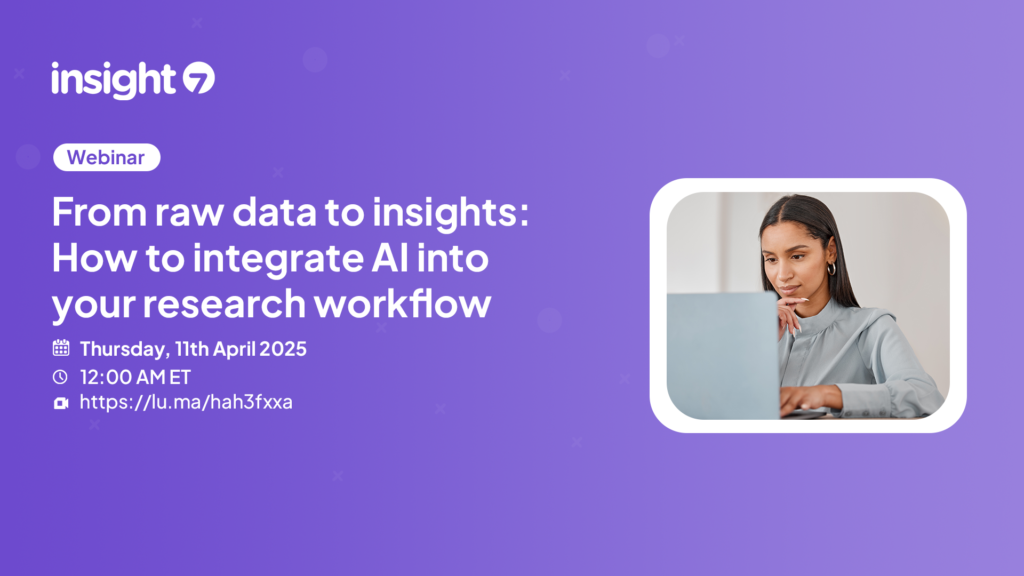
The research and insights landscape is evolving, and AI is transforming the way teams analyze data, extract insights, and drive decision-making. But with so many tools available, how can research and customer experience teams streamline their workflow without adding complexity? We’re excited to invite you to our upcoming webinar that tackles the most pressing challenges facing customer experience and research professionals. The Growing Challenge of Data Complexity Research teams are facing unprecedented challenges: Overwhelming volumes of unstructured data Time-consuming analysis processes Difficulty extracting actionable insights Inconsistent research methodologies Our upcoming webinar isn’t just another product demonstration. It’s a deep dive into how AI is revolutionizing research workflows. You’ll learn how to eliminate tool fatigue, analyze multiple file formats effortlessly, and ensure consistency in your research findings. What You’ll Gain Practical strategies for integrating AI into your research process Insights on reducing manual effort while improving accuracy How to transform raw data into compelling, actionable insights A firsthand look at how AI-driven tools deliver faster, more reliable results Why This Matters We’ve spent months listening to research teams across industries. Their challenges are real, and the solutions are closer than you might think. This webinar is our commitment to helping researchers work smarter, not harder. Date: 11th April, 2025 Time: 12:00 – 1:00 PM New York Eastern Time Duration: 60 minutes Platform: Google Meet Don’t miss this opportunity to stay ahead in research innovation. Register Now!
