


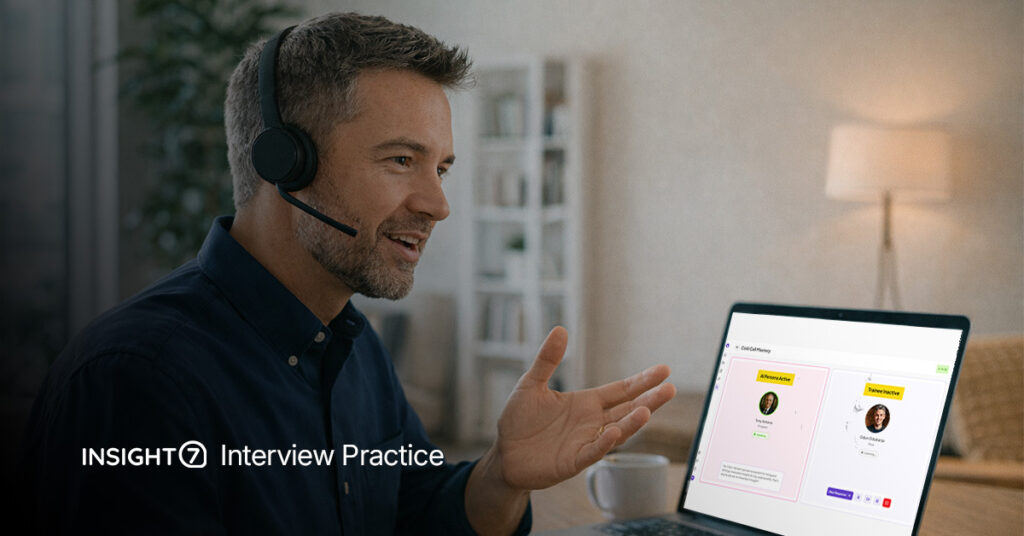
Microsoft Operations interviews test whether you improve processes with a growth mindset, meaning you treat operational problems as learning opportunities rather than problems to fix once and close, you think at scale because Microsoft's operations span global cloud infrastructure, supply chains, and service delivery, and you take genuine personal ownership of execution outcomes rather than managing others toward them. Interviewers are specifically watching for fixed-mindset signals: claiming credit for improvements without naming what you learned, and process stories that end with the fix without naming what the data revealed about the system.
Start your free Microsoft Operations practice session.
What interviewers actually evaluate
Growth Mindset, Process Improvement & Scale Execution
Microsoft Operations interviews test whether your process thinking reflects the Growth Mindset Culture that defines how Microsoft approaches improvement. Interviewers evaluate whether you approach operational failures with curiosity about the system rather than urgency to assign blame, whether you think at the scale of a global technology company, and whether your execution ownership is genuine rather than delegated to a team you managed.
Growth mindset, Process improvement, Scale thinking, Execution ownership, Learn from failure, Quantified impact
What gets scored in every session
Specific, sentence-level feedback.
| Dimension | What it measures | How to answer |
|---|---|---|
| Growth Mindset Signal | Does your answer demonstrate curiosity about the system and learning from the improvement process? We flag answers where operational expertise is positioned as certainty rather than as ongoing learning. | Learning language, system curiosity demonstrated, failure acknowledged |
| Process Clarity | Can you describe the operational process clearly: inputs, steps, outputs, failure points? We score the technical clarity of your process description. | Process stages named, failure mode awareness, scale context |
| Execution Ownership | Did you design and implement the change, or direct others to? We detect delegation-as-leadership stories and probe whether you were the actor or the executive sponsor. | Personal action verbs, decision ownership, specific implementation steps |
| Efficiency Impact | What improved and by how much? We flag stories without a quantified before/after: cost, throughput, cycle time, or error rate. | Percentage improvement, time or cost delta, scale of impact |
How a session works
Step 1: Get your Microsoft Operations question
You are assigned questions based on where candidates for this role typically struggle most, which for Microsoft Operations means growth mindset demonstration alongside quantified efficiency impact and personal execution ownership rather than delegation-framing. Each session starts fresh with a new question targeting a different evaluation dimension.
Step 2: Answer by voice
Speak your answer as you would in a real interview. The AI listens for STAR structure and evaluation signal alignment, specifically whether your process description is technically clear, your improvement is quantified, and your Result includes both a before/after metric and an explicit learning about the system.
Step 3: Get scored dimension by dimension
Instant scores across all four rubric dimensions. Each gets a score, a flagged weakness, and a specific sentence-level fix. Microsoft Operations interviewers probe for process stories where the candidate managed the improvement rather than executing it personally, and for results that report the improvement without naming what the data revealed about the underlying system.
Step 4: Re-answer and track improvement
Revise based on feedback and answer again. See the before/after score change across Growth Mindset Signal, Process Clarity, Execution Ownership, and Efficiency Impact. Your weakness profile updates across sessions so if you consistently underdemonstrate growth mindset through system curiosity and learning language, that becomes the focus of your next question assignment.
Frequently Asked Questions
What are the 5 C's of interviewing for Microsoft Operations?
In Microsoft Operations interview contexts, the 5 C's map to: Curiosity (genuine investigation of the system failure before proposing a fix), Collaboration (how you worked with engineering, product, and cross-functional teams to understand and redesign the process), Change (the specific actions you personally took to implement the operational improvement), Consequence (the quantified before/after outcome in cost, throughput, or quality terms), and Change-Again (what the improvement revealed about the system that you would address next). For Microsoft Operations interviews, Curiosity and the second Change are most often underdeveloped.
What are operations interview questions for Microsoft?
Microsoft Operations interviews are behaviorally structured and probe Growth Mindset alongside operations competencies. Common questions include:
- "Tell me about a process failure you investigated and what you discovered about the underlying system"
- "Describe an operational improvement you implemented at scale and what surprised you about the results"
- "Walk me through a time you had to change your approach to an operational problem because the data told you something you had not expected"
- "Tell me about an operational change that worked but revealed a bigger problem you had not seen before"
Each question tests whether your operations thinking is curious, system-oriented, and learning-driven rather than fix-and-close.
What are the 3 C's of a Microsoft Operations interview?
The 3 C's in Microsoft Operations interview contexts cover: Competency (the specific operations skill being evaluated, such as process design or scale execution), Culture Fit (whether your operations approach reflects Microsoft's Growth Mindset: curiosity about systems, learning from outcomes, and scale thinking), and Contribution (the specific actions you personally took and the quantified before/after operational outcome). Microsoft Operations interviewers probe most consistently for Culture Fit, since many experienced operations candidates present with fix-it certainty framing that signals a fixed rather than growth orientation.
What are the 5 hardest interview questions for Microsoft Operations?
The most challenging Microsoft Operations questions require you to demonstrate growth mindset and operational rigor simultaneously. They typically include: a process improvement that produced the expected result but revealed a systemic problem you had not anticipated; a situation where the data told you the problem was different from what everyone assumed; a scale challenge where your solution for a small system failed when applied to the full operation; an operational failure where you were the primary contributor and what you learned; and a continuous improvement story where the second improvement was more valuable than the first because of what the first revealed.
What are the most common failure modes in Microsoft Operations interviews?
The most consistent failures are:
- Process improvement stories that describe a problem and a fix without naming what the investigation revealed about the underlying system
- Execution ownership framed as managing a team toward the improvement rather than personally designing and implementing the change
- Efficiency results reported without scale context: a 20% improvement that affected 100 transactions is different from one that affected 100 million
- No learning named: ending with the before/after metric without stating what the improvement process revealed about the system
- Fixed mindset signals: defending the original process design as correct in concept and attributing the failure to execution, external factors, or team performance rather than system design
Also practice
All eight Microsoft role interview practice pages.
- Sales
- Customer Service
- Product Management
- Marketing
- Finance
- People & HR
- Leadership
- Legal & Compliance
One full session free. No account required. Real, specific feedback.








