How much can a sales leader really learn from a few reviewed calls?
The conversations that shape performance are often buried in hours of meetings, follow-ups, and deal discussions. By the time a pattern becomes obvious, the team may have already repeated the same mistake several times.
Sales conversation intelligence software is built to solve that problem by bringing those patterns to the surface earlier, before they have a bigger impact on performance.
In this guide, we’ll compare the seven best platforms to help you choose the one that best supports your sales performance goals.
These are the seven best sales conversation intelligence software platforms for sales teams in 2026:
Every sales conversation intelligence platform records and analyzes conversations. What separates one platform from another is what happens after those conversations are analyzed.
The most valuable platforms may use AI-powered insights to help sales leaders identify patterns that influence performance. But their real advantage lies in helping leaders understand how to use those patterns to improve coaching and execute their sales strategies more effectively.
So, when evaluating sales conversation intelligence software, look beyond AI-generated summaries or call recordings.
Consider whether the platform helps managers reinforce winning behaviors, measure coaching effectiveness, and improve sales performance over time. Those capabilities have a much greater impact on long-term team success than conversation analysis alone.
Now that you know what separates great sales conversation intelligence software from the rest, it’s time to compare your options.
The seven platforms below represent different approaches to conversation intelligence solutions.
Software | Best For | Overview | Key Features | Pricing |
Insight7 | End-to-end sales performance improvement | Connects conversation intelligence with coaching and continuous performance improvement. |
|
|
Gong | Revenue intelligence | Connects customer conversations with pipeline performance and revenue execution. |
| No public pricing available |
Clari Copilot | Forecasting and deal inspection | Combines conversation insights with forecasting and pipeline management. |
| No public pricing available |
Avoma | Meeting intelligence | Uses AI meeting intelligence to organize conversations and support sales teams. |
|
|
Attention | Real-time sales assistance | Provides live sales guidance and automates post-meeting administrative work. |
| No public pricing available |
Salesloft Conversations | Sales engagement workflows | Integrates conversation intelligence into a broader sales engagement platform. |
| No public pricing available |
Fireflies.ai | AI meeting transcription | Automates meeting transcription and makes conversations searchable for future reference. |
|
|
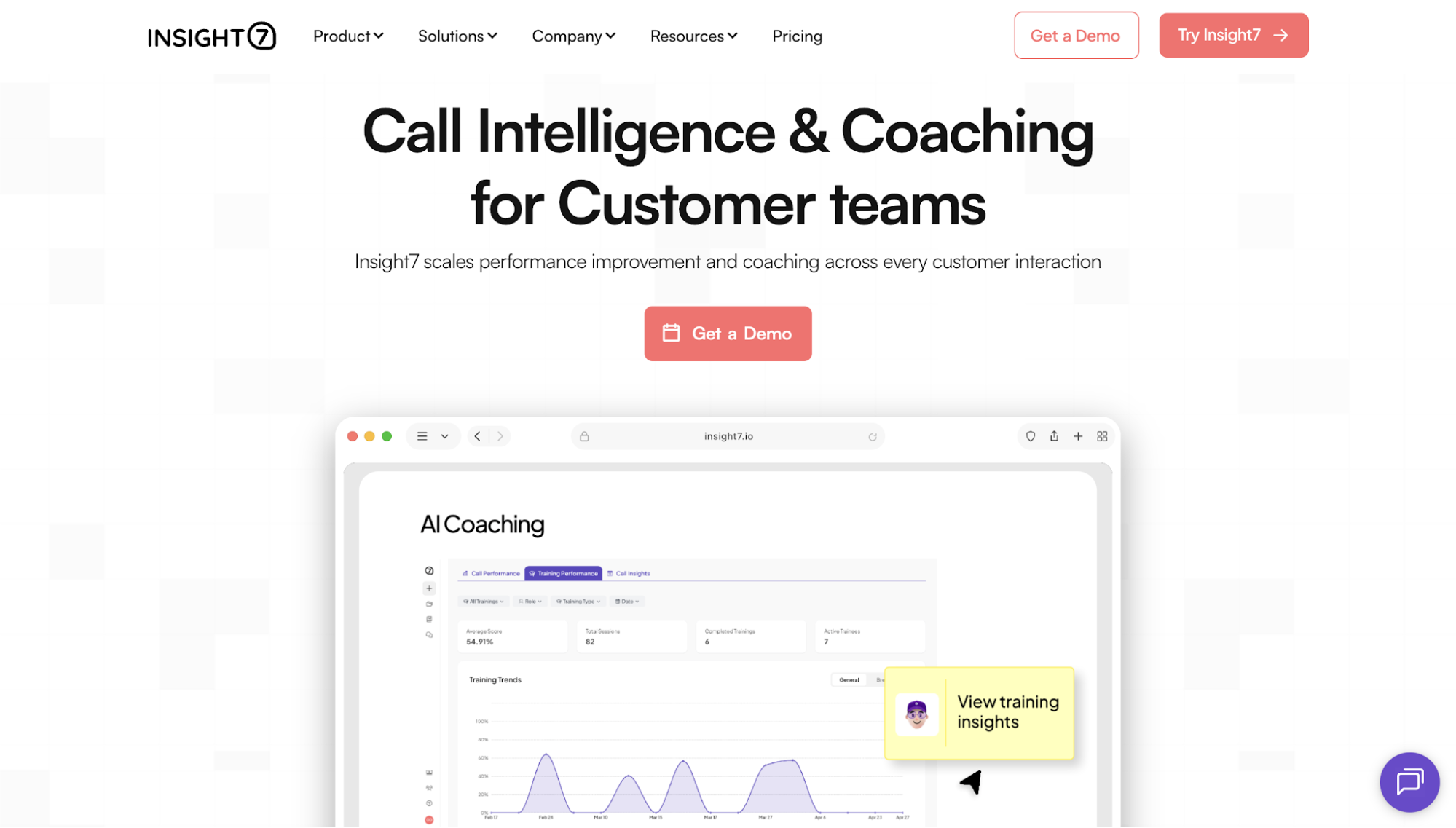
Insight7 is an AI call intelligence and coaching platform built for customer-facing teams that want to improve performance using real conversations.
It combines conversation intelligence with sales coaching, quality management, and AI-powered practice so sales leaders can evaluate conversations consistently and help reps improve over time.
Unlike platforms that stop at conversation analysis, Insight7 connects conversation insights to ongoing coaching and performance development.
Managers can identify skill gaps, deliver targeted feedback, reinforce successful behaviors, and coach reps more consistently using the same platform.
This end-to-end approach makes it well-suited for organizations looking to scale coaching through a repeatable process rather than simply reviewing sales calls.
Existing Insight7 users have been especially impressed by its ability to scale conversation analysis. As Elise Dietrich, CPO at TripleTen, puts it, the experience has been “amazing,” with her team now able to evaluate more than 6,000 calls in a single month.
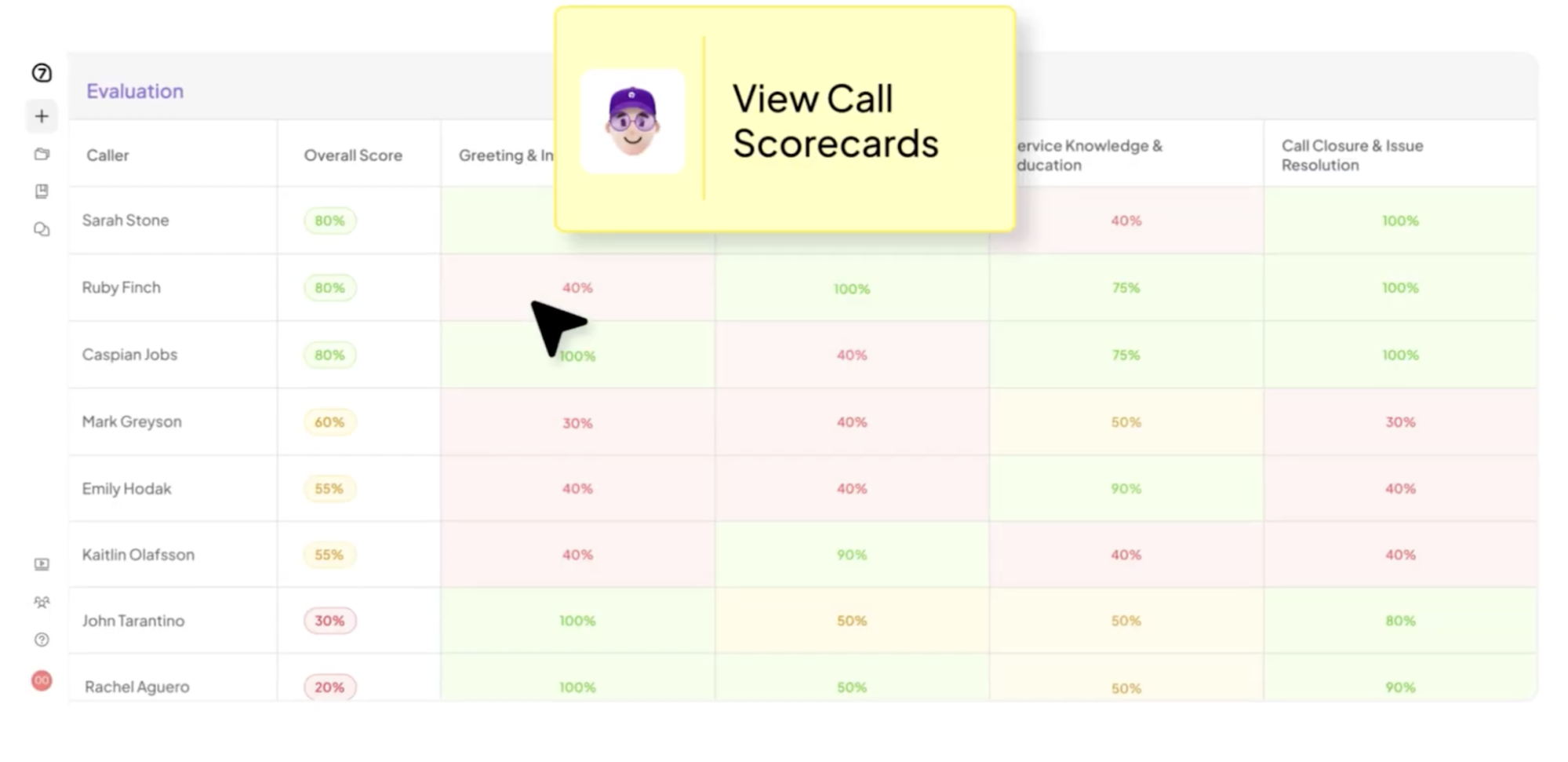
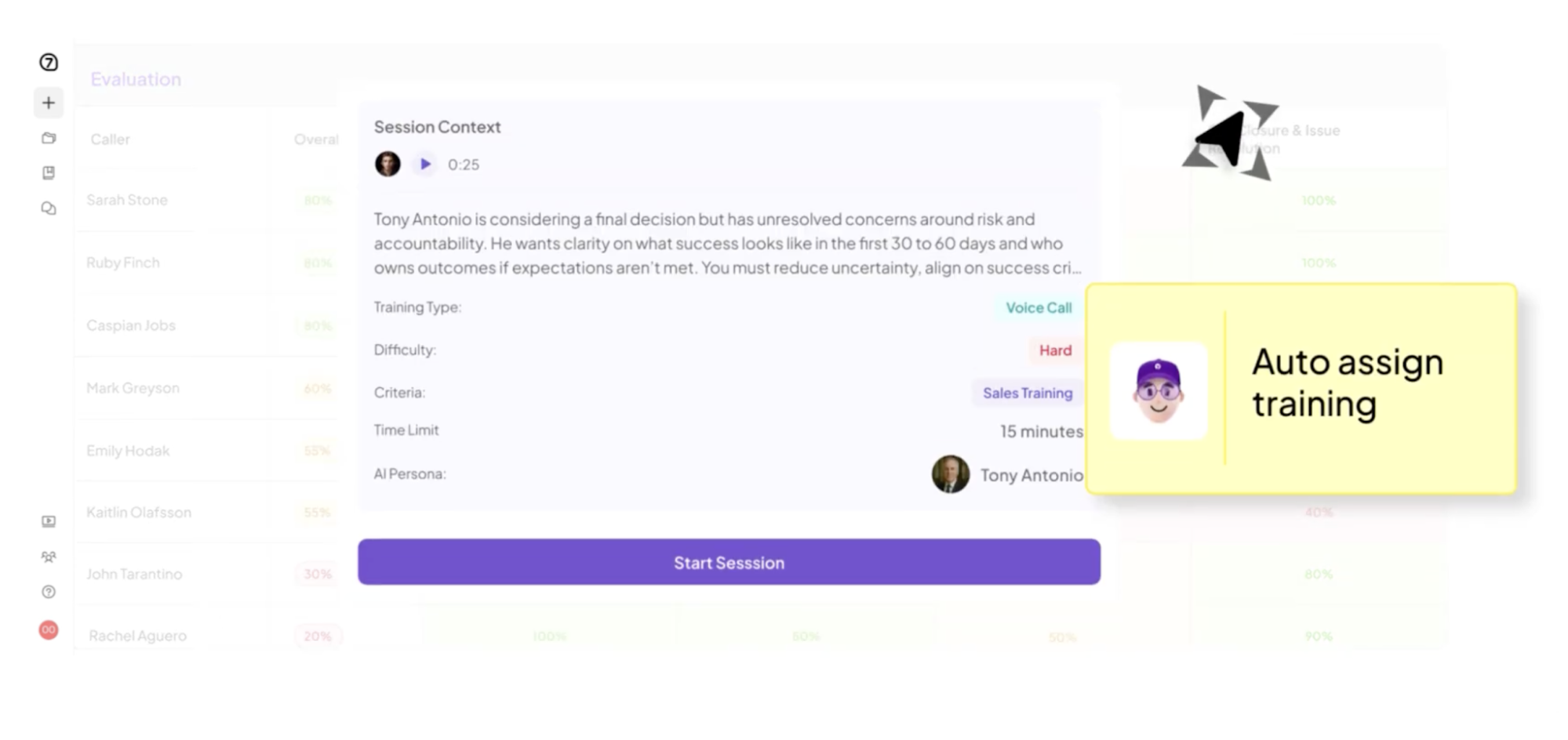
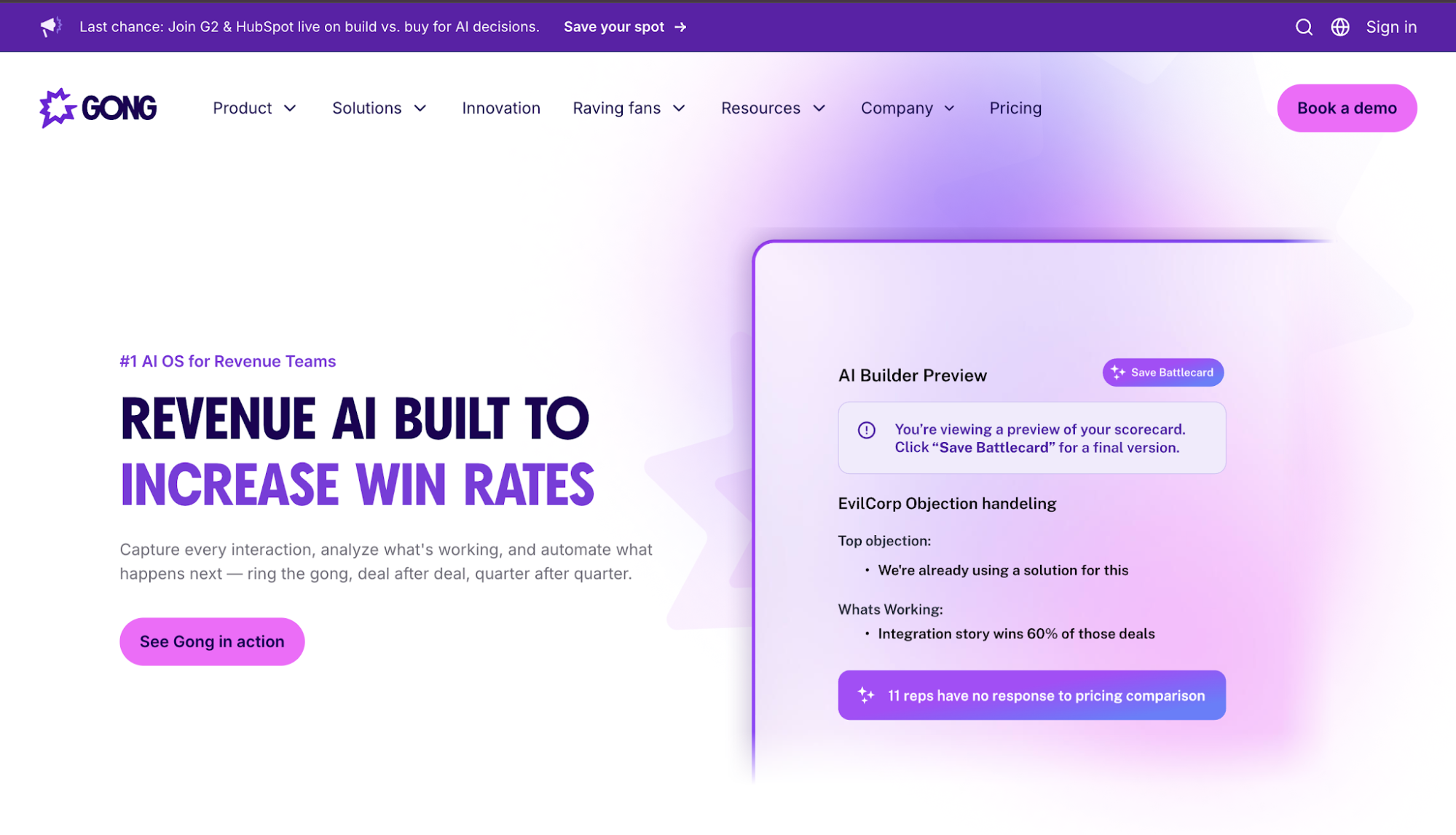
Image source: gong.io
Gong is a revenue intelligence platform designed for sales organizations that want better visibility into deals, pipeline health, and team performance.
It captures customer interactions from calls, emails, and meetings, then analyzes those conversations alongside CRM activity to support revenue teams throughout the sales cycle.
Rather than focusing only on individual conversations, Gong connects conversation intelligence with broader revenue execution. This gives sales leaders a clearer picture of how buyer interactions influence each deal stage, forecast accuracy, and overall sales performance.
Gong does not disclose its pricing publicly.
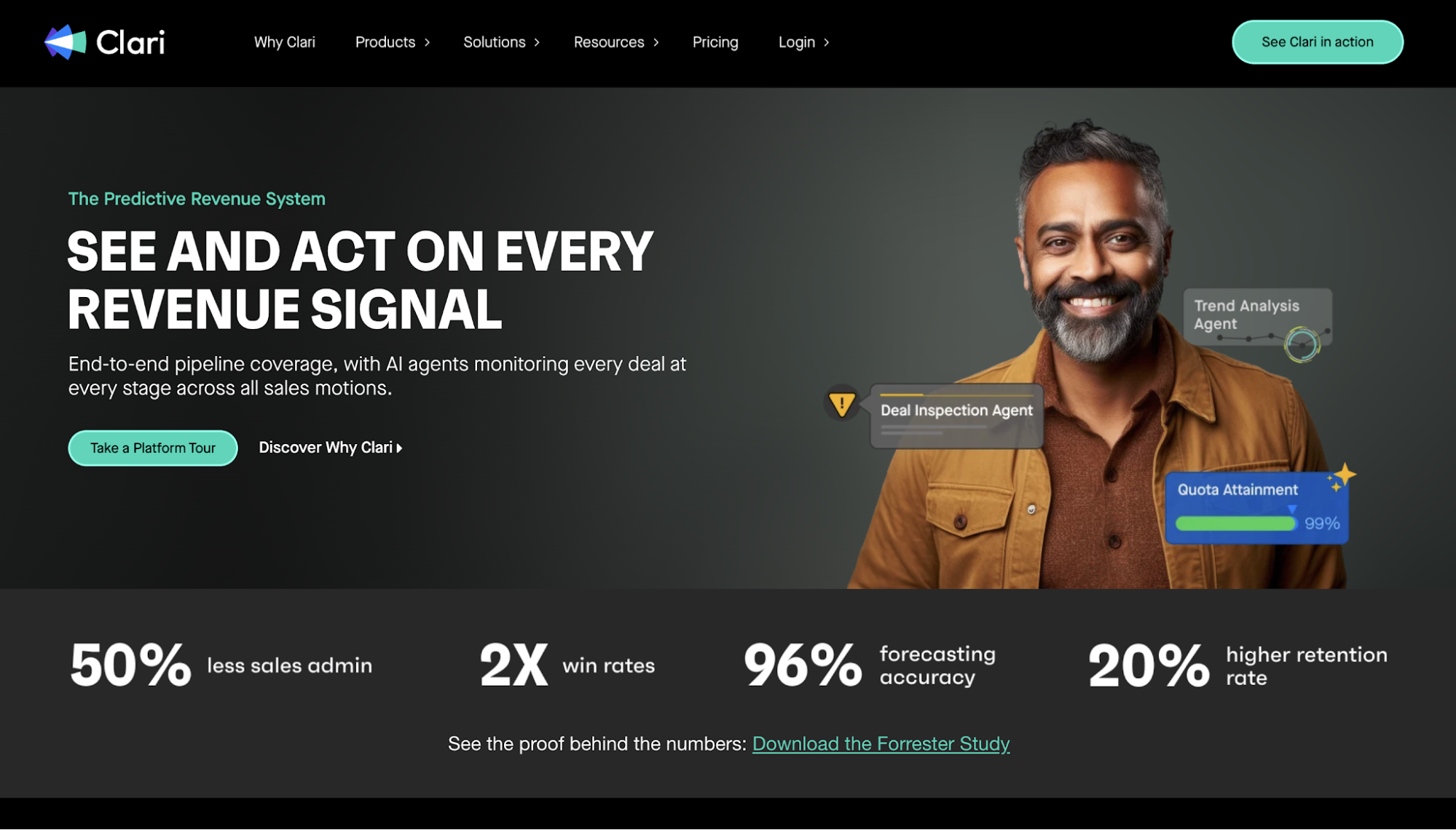
Image source: clari.com
Clari Copilot is part of Clari’s Revenue Orchestration Platform, which helps revenue teams improve forecasting accuracy and pipeline visibility.
It captures customer conversations and combines those insights with revenue data to give organizations a more complete understanding of deal health.
Its approach centers on helping revenue leaders evaluate opportunities throughout the sales cycle. By connecting conversation signals with forecasting workflows, Clari Copilot supports more informed pipeline reviews and revenue planning.
Clari does not disclose its pricing publicly.
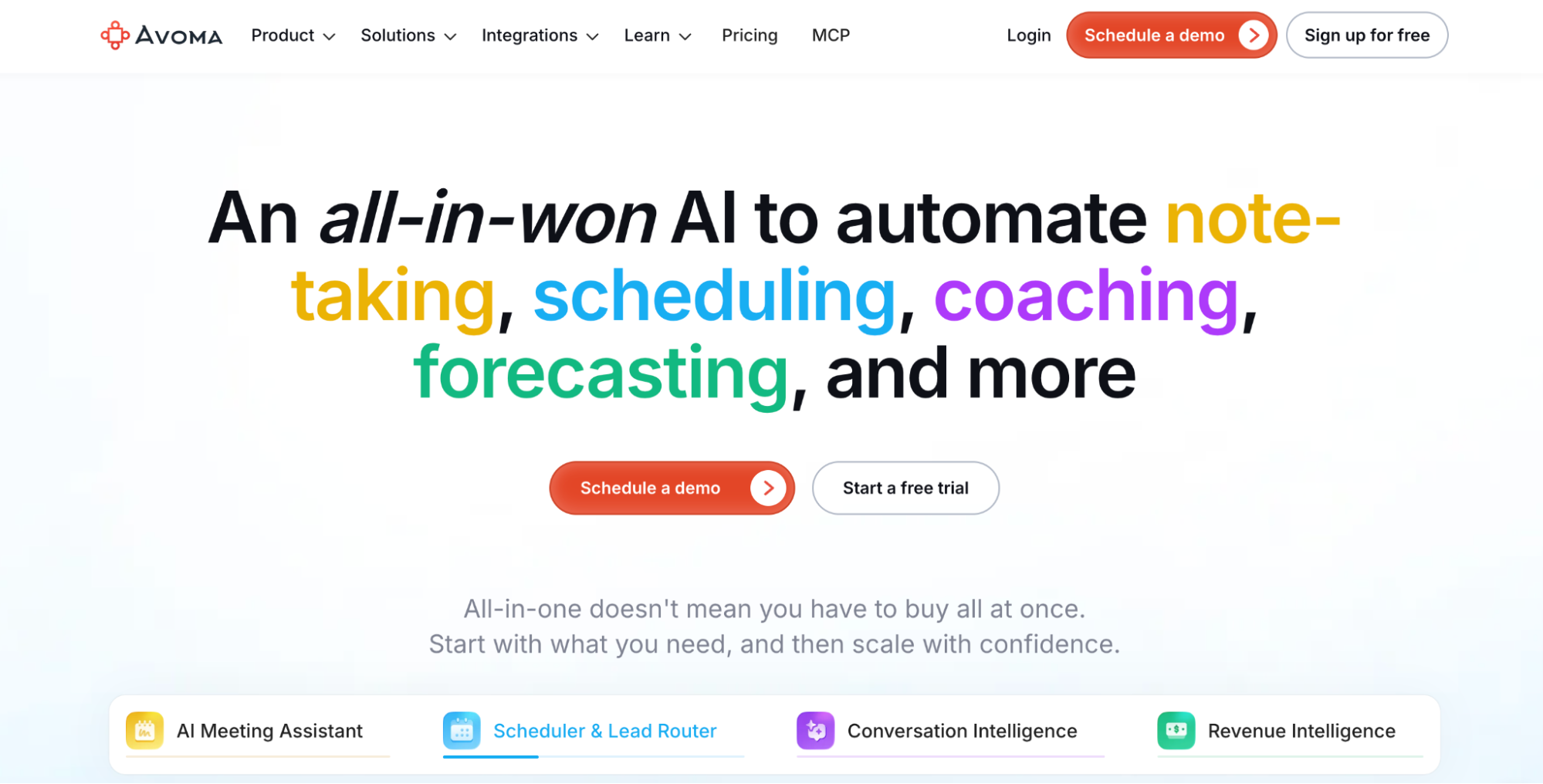
Image source: avoma.com
Avoma is a meeting intelligence platform built for customer-facing teams that spend significant time in virtual meetings. It combines AI-powered note-taking, conversation intelligence, and meeting management to help teams capture important information without relying on manual notes.
Its meeting-first approach makes conversations easier to organize and review. Sales leaders can revisit discussions, identify recurring topics, and use customer conversations to support coaching, onboarding, and sales execution.
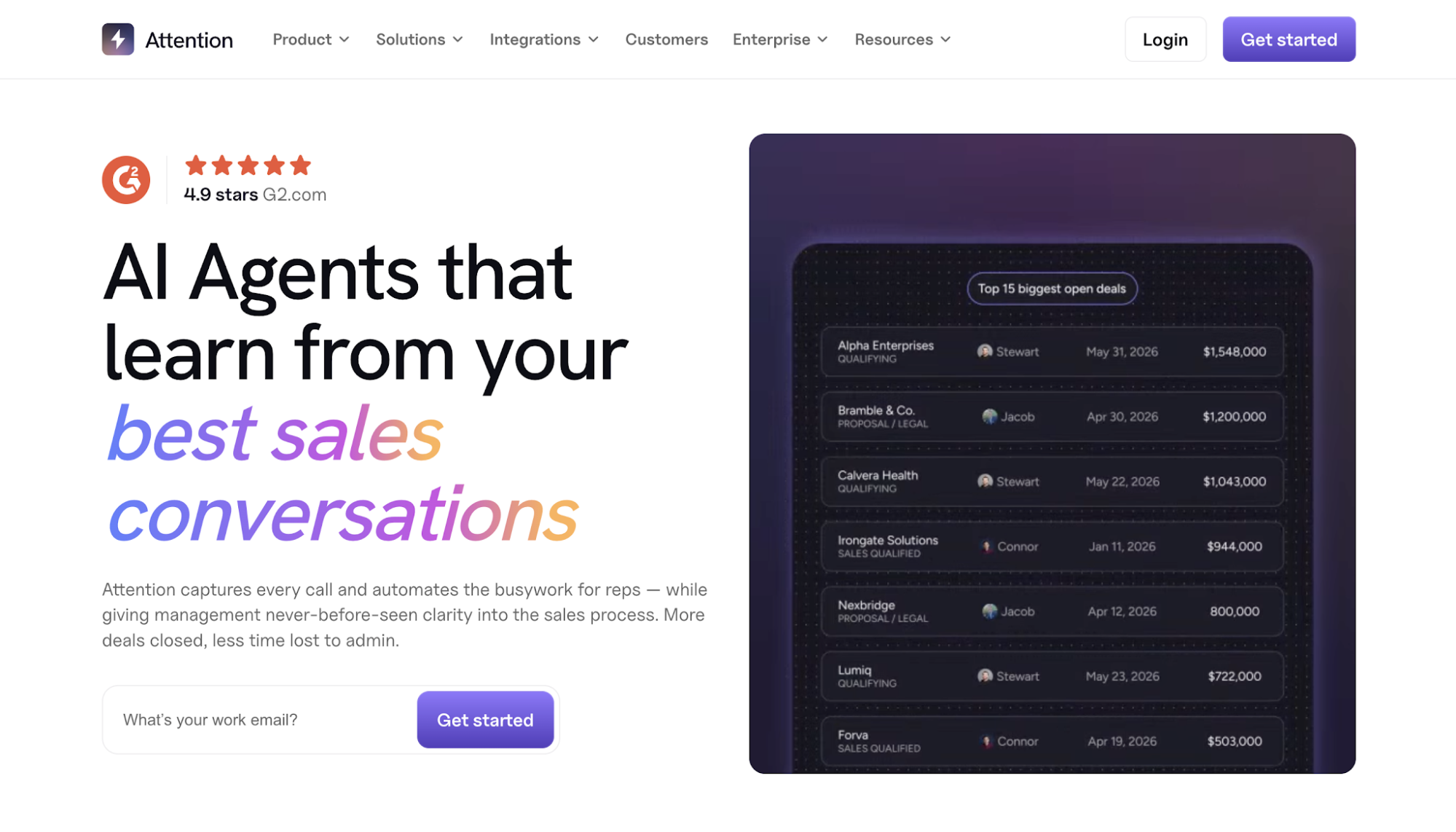
Image source: attention.com
Attention is an AI-powered sales platform designed to support sales representatives during and after customer conversations. It combines conversation intelligence with automation to reduce administrative work while helping teams maintain consistent sales execution.
The platform focuses on delivering guidance throughout live sales conversations and simplifying follow-up tasks afterward. It also provides reporting and coaching tools that help sales leaders understand team performance using real customer interactions.
Attention does not disclose its pricing publicly.
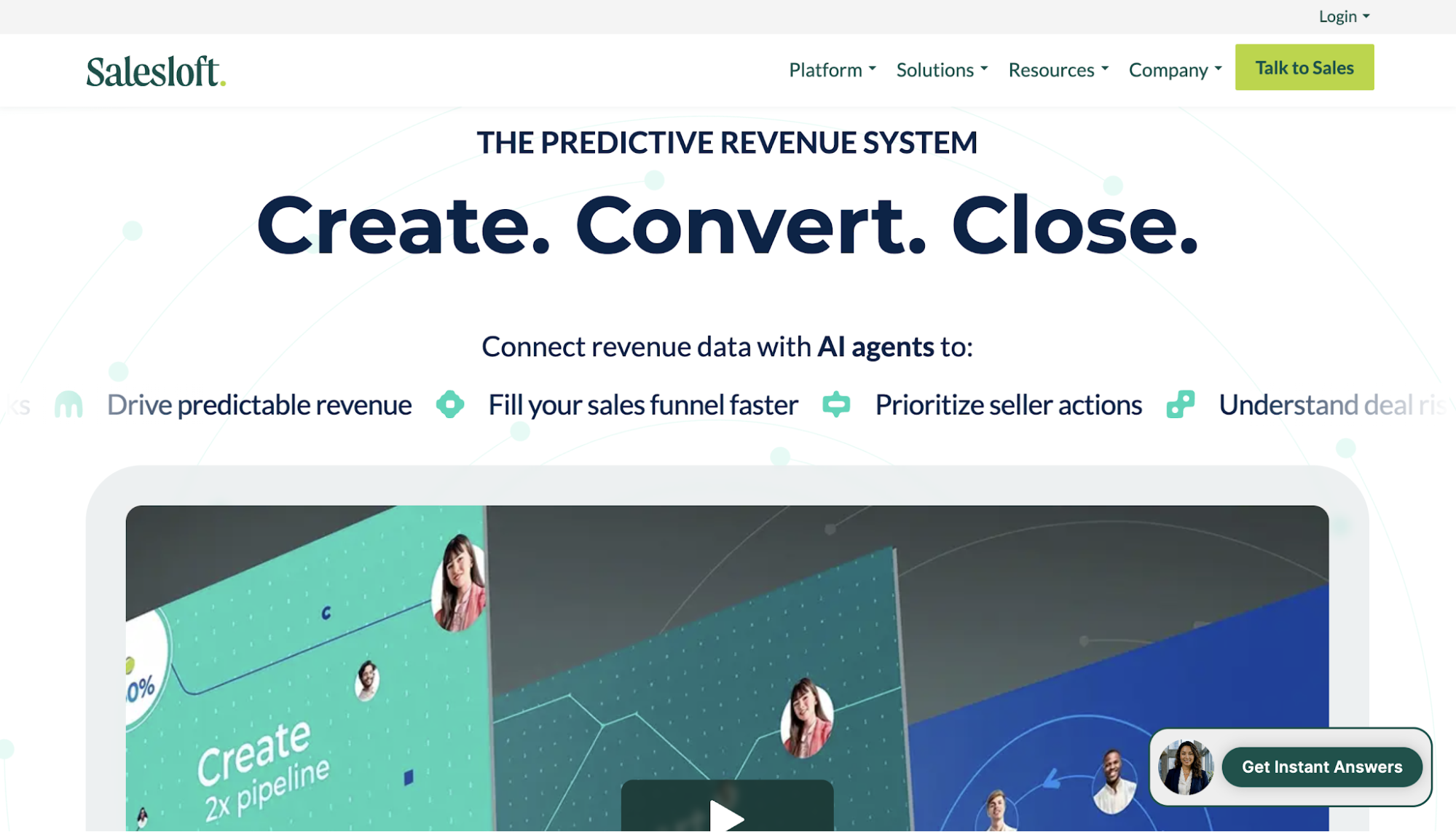
Image source: salesloft.com
Salesloft Conversations is part of the Salesloft Revenue Orchestration Platform, which helps revenue teams improve customer engagement throughout the sales process.
It captures sales conversations, analyzes customer interactions, and connects those insights with the broader workflows sales teams use every day. Its approach centers on making conversation intelligence part of the sales engagement process.
By combining conversation data with deal management, forecasting, and seller workflows, Salesloft gives leaders more context for coaching while helping teams maintain consistent customer engagement.
Salesloft does not disclose its pricing publicly.
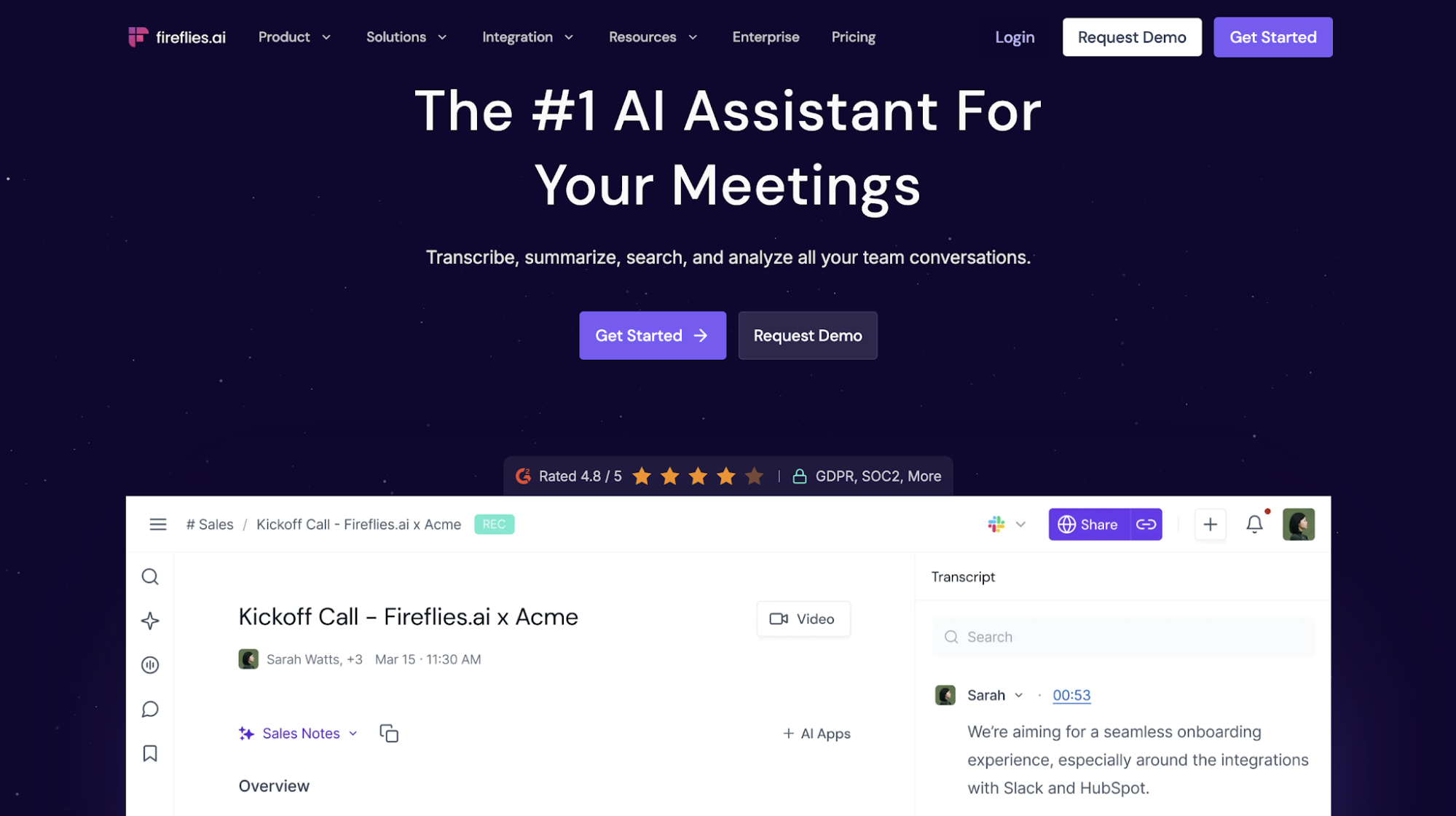
Image source: fireflies.ai
Fireflies.ai is an AI meeting assistant that automatically records, transcribes, and organizes customer meetings. It serves sales teams, customer success teams, and other customer-facing organizations that need accurate meeting documentation without relying on manual note-taking.
The platform makes conversations from past meetings easy to search and revisit. Teams can review transcripts, identify important discussion points, and share meeting knowledge with colleagues, making it easier to reference previous customer conversations throughout the entire sales process.
Now that you’ve seen the leading platforms, the next step is understanding what separates one solution from another. To help you do that, here are the key features to consider as you weigh your options.
Conversation intelligence starts with reliable transcription. If customer conversations are not captured accurately, every insight built on that data becomes less reliable.
The value becomes even clearer as call volume increases.
A 2026 ScienceDirect study examining a telecom operation handling more than 35,000 calls per day found that combining high-accuracy speech recognition with semantic analysis and automated evaluation helped streamline post-call assessment and strengthen quality assurance.
With that in mind, look for software like Insight7 that produces searchable transcripts and identifies recurring themes in customer feedback, questions, and competitor mentions. These capabilities make it easier to review conversations without listening to every recording.
Insight7 users have, in fact, highlighted this accuracy in transcripts in practice. As Research leader Juliane von Kameke said, her team has tested Insight7 with around 30 interviews and found its results to be “incredibly accurate.”
Consistent coaching depends on consistent evaluation. AI call scoring gives sales managers a standardized way to review conversations using the same criteria for every sales representative.
Without structured scoring, coaching often depends on anecdotal feedback or whichever calls happen to be reviewed. Choose software like Insight7 that supports customizable scorecards aligned with your sales methodology and performance expectations.
Managers can also see the specific conversation moments behind each Insight7 score and review or override AI ratings when needed. This gives them more context when deciding what a rep needs to work on instead of relying on a score alone.
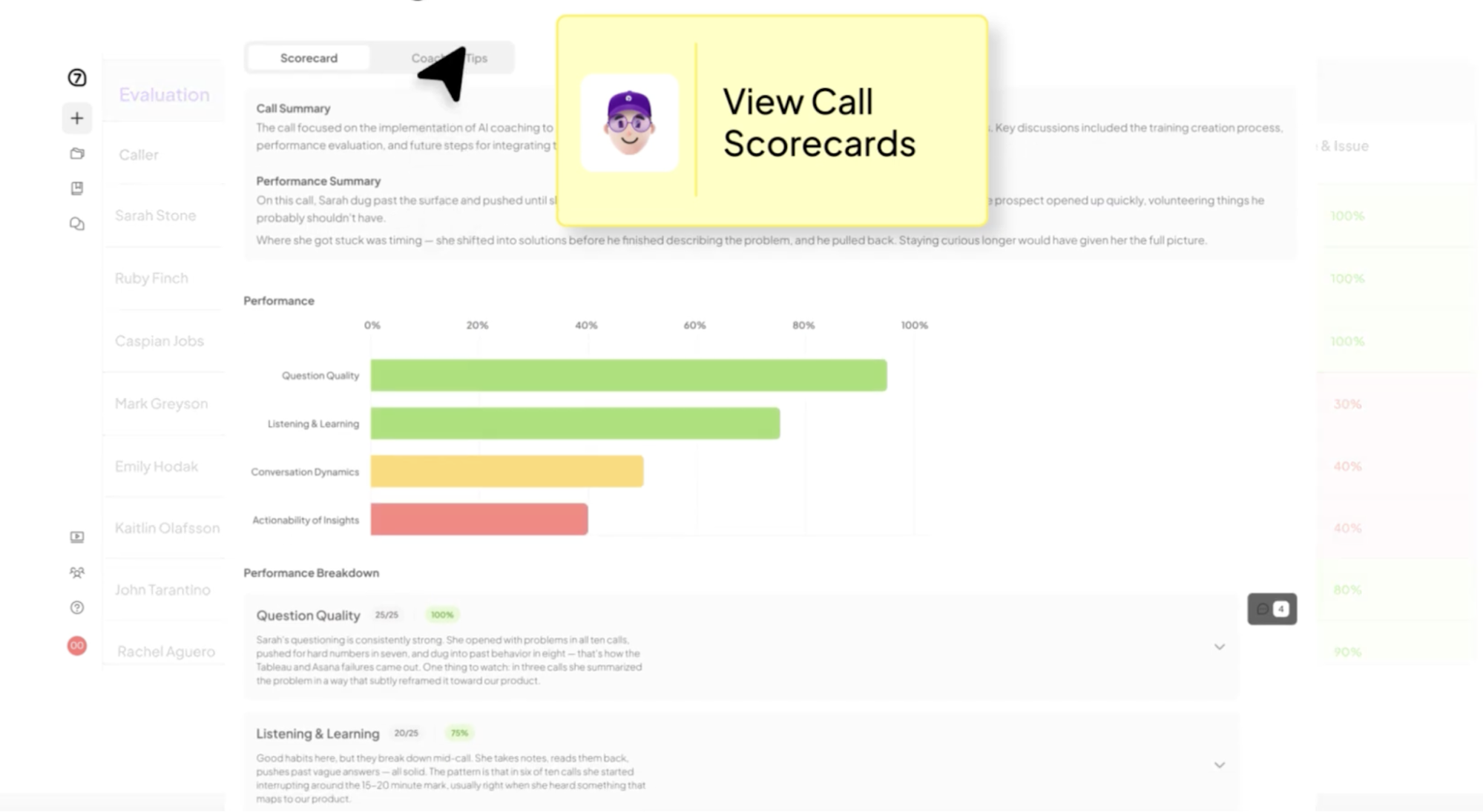
Conversation summaries tell you what happened during a sales call, but they don’t always explain how your team can improve. Coaching insights bridge that gap by identifying patterns that managers can turn into meaningful feedback instead of relying on assumptions or isolated examples.
Prioritize platforms that identify recurring skill gaps and highlight coaching opportunities for each rep. This gives managers a clearer starting point for one-on-one coaching sessions and helps conversation intelligence work more effectively within the coaching process.
Insight7 identifies individual skill gaps from scored calls and gives each rep personalized coaching based on their actual conversations.
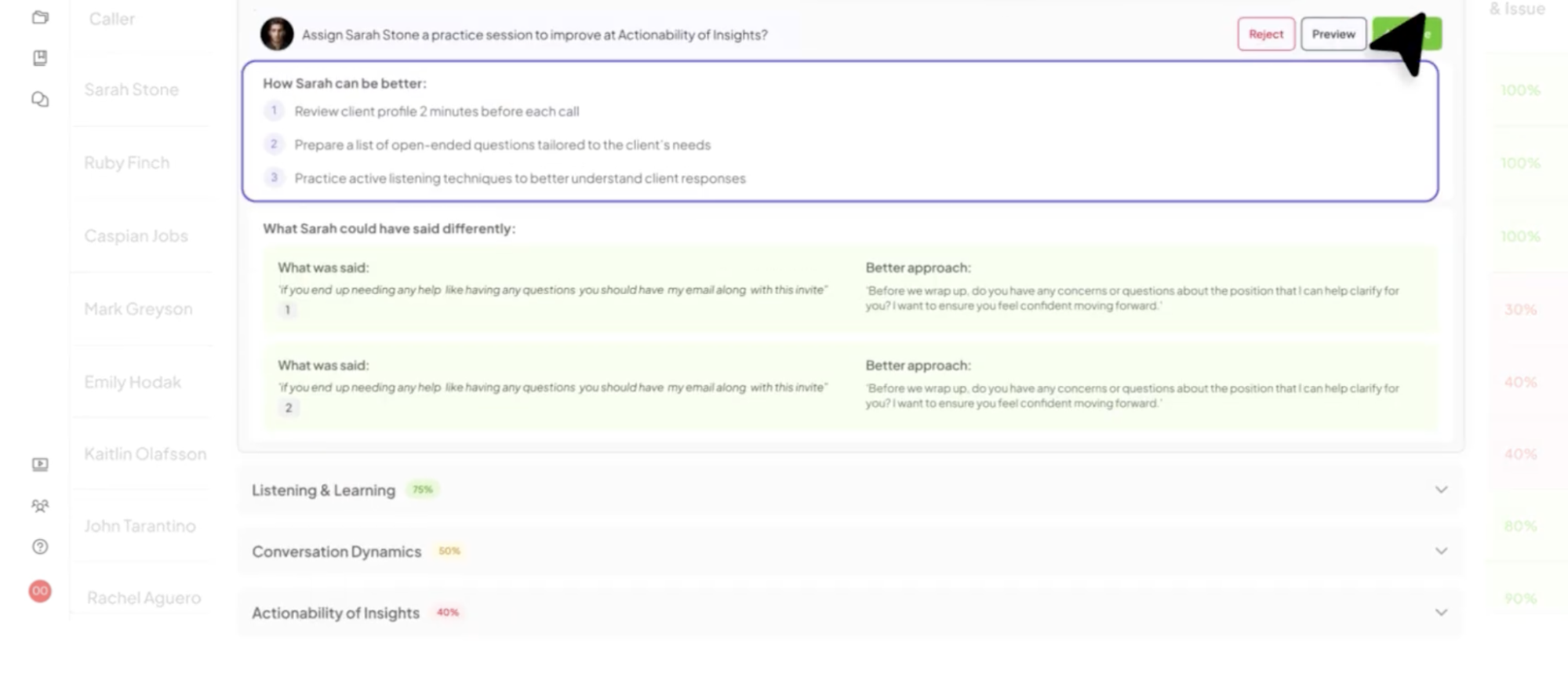
When a rep struggles with an area like objection handling or discovery, those findings can also be turned into targeted AI roleplay so they can practice the specific skill they need to improve.
Every sales conversation includes moments that can influence whether a deal moves forward. Customer objections, pricing discussions, buying signals, and competitor mentions often reveal what buyers need before they’re ready to make a decision.
The challenge is finding those moments without reviewing every conversation manually.
Look for software that automatically detects these key moments and makes them easy to review.
Insight7 surfaces buying signals, objections, and competitor mentions from sales conversations so leaders can see where these moments occur and how reps respond to them.
This helps sales leaders understand what successful reps do differently and where additional coaching can help improve future conversations.
A conversation can sound promising, but that doesn’t always mean a deal is progressing as expected. To understand the bigger picture, sales leaders also need to see how customer conversations relate to the sales pipeline, buyer engagement, and forecast accuracy.
Go for platforms that connect conversation data with revenue growth insights so you can evaluate both the quality of sales conversations and the health of your pipeline when making business decisions.
With Insight7, deal scores are informed by what customers actually say during conversations, including signals around decision-maker engagement and competitive risk.
It can also surface deals where CRM notes don’t match what was discussed on the call, giving leaders more evidence to work with during pipeline and forecast reviews.
Conversation insights become much more valuable when they’re available where your team already works. If reps have to manually transfer call notes or update customer records after every meeting, those extra tasks quickly add up and valuable information can be missed.
Focus on software that integrates with your CRM, meeting platform, dialer, and other sales tools. The right integrations should keep customer records updated automatically while making conversation insights easier for the entire team to use
Over time, every sales team builds a collection of conversations that show what success looks like. Whether it’s a discovery call, an objection handled well, or a negotiation that led to a closed deal, those conversations become valuable learning resources for the rest of the team.
Being able to quickly find real examples makes onboarding, coaching, and ongoing training much more effective.
Insight7 takes this further by using real call moments to identify performance patterns and build coaching scenarios around the situations reps encounter with customers.
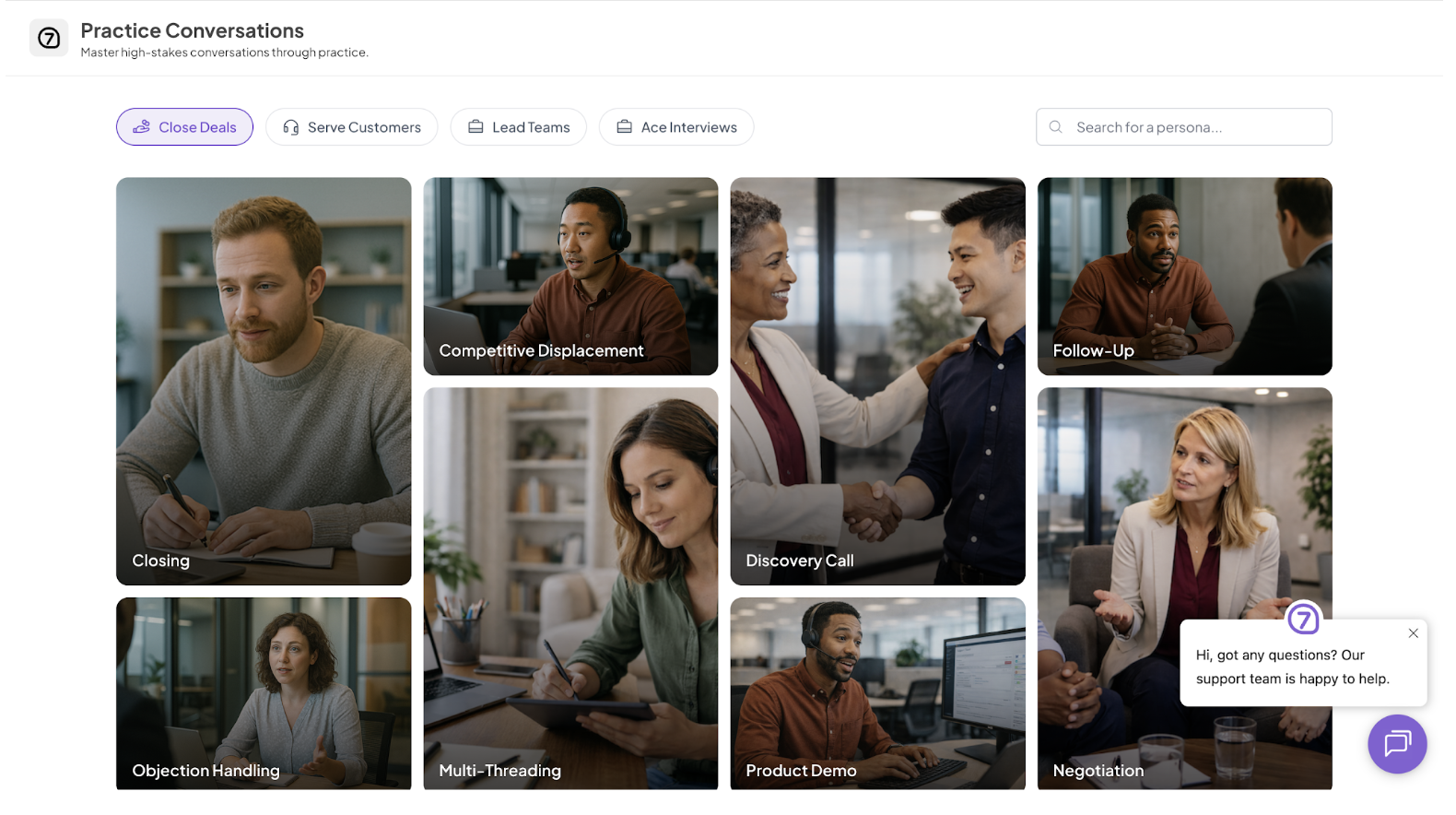
Instead of relying only on generic training examples, managers can use what is happening in actual sales conversations to guide what their teams practice next.
Coaching is an ongoing process, so it’s important to understand whether your efforts are leading to better results. Looking at individual calls provides useful feedback, but reporting helps reveal larger trends from multiple conversations that aren’t always obvious from a single call.
Pay attention to software that tracks rep performance, manager effectiveness, and team results over time. This makes it easier to measure coaching effectiveness, identify long-term improvement, and adjust your strategy when needed.
The needs of a small sales team are very different from those of a growing organization. As conversation volume increases and more people become involved in coaching, it’s important that your software continues to support the way your team works without becoming difficult to manage.
Look for platforms that can handle larger conversation volumes while giving leaders control over what different users can access. With Insight7, permissions are configurable so leaders can control whether reps see their own scores, coaching prompts, and performance trends.
This becomes more important as coaching expands to more reps and managers because teams can give people access to the performance information they need without treating every user the same.
Sales conversations often include customer information, financial details, or other confidential business discussions. Any platform analyzing those conversations needs safeguards that match the sensitivity of the data it processes, especially given the security risks associated with AI.
According to the World Economic Forum’s Global Cybersecurity Outlook 2026, 87% of respondents viewed AI-related vulnerabilities as the fastest-growing cyber risk since 2025.
This is especially concerning as 94% of respondents also expect AI to be the most significant driver of change in cybersecurity in the year ahead.
In fact, as organizations respond to these risks, the number of companies evaluating the security of their AI tools has increased from 37% to 64% in 2026.
That said, review each platform’s security standards, recording controls, and compliance capabilities before making a decision. The right software should help you gain valuable conversation insights while supporting your organization’s security and regulatory requirements.
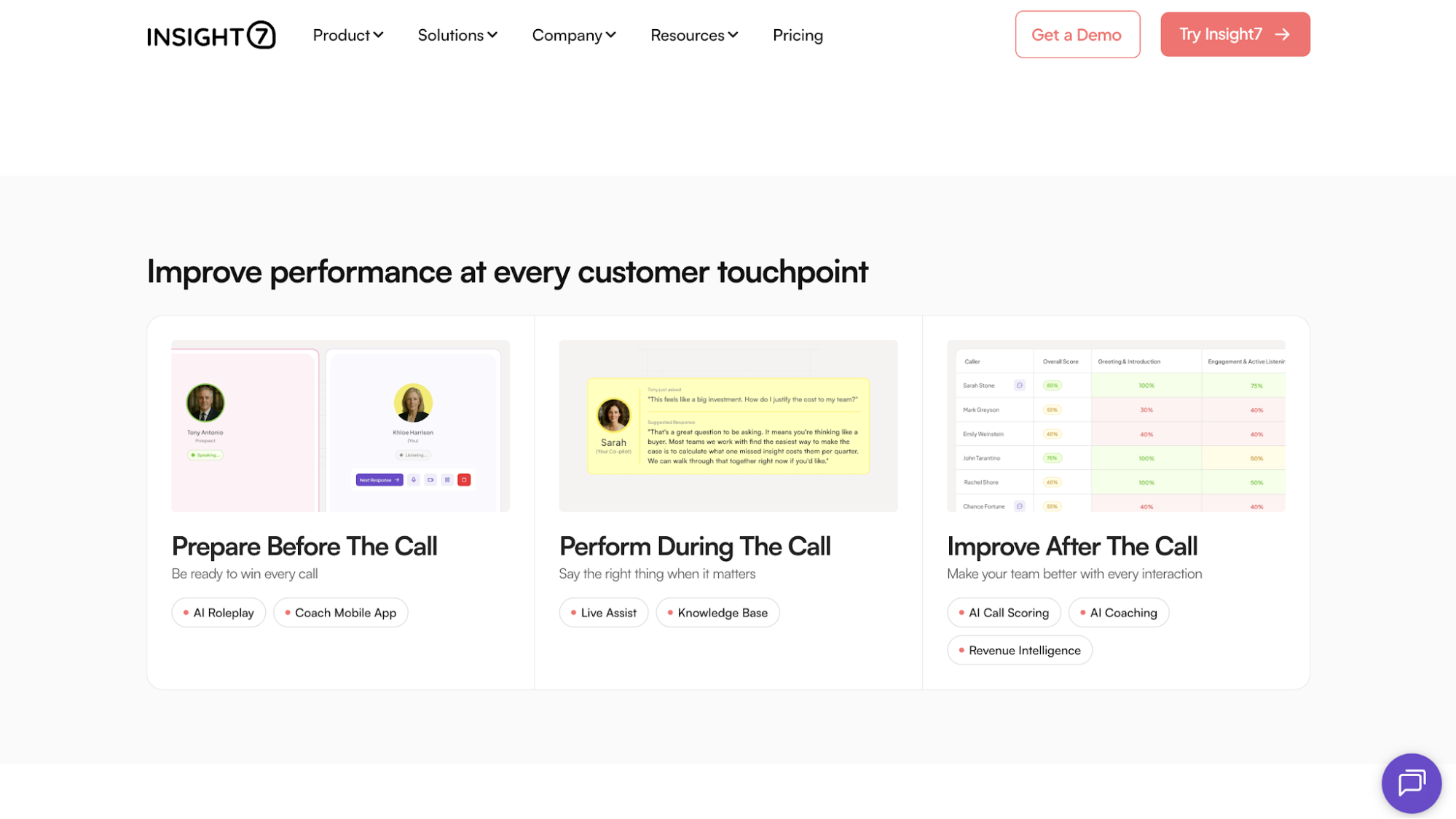
Choosing the right platform comes down to understanding why conversation intelligence matters for your team’s long-term improvement.
So if your goal is to go beyond identifying patterns in team performance and help your team apply those insights over time, what you need is a full-lifecycle sales conversation intelligence platform like Insight7.
Remember, the best conversation intelligence software isn’t just one that aligns with your team’s goals and the way your organization develops sales talent.
It should also help you turn those insights into actionable strategies your team can continuously practice, learn from, and improve for future customer conversations.
Call recording captures conversations for future playback. Sales conversation intelligence software goes further by analyzing those conversations, identifying patterns, highlighting coaching opportunities, and providing insights that help sales leaders improve team performance.
Conversation intelligence gives managers objective data from real customer interactions instead of relying on anecdotal feedback. This makes it easier to deliver targeted coaching based on recurring behaviors, successful techniques, and specific areas for improvement.
Most conversation intelligence platforms use artificial intelligence and natural language processing to recognize topics, customer objections, buying signals, competitor mentions, pricing discussions, and other important moments within conversations.
These insights help managers review conversations more efficiently.
Post-call analysis allows sales leaders to review how objections were handled during multiple customer conversations. By identifying successful approaches and recurring challenges, managers can create more focused coaching that prepares reps for similar situations in future sales calls.
Revenue intelligence combines conversation data with CRM information, pipeline activity, and deal progress to provide a broader view of sales performance. This helps revenue leaders identify deal risks, improve forecasting accuracy, and make more informed decisions throughout the sales process.

