Most quality assurance programs review a fraction of what happens on the phone. A supervisor pulls a handful of calls per agent each month, scores them, and hopes the sample is representative.
It rarely is. The calls that get reviewed tend to be the ones that were escalated or ran long, while ordinary conversations pass through unexamined, which is where most compliance risks and coaching opportunities actually sit.
Call quality monitoring software exists to remove that limit. Modern quality monitoring tools automatically analyze customer interactions and score each one, so managers work from complete data rather than a sample someone had time to listen to.
In this guide, we compare the seven best call quality monitoring platforms, what each does well, and how to choose between them.
See Insight7 on your own calls and find out how your team scores when nothing gets skipped.
These are the seven best call quality monitoring software platforms for 2026:
The platforms below take noticeably different approaches. Some lead with automated quality management, others with real-time guidance or analytics depth, and the right fit depends on which part of the problem you are trying to solve.
The best call center quality programs rarely come down to which vendor has the longest feature list. They come down to whether the platform fits how your team already works, which is why the table below leads with what each one is genuinely best at rather than what it can technically do.
Platform | Best For | Key Strengths | Pricing |
Insight7 | Scoring connected to coaching and practice | AI call scoring, AI coaching, AI roleplay, Live Assist, knowledge base, revenue intelligence | Free plan available, Pro at $99/month, Business at $299/month, Enterprise custom |
Observe.AI | Enterprise contact center QA | Auto QA, conversation analytics, agent coaching, voice AI agents | No public pricing available |
Convin | Omnichannel QA and live assistance | Auto QA, omnichannel coverage, compliance monitoring, real-time guidance | No public pricing available |
Level AI | Broad CX quality management | AI quality assurance, auto QA, custom scorecards, performance dashboards | No public pricing available |
Balto | Real-time agent guidance | Live prompts, dynamic scorecards, real-time alerts, coaching dashboards | No public pricing available |
CallMiner | Analytics depth at very large volumes | Speech analytics, root cause analysis, sentiment, compliance monitoring | No public pricing available |
Scorebuddy | Scorecard-led QA for regulated and BPO teams | Custom scorecards, AI auto scoring, agent dashboards, analytics and optional surveys | No public pricing available |
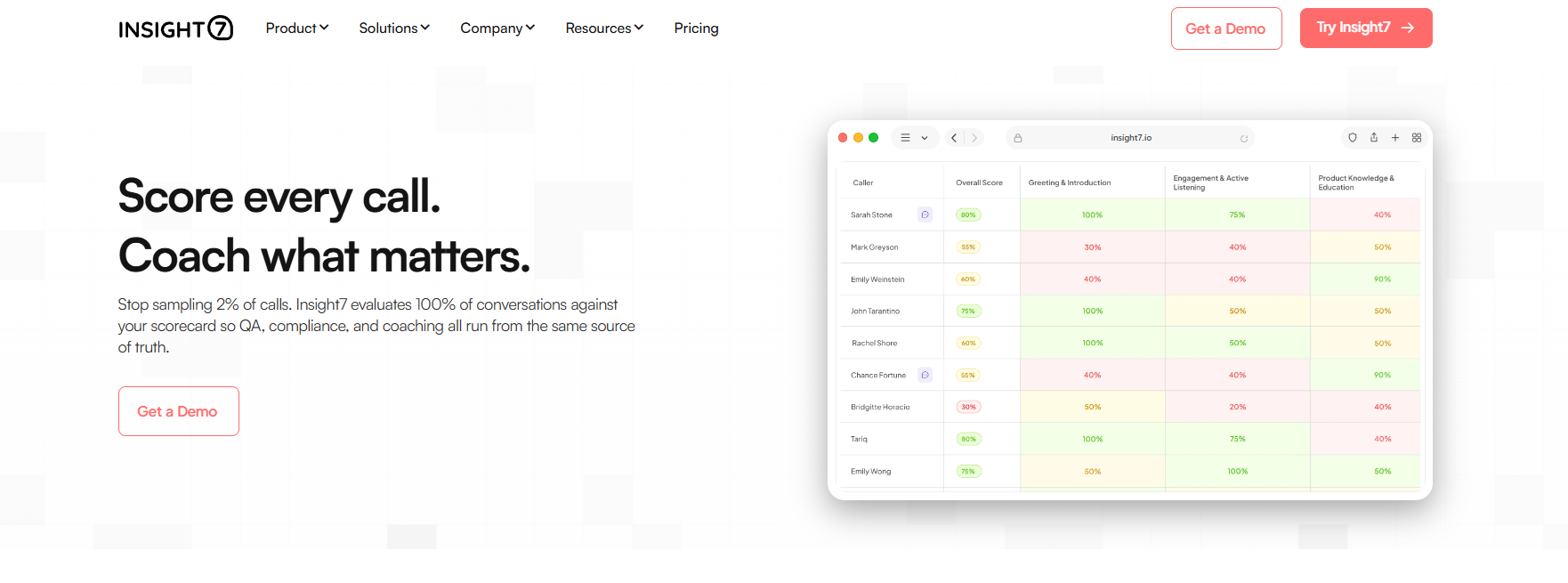
Insight7 is an AI call intelligence and coaching platform that scores every customer conversation and turns the findings into measurable performance improvement.
Most quality monitoring tools stop once the scorecard is filled in. Insight7 treats the score as the starting point, connecting call evaluation, coaching, practice, and live support within a single system.
That matters because a quality score on its own changes nothing. The gap between knowing an agent struggles with objection handling and that agent actually improving is where most QA programs stall.
Insight7 covers the full loop rather than a single stage. The same platform surfaces where an agent appears to need support, delivers the coaching, provides a place to practice, then tracks how subsequent calls score.
Most platforms here approach the problem from one side. Several are quality-assurance-first with coaching layered on afterward, one leads with real-time guidance, and another is an analytics engine. Insight7 is built around the loop itself, which is why the system that finds the gap is also the one that closes it.
For teams currently running quality monitoring in one tool and coaching in another, that removes the handover where findings usually stall. Managers are not exporting scores into a separate system and hoping somebody acts on them.
It also handles conversation data to enterprise standards, with SOC 2 Type II certification, HIPAA and GDPR compliance, PII and PHI redaction, and no model training on customer data.
Insight7 makes analyzing interviews so much faster. It highlights pain points, motivators, and behaviors in minutes — saving me hours and helping us deliver insights that actually impact the bottom line.
Adrienne Hibbert, Research Manager, Teknicks
Try Insight7 and see what changes when every call gets scored the same way.
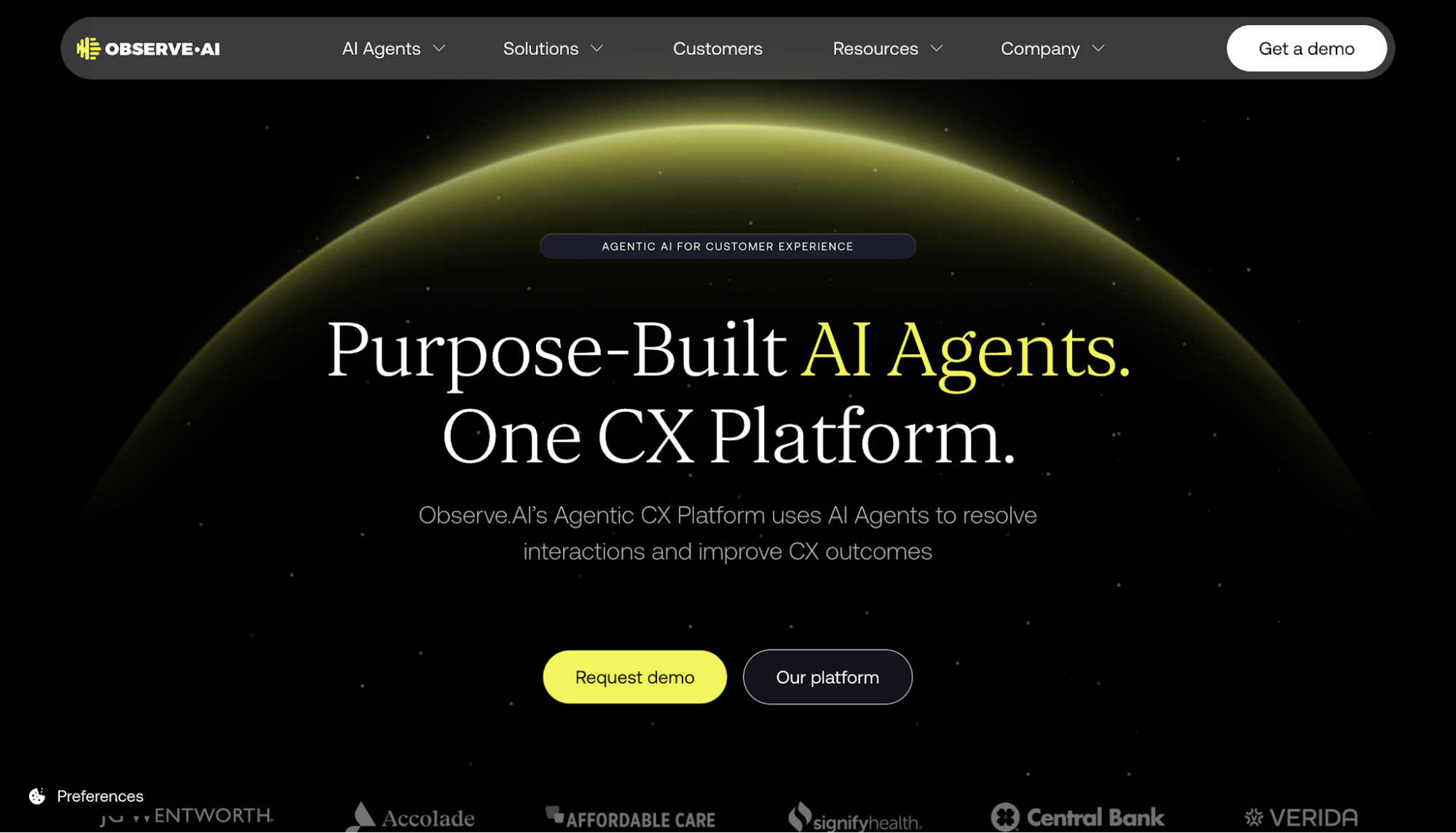
Observe.AI is a conversation intelligence platform built for contact centers, combining automated quality assurance with analytics and agent coaching.
Its automated QA reviews every call rather than a sample, scoring interactions against configurable criteria and surfacing the moments that need attention. The platform also extends to voice AI agents that handle routine contacts, so human agents handle the more complex work.
No public pricing available.
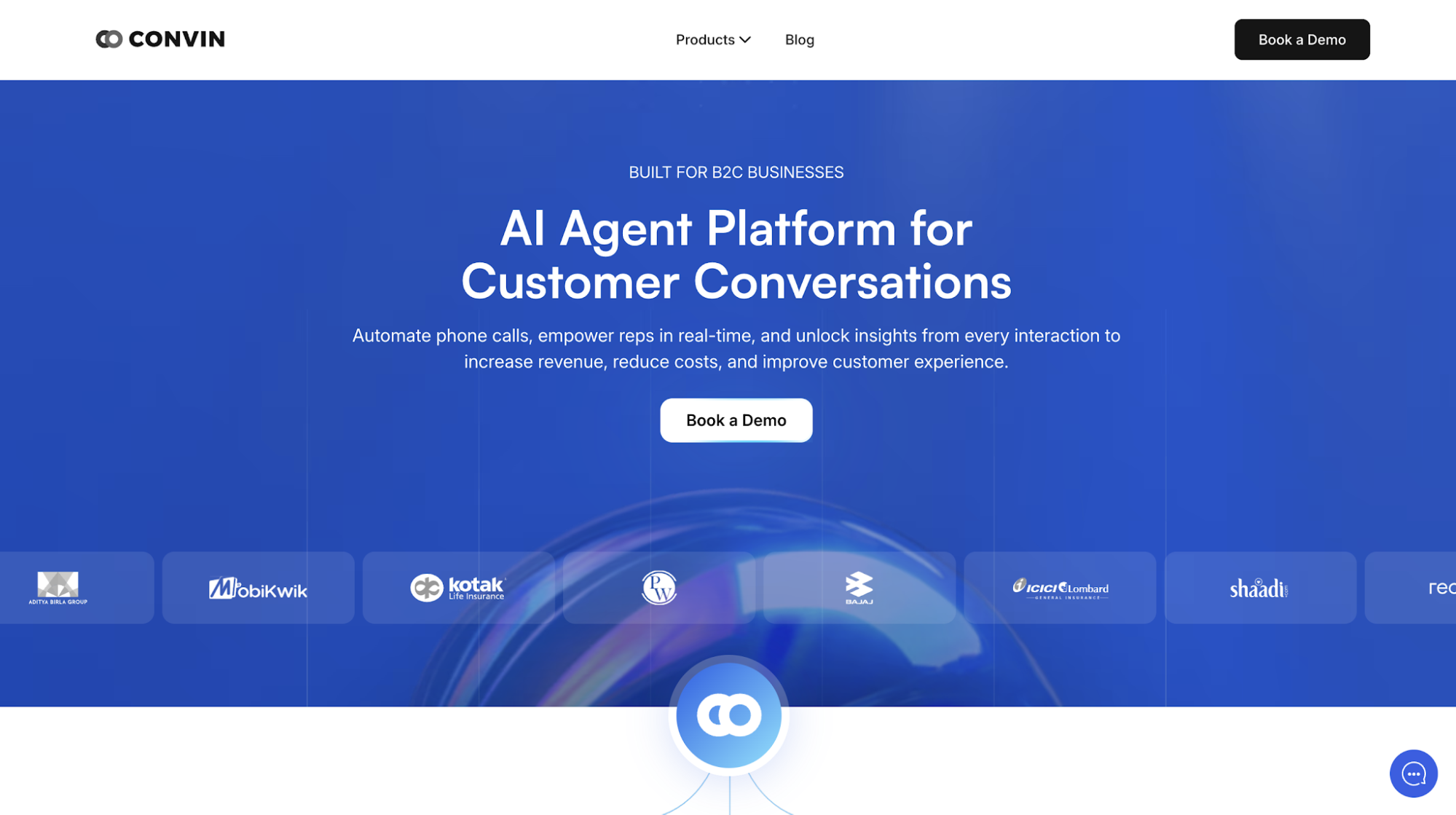
Convin is an AI-powered conversation intelligence and quality management platform aimed at omnichannel contact centers. It automates auditing on calls, chat, and email, letting managers score interactions on the criteria that matter to them rather than a fixed template.
Its positioning leans heavily on full interaction coverage, compliance, and fast post-call insight, which suits voice-led operations where manager intervention matters as much as scorecard automation.
No public pricing available.
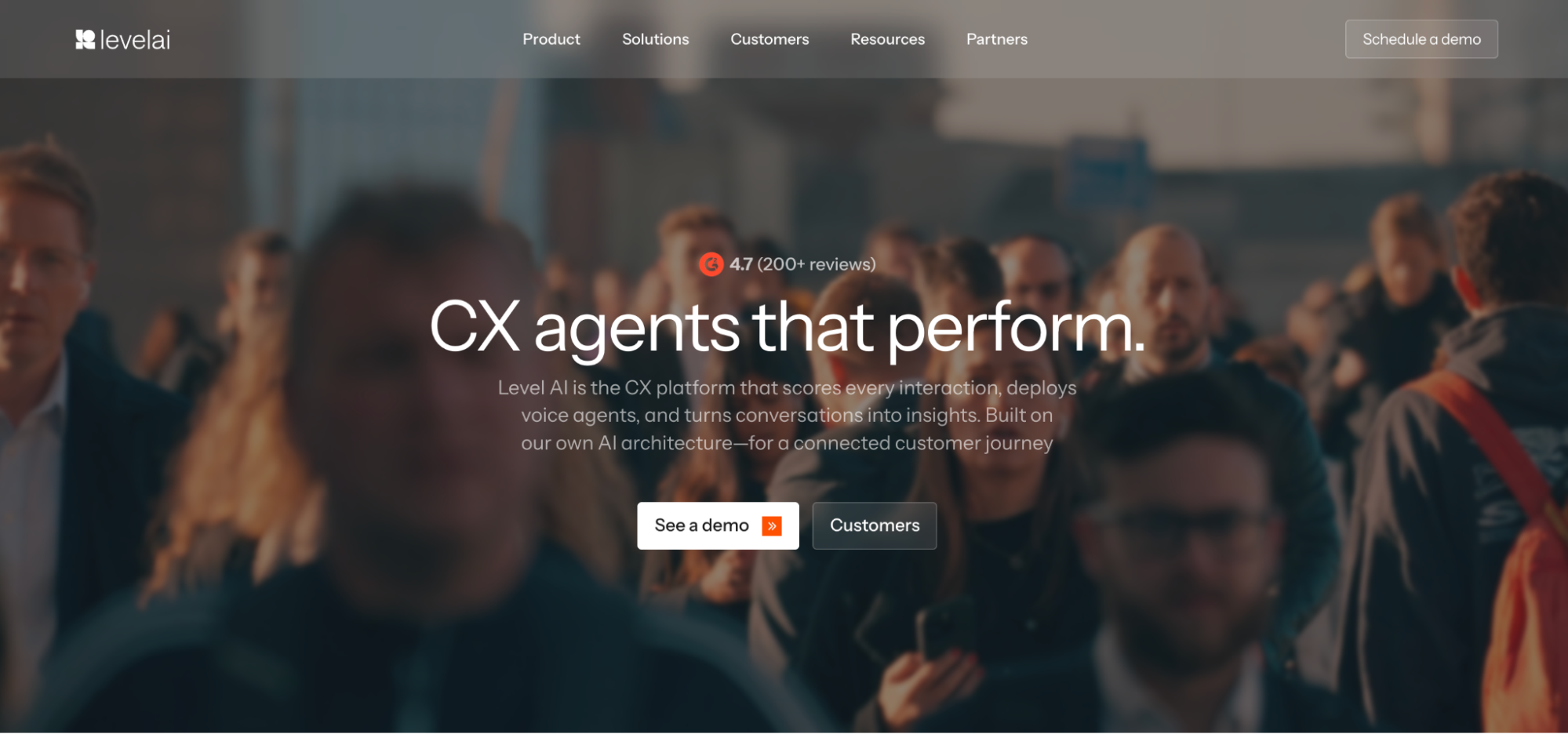
Level AI is a customer experience platform that evaluates conversations, automates quality assurance, and surfaces coaching opportunities.
It replaces manual call sampling with AI-powered evaluations that give broader visibility into agent interactions. Its approach starts with quality management, using evaluation trends to help managers prioritize coaching based on measurable behaviors rather than impressions.
No public pricing available.
Balto is a real-time guidance platform that listens to conversations as they happen and prompts agents mid-call.
It leads with live intervention rather than post-call review alone. Agents see on-screen prompts, reminders, and objection-handling suggestions while the customer is still on the line, and supervisors can monitor performance in real time and step in when a conversation needs support.
It also scores interactions using dynamic scorecards and provides call review and longer-term quality reporting, so the live prompts sit alongside a record of how calls were handled.
No public pricing available.
CallMiner is a conversation analytics platform built for organizations that analyze huge volumes of customer interactions.
Its strength is analytical depth rather than scorecard simplicity. The platform is designed for teams that want to understand why patterns appear, running root cause analysis on themes that surface in contact center operations rather than only reporting agent-level quality scores.
That makes it a strong fit for operations with dedicated analysts, and a heavier lift for a small QA team that mainly wants automated scoring.
No public pricing available.
Scorebuddy is a contact center quality management platform built around scorecards and agent development.
It focuses on the mechanics of running a QA program well. Teams build as many scorecard designs as they need, apply complex scoring rules, and give agents their own dashboards so quality data is visible to the people it describes rather than only to supervisors.
It is widely used by BPOs and regulated industries, where structured evaluation and clear audit trails matter as much as automation.
No public pricing available.
Feature lists start to look identical after the third demo. Call center quality monitoring software has moved a long way past recording calls and filling in a scorecard, and these are the questions that actually separate one call center monitoring software platform from another.
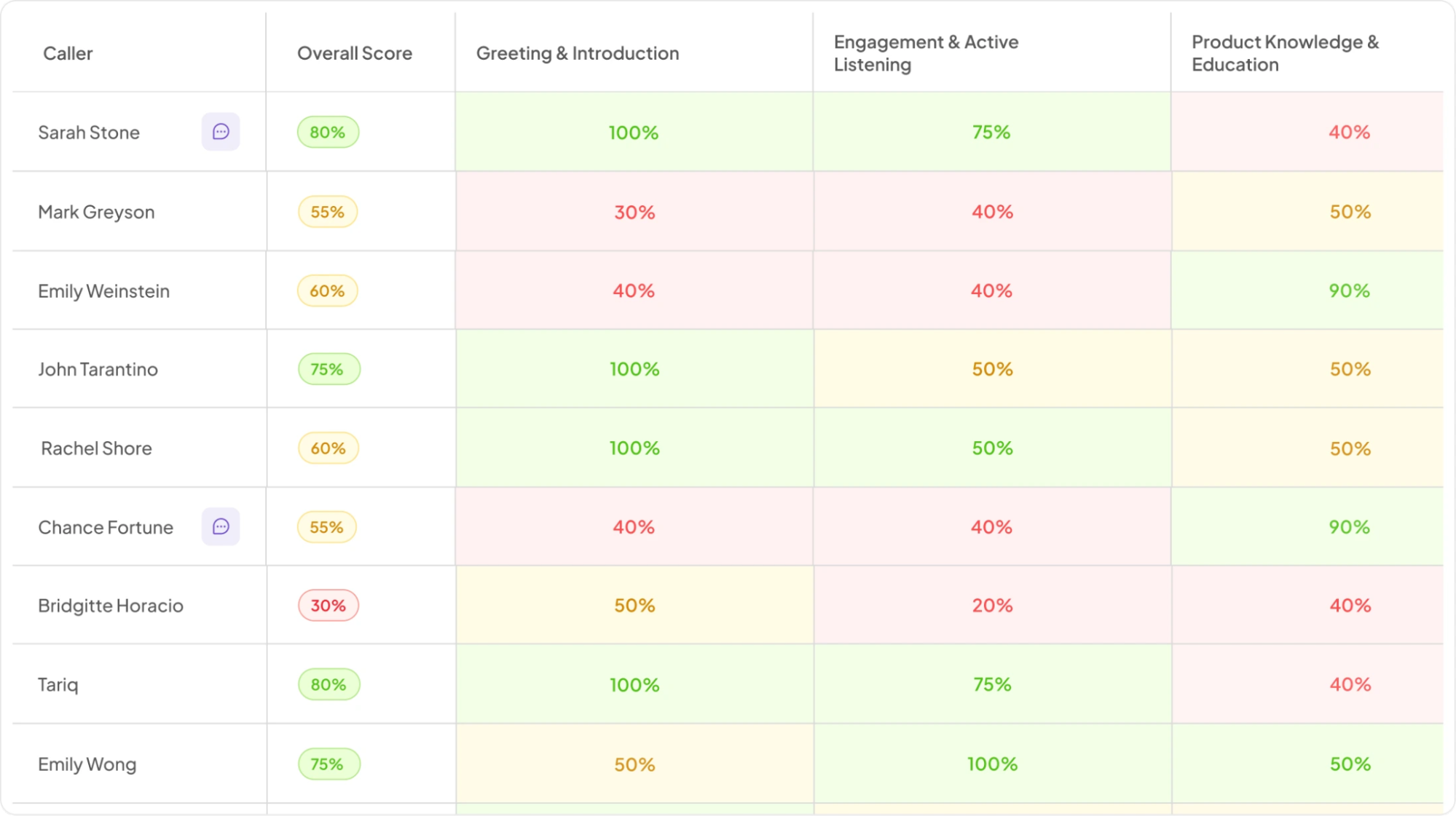
The defining feature of modern quality monitoring solutions is coverage. Automated scoring evaluates every captured and eligible interaction against your criteria rather than a sample, which changes what the quality data can be used for.
Confirm what share of conversations a platform will score, and whether that includes every channel your team uses. Voice is a given, while chat and email vary considerably between vendors.
Partial coverage produces skewed conclusions. If phone calls are analyzed and chat is not, every finding tilts toward whichever customers prefer to call, and customer sentiment reads very differently on a live call than in a written message.
Manual effort does not disappear entirely. It moves from listening to calls toward calibrating the system and handling the interactions that genuinely need a human ear, which is where the operational efficiency gain actually comes from.
Every operation measures different things. A collections team, a healthcare scheduling line, and a retail support desk have almost nothing in common in terms of what a good call looks like.
High-quality call monitoring software lets you build scorecards around your own quality standards rather than forcing a generic template on your call center operations. Most call center solutions now allow this, though the depth of customization varies more than the marketing suggests.
Ask how the system handles disagreement too. The better platforms let managers override a rating and feed the correction back, which helps keep scores credible with agents.
Platforms like Insight7 let a team write the criteria in their own language, so a healthcare scheduling line can score whether identity was confirmed before an appointment was discussed, and a collections team can score whether the required disclosure was read before payment was taken.
For regulated industries, compliance monitoring is often the reason the platform gets approved. The system checks whether required disclosures were read, consent was captured, and prohibited language stayed out of the conversation.
Automated checks add a continuous layer between formal audits, so potential disclosure and process failures surface far sooner. They supplement compliance controls rather than replacing them, since indirect phrasing and transcription errors still need a human eye.
Evaluating agent performance once a month tells you very little on its own. Agent performance tracking continuously monitors individual and team results, so managers can see whether coaching improved performance or simply led to more coaching sessions.
Structured formats such as side-by-side coaching templates make those sessions easier to compare over time.
The useful platforms tie agent performance metrics to outcomes such as first call resolution and customer satisfaction, rather than reporting quality scores in isolation.
Pair quality scores with the key performance indicators your operation already reports.
When quality data and key performance metrics move together, the case for improving agent performance no longer rests on QA opinion alone, even though staffing, routing, and call mix all influence the same numbers.
Some platforms act while the conversation is still happening. Real-time monitoring can flag an escalating call to a supervisor, and real-time guidance can put the right answer or the next best action on the agent’s screen mid-call.
Decide which you need before you shortlist. Real-time guidance helps newer agents most and rescues the conversation in front of you, while post-call analysis builds patterns that can improve future conversations once the findings reach coaching or process changes.
Some teams genuinely only need the second. Live prompts can distract agents handling complex calls, and they raise adoption questions that a post-call program does not.
Everything downstream inherits transcription errors. Accuracy varies by accent, audio quality, industry vocabulary, and how often people talk over each other.
Test it on your own recordings rather than a vendor sample. A platform can look excellent in a demo and perform noticeably worse on your actual phone calls.
Performance dashboards should answer the questions a manager actually has, including which behaviors are slipping and where the team keeps hitting the same wall. The better platforms identify knowledge gaps directly, showing which topics agents consistently struggle to answer.
Deep insights matter more than volume of charts here. A dashboard showing 20 key metrics tends to be checked once, while one that highlights the main few behaviors costing you the most is used weekly.
AI-driven insights are only valuable when somebody can act on them the same week.
The platform has to reach your dialer, contact center software, and CRM without a custom build. Check whether the integrations you need sit in the tier you are quoting for, since the useful ones often sit higher up.
Call recordings contain customer data and often personal information, so security belongs in the evaluation rather than the contract review.
Ask where recordings are stored, how personal information is redacted, whether your customer data trains the vendor’s models, and how recording consent requirements are supported in the regions you operate in. This gets skipped in most evaluations and causes the most trouble later.
Schedule a demo with Insight7 to see how these criteria look on a live scorecard.
Choosing a platform is the easier half. Most of the value depends on how the program is introduced and whether anyone acts on what it finds.
Before changing anything, understand where the team stands. Review existing quality data, customer feedback, and performance metrics to identify the behaviors that need the most attention.
A monthly QA performance report template gives that baseline a repeatable format from the first month.
Without a starting point, it becomes impossible to tell whether the software improved your call center’s performance or simply produced more reporting.
A single team generates enough conversations to reveal patterns while keeping early mistakes contained. Scorecards almost always need revision after the first few weeks, and it is far easier to fix that with one team than with the whole floor.
A contained pilot also gives you a clean comparison. If the pilot team’s scores and customer satisfaction both move while the rest of the floor stays flat, you have evidence rather than an anecdote.
Call center agents will assume the worst if nobody tells them otherwise. They should know what is being evaluated, how scores feed into coaching, and that the output is a first pass rather than a verdict.
A program introduced as monitoring gets resisted. The same program introduced as evidence for what good calls look like gets used, and agents who can see the reasoning behind their call evaluation feedback tend to trust it.
Automated quality management needs checking. Models misread context, accents, and unusual call types, so periodic calibration sessions comparing AI scores against senior reviewer judgment keep the system honest.
Build a route for agents to dispute a score. It costs little and protects the credibility of the whole program.
Insight7 keeps each score traceable back to the moment in the conversation that produced it, so a calibration session compares judgments against the same evidence rather than against recollection.
Automated quality monitoring produces a number every day, which makes it easy to mistake activity for progress. Quality scores are a means rather than an end, so tie them to the metrics the business already cares about, whether that is first call resolution, handle time, or increased customer satisfaction.
The point of call center monitoring tools is to enhance customer satisfaction and agent capability, not to generate a number that improves in isolation.
If quality scores climb while customer experience stays flat, the scorecard is measuring the wrong things and needs revisiting. When the same agents keep flagging on the same criteria, a structured call center action plan turns that finding into a documented improvement path.
Review the criteria on a regular schedule, and again whenever products, policies, or regulations change. A scorecard written 18 months ago will quietly start rewarding behaviors that no longer help anyone.
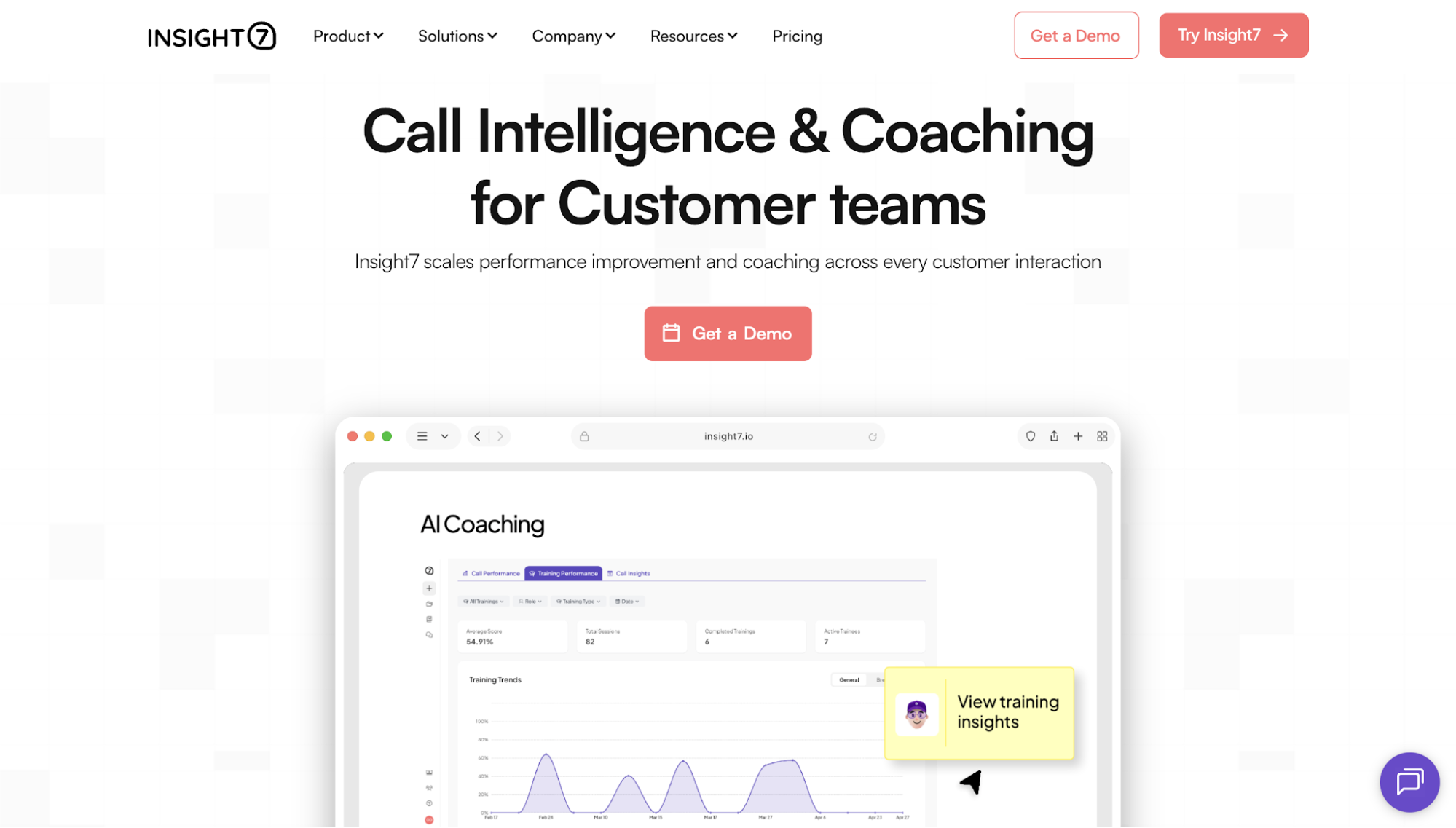
Delivering exceptional customer service rarely comes from more evaluation. It comes from connecting what the evaluation finds to something that changes agent behavior.
Insight7 scores every connected conversation, identifies the behaviors that consistently differ between your strongest agents and the rest, then turns those findings into call coaching and practice rather than another report.
It holds a 4.7 rating on G2, where reviewers describe the same move from spot-checking calls to working from complete scores.
Managers get specific priorities for each agent instead of a dashboard to interpret on their own.
Agents get practice on the exact gaps the calls revealed, which helps you enhance agent performance and improve customer satisfaction at the same time, rather than treating them as separate projects.
That loop is what turns quality monitoring into continuous improvement: scores identify the gap, coaching addresses it, practice reinforces it, and the next set of calls shows whether anything changed.
It is built for mid-market service, sales, and success teams in industries with high conversation volume and high quality standards, including financial services, healthcare, and manufacturing.

