


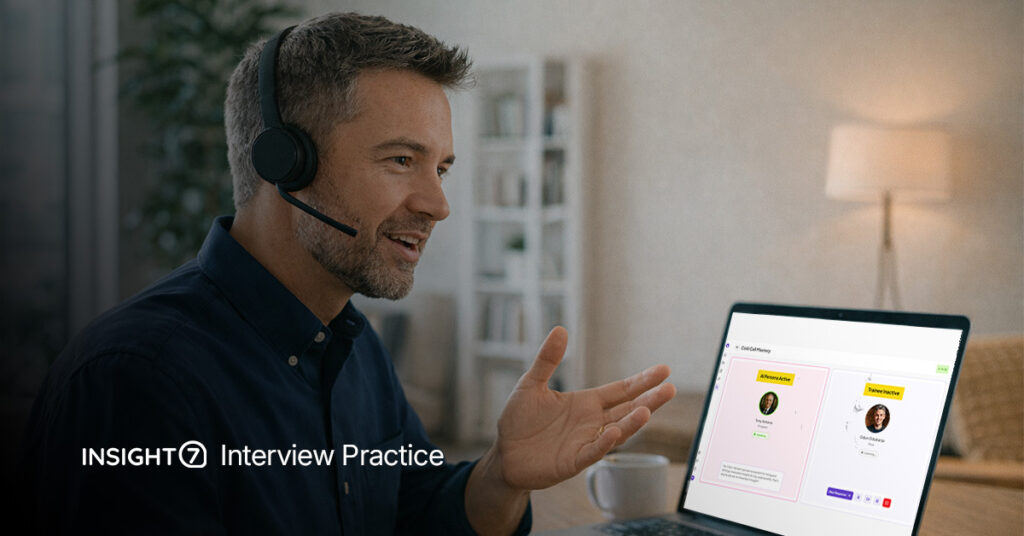
Cigna Marketing interviews test whether you can market health and benefits solutions with the mission-driven clarity and regulatory discipline that healthcare marketing demands, whether you understand how to reach and move both employer buyers and individual members through distinctly different marketing strategies, and whether you can build Cigna's brand around whole health outcomes rather than insurance product features. Interviewers are specifically evaluating whether your marketing approach reflects the health mission orientation of a company that positions itself as a partner in improving the health of the people and communities it serves.
Start your free Cigna Marketing practice session.
What interviewers actually evaluate
Health Mission Marketing, B2B Employer Strategy & Member Engagement
Cigna Marketing interviews evaluate whether your marketing strategy is grounded in health outcome positioning and employer value creation, whether you can execute compliant, impactful campaigns in a regulated healthcare environment, and whether your measurement framework reflects health engagement and employer ROI rather than generic marketing funnel metrics. Interviewers assess your ability to navigate the dual audience challenge of marketing to employer buyers and individual members simultaneously.
Health outcome positioning, B2B employer marketing, Member engagement, Regulatory compliance, Whole health brand, Campaign measurement
What gets scored in every session
Specific, sentence-level feedback.
| Dimension | What it measures | How to answer |
|---|---|---|
| Health Mission Alignment | Does your marketing strategy start from a health outcome or wellness objective rather than product promotion? We flag insurance product-feature marketing with no health mission dimension. | Health outcome goal stated, member wellness framing, mission connection |
| Audience Sophistication | Do you demonstrate understanding of the distinct marketing approaches required for employer buyers versus individual members? We score dual-audience awareness. | Employer and member audiences distinguished, separate strategies named |
| Regulatory Awareness | Does your campaign approach account for healthcare marketing regulations, CMS guidelines, or state insurance advertising rules? We flag campaigns with no compliance dimension. | Regulatory constraint acknowledged, compliance approach named |
| Campaign Impact | What was the measurable outcome? We look for employer pipeline, member enrollment, health engagement, or brand awareness metric. | Specific metric named, before/after framing |
How a session works
Step 1: Get your Cigna Marketing question
You are assigned questions based on where candidates for this role typically struggle most, which for Cigna Marketing means demonstrating health mission positioning and dual-audience strategy rather than generic consumer marketing or insurance product promotion. Each session starts fresh with a new question targeting a different evaluation dimension.
Step 2: Answer by voice
Speak your answer as you would in a real interview. The AI listens for STAR structure and evaluation signal alignment, specifically whether your marketing strategy reflects Cigna's whole health positioning, your audience strategy is sophisticated, and your Result is measured in health engagement or employer impact terms.
Step 3: Get scored dimension by dimension
Instant scores across all four rubric dimensions. Each gets a score, a flagged weakness, and a specific sentence-level fix. Cigna Marketing interviewers probe for product-feature marketing stories with no health outcome framing and for campaigns measured in clicks or impressions without connection to employer pipeline or member health engagement.
Step 4: Re-answer and track improvement
Revise based on feedback and answer again. See the before/after score change across Health Mission Alignment, Audience Sophistication, Regulatory Awareness, and Campaign Impact. Your weakness profile updates across sessions so if you consistently default to product marketing without health mission framing, that becomes the focus of your next question assignment.
Frequently Asked Questions
What questions are asked at the Cigna interview for marketing roles?
Cigna Marketing interviews are behavioral and probe your alignment with health-mission brand positioning and regulated marketing execution. Common questions include: "Tell me about a marketing campaign you ran that drove health engagement rather than product awareness," "Describe how you built a marketing strategy for a regulated healthcare product while maintaining creative impact," "Walk me through a B2B employer marketing initiative and how you measured its effect on the sales pipeline," and "Tell me about a marketing campaign that did not produce the expected outcome and what you learned from it."
What are the 5 C's of interviewing for Cigna Marketing?
In Cigna Marketing interview contexts, the 5 C's map to: Cause (the health mission or outcome your marketing was designed to advance, not just the product you were promoting), Campaign (the specific strategy, channels, and creative approach you chose and why they fit the audience and regulatory context), Compliance (how you navigated healthcare marketing regulations and brand standards in your execution), Conversion (the measurable employer or member outcome your campaign produced), and Change (what the campaign result revealed about your audience or approach that you applied to your next marketing initiative). For Cigna Marketing interviews, Cause and Change are most often underdeveloped.
What are the 5 hardest interview questions for Cigna Marketing?
The most challenging Cigna Marketing questions require you to demonstrate health mission fluency and dual-audience marketing sophistication simultaneously. They typically include: a campaign that drove measurable member health behavior change rather than just awareness; a B2B employer marketing initiative where you connected marketing investment to sales pipeline and revenue; a situation where healthcare marketing regulations required you to redesign a campaign you had already planned; a case where your understanding of employer versus member needs led you to build completely different marketing strategies for the same product; and a story about a marketing failure where your assumptions about audience motivation were wrong and what you changed in your next approach.
What is the marketing strategy of Cigna and how does it inform interviews?
Cigna's marketing strategy centers on its whole health positioning, communicating that physical, mental, and social well-being are interconnected and that Cigna supports all three dimensions rather than just medical care access. This strategy shapes interview questions directly: Cigna Marketing interviewers probe whether you can articulate and extend this whole health positioning rather than defaulting to insurance product marketing. Strong candidates demonstrate comfort with health behavior change marketing, employer workforce health ROI framing, and the ability to build brand campaigns that advance a health mission rather than promote a benefits product.
What are the most common failure modes in Cigna Marketing interviews?
The most consistent failures are:
- Marketing campaigns framed as product launches or awareness drives without connecting to a member health engagement or employer workforce health outcome
- Single-audience marketing stories that do not distinguish between the employer buyer journey and the member engagement journey
- No regulatory dimension: healthcare marketing involves CMS guidelines, state insurance advertising regulations, and healthcare privacy standards that shape what you can say and how
- Campaign success measured in impressions, clicks, or lead volume without connection to health engagement, employer pipeline quality, or member enrollment
- Generic consumer marketing framing with no evidence of understanding healthcare's mission-driven brand environment or the compliance constraints that come with it
Also practice
All nine Cigna role interview practice pages.
- Sales
- Customer Service
- Product Management
- Finance
- Operations
- People & HR
- Leadership
- Legal & Compliance
One full session free. No account required. Real, specific feedback.








