Healthcare operations managers and patient experience directors evaluating conversational AI face a selection problem that general-purpose chatbot comparisons don't address: healthcare deployment requires HIPAA-compliant data handling, integration with EHR and scheduling systems, and conversation design calibrated for distressed or medically uninformed patients. A healthcare chatbot that performs well in a fintech use case may fail entirely in a patient intake workflow. This guide covers the top healthcare chatbots in use in 2026 and the criteria that determine fit for clinical and administrative use cases.
How We Evaluated Healthcare Chatbot Platforms
These platforms were evaluated against criteria specific to healthcare deployment, not generic chatbot capability.
| Criterion | Weighting | Why it matters for healthcare |
|---|---|---|
| HIPAA compliance and data security | 35% | Non-compliant platforms are not deployable in US healthcare contexts |
| EHR and scheduling integration | 30% | Chatbots that don't connect to clinical systems create manual handoff work |
| Patient experience design | 20% | Healthcare conversations require different design than commercial transactions |
| Deployment complexity | 15% | Smaller healthcare organizations need faster time-to-value |
Chatbot platforms without HIPAA compliance were excluded from this evaluation. General-purpose chatbots (ChatGPT, standard Intercom, standard Drift) were excluded unless the vendor offers a specific healthcare-compliant deployment tier.
Which AI chatbot is best for healthcare?
The strongest healthcare chatbot depends on the specific use case. For patient scheduling and appointment management, platforms with native EHR integration (Epic, Cerner) and HIPAA-compliant architecture outperform general-purpose chatbots that require custom middleware. For patient engagement and symptom triage, platforms trained on clinical conversation data and validated by clinicians outperform marketing-originated chatbots repurposed for healthcare.
Top 5 Healthcare Chatbot Platforms in 2026
This section evaluates each platform with consistent structure across all profiles.
Conversica (Healthcare Automation)
Conversica provides AI-powered conversation automation for healthcare revenue cycle and patient engagement workflows. It focuses on outbound patient engagement: appointment reminders, pre-registration outreach, and care gap notifications.
Pro: Conversica's strength is outbound automation at scale. Healthcare systems using it for appointment reminder and no-show reduction campaigns report measurable improvements in appointment attendance without adding staff.
Con: Conversica is primarily an outbound engagement tool, not a full patient-facing chat interface. It is not designed for complex inbound patient questions or clinical triage.
Pricing: Enterprise pricing. Contact vendor for current rates.
Conversica is best suited for healthcare systems with high appointment volumes where outbound engagement automation directly reduces no-show rates.
Hyro
Hyro is a healthcare-specialized conversational AI platform built for inbound patient communication: scheduling, directory navigation, prescription refill requests, and FAQ handling. It integrates with Epic, Cerner, and other major EHR platforms natively.
Pro: Hyro's knowledge base updates automatically from connected health system content, which eliminates the maintenance overhead that makes most healthcare chatbot deployments stale within months of launch. The clinical content stays current without a content management team maintaining it manually.
Con: Hyro is optimized for administrative and scheduling workflows. Complex clinical symptom assessment or mental health support conversations require a specialized clinical platform rather than an administrative AI.
Pricing: Annual contract pricing. Contact vendor for current rates.
Hyro is best suited for health systems handling high volumes of inbound scheduling and navigation requests where EHR integration enables real-time appointment booking.
Buoy Health
Buoy Health is a clinical decision support chatbot that guides patients through symptom assessment and navigates them toward appropriate care settings. It was developed with clinical oversight from Harvard Medical School.
Pro: The clinical rigor behind Buoy's symptom assessment conversations differentiates it from administrative chatbots repurposed for symptom triage. Clinician-validated conversation trees reduce the liability risk associated with automated clinical guidance.
Con: Buoy is primarily a symptom assessment and care navigation tool. It does not replace scheduling systems or EHR-connected administrative automation, so health systems typically deploy it alongside a scheduling-focused platform rather than as a single solution.
Pricing: Per-partnership pricing. Healthcare system and payer partnerships. Contact vendor for current rates.
Buoy Health is best suited for health systems and payers that want to reduce unnecessary ER visits and direct patients to appropriate care settings through validated symptom triage.
Nuance Communications (Microsoft)
Nuance, now part of Microsoft, provides AI-powered clinical documentation and patient engagement tools. Its Dragon Ambient eXperience (DAX) product focuses on clinical note automation while its patient engagement products address scheduling and intake.
Pro: For health systems already using Microsoft's ecosystem (Teams, Azure Active Directory), Nuance integrates without additional infrastructure complexity. The combination of clinical documentation and patient-facing tools in one vendor relationship simplifies procurement.
Con: Nuance's full platform is complex to deploy and is designed for large health systems with dedicated IT resources. Smaller healthcare organizations or individual practices will find the implementation scope disproportionate to their needs.
Pricing: Enterprise pricing through Microsoft. Contact vendor for current rates.
Nuance is best suited for large integrated health systems with Microsoft infrastructure already in place and the IT capacity to manage a multi-module enterprise deployment.
Insight7 (Healthcare Contact Center Analytics)
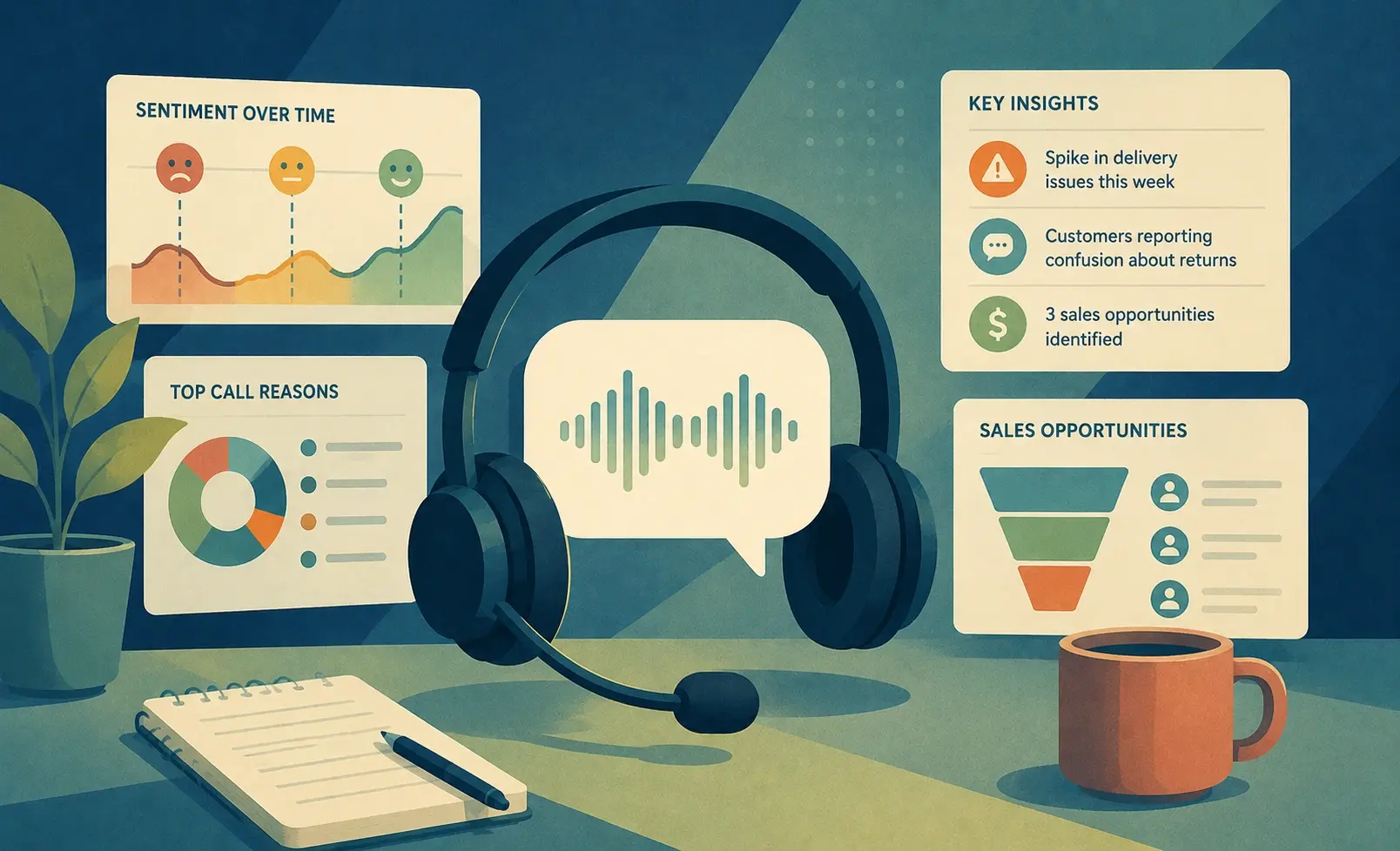
Insight7 is not a patient-facing chatbot, but it solves a critical gap in healthcare chatbot deployments: measuring what happens after the conversation. Healthcare contact centers use Insight7 to analyze 100% of patient-facing calls, identify service quality patterns, and surface coaching opportunities for patient access representatives.
Pro: Healthcare organizations using Insight7 get visibility into the full patient phone experience rather than a sample. Quality gaps in how patient access reps handle distressed callers surface in aggregate rather than surfacing only when a supervisor happened to be listening.
Con: Insight7 is a call analytics and coaching platform, not a self-service patient chatbot. It improves the human agent-assisted conversation layer rather than automating it.
Pricing: Call analytics from approximately $699 per month. Implementation support available.
Insight7 is best suited for healthcare contact centers that want to measure and improve the quality of human-assisted patient calls at scale.
How is conversational AI used in healthcare?
Conversational AI in healthcare is used across three workflow categories: patient engagement automation (appointment reminders, pre-registration, gap closure outreach), administrative self-service (scheduling, prescription refill requests, directory navigation, FAQ handling), and clinical support (symptom triage, care navigation, clinical documentation). Each category requires different platform capabilities. Patient engagement automation prioritizes scale and EHR data integration. Clinical support requires clinical validation and liability frameworks that administrative platforms don't address.
If/Then Decision Framework
FAQ
What is the best AI chatbot for healthcare in 2026?
The best healthcare AI chatbot depends on the use case. For scheduling and inbound self-service with EHR integration, Hyro is consistently rated among the strongest purpose-built platforms. For symptom triage and care navigation, Buoy Health provides clinician-validated conversation design. For outbound patient engagement at scale, Conversica handles appointment reminders and gap closure workflows. General-purpose chatbots without healthcare-specific compliance and integration capabilities should not be deployed in patient-facing workflows.
What HIPAA compliance requirements apply to healthcare chatbots?
Healthcare chatbots deployed in the US must comply with HIPAA's Privacy Rule and Security Rule when handling Protected Health Information (PHI). This requires a Business Associate Agreement (BAA) with the vendor, data encryption in transit and at rest, access controls, and audit logging. According to HHS's HIPAA guidelines, any AI platform that accesses, creates, or transmits PHI on behalf of a covered entity or business associate is subject to these requirements.