Sales analytics becomes difficult when leaders need to piece together reports from customer relationship management (CRM) system fields, call recordings, forecasting spreadsheets, and engagement dashboards.
The result is often a partial view of performance. Historical data shows leaders what happened, but they still lack the context needed to understand why it happened or what their teams should do next.
Modern sales analytics tools address different parts of this problem, and the right choice depends on the decisions your team needs to make.
In this guide, we’ll be comparing the six best sales analytics tools and the distinct use cases they are known for to help you decide which one is for you.
Get a demo with Insight7 today to uncover the patterns shaping your team’s sales performance!
These are the top six sales analytics tools based on the use cases they are known for:
Before we begin, let’s first establish what a sales analytics tool should help you do.
Sales analytics software helps teams analyze sales data and turns it into actionable insights that leaders can use to evaluate performance and support business growth.
But showing the final result is only part of the picture.
The tool should also reveal the activities and customer signals that produced that outcome, as these insights help your team decide what to improve and which successful approaches to continue.
A complete analytics strategy usually connects four measurement areas.
Activity analytics track how sales reps execute the sales process. This includes calls, emails, meetings, follow-ups, and account touches.
The goal is not to maximize activity volume without context. Leaders need to determine which activities support their sales strategy and where execution begins to slow.
Pipeline analytics show how sales opportunities are moving and where deals may be losing momentum. They help sales managers identify which opportunities are progressing and which ones have remained open without meaningful buyer engagement.
This also helps revenue operations teams decide where support is needed. Leaders can see which territories or types of deals require closer attention to direct their teams toward opportunities most likely to move forward.
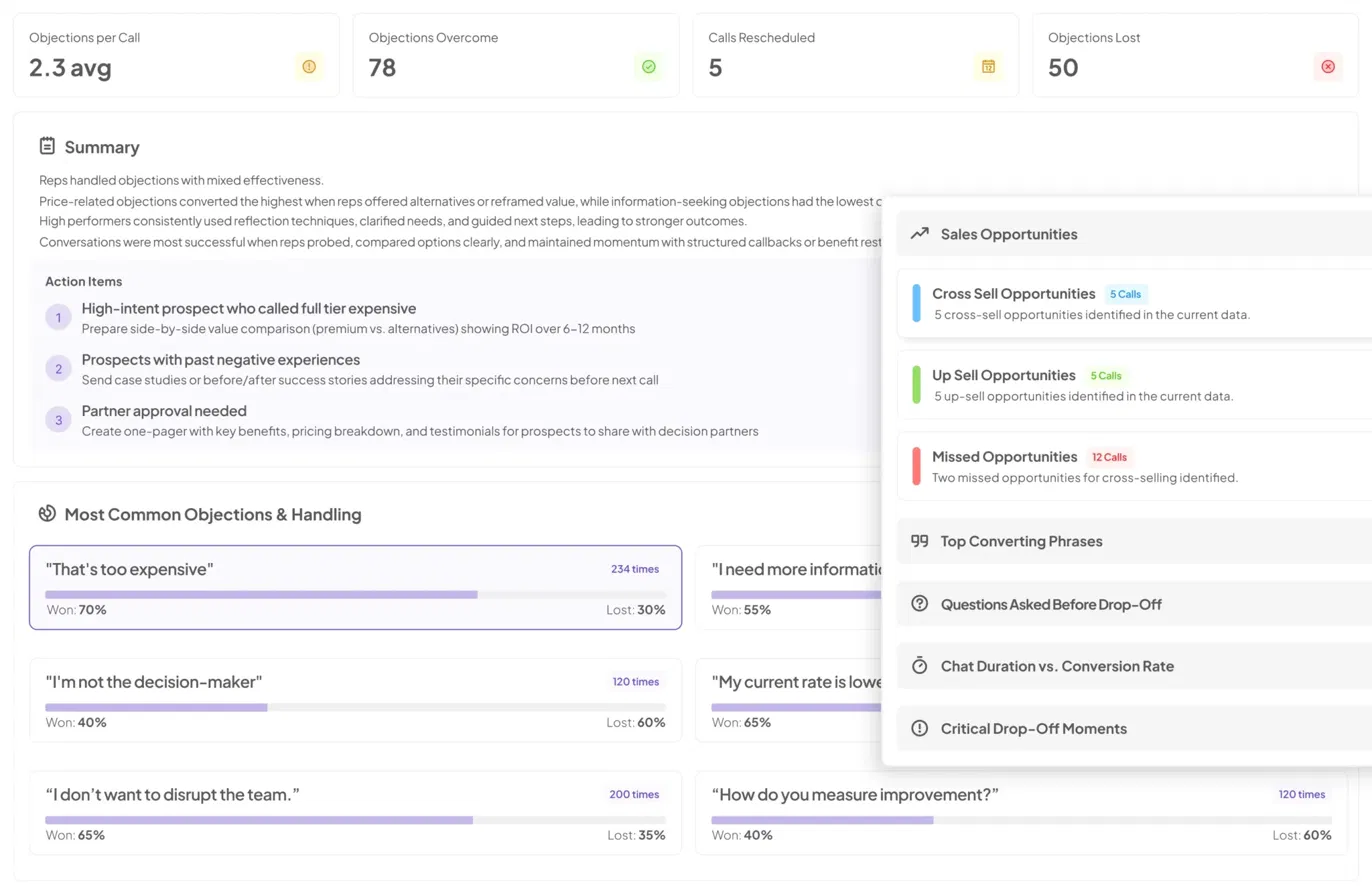
Sales performance analytics show how well team members are contributing to sales results. This often involves tracking performance metrics such as win rate, quota attainment, average deal size, and sales cycle length.
This area helps leaders see where performance is improving and where it’s falling behind. They can then identify which reps need support, which parts of the sales process need attention, and where sales coaching will move the numbers fastest.
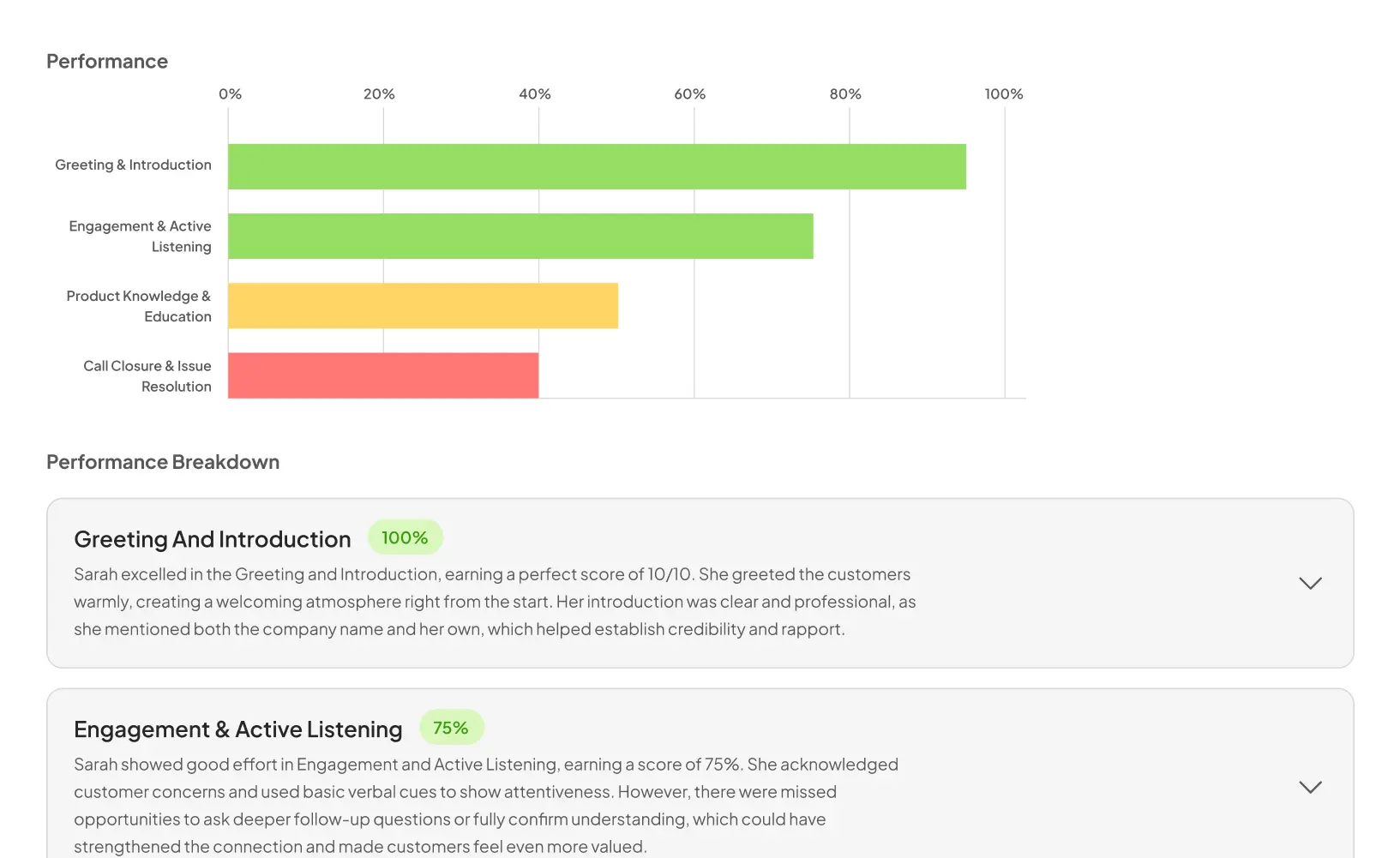
Sales results are also shaped by what buyers care about and how they respond throughout the sales process. Their research activity, questions, and objections can reveal what is encouraging a purchase or causing hesitation.
Tracking these signals helps leaders understand why buyers move forward, delay a decision, or disengage. Those findings empower sales teams to refine their strategy and prepare reps for the most common concerns.
Platforms like Insight7 pull this directly from recorded calls, surfacing the objections and questions that come up most often instead of inferring intent from activity counts.
Including this area in an analytics strategy gives leaders context behind changes in performance. It helps them respond to emerging buyer needs and market trends before those patterns begin affecting more opportunities.
Now that you have a clearer understanding of what a complete sales analytics strategy should measure, the next step is to find a platform that supports the areas your team needs to improve.
Tool | Primary Analytics Focus | Ideal For | Pricing |
Insight7 | AI call analysis, conversation intelligence, sales coaching | Teams that want to improve sales conversations with AI insights | Starts at $99/month (Free plan available) |
Salesforce Sales Cloud (Agentforce Sales) | CRM reporting, pipeline tracking, sales performance | Organizations that manage sales activity in Salesforce CRM | Starts at $25/user/month (Free plan available) |
Gong | Revenue intelligence, conversation analytics, deal insights | Revenue leaders focused on pipeline visibility and coaching | Pricing not publicly available |
Clari | Forecasting, pipeline inspection, revenue analytics | Sales and RevOps teams focused on forecast accuracy | Pricing not publicly available |
Outreach | Engagement analytics, seller activity, and sequence performance | Teams looking to optimize outbound sales execution | Pricing not publicly available |
6sense | Buyer intent, account prioritization, and predictive buying stages | B2B teams using account-based sales and marketing | Pricing not publicly available |
The sales analytics software options in this list represent six distinct approaches. Each platform was selected for a specific use case, from tracking CRM performance to analyzing customer conversations and buyer intent.
Insight7 is an AI-powered call intelligence and coaching platform for customer-facing teams. It serves sales, enablement, customer service, and learning leaders who need to evaluate performance within recorded conversations.
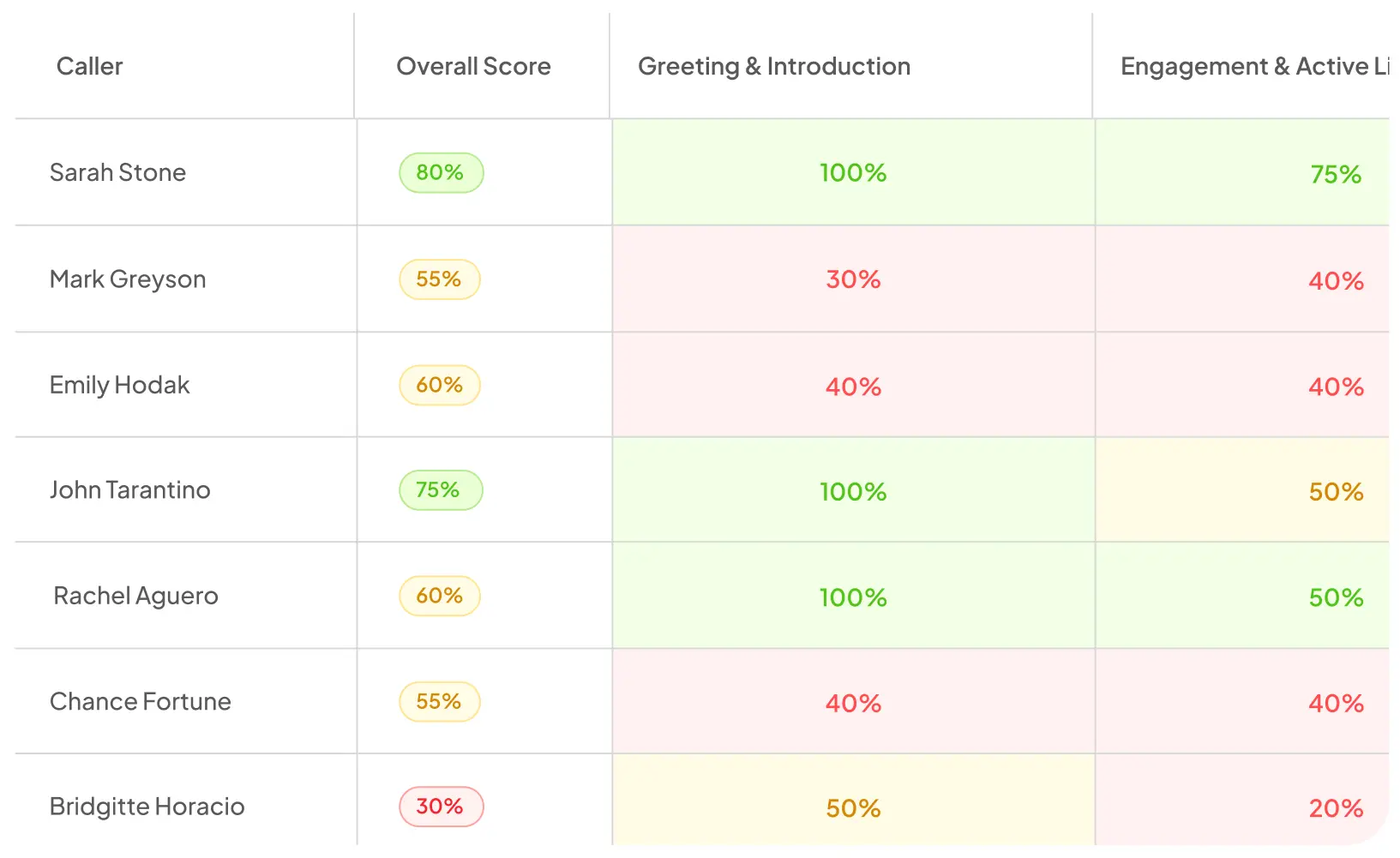
The platform approaches sales analytics through the content of calls. It turns customer interactions into structured performance findings so leaders can understand how each sales representative communicates and which conversation patterns affect sales results.
This creates a direct connection between sales data and frontline behavior. Leaders can evaluate calls against their own standards, identify skill gaps, and use the findings to optimize sales performance through coaching.
Insight7 offers the following plans:
Insight7 also offers a 50% discount on its Pro and Business plans for educational and nonprofit organizations.
Insight7 has saved us analysis time. I’ve been feeding feedback from sales calls, conversations, and emails and it’s been great input into the product roadmap and helped us better address people’s problems.
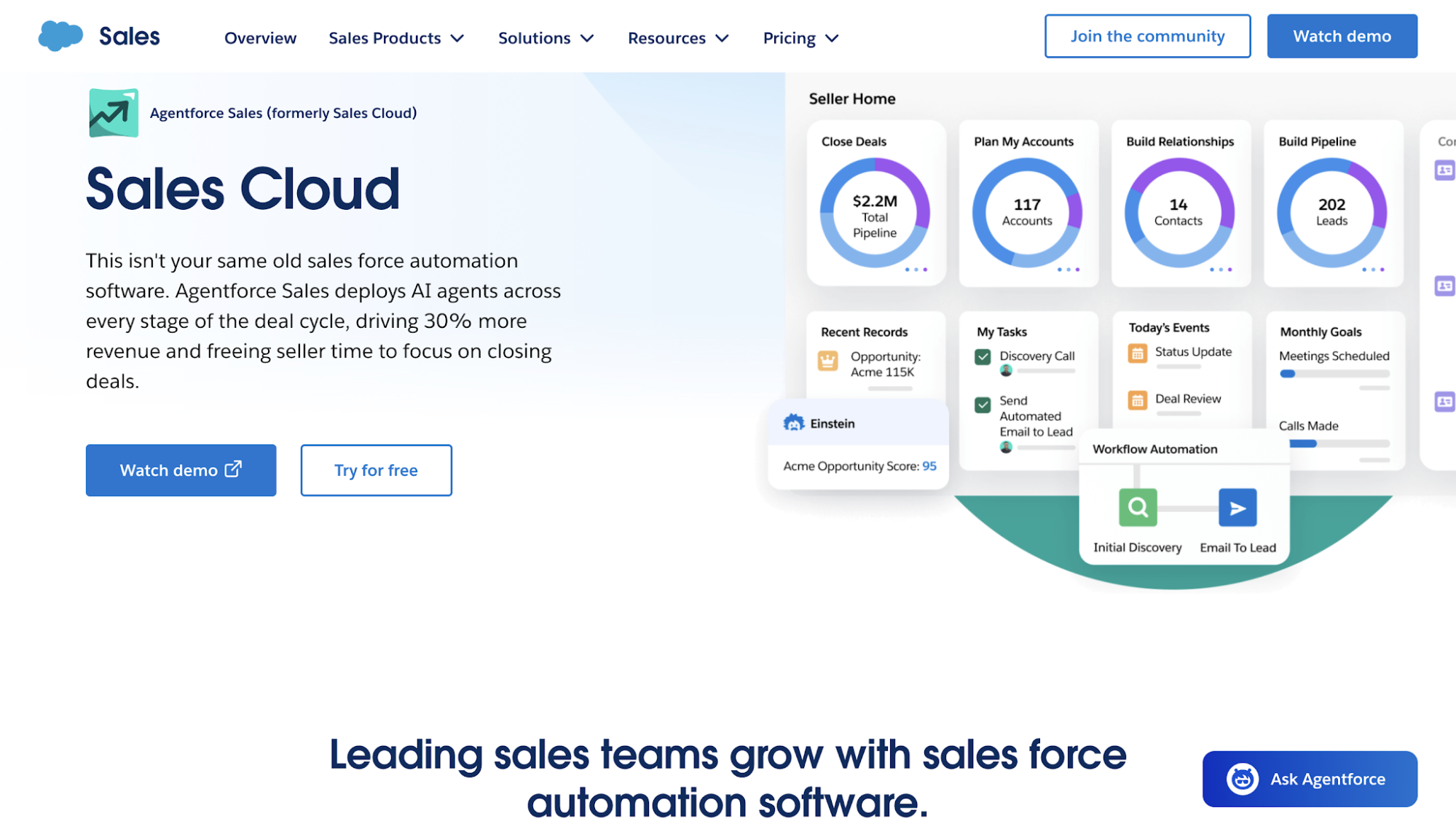
Image source: salesforce.com
Salesforce Sales Cloud, now called Agentforce Sales, is Salesforce’s customer relationship management (CRM) solution for sales teams.
It helps organizations streamline sales processes by managing leads and customer relationships throughout the entire customer lifecycle as part of the larger Salesforce product ecosystem.
Its approach to sales analytics begins with the information stored in the CRM. Sales activity, opportunity changes, and pipeline data feed into reports and forecasts so leaders can analyze sales performance using a shared source of relevant sales data.
Salesforce lists the following Agentforce Sales plans:
The capabilities included vary by edition, so teams should compare each plan based on the reporting, forecasting, automation, and AI features they require.
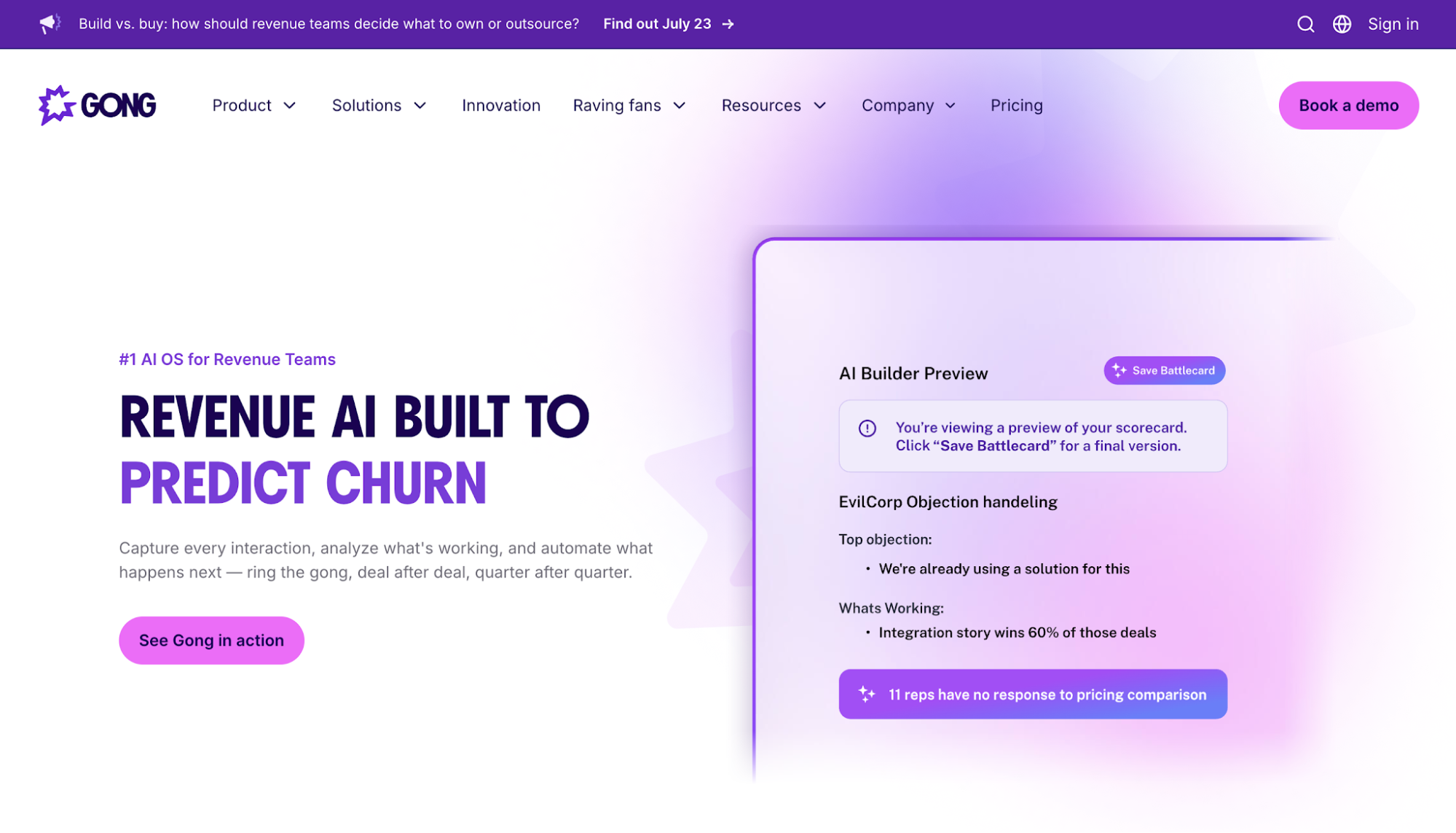
Image source: gong.io
Gong is a revenue intelligence platform for go-to-market organizations. It captures customer interactions and combines them with revenue data to support sellers, managers, enablement teams, and revenue operations leaders.
Its approach connects customer conversations with deal activity to give leaders a clearer view of revenue performance, especially when making informed decisions about pipeline reviews and coaching.
Gong describes its broader platform as a revenue AI operating system, unifying revenue intelligence applications and AI agents into a single system for go-to-market teams.
Gong does not publish its pricing publicly.
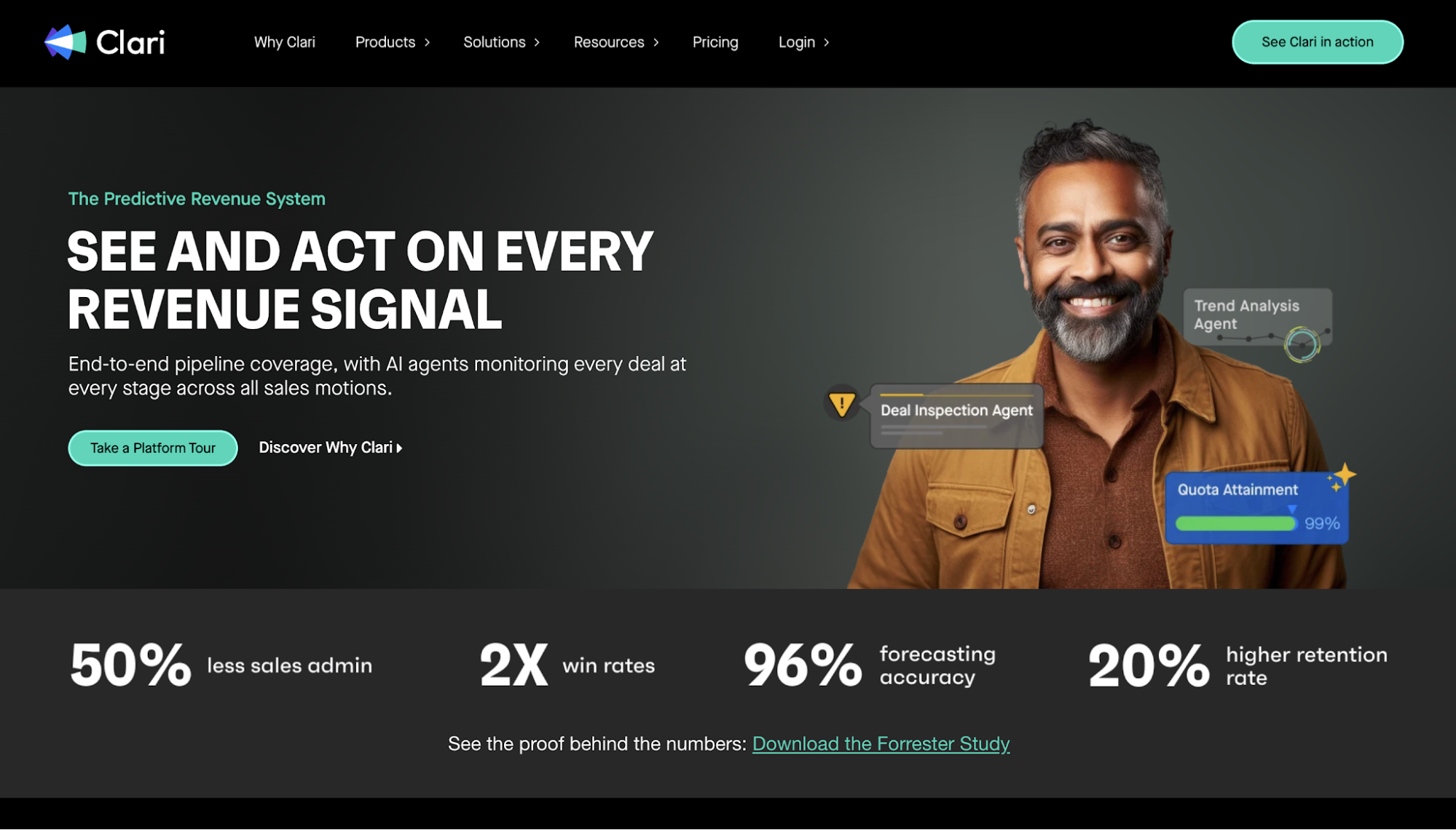
Image source: clari.com
Clari is a revenue orchestration platform for enterprise sales organizations. It serves sales leaders, revenue operations teams, and finance stakeholders responsible for forecasting and revenue performance.
Its approach to sales analytics centers on keeping forecast and pipeline data continuously updated, helping leaders identify risks and anticipate future sales trends.
Clari does not publish its pricing publicly.
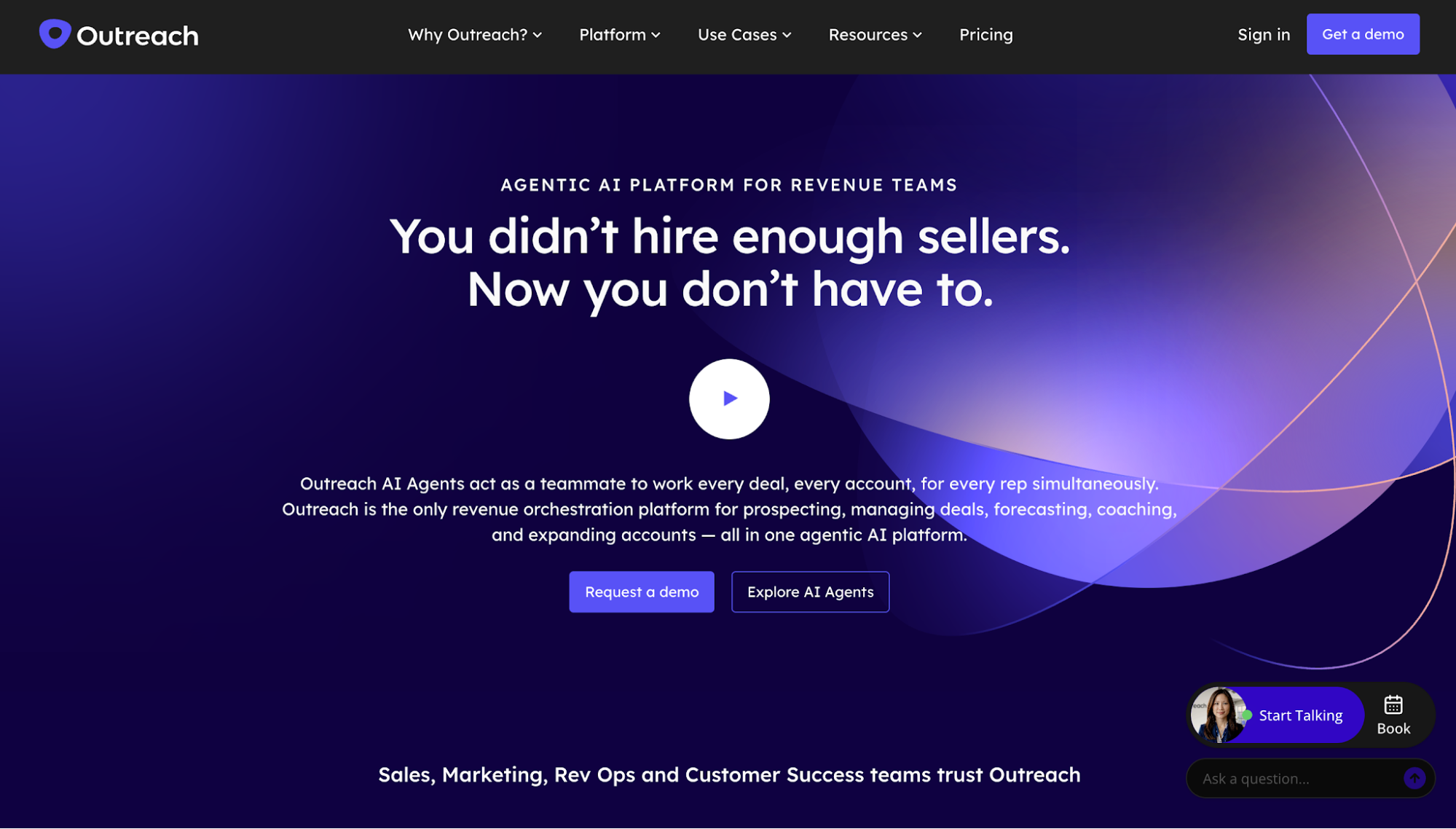
Image source: outreach.ai
Outreach is a sales execution and revenue platform used by sellers, managers, and revenue leaders. It supports lead generation, account engagement, deal management, coaching, and forecasting.
Its sales analytics approach begins with rep activity. Outreach measures the sequences, emails, calls, and account touches used to generate pipeline, giving leaders a clearer view of execution within the engagement process.
The platform has expanded into broader revenue workflows, but its engagement analytics remain closely connected to daily seller activity. Leaders can study which sales activities generate the most engagement and where prospects begin to disengage.
Outreach does not publish its pricing publicly.
Image source: 6sense.com
6sense is a go-to-market intelligence platform for B2B marketing and sales organizations. It brings first-party customer data together with external buying signals to help teams identify accounts that appear to be researching a purchase.
The platform applies analytics before direct seller engagement. It analyzes intent signals, account activity, and predictive buying stages, enabling sales teams to prioritize accounts with a higher likelihood of entering the sales process.
This approach is designed for account-based revenue teams that need to understand customer behavior before prospects submit a form or respond to outreach.
6sense does not publish its pricing publicly.
Check out the factors that separate these platforms once you get past the feature lists.
Reports help leaders monitor key sales metrics and turn data into decisions. If managers cannot quickly understand why pipeline performance changed or where revenue is at risk, the analytics lose much of their value.
When comparing platforms, look beyond the number of dashboards they offer. The reporting should help leaders monitor key performance indicators (KPIs) and make it easy to adjust reports as the business evolves.
Sales analytics is only as reliable as the raw sales data behind it. That’s why a sales analytics platform that cannot connect with your CRM, communication tools, or other sales systems creates gaps that make reports harder to trust.
During the buying process, confirm which systems the platform connects with and how it maintains a seamless data flow between them. The right tool should fit naturally into your existing sales workflow instead of creating another system to manage.
Historical reports explain what has already happened. Forecasting and predictive analytics help leaders predict future sales performance so they can respond before problems affect revenue.
Forecast accuracy depends on the data and level of analysis each tool uses.
RevenueGrid quoted Gartner as putting median forecast accuracy between 70% and 79%, with only 7% of sales organizations reaching 90% or higher, and 69% of sales operations leaders saying forecasting is getting harder.
Look for a platform that explains how accurate sales forecasts are generated and gives leaders enough context to act on the results with confidence.
Every sales organization measures performance differently. A platform should adapt to your complex sales process instead of forcing your team to work around predefined reports or workflows.
Consider how easily you can customize dashboards, reporting, or scoring criteria. The more closely the platform reflects how your business operates, the more valuable its insights become.
Even the most advanced analytics platform delivers little value if sales teams avoid using it. Complicated workflows or difficult reporting reduce adoption and eventually affect the data quality leaders rely on.
Look for a platform that fits naturally into the daily work of both managers and sales reps. The best sales analytics software makes insights easy to access and helps teams take action without adding unnecessary administrative work.
Insight7 keeps that surface small by delivering findings as scored calls and named coaching items rather than another dashboard for managers to interpret.
Sales analytics only creates value when it helps teams understand what is driving performance and what needs to change next.
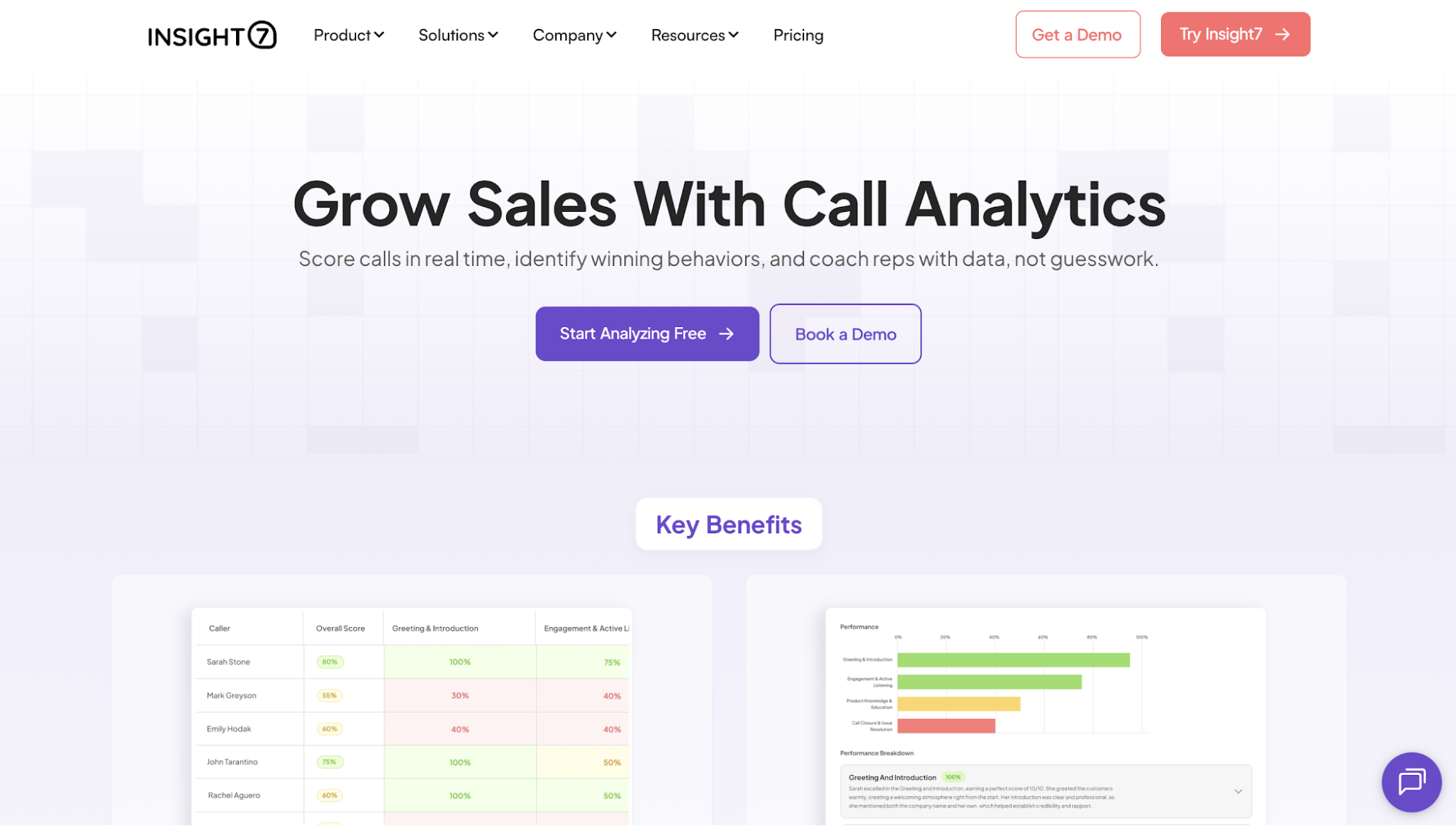
Insight7 brings that clarity to customer conversations by showing leaders how reps are performing and where coaching is needed.
When teams act on those insights consistently, they are better positioned to improve sales performance and build more predictable revenue growth over time.

