


Key Takeaways
- The CBN’s March 2026 Baseline Standards give regulated institutions 18 months to automate AML monitoring, with an implementation roadmap due to the Compliance Department within three months.
- Six requirements apply, covering BVN and NIN verification, contextual risk assessment, sanctions screening, multi-channel monitoring, automated case management, and annual model validation.
- The directive’s language about assessing the full customer profile extends to KYC calls and support chats.
- Insight7 scores every call against your compliance rubric & redacts BVNs automatically, closing the conversational gap of compliance.
A bank can have flawless transaction monitoring and still miss the moment a KYC agent skips a required question on an onboarding call. Nobody’s watching that conversation or scoring it, so it doesn’t show up in a transaction log.
The CBN’s March 2026 directive is focused on automating transaction-side AML compliance, and it’s specific about what that requires. But the directive’s own language, assess the full customer profile, not raw transaction data alone, points at a gap most banks haven’t mapped yet: the compliance risk sitting inside calls and chats, not ledgers.
Let’s break down exactly what the new CNB standard requires, why manual compliance can’t meet it, and where the gap sits that many banks aren’t planning for yet.
What the CBN’s March 2026 AI Directive Requires
The directive itself is called the Baseline Standards for Automated Anti-Money Laundering Solutions, and it applies to banks, mobile money operators, international money transfer operators, payment service providers, and every other institution the CBN regulates for financial crime compliance.
The CBN didn’t mince words about why. “As financial services become increasingly digitised and complex, manual AML/CFT/CPF controls are no longer sufficient to manage evolving risks,” the circular states.
Nigeria’s digital finance sector has grown fast. Mobile money volumes keep climbing as cross-border transfers multiply. A compliance process built around a human reviewing flagged transactions one at a time simply can’t keep pace. To fix this, the baseline standards outline six core requirements an automated system must handle:
- Customer Identification & Verification: Real-time checks integrated with national infrastructure like BVN and NIN.
- Contextual Risk Assessment: Evaluating activity against a customer’s full history, not just isolated ledger lines. As the CBN explicitly noted, automated solutions must “assess activity in the context of the full customer profile and not monitoring solely on raw transactional data.”
- Sanctions & PEP Screening: Screening against domestic and international watchlists, with the ability to block matching transactions instantly.
- Multi-Channel Transaction Monitoring: Real-time monitoring across cards, e-channels, deposits, and lending.
- Automated Case Management: Automatically generating, assigning, and tracking flagged alerts instead of letting them sit in an inbox.
- Governance & Model Validation: Annual independent audits of any AI or machine-learning model to check for accuracy, bias, and performance drift.
Pay close attention to that last point. The CBN expects AI to be part of the solution but it also demands strict oversight. You cannot deploy a “black box” system and call it compliant. Every model must be validated annually, with human review built directly into the workflow.
Why Manual Compliance Can’t Meet This Deadline
Many mid-sized Nigerian banks still rely on manual compliance reviews: an analyst pulls a file, runs manual checks, writes notes, and routes the case for approval. Across millions of daily transactions, this workflow breaks down long before the CBN’s 18-month deadline arrives.
Failing to adapt carries clear financial consequences. The CBN regularly enforces strict deadlines, having levied ₦1.69 billion in penalties under its 2025 consumer protection framework alone (including ₦430 million for delayed complaint resolutions.)
But focusing solely on transaction monitoring engines creates a major compliance blind spot. A complete customer profile includes verbal and written interactions e.g. onboarding calls, support chats, and phone confirmations.
A bank can deploy an advanced transaction monitor and still face heavy fines if an agent skips a required KYC prompt or omits a legal disclosure on a call.
Closing this gap means automating conversation intelligence alongside transaction tracking:
- Automated Compliance Scoring: AI evaluates 100% of customer calls against regulatory rubrics, immediately capturing skipped disclosures or flawed KYC steps that never show up in a transaction log.
- Automated PII Redaction: Compliance monitoring tools like Insight7 sanitize spoken sensitive data (like Bank Verification Numbers (BVNs), card numbers, and account details) eliminating human error.
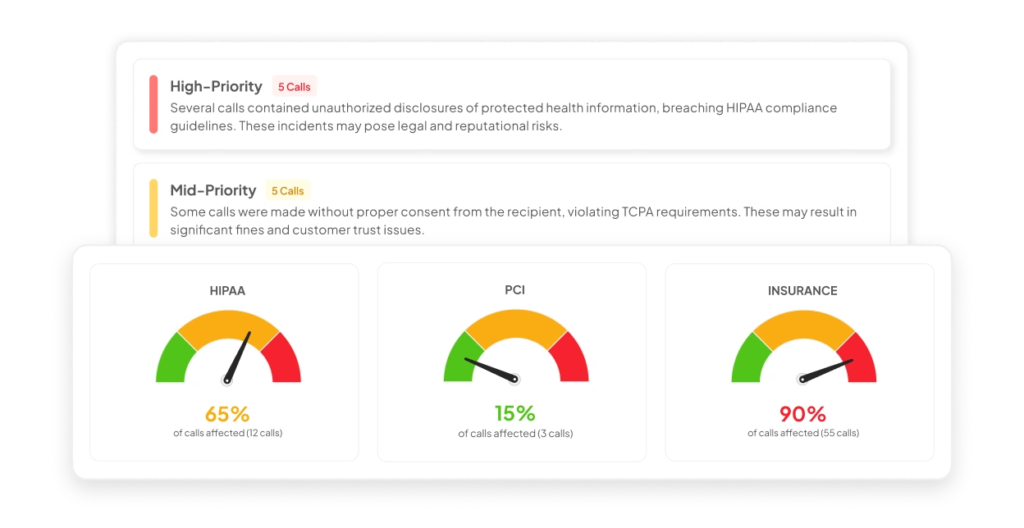
Because the CBN’s governance rules apply equally to conversational data and ledger engines, banks must secure both sides of the customer profile to avoid multi-million-Naira penalties.
What Nigerian Banks and CX Teams Should Do Before the Roadmap Deadline
The three-month window to submit an implementation roadmap to the CBN’s Compliance Department is short. While building your plan, focus on these three key actions:
- Audit your current review coverage: Most compliance and QA teams only sample 5% to 15% of interactions. Knowing your true baseline is the first step toward closing the automation gap.
- Separate transaction monitoring from conversational visibility: Setting up a core transaction engine takes months. But gaining visibility into KYC calls, onboarding conversations, and complaints can happen much faster. Tools like Insight7’s Call Quality Assurance can start scoring conversations against a compliance rubric well before the transaction engine goes live.
- Build the human-review layer early: The CBN’s push for AI validation and human oversight isn’t a footnote. Make sure your roadmap includes a clear, documented process for reviewing AI outputs.
Close Your Compliance Gaps Ahead of Schedule with Insight7
Eighteen months sounds like a long runway, until you map out core banking integrations, sanctions screening, and case management tools. Fortunately, the conversational side of your compliance profile doesn’t have to wait. Insight7 scores compliance-relevant calls and chats against your exact rubric today.
It automatically flags missed disclosures, identifies flawed KYC steps, and maintains an auditable trail of evidence for your next CBN examination.
Try Insight7 free to see your team’s compliance gaps and build a complete, CBN-ready roadmap today.
FAQs About AI Compliance Monitoring for Nigerian Banks
What AI tools help Nigerian banks comply with CBN’s anti-money laundering directive?
Tools like Insight7 add visibility into the conversational side of compliance, scoring KYC calls and customer interactions for the same kind of gaps a transaction engine can’t see.
How can I monitor customer calls for AML and KYC compliance in my Nigerian bank?
Automated call scoring, like you get from Insight7 evaluates every recorded interaction against a compliance rubric, flagging missed disclosures, incomplete KYC steps prohibited language, rather than relying on a small manually reviewed sample. This works alongside the transaction-monitoring system the CBN’s directive requires.
What does the CBN’s March 2026 AI directive mean for my contact center?
The directive itself targets transaction monitoring and sanctions screening, but its underlying logic, assess the full customer profile, extends naturally to the conversations a contact center handles. A CX team that can show what was said on a KYC or onboarding call is better positioned when compliance asks for evidence.
How do I automate compliance checks on customer service calls in Nigeria?
Automated call scoring against a configurable rubric replaces manual spot-checks with coverage across every recorded call, with sensitive data like BVNs and card numbers redacted automatically to keep the process itself compliant with data-handling rules.
Does CBN-compliant call recording require a specific type of software?
The CBN’s directive doesn’t name specific vendors, but it does require automated solutions with documented governance, including annual validation, bias testing, and human review of any AI involved. Reliable call monitoring and scoring tools like Insight7 should be able to produce that audit trail on request.








