Call center agents are expected to handle difficult conversations well. With proper training, they are tasked with following quality standards and staying confident as customer needs change.
But how do you continue reinforcing that behavior when tasks and responsibilities pile up? That is where call center coaching software makes the job easier.
In this guide, we’ll explore the five best call center coaching software solutions and the different ways they support call center agents beyond call coaching.
These are the five best call center coaching software solutions for 2026:
The goal of call center coaching is not simply to improve individual calls. It is to improve agent performance by building the skills agents need to consistently deliver better customer experiences over time.
That need is becoming more important as frontline roles evolve. Gartner reported in 2026 that, based on a survey of 321 customer service and support leaders conducted in October 2025, 84% of respondents plan to add new skills to the agent role and adjust hiring profiles.
The shift comes as organizations expect automation to handle more routine tasks while human expertise remains important for complex or emotionally sensitive interactions.
For managers, this puts more emphasis on understanding where each agent needs to develop and reinforcing those skills as their role changes.
That means coaching should support every stage of an agent’s development. From onboarding through ongoing performance improvement, managers need visibility into the behaviors that influence customer interactions and a structured way to reinforce them.
Here are the core capabilities your coaching software should help strengthen.
Every customer conversation depends on how well an agent communicates.
Agents need to ask effective questions, explain information clearly, listen carefully, and respond confidently in different situations. They also need to adapt their communication style when call sentiment changes or conversations become emotionally charged.
Coaching software analyzes customer conversations to identify patterns and key moments that are difficult to spot through manual reviews alone. Instead of relying on occasional observations, they can review call recordings and provide relevant feedback based on actual customer interactions.
Insight7 customers have seen how much faster conversation analysis can surface customer insights.
Jim Akins, Head of Operations at Tri County Metals, says his team can review customer calls for insights “in minutes vs weeks,” helping them identify opportunities to improve both customer experience and sales.
Faster access to those insights gives managers more opportunities to coach from what agents are doing in real customer interactions. Over time, this can help teams reinforce more consistent communication habits instead of relying on occasional call reviews.
Book a demo now and learn how Insight7 can improve your call center experience in no time.
Even experienced agents struggle when they cannot quickly find accurate information.
Routine inquiries about products, policies, or internal procedures can still slow conversations when agents cannot quickly find accurate information. As organizations introduce new services or update existing processes, keeping everyone informed becomes even more challenging.
Call center coaching software should make knowledge development part of the coaching process instead of treating it as a separate activity.
Some platforms reinforce learning through coaching sessions, while others provide immediate access to verified information during live customer conversations.
Insight7, for example, combines an AI knowledge base with live assist so approved information and suggested responses can appear on the agent’s screen while a conversation is happening.
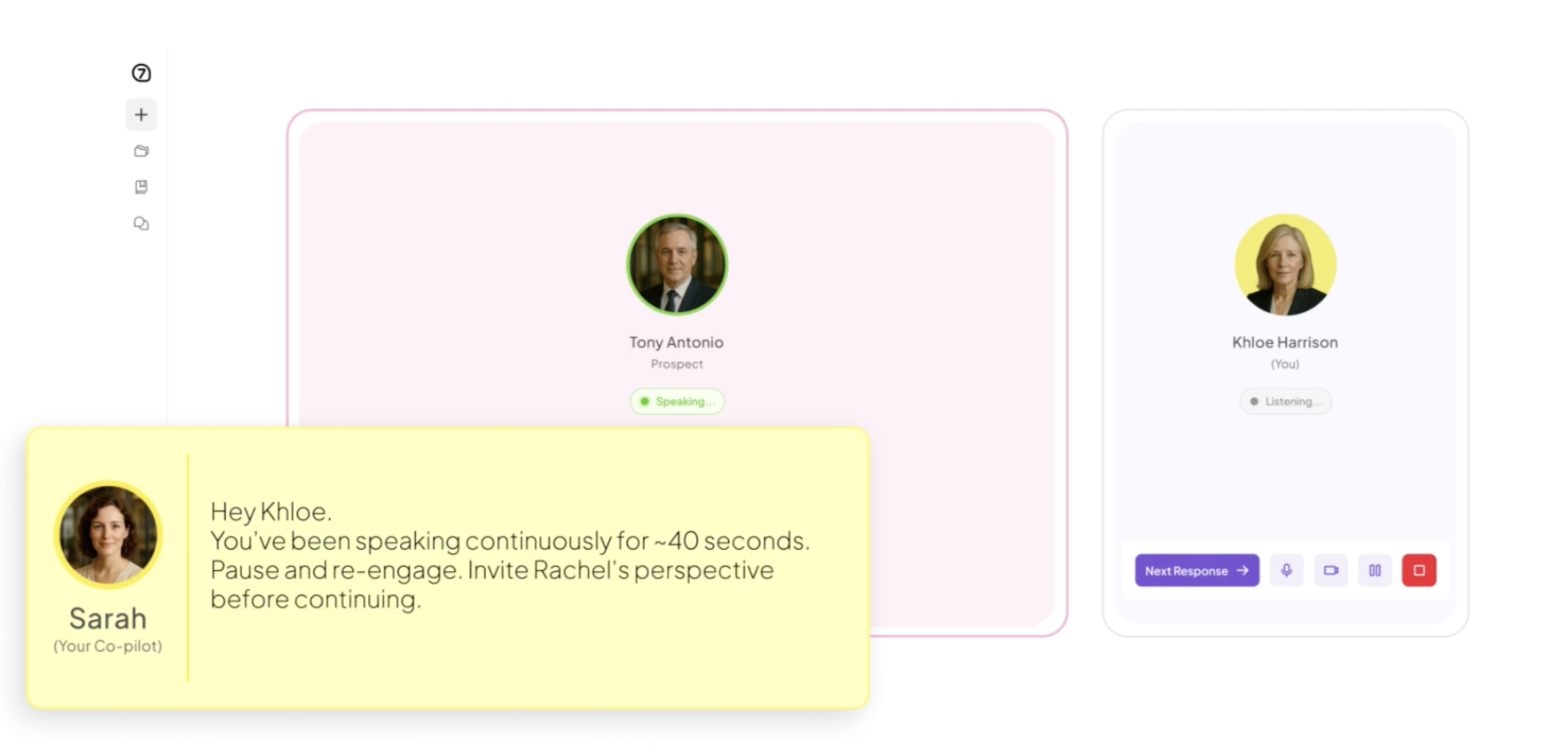
Both approaches build agent confidence by helping them answer questions more accurately while reducing unnecessary escalations.
Quality assurance is one of the most valuable sources of coaching opportunities.
Evaluation scores help managers understand whether agents consistently follow required processes, communicate professionally, and meet regulatory or internal standards.
The most effective coaching platforms go beyond producing quality scores. They connect quality assurance workflows with coaching by helping managers understand why performance changed and turn those findings into meaningful coaching conversations.
With Insight7, every conversation can be evaluated against the team’s QA scorecard, and the resulting scores connect directly to coaching.
Managers can review the specific call moments behind an evaluation and use those findings to focus development on the agent behaviors that need attention.
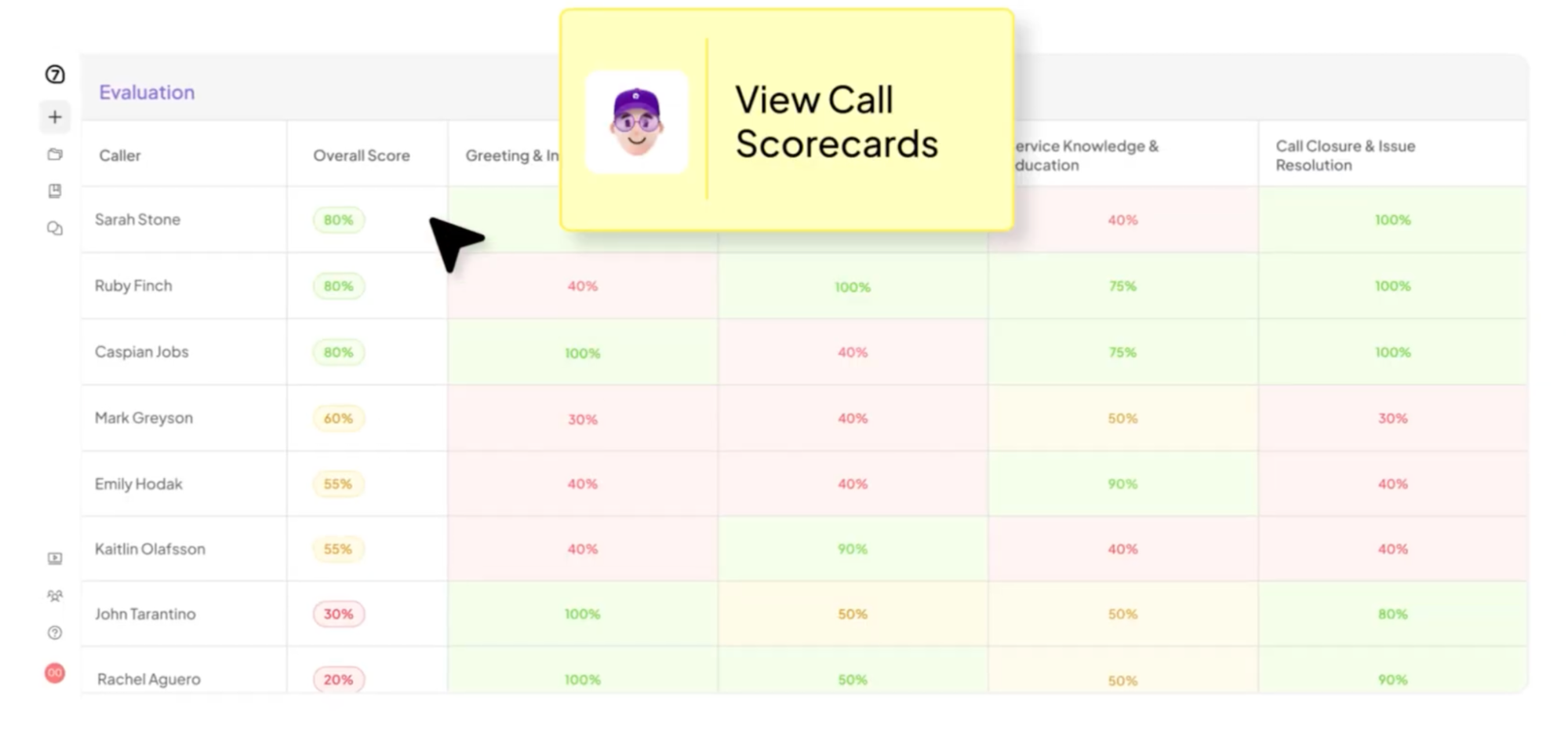
This makes quality management part of an ongoing development process rather than a reporting exercise completed after the interaction ends.
Agent development should continue well beyond onboarding.
As customer expectations change and business priorities evolve, agents need ongoing coaching to reinforce existing skills and develop new ones. Without a structured learning process, coaching often becomes inconsistent and depends heavily on individual managers.
Call center coaching software supports continuous development by helping organizations deliver coaching regularly, track performance over time, and reinforce learning as new coaching needs emerge.
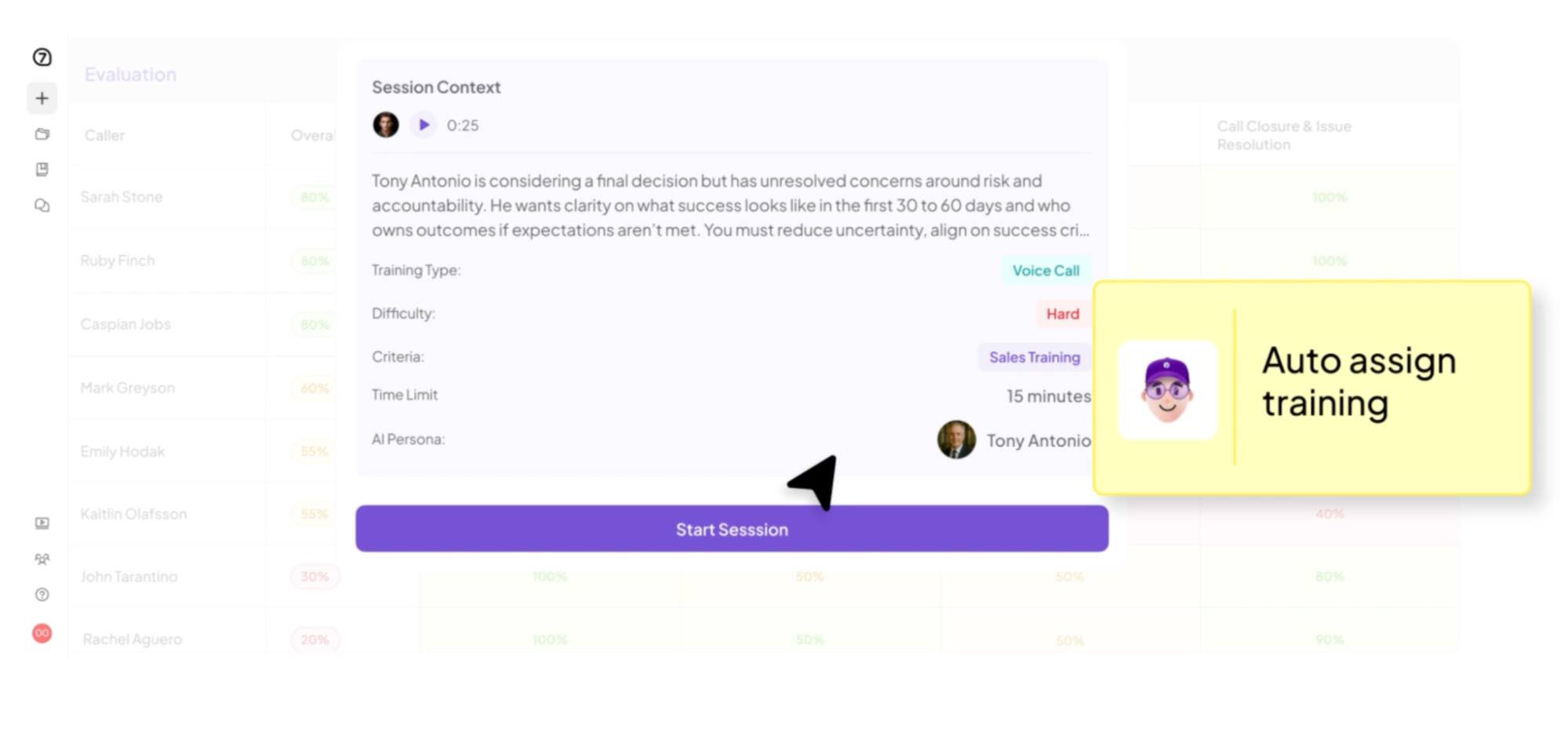
Insight7 connects that process directly to real call performance. When its Coaching Autopilot identifies a skill gap from call scorecards, it can create a targeted AI roleplay scenario for the agent to practice instead of leaving the finding in a QA dashboard for a manager to act on later.
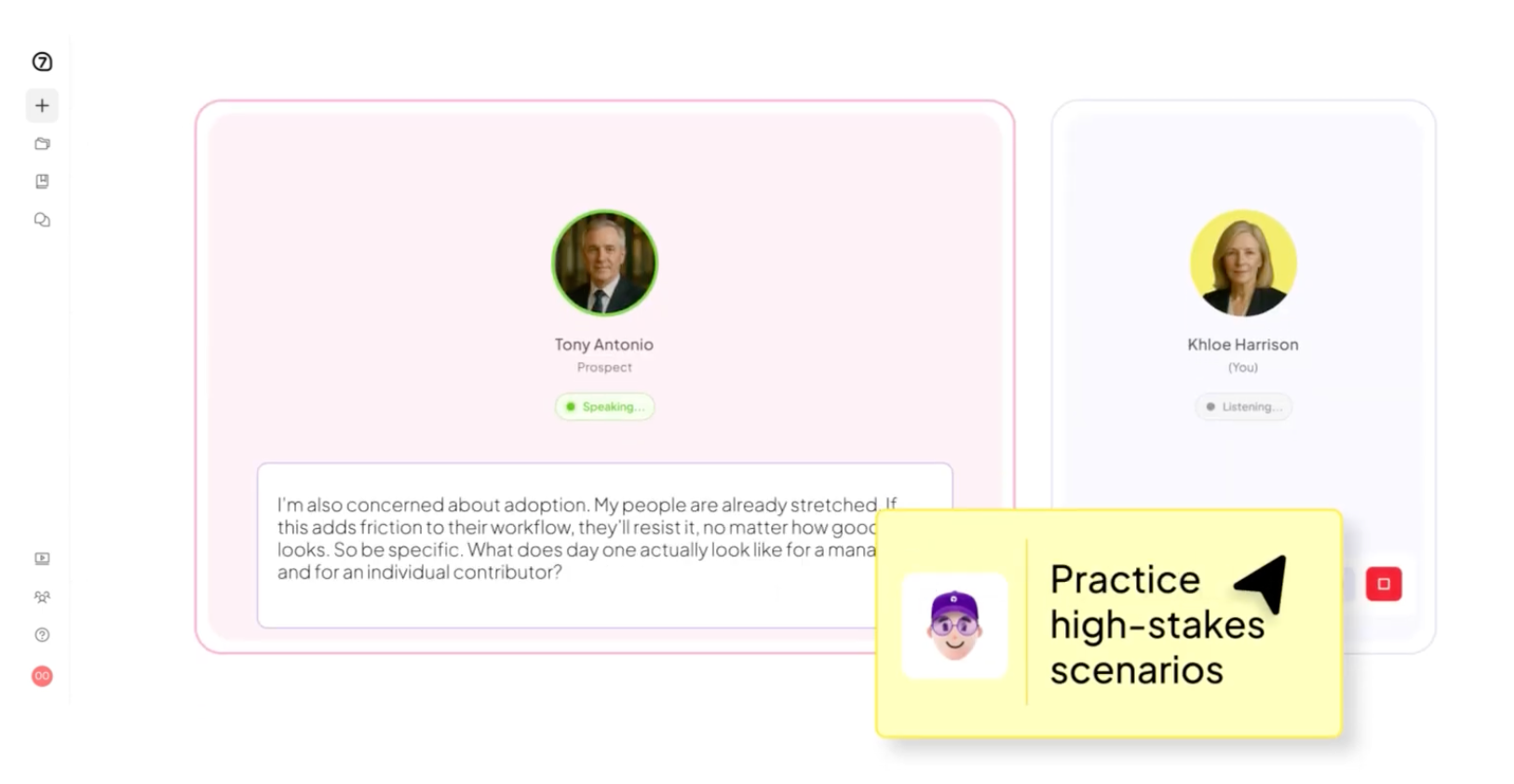
This creates a more consistent experience for both managers and agents while making coaching easier to scale for multiple agents.
Developing capable agents also means supporting agent retention by helping them stay engaged with their own improvement.
Clear coaching goals, regular feedback, and visible progress encourage agents to take an active role in their development. Team leaders also gain a better understanding of which coaching efforts lead to measurable improvements and which approaches need to be adjusted.
Insight7 supports this with personalized coaching based on real call data, where agents can see the skill gaps identified in their conversations and practice those areas through targeted roleplay.
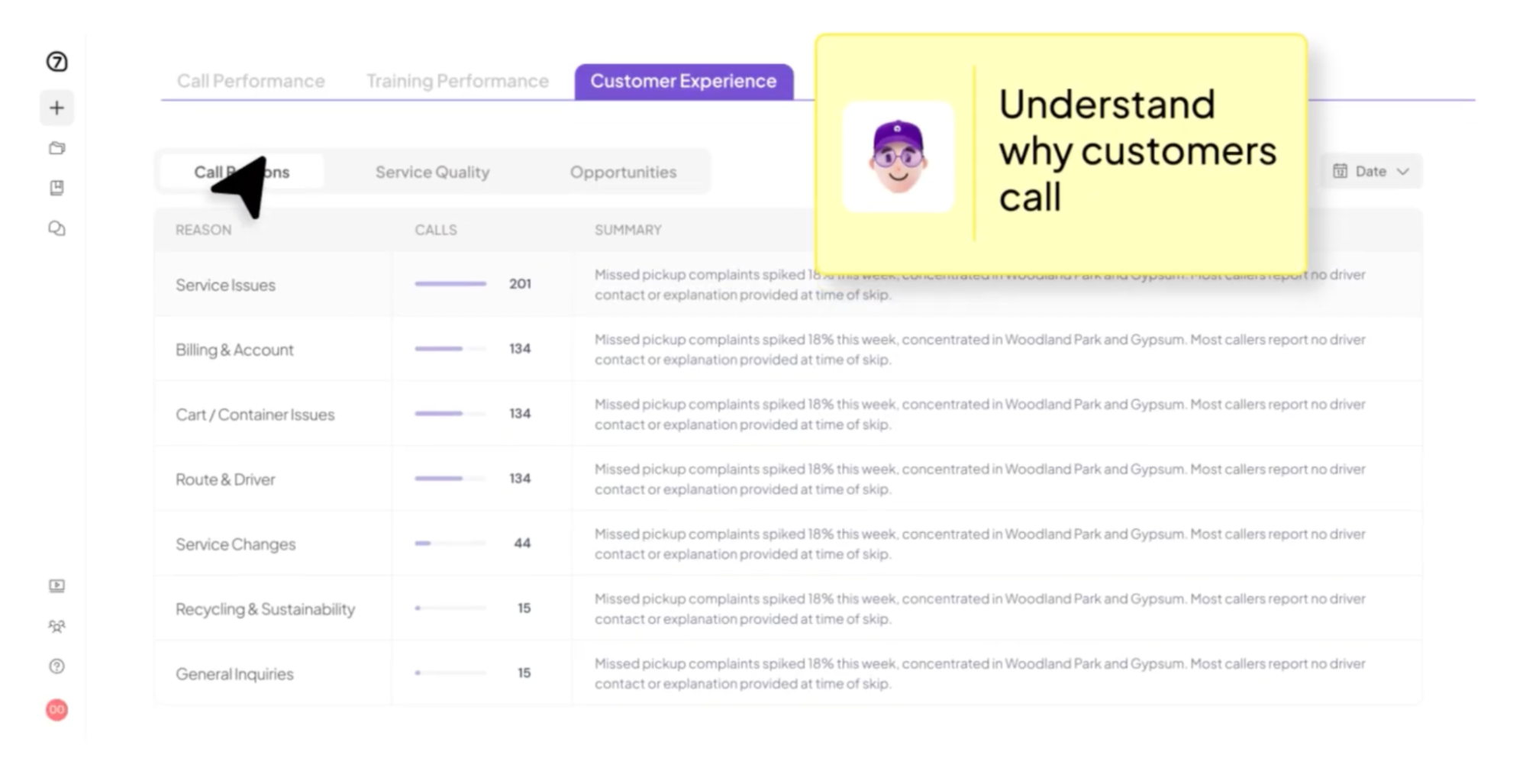
When coaching becomes part of everyday operations, organizations build stronger performance habits that continue long after individual coaching sessions are complete.
Now that we’ve covered the capabilities effective coaching software should help develop, the next step is understanding how different platforms approach those challenges.
The five platforms in this guide represent different parts of the coaching process. Some focus on continuous learning, while others specialize in quality management, knowledge enablement, or real-time guidance during customer conversations.
Platform | Main Coaching Approach | Key Strengths | Pricing |
Insight7 | Connects conversation analysis, coaching, practice, live guidance, and performance measurement in one system |
|
|
Centrical | Uses performance and quality signals to recommend the next coaching action |
| No public pricing available |
Guru | Supports coaching by making verified company knowledge easier to access during daily work |
| No public pricing available |
Level AI | Turns automated quality evaluations into measurable coaching priorities |
| No public pricing available |
Cresta | Gives agents in-the-moment support while customer conversations are happening |
| No public pricing available |
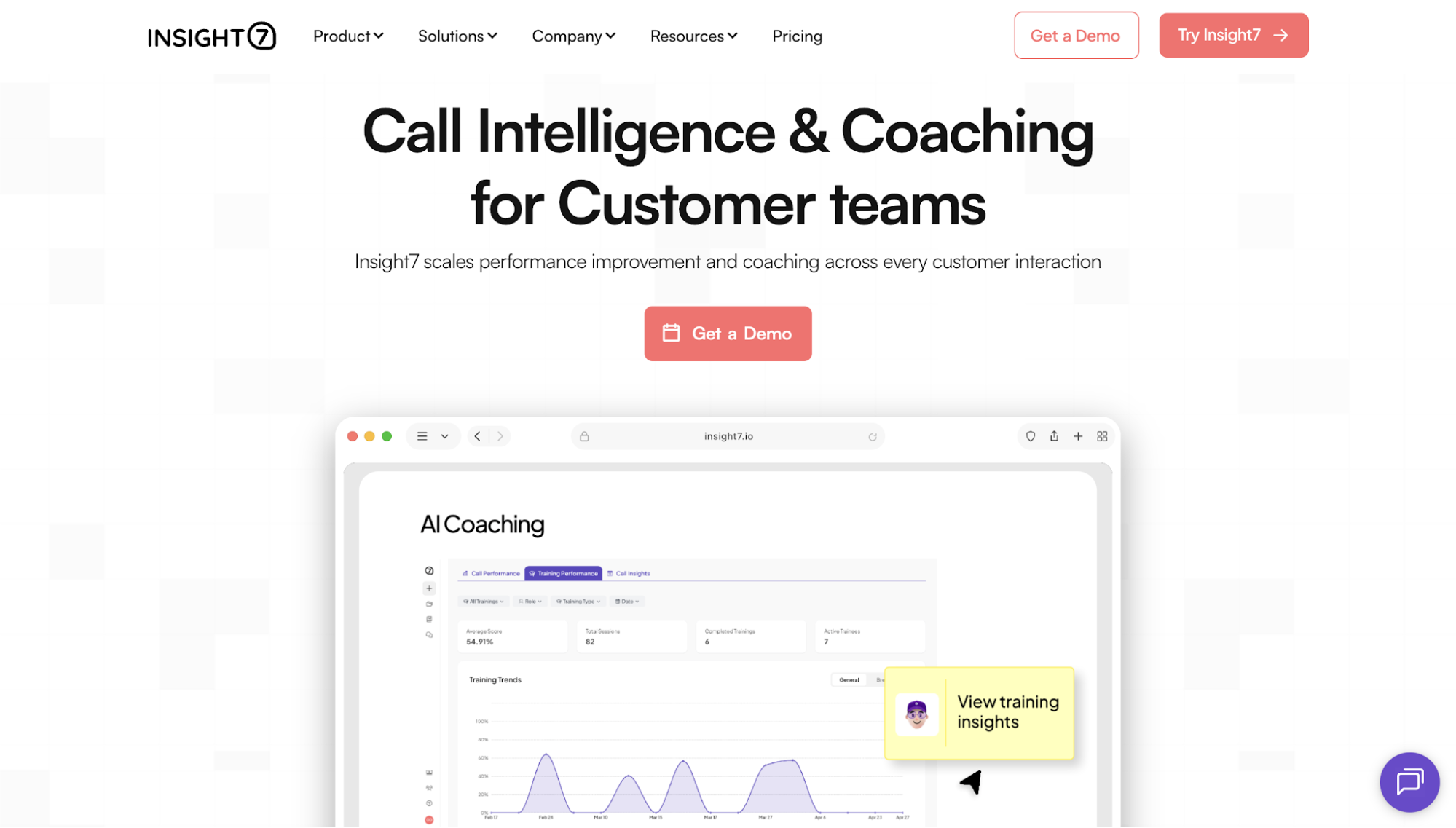
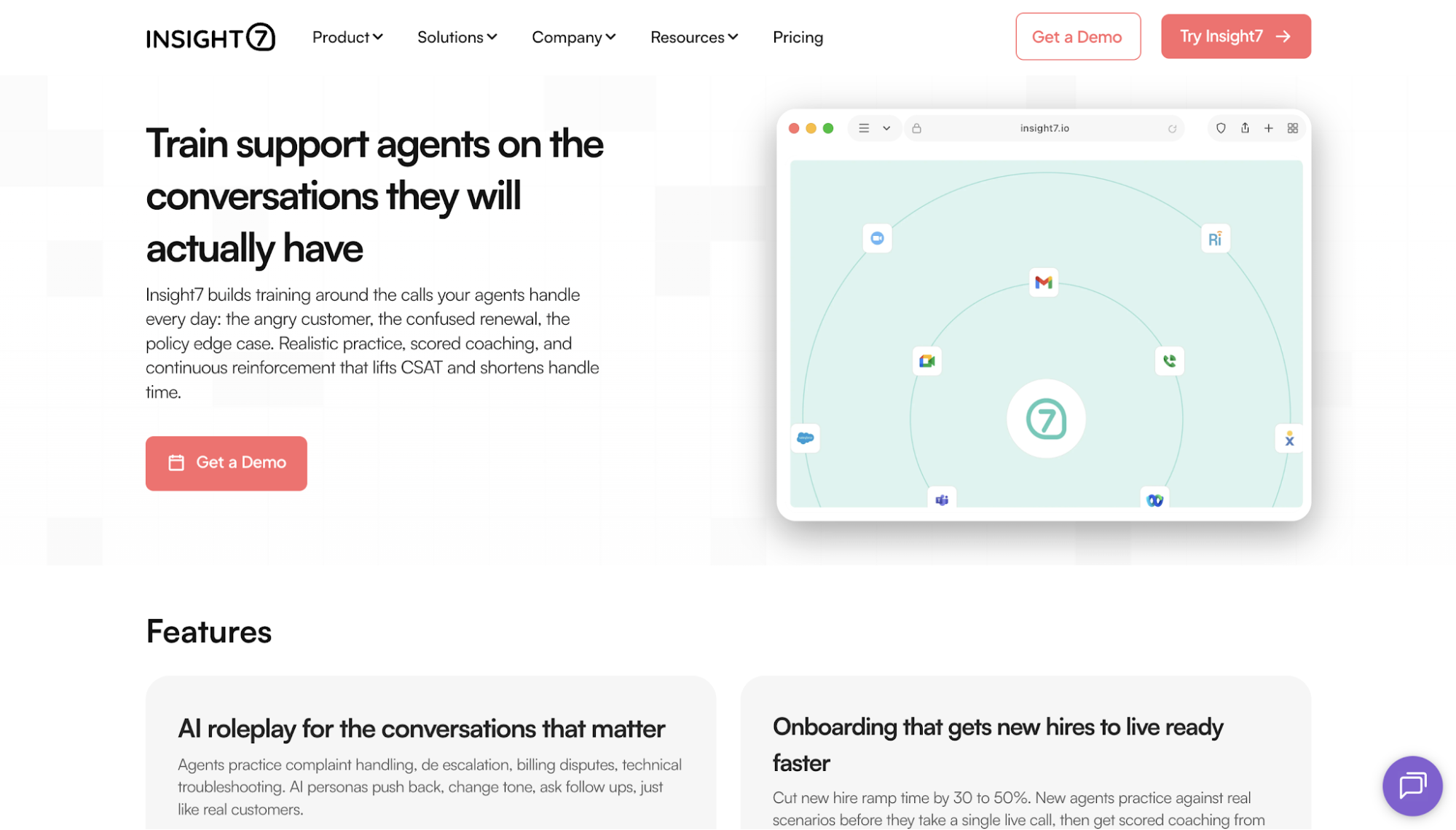
Insight7 is an AI call intelligence and coaching platform that uses conversation analytics to turn customer interactions into measurable performance improvement.
Rather than treating coaching as a separate activity from quality monitoring, it connects conversation analysis, coaching tasks, practice, and ongoing performance measurement within one platform.
Its approach centers on helping managers develop agents throughout their entire coaching journey.
These approaches create a continuous coaching process that supports call center agents from improving to growing over time.
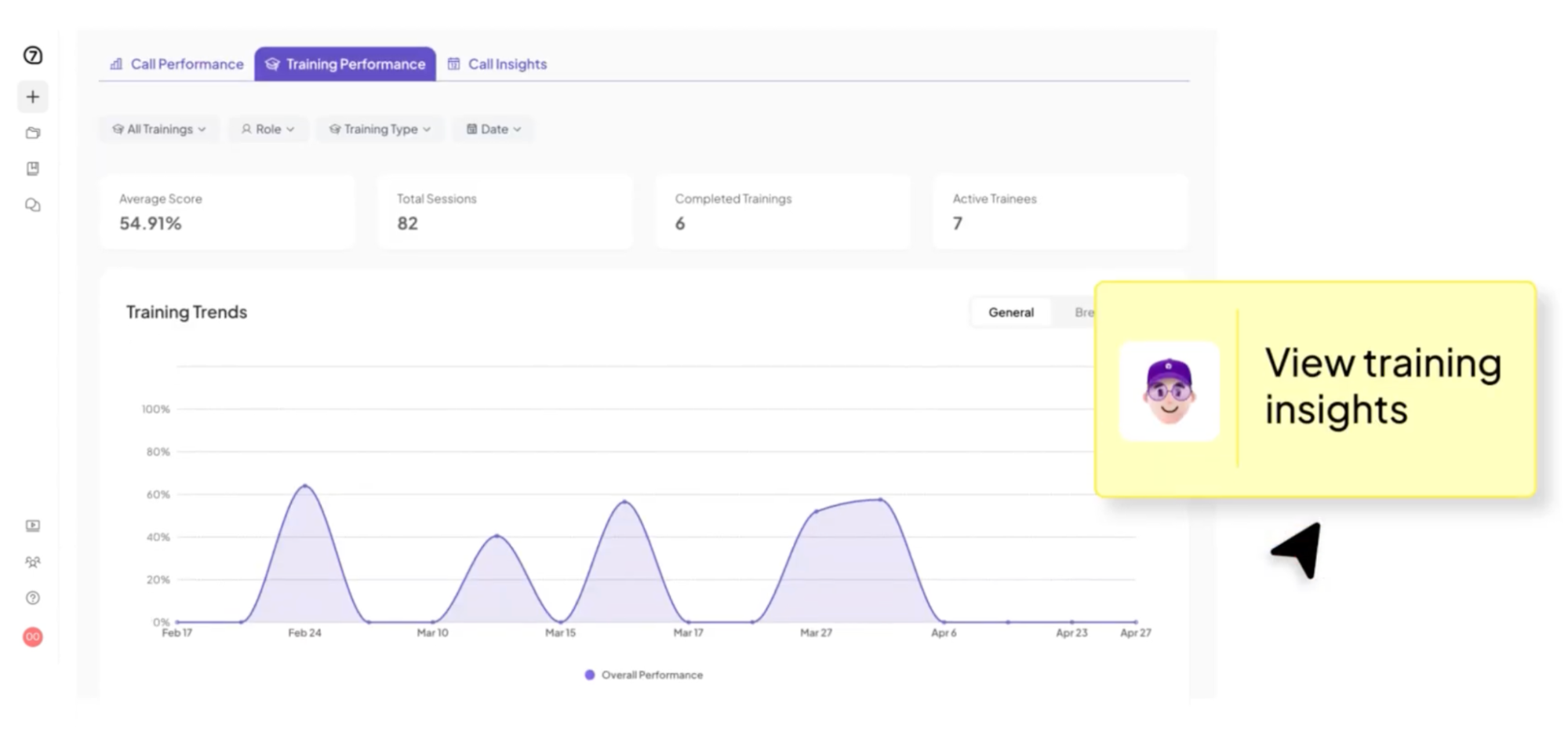
Unlike many coaching platforms that solve only one part of the coaching process, Insight7 brings those activities together within a single coaching workflow. Managers can use the same system to understand where agents need support and whether coaching is improving performance.
That becomes especially useful when conversation volume makes manual evaluation difficult to scale. Elise Dietrich, CPO at TripleTen, says her team evaluates more than 6,000 calls every month with Insight7, giving them much broader visibility into customer conversations.
With that visibility, managers have more evidence to work from as they decide where coaching is needed. Keeping evaluation, coaching, practice, and progress measurement connected also makes the development process easier to maintain as call volume grows.
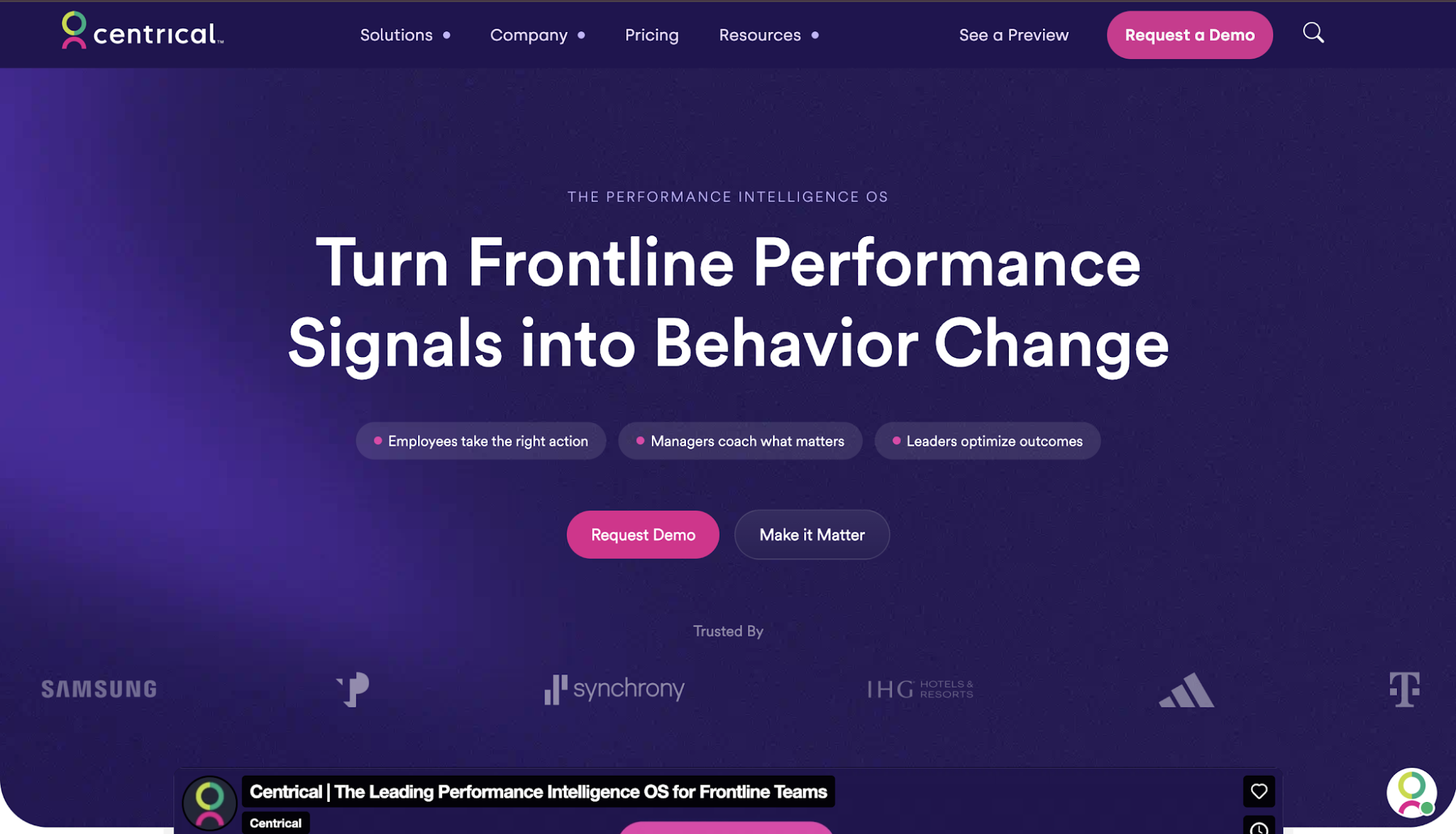
Centrical is a frontline performance platform that brings coaching, quality management, learning, and gamification into one system.
It uses performance insights and quality data as coaching signals that direct the next action. Managers can then reinforce specific behaviors through personalized learning and practice, which makes development more responsive to how each agent is performing.
No public pricing available.
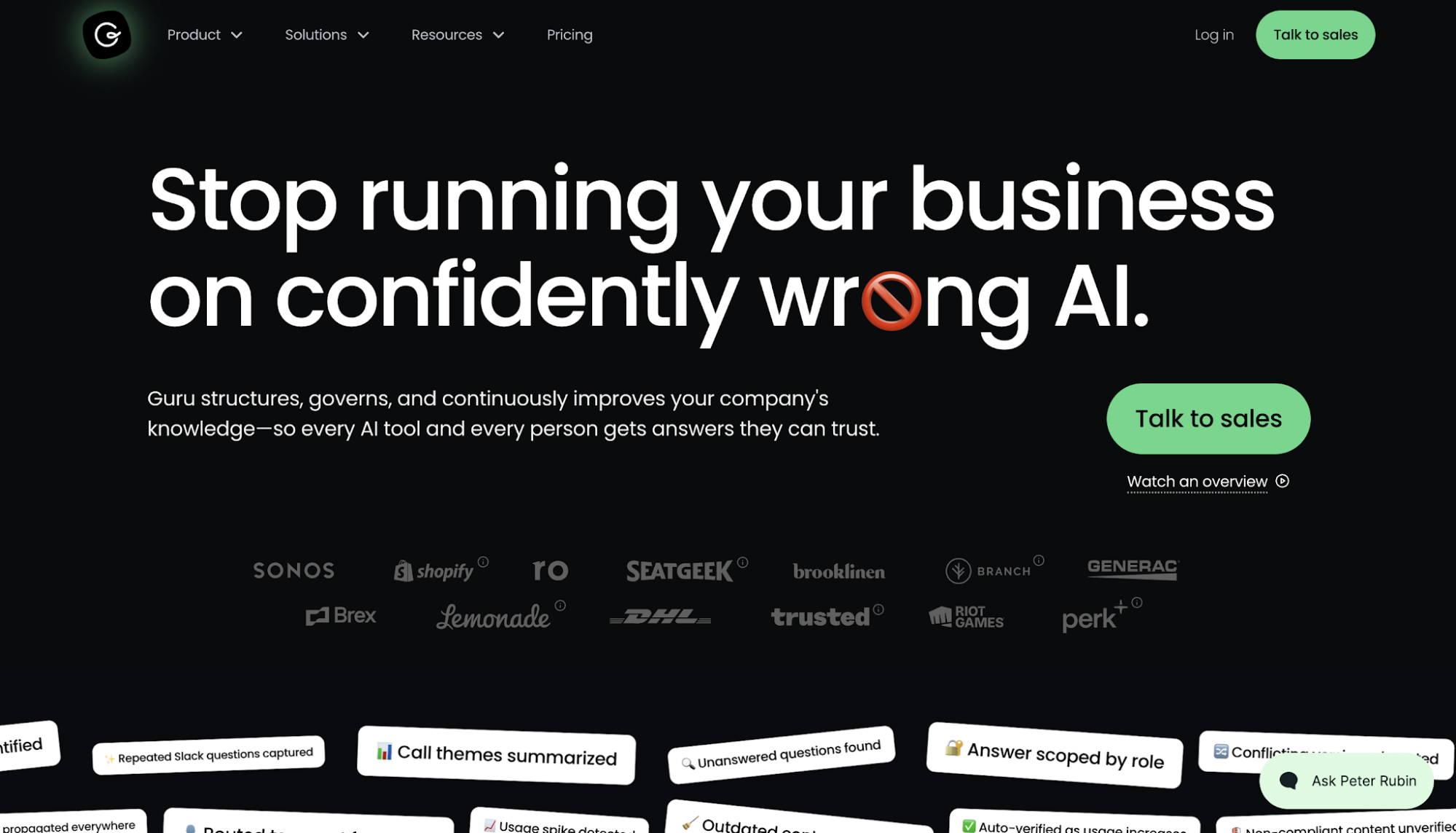
Guru is an AI-powered knowledge platform that helps organizations capture, organize, and deliver trusted information where employees work. It reduces the time agents spend searching for answers by making verified knowledge easier to access during their daily workflows.
Its approach to coaching focuses on strengthening one of the biggest drivers of agent performance: knowledge.
When agents have immediate access to accurate information, managers spend less time correcting recurring mistakes and more time coaching communication, service quality, and customer interactions.
No public pricing available.
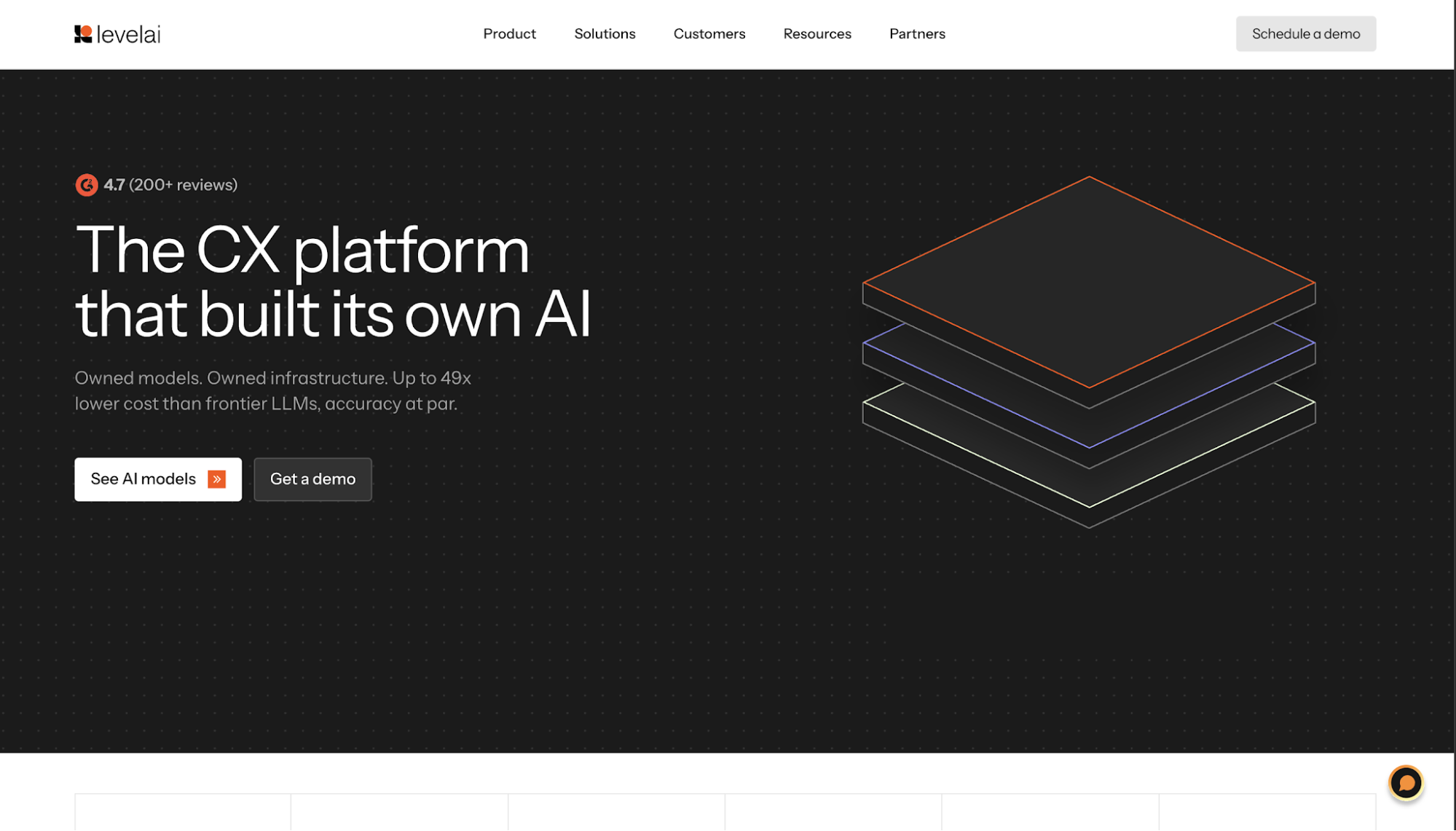
Level AI is a customer experience platform that helps organizations evaluate customer conversations, automate quality assurance, and uncover coaching opportunities using artificial intelligence.
It replaces manual call sampling with AI-powered evaluations that provide broader visibility into agent interactions and performance.
Its coaching approach begins with quality management. By automatically identifying performance data and evaluation trends, the platform helps managers prioritize coaching based on measurable behaviors.
No public pricing available.
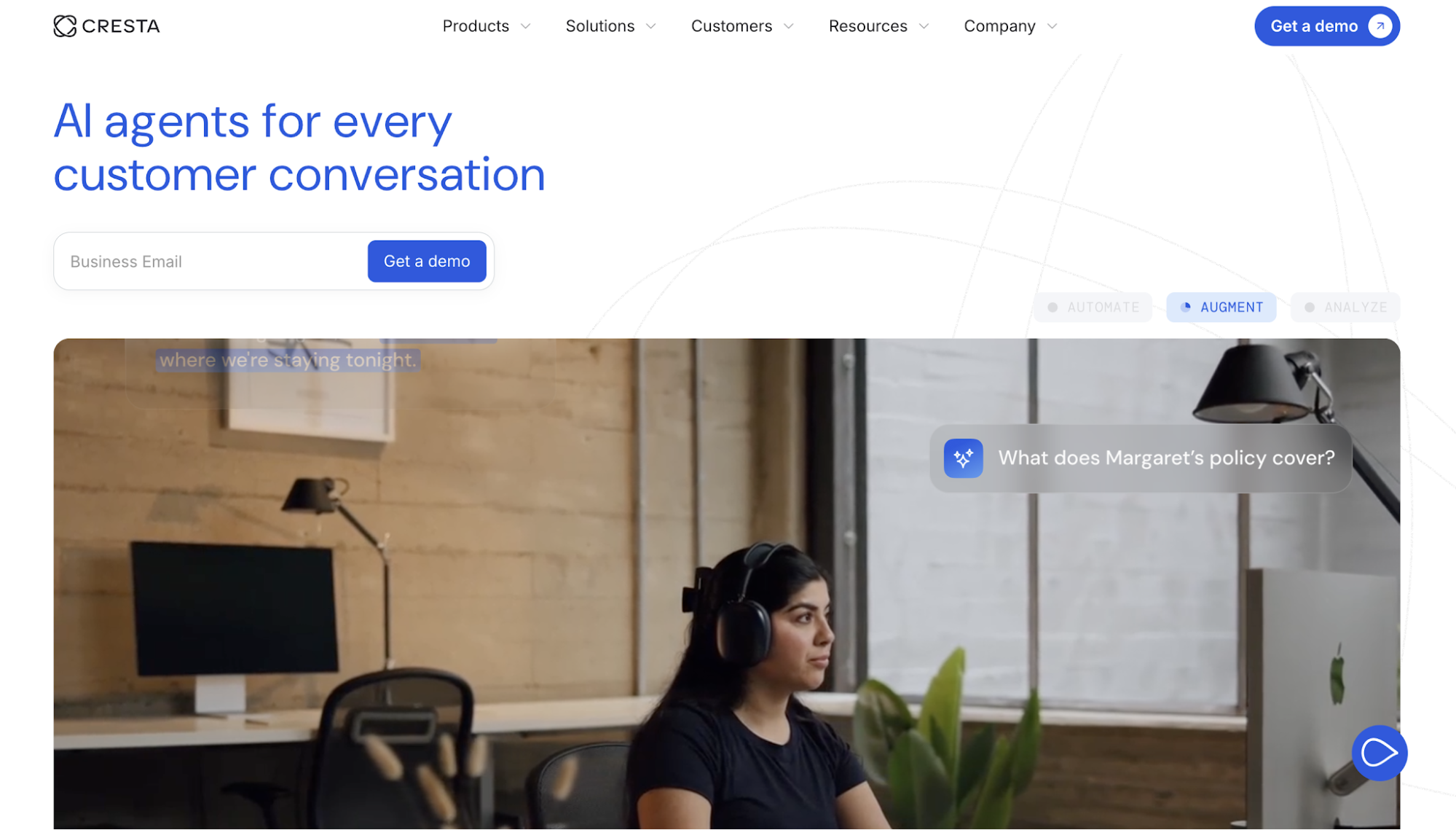
Cresta is an AI platform designed to improve customer conversations through real-time guidance, conversation intelligence, and AI-powered automation. It supports contact center teams by helping agents respond more effectively while conversations are still happening.
Its approach centers on real-time coaching and learning in the moment. Agents receive instant feedback during live conversations, giving them an opportunity to apply best practices as each interaction occurs.
No public pricing available.
Choosing the right platform is only the first step. The impact of call center coaching software depends just as much on how it is introduced and used within the organization.
The most successful implementations treat coaching as an ongoing process rather than a one-time rollout. Clear priorities, consistent coaching habits, and regular follow-up help teams get more value from the software over time.
Before introducing new coaching workflows, understand where your team stands today. Review quality assurance data, customer feedback, and performance metrics to identify the behaviors that need the most attention.
Without a clear starting point, it becomes difficult to measure whether coaching is making a meaningful difference. Managers should begin with a baseline that reflects current team performance so future improvements are easier to track and validate.
Trying to improve every skill at once often creates confusion for both managers and agents. Coaching becomes more manageable when everyone is working toward the same development goal.
Choose one priority that aligns with your current business needs. That could be improving compliance, reducing product knowledge errors, strengthening objection handling, or developing de-escalation skills. Once that area shows consistent progress, expand coaching into other areas.
Coaching software works best when agents understand how it supports their development. They should know what information is being reviewed, how coaching decisions are made, and how progress will be measured over time.
When those expectations are unclear, coaching can feel like a continuous evaluation tool rather than a means of professional development. Open communication helps build trust and encourages agents to view feedback as an opportunity to improve instead of something to avoid.
Software creates consistency, but managers still need a structured coaching routine. A repeatable process makes coaching easier to deliver regardless of team size or individual management style.
Practical call center coaching techniques usually follow five steps:
With Insight7, building a repeatable process becomes easier because managers no longer have to spend hours turning calls into usable evidence first.
As Kevin Smith, Partner at Riggs Partners, puts it, he says work that previously took days to transcribe recordings and aggregate insights can now be completed in minutes because of the platform’s efficiency.
Since managers can now reach the relevant evidence faster, they can spend less time preparing for coaching and more time helping agents act on what customer conversations truly reveal.
Coaching should lead to measurable changes in performance, not simply more coaching sessions. Regular reviews and coaching effectiveness scores help managers determine whether targeted behaviors are improving after feedback has been delivered.
If progress stalls, revisit the original coaching strategy before introducing new actions. In some cases, the issue lies in how the coaching was delivered.
With Insight7, managers can track performance trends alongside coaching activity to see whether the behaviors they’re targeting are improving over time. This gives them a clearer basis for deciding whether to continue the same coaching approach or make an adjustment.
If progress stalls, managers can revisit the original coaching strategy before introducing new actions. In some cases, the issue lies in how the coaching was delivered.
In others, the original performance gap may have been diagnosed incorrectly. Reviewing results regularly helps teams adjust their approach before small issues become long-term performance challenges.
Better agent performance rarely comes from more coaching sessions alone. It comes from giving managers a clearer way to identify what needs attention and how to reinforce it.
When coaching opportunities are identified early, teams can address them before they become recurring habits that affect customer conversations.
With Insight7, each coaching decision becomes part of a longer development path. Managers can focus agents on the next skill they need to build, then continue raising expectations as their performance improves.
This is also something that G2 platform users, where Insight7 currently holds a 4.7 out of 5 rating, have also specifically highlighted in their feedback.
Reviewers have spoken positively about the platform’s fast-tracked ability to analyze customer conversations and turn large amounts of qualitative data into useful insights without sacrificing quality.
Over time, with the help of the platform, agents have become better prepared for the situations they face every day. They develop stronger judgment, communicate more consistently, and handle customer conversations with greater confidence.

