Contact center QA managers and operations directors evaluating AI quality tools face a coverage gap: manual QA teams review only 3 to 5% of calls, leaving most quality issues undetected. Insight7 is the stronger choice for contact centers that need configurable behavioral scoring on 100% of calls; Scorebuddy is better for teams running manual QA alongside automated scoring; Qualtrics XM is better when call quality data needs to integrate with survey-based CX metrics.
AI quality assurance for call centers has moved from niche technology to operational standard faster than most QA teams anticipated. The tools now range from general-purpose AI that can handle call center QA as one of many tasks to purpose-built platforms designed entirely around contact center interaction quality. This guide covers six of the strongest options evaluated specifically for behavioral scoring, coaching output, and coverage depth.
What Is AI Quality Assurance for Call Centers?
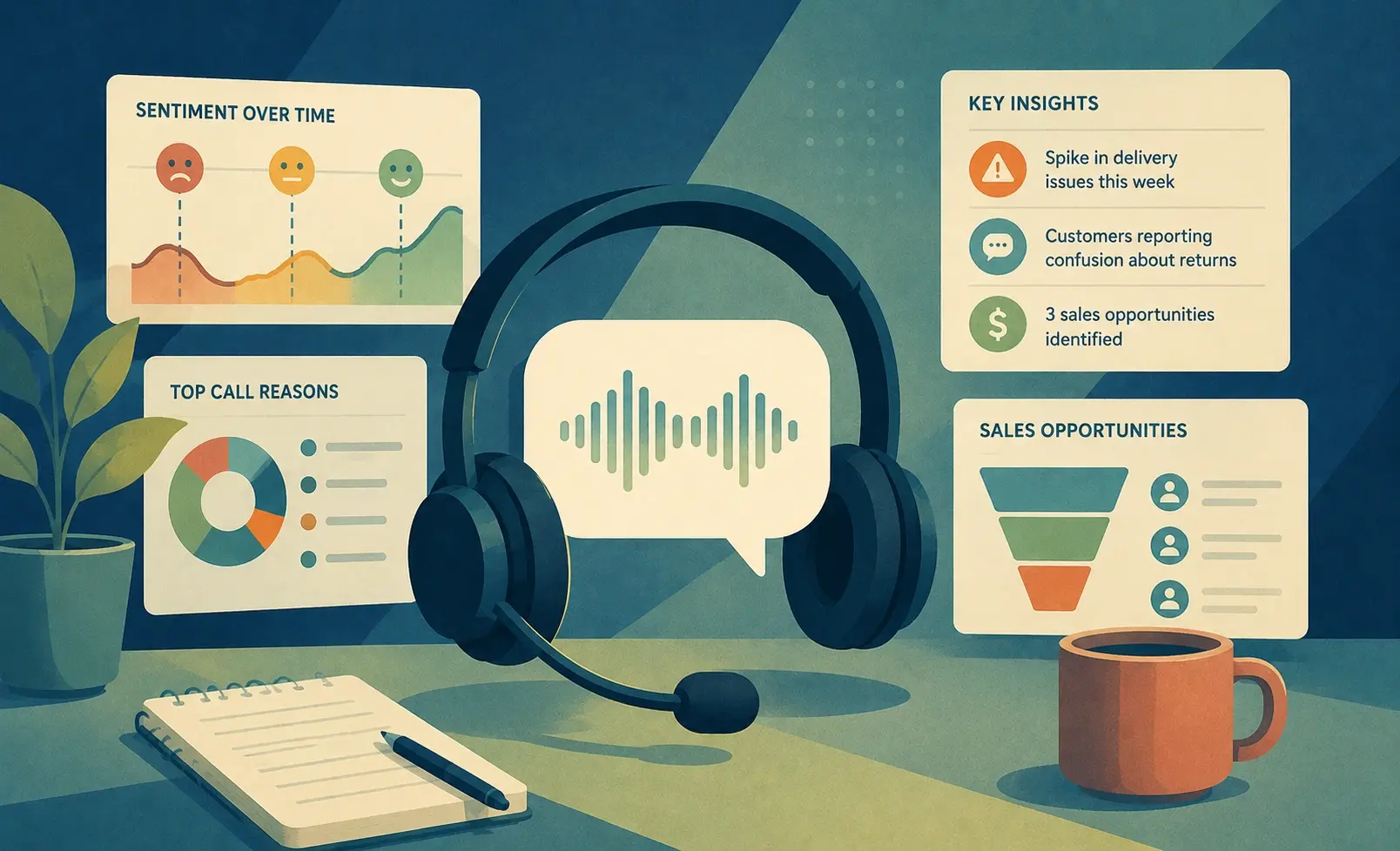
AI quality assurance for call centers is the automated evaluation of agent-customer interactions against defined quality criteria, using machine learning and natural language processing to score calls, identify compliance issues, and surface coaching opportunities. Unlike traditional QA, which relies on supervisors manually reviewing a 3 to 5% sample of calls, AI QA can evaluate 100% of interactions and deliver scored results within minutes of each call ending.
The core components include: transcription, evaluation against weighted criteria (scripts, behaviors, compliance items), score aggregation into agent-level scorecards, and alert generation for issues requiring attention. More advanced platforms add coaching workflow integration, so flagged calls automatically generate practice sessions or manager reviews.
How Do You Improve QA Score in a Call Center?
Improving QA scores requires knowing which criteria are pulling scores down and whether the cause is a skill gap or a process gap. AI QA helps distinguish these because it scores every call: consistent weakness across all call types suggests a training need, while situational weakness suggests a script or process issue. Tactically: audit criteria weights, identify the three criteria with the lowest team averages, and build coaching plans around those specific behaviors.
What percentage of call center calls should be evaluated for quality?
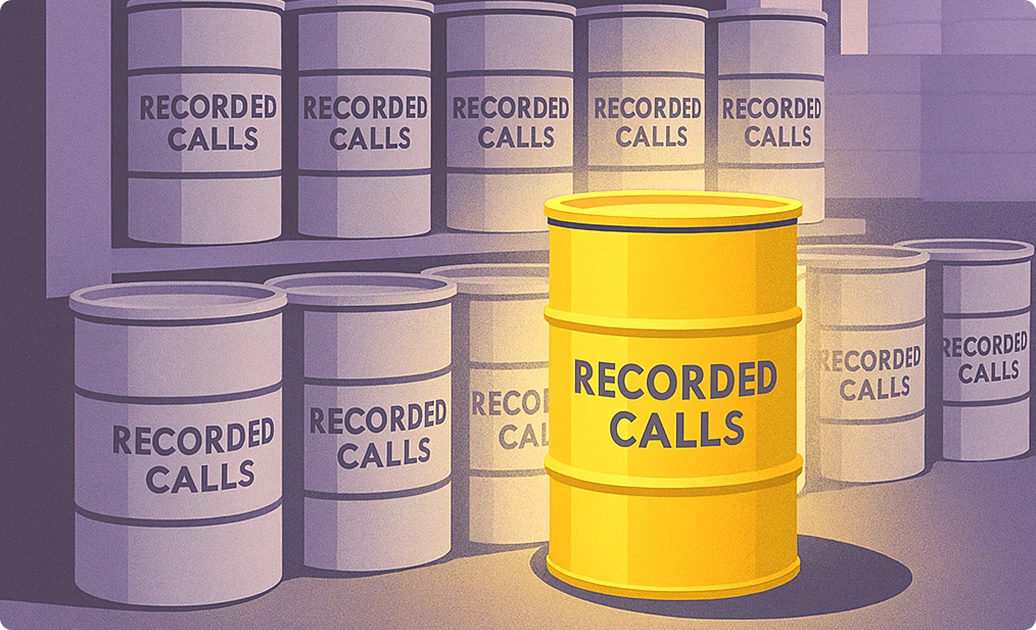
Manual QA teams typically evaluate 3 to 5% of calls. At that coverage rate, a contact center handling 10,000 calls per month sees QA data on 300 to 500 interactions, while 9,500+ go unreviewed. According to ICMI research on contact center quality programs, AI-powered QA platforms that evaluate 100% of calls identify systemic patterns that random sampling misses, particularly for compliance issues that occur at low frequency but with high risk. For regulated industries, 100% coverage is increasingly a baseline expectation rather than a differentiator.
Methodology
This evaluation covers six platforms selected for relevance to contact center interaction quality: behavioral scoring, call criteria configuration, coaching output, and coverage capability. Platforms were assessed on scoring configurability (30%), coverage depth (25%), coaching integration (25%), reporting (15%), and setup complexity (5%). General call recording tools without structured scoring were excluded.
The 6 Best AI Tools for Contact Center Interaction Quality
The platforms below cover the range from purpose-built QA scoring to hybrid manual-and-automated workflows. Each includes a limitation assessment and a clear best-fit statement.
Insight7
Insight7 is best suited for contact centers running high-volume inbound or outbound operations that need 100% call coverage with criteria-based behavioral scoring and a connected coaching workflow.
Insight7 is built for teams that need to evaluate 100% of calls against configurable, weighted behavioral criteria rather than keyword lists or static scripts. The platform supports dynamic scorecard routing, where it detects call type (sales, support, onboarding) and applies the correct criteria set automatically. Criteria are weighted and subdivided into main items, sub-criteria, descriptions, and a "what good/poor looks like" context column that calibrates AI judgment to match human QA standards.
Evidence-backed scoring links every criterion score to the exact transcript quote that generated it, making results auditable and defensible. Agent scorecards aggregate multiple calls into a single performance view with drill-down access to individual interactions.
Insight7 connects QA directly to coaching: low-scoring criteria on a scorecard can automatically trigger AI roleplay sessions that the manager approves before deployment. TripleTen, an AI education company processing over 6,000 coaching calls per month, went from Zoom hookup to first analyzed batch in one week.
Limitation: out-of-box scoring accuracy requires 4 to 6 weeks of tuning to align with your team's QA standards. First-run scores without company-specific context can diverge from human judgment. Post-call only, no real-time agent assist.
Best for: Contact centers that need 100% call coverage with configurable behavioral scoring and coaching workflow integration.
Scorebuddy
Scorebuddy is designed for teams running a hybrid QA model: some calls evaluated manually by QA analysts, others by automated scoring. The platform provides a structured scorecard builder for human evaluators alongside automated scoring capabilities. This hybrid approach works well for teams that have invested in a QA analyst function and want to augment rather than replace it.
Reporting is strong at the team and agent level, with calibration features that help QA teams align their human scores before automation is introduced. The platform does not have native coaching integration at the depth of purpose-built coaching platforms, but it connects to several LMS tools.
Best for: Teams with established QA analyst workflows looking to add automation without replacing their human QA function.
Qualtrics XM
Qualtrics XM treats call quality as one data stream within a broader CX measurement system. QA scores sit alongside CSAT surveys, NPS data, and digital feedback in a single platform. The scoring capabilities are solid but less configurable than purpose-built tools. The strength is cross-channel correlation: connecting a dip in call scores to a corresponding dip in survey-based NPS.
Best for: Organizations running formal CX measurement programs where call quality needs to sit alongside survey-based metrics.
AmplifAI
AmplifAI focuses on the performance management layer: ingesting call quality data from existing QA tools and driving structured coaching assignments, learning paths, and manager workflows. It is stronger on coaching management than on call evaluation, making it a better fit as a coaching layer on top of an existing QA tool than as a standalone solution.
Best for: Teams that already have a call QA system and need a structured layer to turn scores into development actions.
Tethr
Tethr uses a machine learning model trained on contact center conversation data to score calls against a library of effort, quality, and compliance behaviors. Its strength is detecting patterns that correlate with escalation or churn. Configuration requires less manual setup than weighted scorecard platforms, which reduces setup time but limits per-criteria customization.
Best for: Teams prioritizing churn/escalation pattern detection over fully configurable criteria-based scoring.
Avoma
Avoma is primarily a meeting intelligence tool that includes call scoring and coaching features. Its QA capabilities work well for sales call review but are less suited to high-volume contact center compliance workflows. Strengths are meeting summarization, keyword tracking, and sales coaching dashboards.
Best for: Sales teams needing call review and coaching; not optimized for high-volume compliance QA.
Comparison Table
| Platform | Coverage | Scoring Type | Coaching Integration |
|---|---|---|---|
| Insight7 | 100% automated | Weighted behavioral criteria | Native, scorecard-triggered |
| Scorebuddy | Hybrid (manual + auto) | Structured scorecard | LMS connections |
| Qualtrics XM | Automated + survey overlay | Multi-channel QA | Limited native coaching |
| AmplifAI | Aggregates from other tools | Performance management layer | Core strength |
If/Then Framework: Which Platform Fits Your Situation
If your team evaluates fewer than 500 calls per month and QA analysts review each call manually, then Scorebuddy's hybrid model fits your current workflow while building toward automation.
If your contact center runs high-volume inbound or outbound calling and you need consistent behavioral scoring across 100% of interactions, then Insight7 is built for that coverage depth with configurable criteria.
If your QA data needs to sit alongside NPS, CSAT, and digital feedback in a unified CX reporting system, then Qualtrics XM is the integration path that avoids a separate data reconciliation effort.
If you already have a QA tool but coaching actions from scores are not consistently happening, then AmplifAI addresses the gap between scoring and development action.
If churn prediction and escalation detection matter as much as compliance scoring, then Tethr's pattern-detection model handles those use cases with less manual configuration.
Avoid this common mistake: selecting a call QA platform based on the scoring interface alone. The downstream workflow, how scores connect to coaching sessions, manager reviews, and agent development plans, determines whether QA investment produces behavior change or just reports. Evaluate the coaching connection before committing to any platform.
According to ICMI research on contact center agent development, contact centers that connect QA scores directly to agent development programs see measurably better score improvement over time than those that use QA purely for monitoring purposes.
FAQ
Which is the best AI for QA testing in a contact center?
It depends on what you are optimizing for. For 100% call coverage with configurable behavioral scoring, Insight7 is the strongest fit. For QA integrated with broader CX measurement, Qualtrics XM handles that connection. For a hybrid human-plus-automated model, Scorebuddy is designed for that workflow. No single tool fits all contact center configurations.
What is AI quality assurance for call centers?
It is the automated evaluation of agent-customer conversations against defined quality and compliance criteria. Instead of sampling 3 to 5% of calls manually, AI QA applies consistent scoring to 100% of calls, surfacing agent scorecards, flagging compliance issues, and feeding coaching workflows without a human reviewer listening to each call.
How can AI be used in call centers beyond QA scoring?
Beyond scoring, AI handles conversation summarization (reducing after-call work), topic and sentiment analysis, AI roleplay for coaching practice, and revenue intelligence that identifies conversation patterns correlated with upsell conversion. QA is often the entry point, and the data it generates feeds all of these adjacent use cases once the scoring foundation is in place.