A Practical Guide to Automated Quality Management (AQM)

You’re handling hundreds or even thousands of customer conversations, but there’s only so much your team can realistically review. So how do you get enough visibility into those conversations to understand how your agents are actually performing?

That’s the problem automated quality management (AQM) is designed to address. 

It gives teams a way to automate more of the conversation evaluation process, so understanding what is happening doesn’t have to depend entirely on how many calls your team has time to review manually.

If you’ve recently come across AQM and aren’t sure what it involves, how it works, or what benefits it could offer your team, this blog walks through everything you need to know.

Book a demo with Insight7 today to uncover the gaps hiding and preventing efficiency in your customer conversations.

TL;DR

  • Automated quality management uses AI and automation to evaluate customer interactions against defined quality, performance, and compliance criteria, giving QA teams more visibility into how agents are performing.
  • AQM automates parts of interaction evaluation while keeping people responsible for setting quality standards, reviewing questionable results, calibrating criteria, and deciding which findings need attention.
  • Auto QA generally centers on automated interaction evaluation, while AQM can extend those findings into ongoing quality monitoring, compliance oversight, employee coaching, and performance measurement.
  • When comparing AQM software, leaders should consider interaction coverage, evaluation flexibility, scoring transparency, calibration, performance insights, coaching capabilities, reporting, and implementation requirements.
  • Insight7 supports AQM by combining AI call scoring with coaching and roleplay, helping teams move from automated conversation evaluation to identifying and working on specific agent performance gaps.

What Is Automated Quality Management?

Automated quality management uses AI and automation to evaluate customer interactions based on defined quality, performance, or compliance criteria.

It automates repetitive tasks within the evaluation process that QA analysts and managers would otherwise need to perform manually.

An AQM system can analyze customer calls and other supported interactions using evaluation criteria set by the organization. Depending on the platform, it may apply evaluation forms, generate quality scores, flag specific issues, or identify conversations that need further review.

For example, a company may want agents to follow certain procedures during every customer call. AQM can evaluate those conversations using the same evaluation criteria and show where an agent met or missed the expected standard.

The criteria themselves still come from the organization. Teams decide what should be evaluated and how service quality should be measured, while AQM helps automate how those standards are applied to customer interactions.

Next, let’s look at what happens during that evaluation process and how AQM works from one interaction to the next.

How Does AQM Work?

Most AQM workflows begin with a customer interaction and end with structured quality information that a manager or QA team can review.

For voice interactions, the conversation will typically need to be captured and transcribed before it can be evaluated. Digital conversations already exist as text, although the exact process depends on the platform and communication channel.

The organization then determines what should be evaluated.

One customer service team might score whether an agent followed a required process and communicated clearly. A regulated organization could place greater weight on mandatory disclosures or other compliance requirements.

Once those standards have been defined, the system applies them to relevant conversations and produces evaluation results.

That shift in how quality evaluations are handled also changes the QA team’s role. But it’s not because it removes people from quality management; it’s more about shifting where their attention goes.

When the initial evaluation is automated, analysts do not need to personally listen to every conversation before quality information exists. They can spend more of their time examining exceptions, reviewing questionable evaluations, calibrating criteria, or investigating patterns that deserve attention.

What the Data Says

More evaluated conversations also create a larger pool of data for managers and QA teams to examine.

For example, Insight7’s Call Analytics Index analyzed 6,209 real customer conversations and found measurable differences between performance tiers.

Excellent conversations averaged 14.3 questions compared with 10.4 for Average conversations, while Excellent conversations produced 45% more actionable outcomes.

Those findings do not prove that AQM causes better performance. They show the type of behavioral differences that become easier to investigate when conversations are evaluated systematically.

AQM vs. Auto QA: What’s the Difference?

AQM and Auto QA are closely related terms, and some vendors tend to use them interchangeably. A practical way to understand the distinction is to look at where each concept sits in the quality workflow.

Auto QA Focuses on Automated Evaluation

Auto QA generally refers to automating the evaluation of customer interactions against predefined quality criteria.

The system might check whether a required behavior occurred, apply a QA scorecard, assign a score, or flag a conversation for review. The central job is evaluating the interaction.

Once that evaluation exists, however, the organization still needs to decide what to do with it.

A low score could represent one unusual conversation. It could also be the latest example of a behavior that has appeared repeatedly for the same agent.

Knowing which situation you are dealing with requires a wider view than the individual score.

AQM Covers the Broader Quality Management Process

AQM takes that wider view.

Automated evaluation provides the underlying quality information. A broader AQM process uses that information to monitor performance over time and identify recurring issues. Depending on the system, it can also support compliance oversight or coaching workflows.

The distinction can be summarized like this:

Auto QA

AQM

Focuses primarily on automated interaction evaluation

Covers a broader quality management process

Applies defined evaluation criteria

Uses evaluation findings to monitor quality

Produces scores and findings

Helps reveal recurring performance patterns

Primarily addresses the evaluation stage

Can connect evaluation with review, coaching, compliance, and measurement

This is a practical distinction rather than a universal technical standard. Current vendors package these capabilities differently, and several use Auto QA and AQM language in overlapping ways.

So when you evaluate software, the more revealing question is not simply whether a vendor calls its product Auto QA or AQM.

Ask what happens after the interaction has been evaluated.

How Does AQM Improve Agent Performance?

AQM does not improve an agent simply by evaluating more of their conversations. It gives managers a larger body of evidence for understanding what the agent may need to improve and where coaching could enhance their performance.

Imagine an agent receives a low score for discovery.

One low-scoring conversation tells the manager that something went wrong on that call. If the same behavior appears repeatedly, the conversation changes. The manager now has evidence that the issue could represent a recurring skill gap rather than an isolated miss.

That makes the coaching question more specific.

The manager can examine which behavior is producing the weak evaluation. Perhaps the agent moves into recommendations before understanding enough about the customer’s situation. The development priority is now clearer than telling the agent to “improve discovery.”

AQM can support a progression such as:

Performance finding → Recurring pattern → Specific development priority → Coaching or practice → Future evaluation

The final step is easy to overlook. Once an agent has received coaching, future conversations provide new evidence. Managers can evaluate the same behavior again and determine whether the pattern is changing.

This creates a feedback loop between quality management and development without assuming that the software itself is responsible for the improvement.

What Should You Look for in AQM Software?

Choosing AQM software comes down to more than how many customer interactions it can evaluate. You also need to consider what happens during that evaluation and whether the resulting findings give your team enough information to manage quality effectively.

So to help you weigh your options, here are the key areas to look at when comparing automated quality management systems for your team.

Interaction Coverage and Evaluation Flexibility

First, check whether the software can evaluate the customer interactions your team actually needs to monitor. Look at the channels it supports and how much of your conversation volume it can analyze.

Coverage alone won’t tell you whether those evaluations reflect your quality standards, though. The platform should also give your team enough flexibility to define what it evaluates based on the behaviors or requirements that matter to your operation.

Your criteria may even need to differ between teams or types of conversations.

For example, if your organization has its own QA scorecards, check whether you can recreate those standards within the platform rather than relying on a generic evaluation model.

Insight7 is one example of how this can work, as its AI call scoring allows teams to evaluate conversations against customizable criteria.
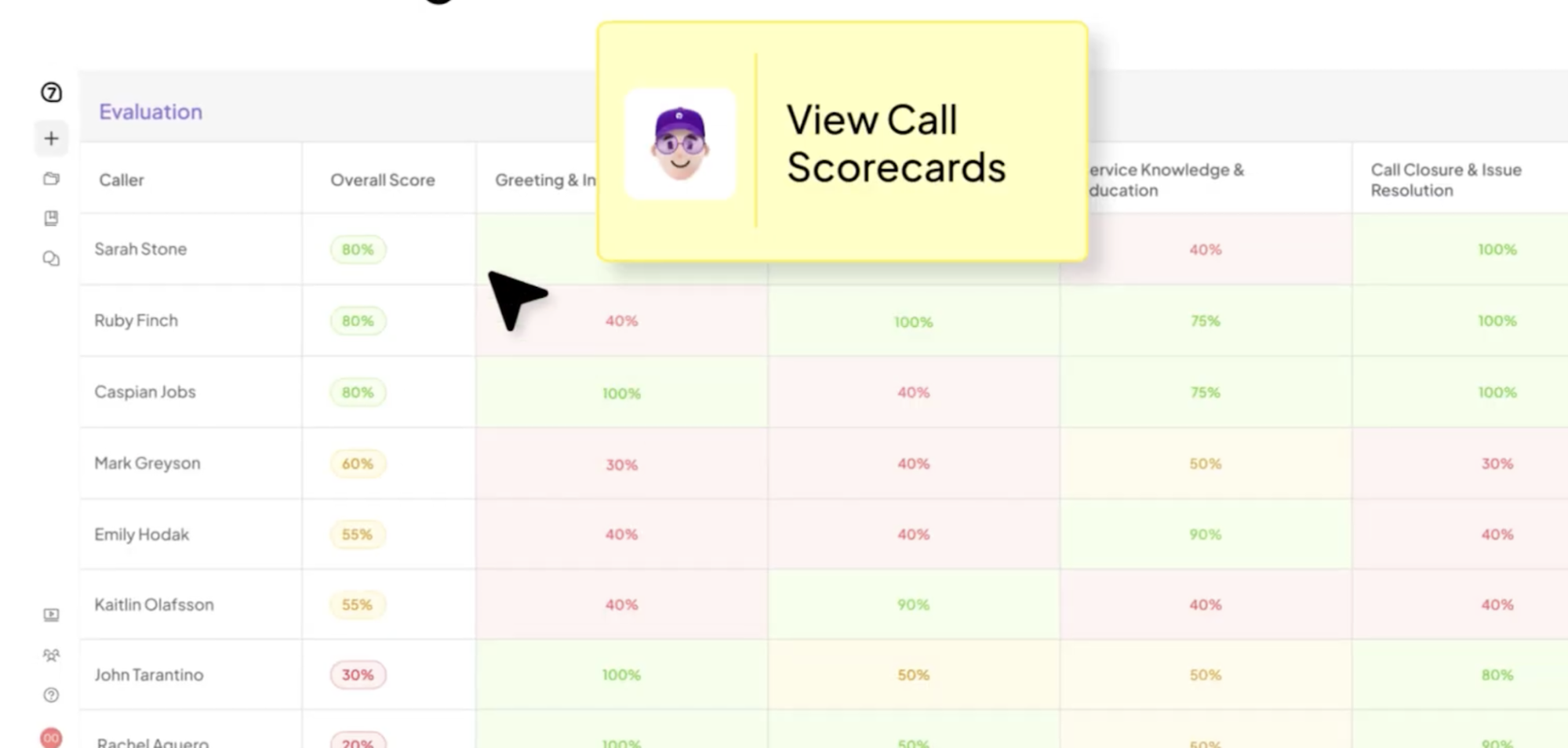
View call scorecards

Scoring Transparency and Calibration

Once you know what the platform evaluates, look at how much information it gives your QA team behind each result.

A score alone tells you very little if a manager cannot determine what caused it. When comparing AQM software, check whether reviewers can see the evidence behind an evaluation and understand why a conversation met or missed a particular criterion.

You should also look at how the platform handles calibration and maintains the accuracy of its automated evaluations.

Your QA team needs a way to validate automated evaluations against its intended standards and refine the criteria when results do not reflect how experienced reviewers would assess the interaction.

Compliance and Risk Monitoring

If compliance forms part of your quality program, the next feature to examine is how the software handles the requirements specific to your operation.

Look at whether you can configure the compliance criteria your team needs to monitor. Then, check what happens when an interaction appears to miss one of those requirements or raises potential compliance issues.

The software should make it easy for the appropriate person to locate the conversation and investigate it further.

Keep in mind that automated monitoring supports this process rather than determining whether your organization is compliant. Your team remains responsible for defining the requirements and deciding how flagged interactions should be handled.

Performance Insights

Once conversations have been evaluated, consider how easily managers can make sense of all those findings.

Look beyond performance dashboards that mainly display individual QA scores. AQM software should help managers examine performance over time so they can tell whether a low score came from an isolated interaction or reflects a behavior that keeps appearing.

When comparing platforms, check how far you can drill into those patterns at the agent or team level. The more clearly managers can see what keeps falling below expectations, the easier it becomes to address performance issues that could affect customer satisfaction.

Coaching and Skills Development

Finding a recurring performance gap naturally leads to another question: what can your managers do with it?

If agent development is one of your goals for AQM, examine how easily evaluation findings can inform coaching. Managers should have enough context to understand the behavior an agent needs to work on rather than building a coaching conversation around an overall QA score.

This is also an area where platform capabilities can differ considerably. If coaching or skills practice is included, check whether it connects back to findings from actual customer conversations.

Insight7, for example, pairs conversation evaluation with AI coaching and roleplay, allowing identified performance gaps to inform what an agent works on next.
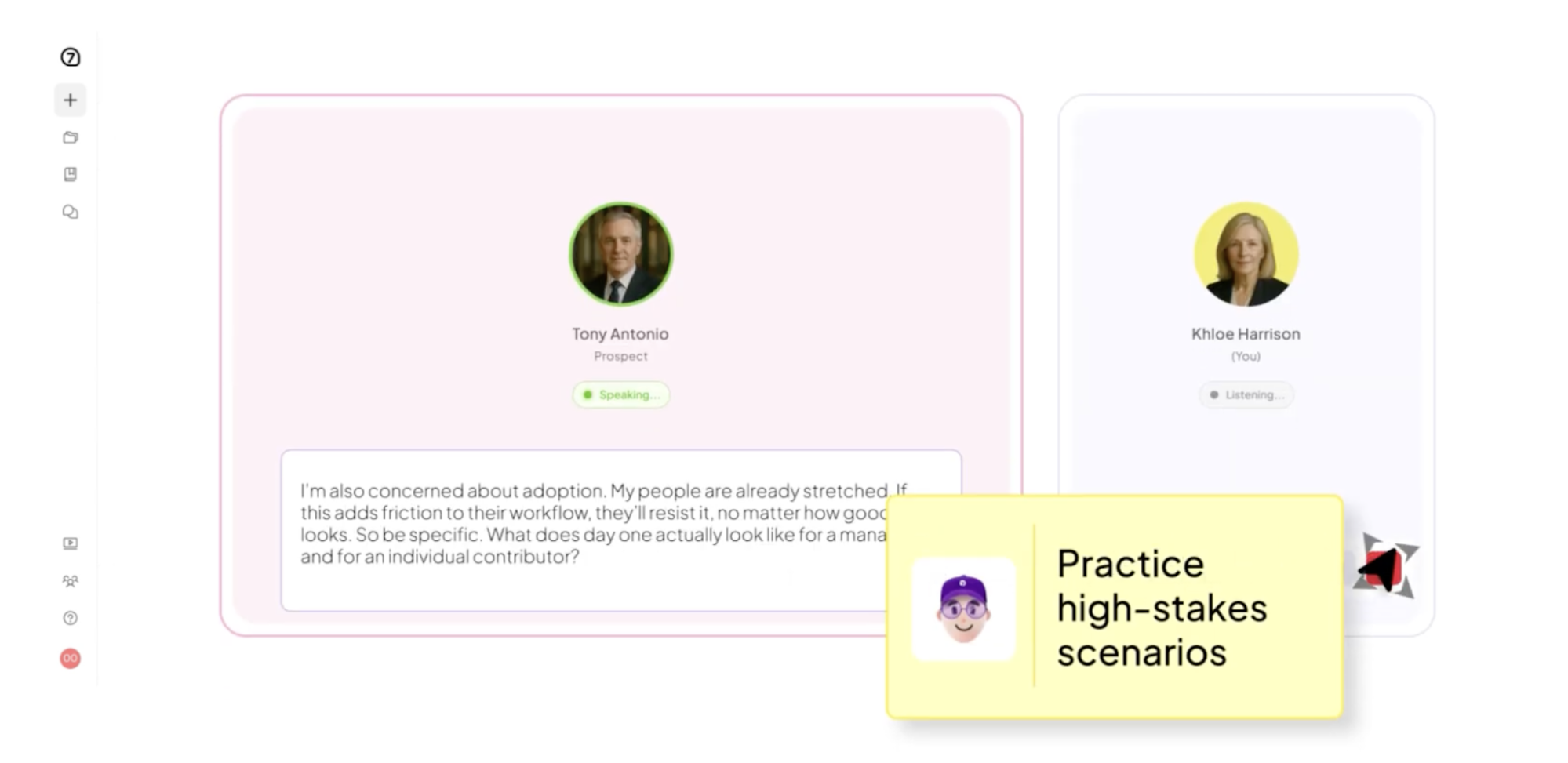
Insight7's AI roleplay

Reporting and Measurement

After managers act on those findings, reporting helps them follow what happens next and support continuous improvement over time.

When comparing AQM software, look at what the reporting actually helps you understand. Can managers track whether the same quality issue continues to appear? Can they see whether a targeted behavior changes over time?

You should also consider how easily leaders can move between individual and team-level performance. The goal is to give them enough information to determine whether an issue still needs attention or whether a different priority has emerged.

Integrations and Implementation

Consider what it will take to make the software work with the quality process you already have.

Start by checking whether the AQM software can access conversations from the systems your team uses. Then look at how your existing scorecards or evaluation criteria will be configured within the new platform.

The implementation requirements are worth examining before you commit. Ask vendors what needs to be connected, how your evaluation framework will be set up, and what your QA team will need to do to calibrate the system before relying on its evaluations.

Where AI Call Scoring Fits Into AQM

AI call scoring is one way to turn a customer conversation into structured performance evidence.

Within an AQM process, the broader workflow might begin with a conversation and eventually lead to quality monitoring or performance development. 

AI call scoring sits closer to the beginning: it applies defined evaluation criteria and produces information about how the interaction performed.

The number itself is rarely the most interesting part.

Suppose an agent receives 68 out of 100. That tells the manager how the conversation performed against the overall scorecard, yet it leaves a much more practical question unanswered: What happened during the conversation to produce that result?

A more informative evaluation helps the manager move beneath the overall score.
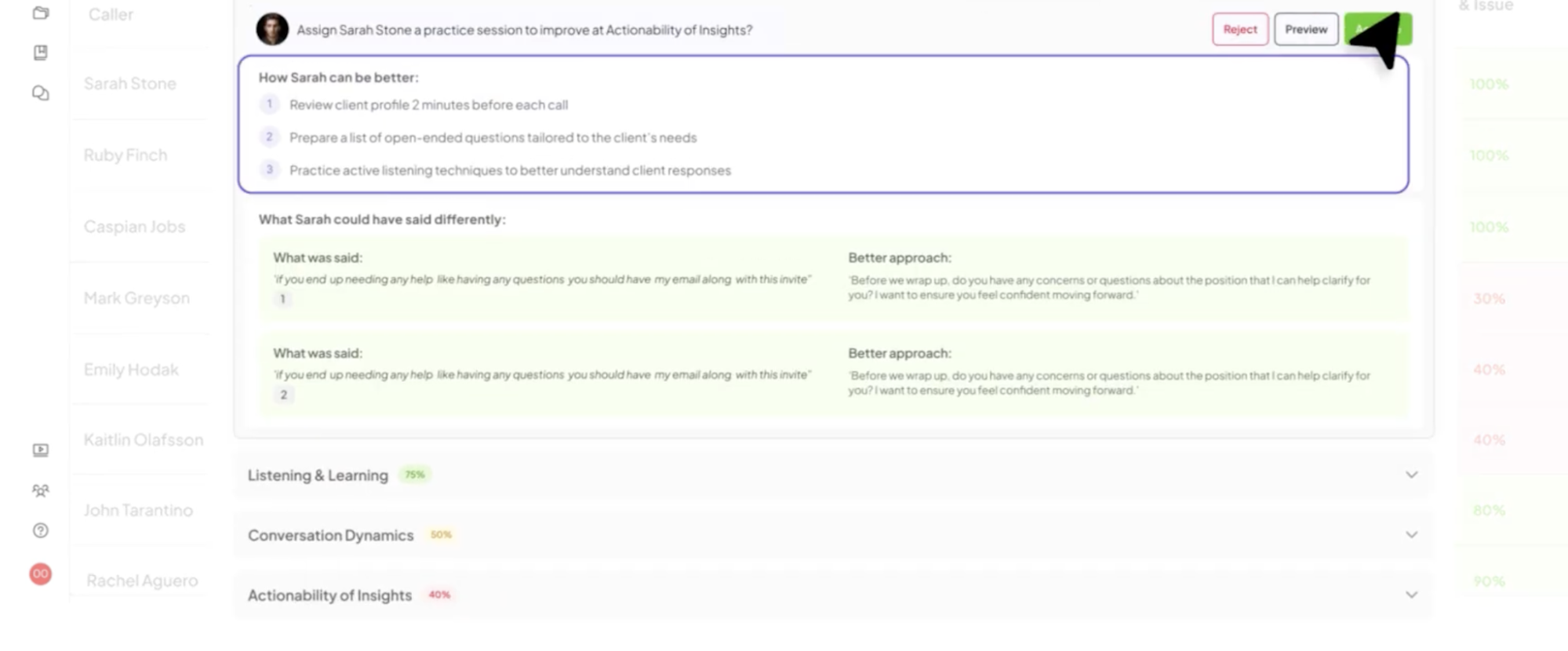
insights to guide coaching

Perhaps the agent met the required opening criteria and communicated clearly, yet repeatedly missed the behaviors expected during discovery. If the same weakness appears in future evaluations, the manager has more evidence that the issue deserves attention.

That is where AI call scoring becomes relevant to the wider AQM process. Its role is to structure what happened in conversations so people responsible for quality have something more specific to investigate.
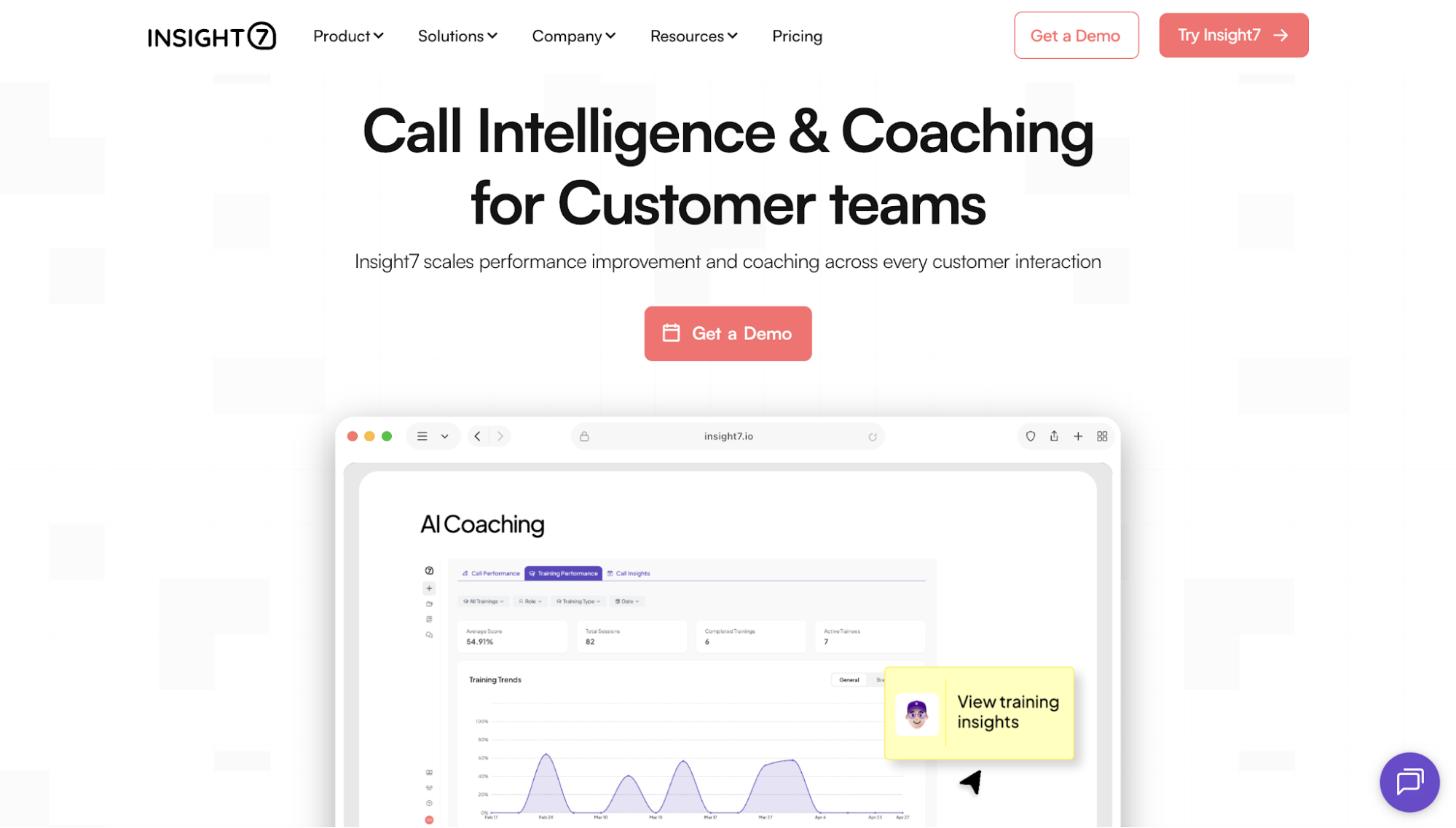
Raise Agent Performance Standards With Insight7

Insight7 homepage

AQM can give you far more visibility into the quality of conversations shaping your customer experience. What ultimately determines its value, though, is how well your team can use those findings to improve the performance behind them.

This is an area where Insight7 can help. It combines AI call scoring with coaching and AI roleplay, giving managers a way to identify specific performance gaps from real conversations and help agents work on the skills that need attention.

So as you consider how AQM could fit into your quality process, think beyond how much it can evaluate. Consider whether it really gives your managers enough insight to know what your agents need to work on next.

Schedule a demo with Insight7 and see firsthand what efficient automated quality management can do for your team!

FAQs About AQM

What does AQM stand for?

In contact center quality management, AQM stands for automated quality management. It generally refers to using AI and automation to evaluate customer interactions against defined quality, performance, or compliance criteria.

The acronym has other meanings in unrelated industries, so its meaning depends on the context in which it appears.

How does automated quality management improve quality monitoring?

Automated quality management helps teams evaluate more customer interactions using defined quality criteria rather than depending entirely on conversations selected for manual review.

This gives managers a broader set of performance findings to work with. They can use those findings to identify recurring quality issues and determine which conversations or behaviors deserve closer attention.

How can AQM help improve agent performance?

AQM can help managers identify patterns in how agents perform during customer interactions. For example, evaluations may reveal that an agent repeatedly misses a required process or struggles with a particular conversation skill.

Managers can then use those findings to set more specific coaching priorities. Agent performance still depends on what happens afterward, including the coaching and practice used to address the identified gap.

What is the difference between automated quality management and quality assurance?

Quality assurance is the broader process of defining, evaluating, and maintaining quality standards. Automated quality management uses AI and automation to support parts of that process, particularly the evaluation and monitoring of customer interactions.

AQM does not replace the people responsible for quality assurance. QA teams still establish evaluation standards, review findings, calibrate criteria, and decide how identified issues should be addressed.

How does artificial intelligence work in an AQM system?

Artificial intelligence can help an AQM system analyze customer interactions and evaluate them against predefined criteria. Depending on the platform, it may also use technologies such as speech analytics to examine spoken conversations and identify relevant behaviors or events.

The exact capabilities vary by AQM system. When comparing platforms, look at what the AI evaluates, how its findings are supported, and how much control your team has over the criteria being applied.

Upcoming Webinar Banner
Get the exact strategies 100+ sales leaders say are working right now to scale revenue in the AI era