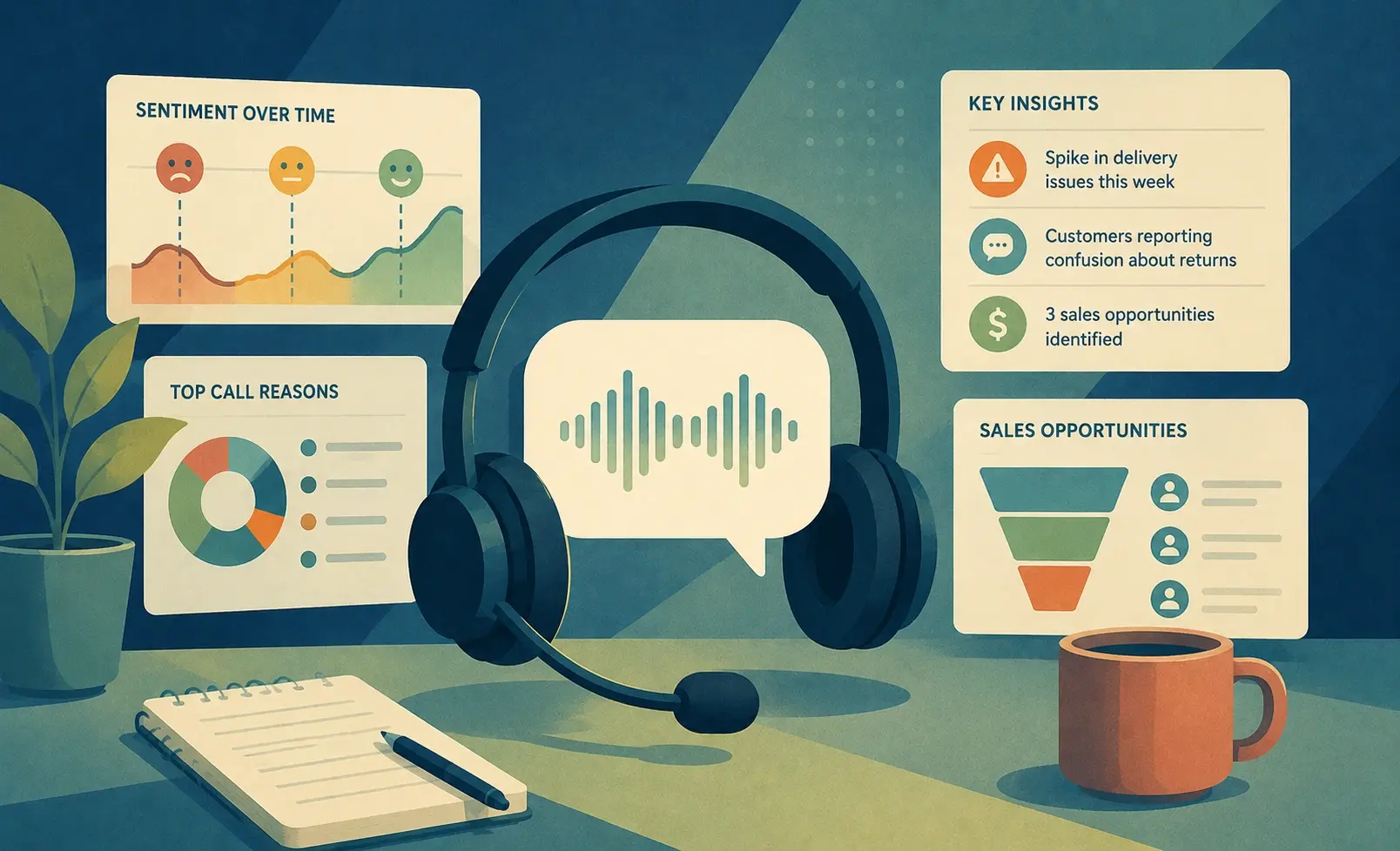
Data-driven sales coaching in B2B requires more than tracking win rates and pipeline velocity. It means identifying the specific behaviors in individual calls that predict whether a deal advances or stalls, then building coaching programs from that evidence. This guide covers seven techniques that connect call data to coaching outcomes, with particular focus on objection handling, the area where B2B coaching most often falls short.
How to handle objections in B2B sales?
Effective B2B objection handling starts with categorizing objections accurately. Price objections, timing objections, and competitor objections each require different responses. The data-driven approach is to analyze recorded calls to identify which objection types appear most frequently, which rep responses lead to advancement versus stall, and where in the call objections typically surface. Insight7 extracts objection patterns across call populations, showing not just how often objections appear but which handling approaches correlate with deal progression.
What are the 5 steps to effective objection handling in B2B?
The five-step framework used in B2B sales coaching is: (1) acknowledge the objection without dismissing it, (2) clarify what is specifically driving the concern, (3) respond with relevant evidence rather than generic positioning, (4) check whether the response landed, and (5) redirect to next steps. The coaching application is to score these five behaviors in actual recorded objection moments, identify where each rep consistently fails, and build targeted practice scenarios for that specific step.
7 Data-Driven B2B Sales Coaching Techniques
1. Build Your Coaching Rubric From Win/Loss Call Analysis
Before coaching on any specific behavior, identify which behaviors actually differentiate won deals from lost deals in your call data. This is the baseline analysis that makes everything else specific to your team rather than generic to B2B sales.
Score your last 50+ closed-won and closed-lost calls against a defined rubric. Look for behavioral differences: did won deals include more qualification questions earlier in the call? Did reps in won deals secure a clear next step before ending? The pattern that emerges from your own call data is more actionable than generic sales methodology training.
Insight7 applies weighted behavioral criteria to 100% of calls and clusters results by outcome. Per-rep scorecards show which behaviors each rep performs consistently and which they miss, with evidence links to the specific transcript moments for every score.
2. Score Objection Handling Moments Specifically
Generic call scores obscure objection-specific performance. A rep who handles discovery questions brilliantly but collapses under price pressure will show an acceptable overall score that hides the specific coaching need.
Build a sub-rubric for objection moments: identify calls where a specific objection type appeared (price, timing, competitor), and score only the objection-handling segment. Score for: acknowledgment before response, use of a third-party reference or case example, checking for resolution before moving on.
The reps who score lowest on objection-handling segments, independent of their overall call score, are your highest-priority coaching targets for this technique.
3. Use the 4 Ps Framework as a Coaching Scorecard
The 4 Ps of objection handling, Pause, Probe, Position, and Proceed, provide a scorable behavioral sequence that translates well to call analytics criteria. Each step can be defined behaviorally and scored:
- Pause: Does the rep acknowledge the objection before responding? (Scored as: no immediate counter-argument in the first response)
- Probe: Does the rep ask a clarifying question to understand the specific driver? (Scored as: at least one question before reframing)
- Position: Does the rep respond with evidence, a relevant example, or a reframe tied to the prospect's stated priority? (Scored as: response references something the prospect said earlier in the call)
- Proceed: Does the rep check for resolution and redirect to next steps? (Scored as: confirmation question and next-step proposal before ending the segment)
Insight7 can score these behaviors using intent-based evaluation, checking whether the conversational intent of the rep's response matches the behavioral requirement rather than requiring script-exact language.
4. Build Coaching Scenarios From Real Objection Moments
The most effective objection handling training uses real objections from your actual calls, not generic simulations. A scenario built from a pricing pushback that appeared 30 times in Q1 is more recognizable and more actionable than a simulated objection a trainer invented.
The process: identify the five most common objection types in your last quarter's call data, extract the specific language customers use, and build roleplay scenarios using that language as the setup. Reps practice handling their actual customers' actual objections, not hypothetical ones.
Insight7's AI coaching module generates roleplay scenarios directly from call transcript content. Objection moments that appear repeatedly in QA scoring become practice scenarios that reps can run unlimited times, with scores tracked across sessions.
5. Track the 3 Fs as a Coaching Conversation Framework
The Feel/Felt/Found technique is a classic objection handling structure that remains relevant in B2B contexts for certain objection types. It translates to a scorable behavior: does the rep use an empathy statement before repositioning? The coaching application is to track whether reps who use an empathy acknowledgment before responding to price objections have higher advancement rates than those who immediately defend the price.
This is testable from your call data. Insight7 can score for the presence of an empathy acknowledgment in objection moments and correlate it with whether the deal advanced to next stage. That correlation determines whether coaching on this technique is worth the investment for your specific team.
6. Set Score Thresholds That Trigger Targeted Practice
Analytics without a training response is just reporting. Establish score thresholds that automatically trigger a coaching assignment: a rep who scores below 55% on objection handling across three consecutive calls gets a targeted practice session on that specific behavior, not a general "sales skills" module.
The threshold-to-training link is what makes coaching systematic rather than reactive. Managers using Insight7 can configure auto-suggested training from score gaps, which are reviewed and approved by supervisors before deployment. This keeps the human judgment in the loop while removing the manual bottleneck of identifying who needs what coaching.
7. Measure the Coaching Impact, Not Just the Training Completion
Coaching effectiveness in B2B sales is measured by whether scores on coached dimensions improve across subsequent calls, not by whether reps completed the training module. Track the specific dimension you coached for improvement in the next 30 days of scored calls.
A rep who completes an objection-handling module but whose objection-handling scores remain flat is not being reached by the training approach, not the content. That signal changes the coaching intervention: if the training approach is not working, the next step is one-to-one coaching with manager-observed practice, not more self-directed modules.
According to Forrester research on B2B sales enablement, sales teams that measure coaching impact at the behavioral level, not just training completion, see significantly higher conversion improvement than those that track attendance alone.
If/Then Decision Framework
| If the B2B coaching gap is… | Then use this technique |
|---|---|
| Reps collapsing under price objections | Score 4 Ps framework in price-objection call segments specifically |
| Inconsistent objection handling across team | Build scenarios from top 5 real objection types in your call data |
| Coaching improvements not sticking | Move from self-directed modules to manager-observed roleplay for resistant reps |
| Can't identify which reps need what | Run win/loss call analysis to build a behavior-outcome correlation before coaching |
FAQ
How to handle objections in B2B sales using AI coaching?
AI coaching for B2B objection handling works by analyzing recorded calls to identify where and how objections appear, scoring the rep's handling against defined behavioral criteria, and generating targeted practice scenarios built from the actual objections in your call data. Insight7 handles this end-to-end: from identifying the objection patterns in your call population to generating scenarios reps can practice before their next customer conversation.
What are the 3 Fs for handling objections in B2B sales coaching?
The Feel/Felt/Found framework: acknowledge what the prospect feels ("I understand that pricing is a concern"), reference how others have felt the same ("many of our customers felt the same way initially"), and share what they found after moving forward ("what they found was…"). As a coaching target, the value is the empathy-before-reposition sequence, not the specific words. Coaching teams to acknowledge objections before defending reduces the defensive dynamic that often causes B2B deals to stall.
Data-driven B2B sales coaching produces outcomes when it connects call analysis to specific training actions, not when it generates reports. Insight7 closes that loop from automated scoring through targeted coaching assignment and impact tracking.