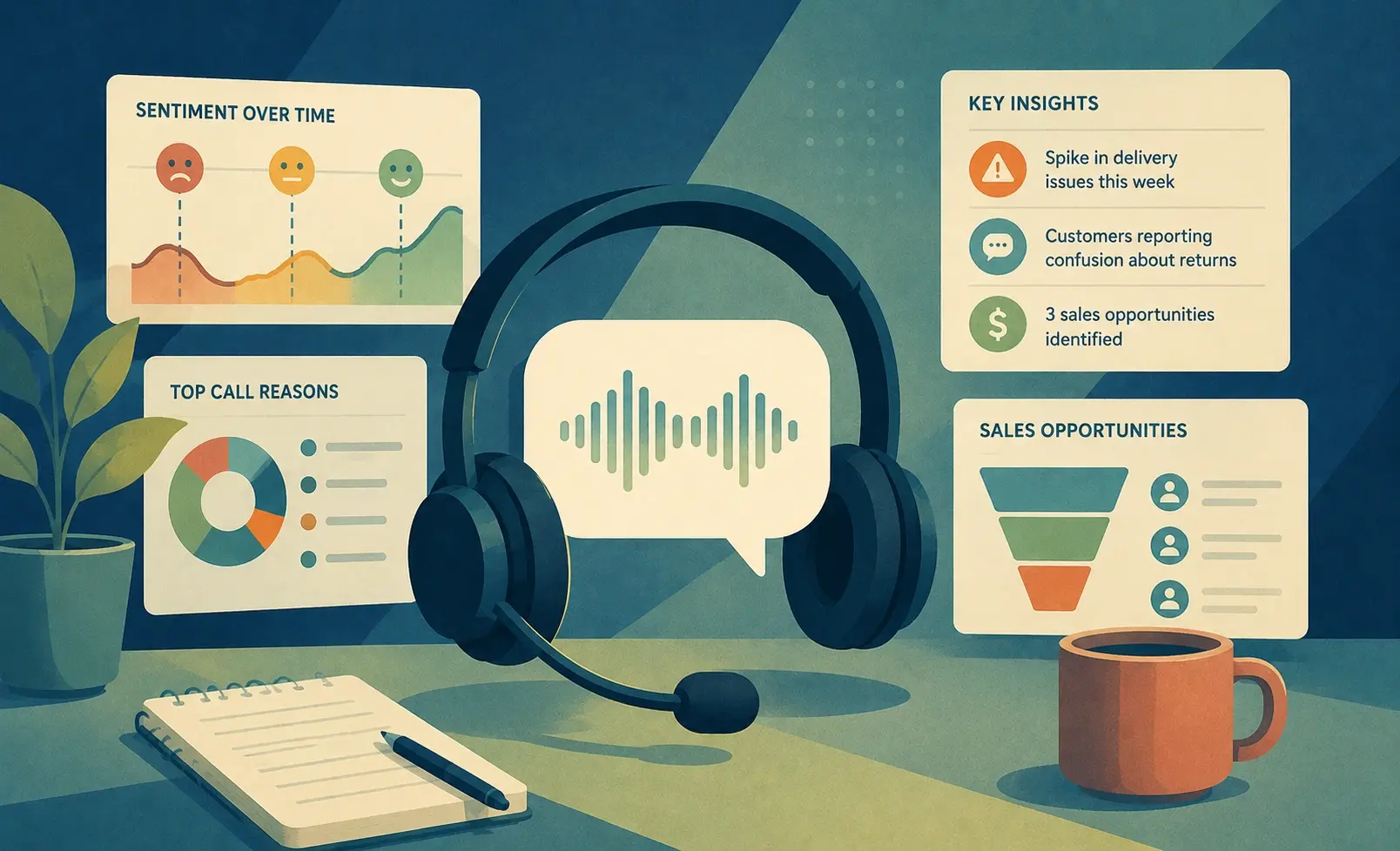
QA scores tell you where a rep falls short. A personalized coaching plan tells you what to do about it. The gap between scoring and coaching is where most quality programs lose value: scorecards get generated, reports get reviewed, and then the behavioral change that was supposed to follow does not happen. The platforms covered here are built to close that gap, connecting QA output directly to targeted development plans.
Why QA Scores Alone Do Not Drive Improvement
A QA score is diagnostic. It tells you that discovery averaged 58% across a rep's last ten calls. It does not tell you what practice scenario to assign, which call moment to use as coaching evidence, or what the rep should focus on in their next session.
Most platforms that offer call scoring require a separate workflow to turn scores into coaching. Managers export reports, review them manually, write coaching notes, schedule sessions, and hope the connection between the score and the coaching is clear enough for reps to act on.
The most effective platforms compress this workflow. When a score drops below threshold on a specific criterion, the platform automatically surfaces relevant coaching evidence, suggests a targeted practice scenario, and lets the manager approve and assign it in a few steps rather than building the plan from scratch.
Which AI coaching tool is best for delivering personalized employee coaching?
For contact center and sales teams, Insight7 is built specifically to translate QA scores into targeted coaching and practice. For corporate leadership development, platforms like BetterUp or CoachHub provide more personalized human-led coaching at the management level. The right tool depends on whether personalization needs to operate at scale across a frontline team or at depth for a smaller leadership cohort.
Top Tools That Translate QA Scores into Coaching Plans
| Tool | How QA connects to coaching | Best for |
|---|---|---|
| Insight7 | Auto-suggests practice from scorecard gaps | Contact center and sales teams |
| Gong | Deal-connected scorecards with coaching notes | B2B sales teams |
| Playvox | QA workflow with coaching session builder | Contact center QA teams |
| EvaluAgent | QA scores trigger coaching assignments | Call center operations |
| MaestroQA | Quality management with coaching workflows | Customer support teams |
| Chorus by ZoomInfo | Scored moments linked to coaching playlists | Sales and CS teams |
Insight7 connects QA scores to coaching through auto-suggested training. When a rep's scorecard shows consistent gaps on a specific criterion, the platform generates a practice scenario targeted to that criterion and surfaces it for supervisor review. The supervisor approves and assigns the session in one step, and the rep receives a targeted practice scenario tied directly to their scoring profile. Progress is tracked over subsequent calls, showing whether the intervention produced behavioral change.
Fresh Prints found that this connection between scorecard feedback and immediate practice changed their coaching cadence. Rather than coaching being a weekly event, reps could address specific gaps the same day they were identified.
Gong generates deal-connected rep scorecards and allows managers to add coaching notes tied to specific call moments. Coaching plans are built by managers within the platform but are not auto-generated from scoring data. Gong is stronger for the coaching discovery workflow; the plan-building step is still primarily manager-driven.
Playvox provides a dedicated QA workflow for contact center teams that includes a coaching session builder. Managers can initiate a coaching session from a QA evaluation, attach the relevant call, and document the coaching conversation. The platform supports structured coaching cycles with manager and rep acknowledgment of session content.
EvaluAgent uses QA scores to trigger coaching assignments automatically when scores fall below configured thresholds. Managers can set rules such as "any score below 70 on compliance criteria triggers a coaching session within 48 hours," creating a systematic connection between scoring and development response.
MaestroQA is a quality management platform designed for customer support teams that includes coaching workflow features. QA evaluations can initiate coaching assignments and include evidence linking directly to the call being reviewed.
Chorus by ZoomInfo scores call moments and allows managers to build coaching playlists from those moments. Coaching plans are constructed by organizing relevant call examples and assigning them to reps with commentary.
What is the 70/30 rule in coaching?
The 70/30 rule refers to the coaching session ratio: approximately 70% of session time should focus on development and practice, and 30% on reviewing past performance. When QA scores are linked directly to coaching evidence, the performance review portion can be condensed. Managers spend less time explaining what went wrong and more time on practice and forward-looking targets. Insight7's auto-suggested practice sessions are designed to support this ratio by making the practice assignment immediate rather than a separate planning step.
If/Then Decision Framework
If you need QA scoring and coaching plan generation to happen in the same workflow automatically, then Insight7 handles both without manual intervention.
If your team runs B2B sales and needs deal-connected coaching documentation, then Gong's pipeline-integrated coaching notes are more appropriate.
If your contact center QA team needs formal coaching session workflows with supervisor and rep acknowledgment, then Playvox or EvaluAgent are built for that structure.
If your customer support team needs quality management connected to coaching assignments, then MaestroQA provides the QA-to-coaching workflow.
If your coaching program is built around a library of example calls organized by scenario, then Chorus by ZoomInfo provides the best moment-tagging and playlist infrastructure.
Setting Up the QA-to-Coaching Workflow
The most common implementation failure is treating QA scoring and coaching as separate processes. Scores get generated and reviewed, but the step from review to plan is manual and inconsistent. Some reps get targeted coaching; others get a monthly session that references their overall score without connecting to specific behaviors.
A functional QA-to-coaching workflow has four automated connections: score generation from recorded calls, threshold alerts when scores fall below the configured minimum on any criterion, coaching evidence surfaced from the relevant transcript segments, and practice scenario assignment linked to the criterion gap. Each step triggers the next without requiring manual intervention beyond supervisor review and approval.
Insight7's coaching workflow is built on this structure. The platform's auto-suggested training feature surfaces practice scenarios based on criterion-level scorecard data and puts them in a supervisor approval queue. Supervisors review suggested sessions, approve or adjust them, and assign them to reps. The rep receives a targeted practice session tied to their specific behavioral gap, not a generic training module.
For organizations setting this up for the first time, start with one criterion. Pick the behavioral dimension where the gap between top performers and bottom performers is largest across your team. Configure the threshold, the evidence surfacing, and the practice assignment. Run the workflow for four weeks and measure whether scores on that criterion improve. Then expand to additional criteria once the loop is validated.
FAQ
How do you build a personalized coaching plan from QA scores?
Start at the criterion level, not the overall score. Identify the three criteria where the rep's scores are furthest from the team benchmark. For each criterion, find two or three call examples that show where the behavior gap appeared. Build the coaching session around those examples and assign practice scenarios that target the same scenario types. Track per-criterion scores over the next two to three weeks of calls to measure whether behavior changed. Insight7 automates the identification and scenario generation steps, reducing the time from QA score to coaching plan.
Is there a better AI than ChatGPT for coaching personalization?
For coaching personalization specifically, purpose-built conversation intelligence platforms outperform general-purpose AI because they are designed to score against coaching-relevant criteria, link evidence to specific call moments, and generate targeted practice scenarios from real call data. Insight7 is purpose-built for this workflow and does not require managers to manually prompt a general AI tool to produce coaching recommendations from call data.
To see how Insight7 translates QA scores into targeted coaching and practice, visit insight7.io/improve-coaching-training.