


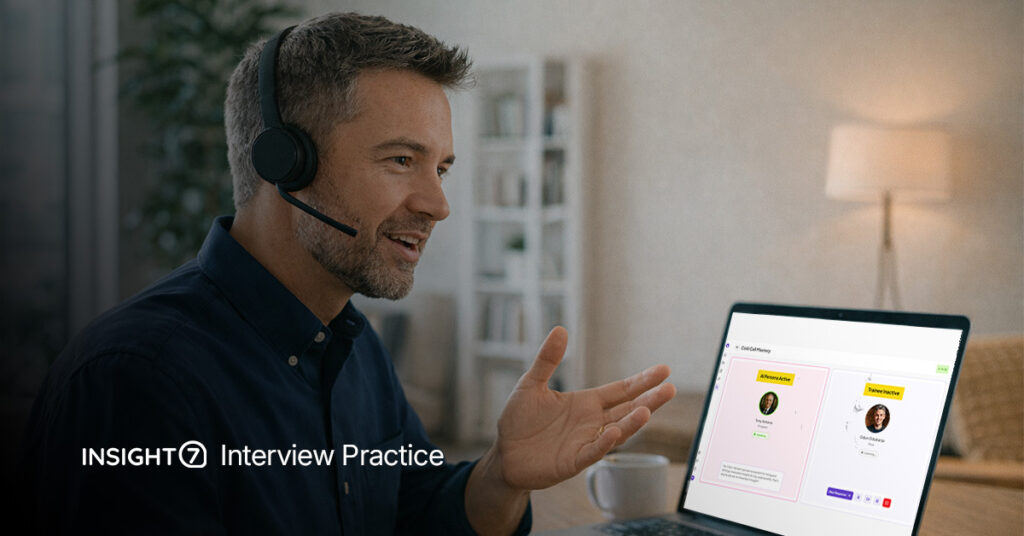
Cencora People and HR interviews test whether your talent decisions connect to measurable workforce outcomes in a pharmaceutical distribution and specialty healthcare company, whether you can develop people across distribution center operations, specialty pharmacy teams, and corporate functions with different regulatory and safety requirements, and whether you own the workforce interventions you led rather than the programs you administered. Interviewers are looking for candidates who diagnose talent problems precisely, describe the intervention they designed, and report a before/after workforce outcome.
Start your free Cencora People and HR practice session.
What interviewers actually evaluate
Talent Strategy, Pharmaceutical Workforce Development & HR Execution
Cencora People and HR interviews test whether your HR instincts are calibrated for a pharmaceutical distribution company where distribution center staff, specialty pharmacy professionals, and corporate teams all have distinct talent dynamics, regulatory training requirements, and career development pathways. Candidates are evaluated on how precisely they define the workforce problem, how specifically they designed and led the intervention, and whether their result is expressed in workforce terms: retention, capability, engagement, or time to fill.
Workforce problem diagnosis, Pharmaceutical distribution context, Intervention design, HR execution ownership, Data-driven talent decisions, Results specificity
What gets scored in every session
Specific, sentence-level feedback.
| Dimension | What it measures | How to answer |
|---|---|---|
| Problem Diagnosis | Do you name the specific workforce failure before describing your solution? We flag answers that jump to HR programs without establishing what was broken. | Root cause clarity, workforce metric as starting point |
| Intervention Design | Did you design the solution or implement someone else's? We score whether your HR approach was tailored to the specific pharmaceutical workforce context. | Custom design rationale, distribution or pharma-specific choices |
| Execution Ownership | Were you the decision-maker or the coordinator? We detect "we rolled out" language and surface where first-person ownership is missing. | Personal action verbs, decision authority named |
| Workforce Impact | What changed in the workforce after your intervention? We flag results expressed as program completion rates rather than workforce outcomes. | Retention delta, engagement lift, capability change, cost impact |
How a session works
Step 1: Get your Cencora People and HR question
You are assigned questions based on where candidates for this role typically struggle most, which for Cencora People and HR means diagnosing the pharmaceutical distribution workforce problem with precision and reporting workforce outcomes rather than program metrics. Each session starts fresh with a new question targeting a different evaluation dimension.
Step 2: Answer by voice
Speak your answer as you would in a real interview. The AI listens for STAR structure and evaluation signal alignment, specifically whether your workforce problem is named before your solution, your design choices reflect the pharmaceutical distribution context, and your Result includes a before/after workforce metric.
Step 3: Get scored dimension by dimension
Instant scores across all four rubric dimensions. Each gets a score, a flagged weakness, and a specific sentence-level fix. Cencora People and HR interviewers probe for program descriptions that skip the workforce problem and for results expressed as rollout completion rather than workforce change.
Step 4: Re-answer and track improvement
Revise based on feedback and answer again. See the before/after score change across Problem Diagnosis, Intervention Design, Execution Ownership, and Workforce Impact. Your weakness profile updates across sessions so if you consistently underdevelop workforce outcomes, that becomes the focus of your next question assignment.
Frequently Asked Questions
What questions will be asked in a Cencora HR interview?
Cencora People and HR interviews are behaviorally structured. Common questions include:
- "Tell me about a time you identified a retention or capability problem in a pharmaceutical distribution or specialty pharmacy workforce before it affected business performance"
- "Describe a workforce development initiative you designed for a frontline distribution or pharmacy professional population"
- "Walk me through a situation where you had to influence a business leader on a people decision they were skeptical of"
- "Tell me about a time you used workforce data to change a hiring, development, or retention strategy in a pharmaceutical or healthcare distribution context"
Each question tests whether your HR judgment is specific to the complexity of a pharmaceutical distribution workforce.
What are the 5 C's of interviewing for Cencora People and HR?
In Cencora People and HR interview contexts, the 5 C's map to: Context (the pharmaceutical distribution workforce challenge you were solving), Complexity (the DEA compliance training, regulatory certification, or cross-functional constraints you navigated), Criteria (how you diagnosed the workforce problem and chose your intervention), Change (the specific people initiative you designed and led), and Consequence (the workforce outcome in retention, engagement, capability, or cost terms). For Cencora HR interviews, Criteria and Consequence are most often underdeveloped.
Why do you want to work for Cencora in a People and HR role?
Strong answers to this question connect Cencora's pharmaceutical distribution and specialty healthcare mission to the specific HR opportunity: building the workforce capability and talent systems that allow Cencora to reliably serve healthcare customers and patients. Candidates who reference the complexity of developing talent across distribution operations, specialty pharmacy, and corporate functions in a regulated pharmaceutical environment signal genuine company knowledge and demonstrate the HR context that makes answers credible.
What are the 5 hardest interview questions for Cencora People and HR?
The most challenging Cencora HR questions require you to demonstrate both workforce problem-solving rigor and pharmaceutical distribution context simultaneously. They typically include: a distribution center retention crisis you diagnosed and addressed with a quantified outcome, a regulatory training or DEA compliance certification gap you identified and filled, a situation where a business leader's people decision created a compliance or safety risk you had to address, a talent development challenge for a specialty pharmacy professional population with high technical requirements, and a case where your HR recommendation was rejected and what you did next.
What are the most common failure modes in Cencora People and HR interviews?
The most consistent failures are:
- Describing an HR program without naming the workforce metric that was off before the intervention
- Results expressed as training completion rates or program rollout rather than workforce outcomes: retention rate, time to certification, engagement score change, or capability improvement
- No pharmaceutical distribution workforce context: Cencora spans distribution center operations, specialty pharmacy professionals, and corporate functions with different talent dynamics
- Influence stories that describe a recommendation made without evidence that the business leader actually changed their decision
- No story prepared for a people initiative that did not produce the expected workforce outcome and what was learned
Also practice
All eight Cencora role interview practice pages.
- Sales
- Customer Service
- Product Management
- Marketing
- Finance
- Operations
- Leadership
- Legal & Compliance
One full session free. No account required. Real, specific feedback.








