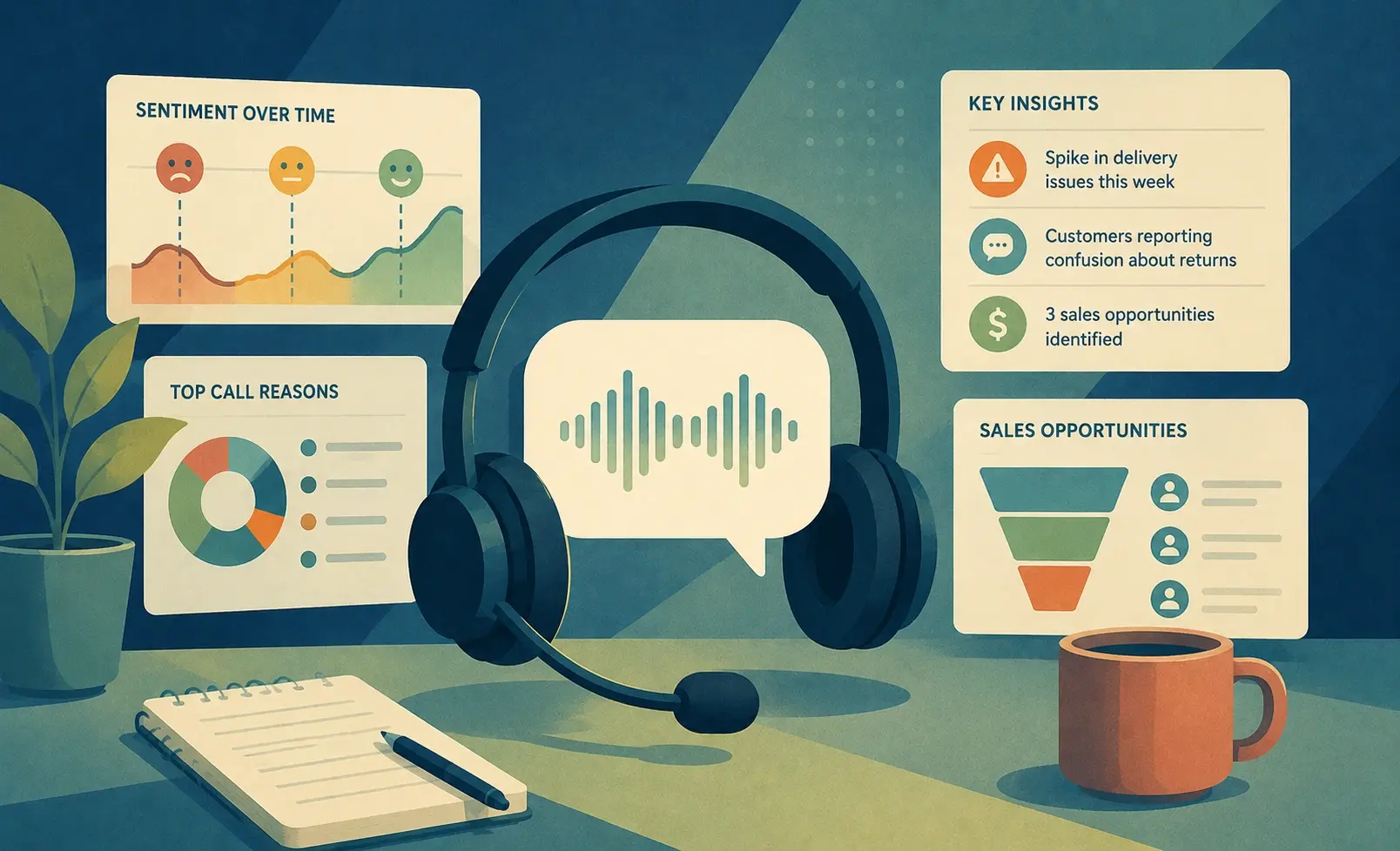
Sales managers running generic coaching templates are burning time on conversations that don't connect to what reps actually do on calls. This guide shows you how to customize coaching templates by sales process stage so every session builds accountability around the behaviors that close deals. The result: six configurable templates, a call-evidence requirement at every step, and a manager metric that shows whether coaching is happening at all.
What you'll need before you start: Access to your last 30 days of call recordings, a written version of your sales methodology (even a rough outline), your current QA scorecard or criteria list, and roughly 3 hours for initial setup. If you don't have a QA scorecard yet, build one first using a tool like Insight7's Call QA Scorecard Builder.
Step 1 — Map Your Sales Process Stages to Specific Coaching Behaviors
List every stage in your sales process. For most B2B teams, this means discovery, demo or presentation, objection handling, negotiation, and close. For each stage, write down the two or three behaviors that most directly affect conversion at that stage, not at the deal overall.
Discovery fails when reps pitch before they understand the problem. The coaching behavior to target here is question quality, specifically open questions that surface the prospect's language for the problem. Demo stages fail when reps default to feature walkthroughs instead of mapping capabilities to stated problems.
Decision point: Some teams collapse discovery and demo into one "early call" stage. If your average deal cycle is under two calls, this works. If your cycle is three or more calls, separate them. Coaching one stage at a time produces faster skill improvement than coaching the whole call at once.
Step 2 — Build One Template Per Stage With Stage-Specific Criteria
Create a separate coaching template for each stage. Each template should contain four to six criteria tied to what success looks like at that specific stage. A discovery template might include: asked at least two open questions in the first five minutes, confirmed the prospect's stated problem before pivoting, did not mention pricing unprompted.
The mechanism here is constraint. Generic templates let managers coach everything, which means they coach nothing well. A stage-specific template with five criteria forces the manager to evaluate exactly the behaviors that matter for that stage's outcome.
Common mistake: Building templates with criteria like "good communication" or "built rapport." These are unverifiable and uncoachable. Every criterion must be observable on a transcript. If you can't point to a line in the call recording and say "this is where they did or didn't do it," the criterion doesn't belong in the template.
How do you customize a sales coaching template for specific deal stages?
Start with the conversion bottleneck, not the template. Identify which stage of your process has the lowest conversion rate over the last 90 days. Build the first template for that stage. Use your QA scorecard as the source for criteria, then remove any criteria that don't apply specifically to that stage's outcome. A negotiation-stage template should have zero discovery criteria in it.
Step 3 — Add a Call Evidence Field to Every Template
Every template must include a required field for transcript or recording evidence. The field should read: "Call evidence: paste the exact quote or timestamp where this criterion was met or failed." No evidence, no coaching session.
This requirement changes coaching from opinion-based to fact-based. Without it, managers and reps argue about what happened on the call. With it, the conversation moves directly to "here's what you said, here's what worked, here's the alternative." According to ICMI research on contact center performance, evidence-based feedback is among the top drivers of agent improvement in structured coaching programs.
Common mistake: Letting managers skip the evidence field when they "know" what happened on the call. Make it required in your template form. If evidence isn't documented, it doesn't exist for accountability purposes.
What is the best way to build accountability into a sales coaching template?
The best approach ties the template to a record that persists after the session. Accountability breaks down when coaching is a conversation with no artifact. A template with a call evidence field, a rep self-assessment section, and a signed follow-up commitment creates a record both parties can reference two weeks later. SHRM's coaching and mentoring guidance identifies documentation as the single most consistent factor distinguishing high-accountability coaching programs from low-accountability ones.
Step 4 — Include a Rep Self-Assessment Section
After the manager's criteria evaluation, add a section where the rep answers two questions before the session: "What did I do well on this call?" and "What would I do differently?" Limit answers to three sentences each.
Self-assessment primes reps to engage with feedback instead of receiving it passively. When a rep has already identified the problem before the manager names it, the session shifts from diagnosis to solution. This works especially well in negotiation and objection-handling templates where reps often have strong instincts about what went wrong.
Give reps 24 hours to complete their self-assessment after the call is flagged for coaching. If they receive the recording link and the template at the same time, completion rates stay above 80%. If you wait more than 48 hours after the call, recall degrades and self-assessment quality drops.
Step 5 — Set a 2-Week Follow-Up Field Tied to the Next Scored Call
At the end of every template, add a follow-up commitment field: "Rep will focus on [specific criterion] on their next [N] calls. Manager will score criterion [X] in the next QA review on [date]." Both parties fill this in before the session ends.
The follow-up field converts coaching into a loop instead of a one-time event. A commitment without a date is aspirational. A commitment tied to a specific scored call is a test. Insight7's QA platform lets you set per-criterion alerts so you're notified automatically when the follow-up call is scored, removing the burden of manual tracking.
Decision point: If you're coaching more than 10 reps, tracking follow-ups manually with a spreadsheet will fall apart within two weeks. Use your QA platform's alert system or assign follow-up tracking to a team lead. The follow-up field only creates accountability if someone actually checks it.
How Insight7 handles this step
Insight7 connects QA scoring directly to coaching assignment. When a rep's score for a specific criterion drops below your configured threshold, the platform flags the call and can auto-suggest a coaching session with the relevant transcript evidence attached. Managers receive the call evidence pre-loaded into the coaching workflow. After the session, post-coaching score tracking shows whether the targeted criterion improved on the rep's next evaluated calls.
See how this works in practice: Insight7 AI Coaching
Step 6 — Track Template Completion Rate as a Manager Accountability Metric
Template completion rate is the one metric that tells you whether coaching is actually happening. Calculate it weekly: number of coaching sessions completed with a filled template divided by total sessions scheduled. Target is above 85%.
This flips the accountability structure. Most coaching programs measure rep performance. This metric measures manager behavior. If a manager's completion rate drops below 70% for two consecutive weeks, that's the conversation to have, not a conversation about rep scores. Teams with consistent template completion rates above 85% see criterion-level QA scores improve faster because coaching compounds. Track this in a shared dashboard visible to frontline managers and their directors.
FAQ
How do you embed sales process coaching into team workflows?
Embed coaching into the workflow by tying it to a trigger, not a calendar. Configure your QA platform to flag calls that fall below a threshold on a specific criterion, then auto-assign the relevant stage template to the manager. The session happens within 48 hours of the call, uses transcript evidence from that call, and produces a follow-up commitment tied to the next scored call. Coaching becomes a step in the QA workflow rather than a separate activity that competes with it.
What should a sales coaching template include?
A sales coaching template needs six elements: stage identifier (which part of the sales process this session covers), four to six observable criteria for that stage, a call evidence field requiring a transcript quote or timestamp for each criterion, a rep self-assessment section completed before the session, a manager evaluation section with a rating and specific feedback, and a follow-up commitment field with a date and the next scored call identified. Templates missing the evidence field or follow-up field tend to produce one-time conversations rather than skill development.