


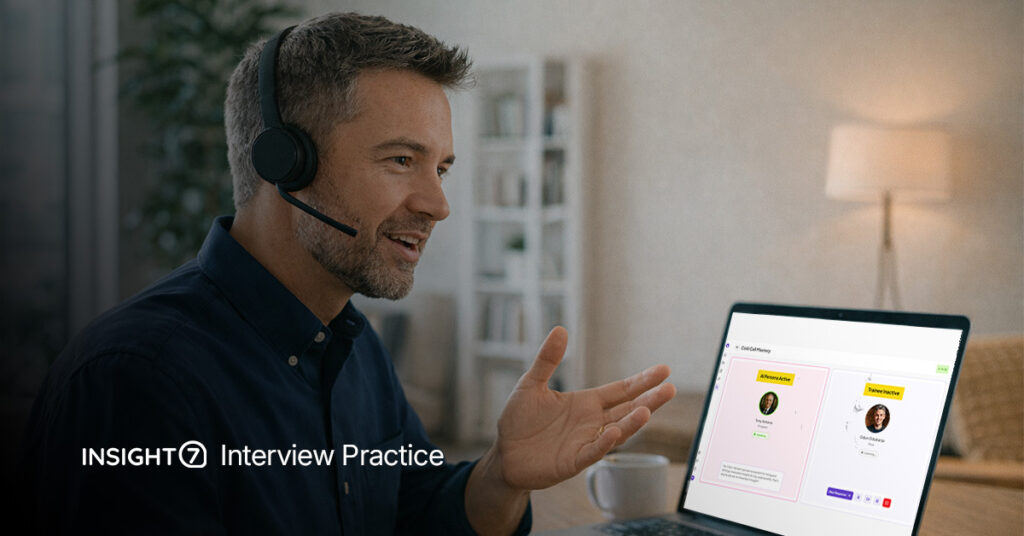
Practicing for a Cisco Systems Customer Service interview is different from practicing for a generic one. Cisco Systems is the global networking and security technology leader behind enterprise routing, switching, WiFi, and the expanded security portfolio, and interviewers expect you to speak to that reality, not a template. This page lets you rehearse by voice and get sentence level feedback tied to the exact dimensions Cisco Systems Customer Service hiring panels score on.
Start your free Cisco Systems Customer Service practice session.
What interviewers actually evaluate
De-escalation and first contact resolution
Interviewers want proof you can own a frustrated customer from hello to resolved without escalating unnecessarily. They listen for tone, empathy, and the exact words you use under pressure. Expect signals on: active listening, de-escalation language, first contact resolution, policy knowledge, empathy expression, and handle time discipline. At Cisco Systems, that lens is shaped by the Splunk acquisition, the security and observability push, Webex collaboration, Chuck Robbins' software and ARR transformation, the partner ecosystem, and the AI-ready infrastructure narrative, so generic answers fall flat.
What gets scored in every session
Specific, sentence level feedback.
| Dimension | What it measures | How to answer |
|---|---|---|
| Empathy language | Whether your words acknowledge the customer's frustration | Use the customer's own words back to them before problem solving. |
| Resolution path | How you move from complaint to concrete next step | State the fix, the timeline, and who owns it. |
| Policy judgment | How you balance the rulebook with the customer experience | Name the policy, then the exception path if one exists. |
| Tone control | Whether your voice stays calm when the customer is not | Keep pace steady and avoid defensive phrasing. |
How a session works
Step 1: Get your Cisco Systems Customer Service question
You get a realistic Customer Service prompt tied to Cisco Systems's actual business and the problems the role owns day to day. No generic behavioral filler.
Step 2: Answer by voice
You answer out loud, the way you would on a real panel. The session captures tone, pace, and filler word frequency alongside content.
Step 3: Get scored dimension by dimension
Feedback comes back per dimension with the exact sentence that triggered each score. You see what landed and what did not.
Step 4: Re-answer and track improvement
Re run the same prompt, tighten the weak dimension, and watch the score move. Most candidates gain two dimensions within three attempts.
Frequently Asked Questions
What are the 5 C's of interviewing?
Tie your answer to Cisco Systems's actual Customer Service context. Use the STAR method, name real metrics, and end with what you would do in the first ninety days.
What questions will be asked in a customer service interview?
Tie your answer to Cisco Systems's actual Customer Service context. Use the STAR method, name real metrics, and end with what you would do in the first ninety days.
How difficult is a Cisco interview?
Tie your answer to Cisco Systems's actual Customer Service context. Use the STAR method, name real metrics, and end with what you would do in the first ninety days.
What is the 30-60-90 question in an interview?
Tie your answer to Cisco Systems's actual Customer Service context. Use the STAR method, name real metrics, and end with what you would do in the first ninety days.
What are the most common failure modes in Cisco Systems Customer Service interviews?
Candidates usually lose points on four things:
- Generic answers with no Cisco Systems specifics
- Vague metrics instead of real numbers and timeframes
- Missing the Customer Service scorecard dimensions the interviewer is listening for
- No clear next step or recommendation at the end of the answer
Also practice
All nine Cisco Systems role interview practice pages.
One full session free. No account required. Real, specific feedback.








