


A talent acquisition lead at a mid-market SaaS company is hiring across four departments simultaneously: 15 sales reps, 8 support agents, 3 engineers, and 2 customer success managers. Each role needs a different evaluation method. The sales candidates need mock call assessments. The engineers need coding challenges. The support agents need scenario-based conversation evaluation. The customer success hires need behavioral and personality fit analysis. Right now, the TA team is using one generic tool for all four, and the hiring managers are complaining that the assessments do not predict who actually performs on the job.
This is the core problem with candidate evaluation tools: most teams pick one platform and force every role through it. The reality is that different roles need different assessment methods, and the best hiring operations match the evaluation tool to the skill being measured.
Skills tests predict technical competency. AI video interviews assess communication and reasoning. Conversation scoring evaluates how candidates handle real interactions. Behavioral assessments reveal work style and team fit.
Here are eight candidate evaluation tools, organized by what they actually measure best and which roles they fit.
Quick Pick: Match the Tool to the Role
| What you are hiring for | Best fit | Why |
|---|---|---|
| Sales, support, or any role evaluated through conversations | Insight7 | Scores screening calls and mock roleplays against behavioral criteria with AI |
| Multiple non-technical roles at high volume | TestGorilla | 400+ validated skills tests covering cognitive, personality, and role-specific competencies |
| Enterprise-scale hiring with video interviews | HireVue | AI-powered video assessment with behavioral science, 40+ language support |
| Any role where you want AI insights on existing interviews | Metaview | Layers AI note-taking and scoring onto your current interview process |
| Roles where cognitive ability and personality predict success | Criteria Corp | Science-backed cognitive and personality assessments with predictive validity data |
| Software engineering and technical roles | HackerRank | Coding challenges in 55+ languages with plagiarism detection and AI code review |
| Roles best evaluated through realistic job simulations | Vervoe | AI-scored job task simulations that rank candidates on actual work output |
| Roles where behavioral style and team dynamics matter most | Predictive Index | Behavioral and cognitive assessments mapped to team fit and job requirements |
1. Insight7: Conversation Scoring for Roles Evaluated Through Calls
A contact center manager is screening 40 candidates for a 12-seat new hire class. Each candidate does a phone screen and a mock customer interaction. The hiring manager listens live, scores on a rubric, and by candidate 25, the scoring has drifted from where it started. Six months later, the hires whose mock calls felt strong in the moment wash out, while a candidate who scored lower but showed stronger listening patterns would have been the better pick.
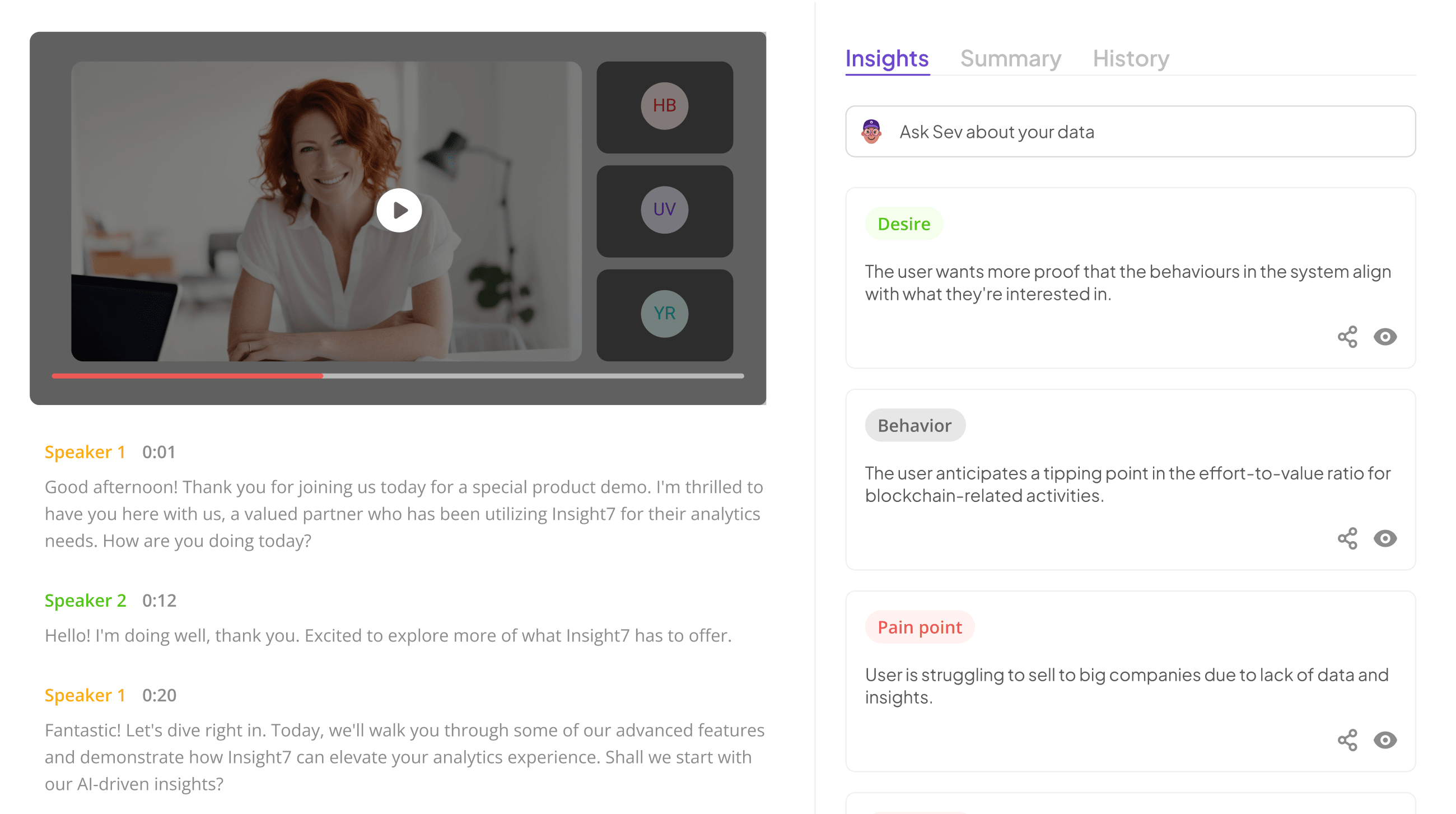
Insight7 solves this by scoring candidate screening calls and mock roleplays automatically against defined behavioral criteria. The same AI scoring engine that evaluates production calls for QA and coaching applies to pre-hire conversations, producing consistent dimensional scores across every candidate. A sales candidate gets scored on discovery questioning, objection handling, and next-step commitment. A support candidate gets scored on empathy acknowledgment, de-escalation, and resolution clarity. Each score links to the specific moment in the conversation that produced it.
The mechanism that sets Insight7 apart from other candidate evaluation tools: hiring criteria and production QA criteria live on the same platform. The behaviors you screen for are the same behaviors you coach after hire, which means you can validate over time whether your hiring scores predict on-the-job performance. Insight7’s skills practice module also runs standardized roleplay scenarios at scale with AI playing the customer, so 40 candidates can complete identical assessments without a human sitting on every mock call.
Built for any organization hiring for roles where conversations are the core skill: sales, support, customer success, account management, healthcare patient interaction, and financial advisory. The trade-off: Insight7 evaluates conversational ability. It does not assess technical coding skills, cognitive aptitude, or personality traits. For those, pair it with a complementary tool from this list.
2. TestGorilla: Broadest Test Library for Multi-Role Hiring
A growing fintech company hires across 12 role types per quarter: marketing, operations, finance, product, and customer-facing teams. They need one platform that covers cognitive screening, personality assessments, situational judgment tests, and role-specific skills evaluations without buying separate tools for each.
TestGorilla offers 400+ validated assessments across technical skills, cognitive ability, personality, language proficiency, and culture fit. Recruiters can combine up to five tests per assessment and add custom questions (video, essay, or multiple-choice) for role-specific depth. AI scoring handles video interviews and cognitive tasks automatically. Anti-cheating measures include webcam monitoring, full-screen enforcement, and plagiarism detection.
Built for high-volume, multi-role hiring where a single platform needs to cover diverse assessment types. TestGorilla holds a 4.5/5 G2 rating across 1,400+ reviews. Free tier available with limited tests; paid plans start at $75 per month. The trade-off: breadth over depth. TestGorilla covers many assessment types adequately but does not match the depth of specialized tools in any single category. Engineering teams needing advanced coding challenges will find HackerRank deeper. Teams needing conversation-based evaluation will find Insight7 more precise.
3. HireVue: Enterprise AI Video Interviewing
A Fortune 500 retailer hires 5,000+ frontline workers annually across 200 locations. They need structured, consistent candidate evaluation at a scale where live interviews for every applicant are logistically impossible. Candidates need to complete assessments asynchronously on their own time, and hiring managers need AI-assisted scoring to manage the volume.
HireVue combines on-demand video interviewing with AI-driven behavioral assessment. Candidates record video responses to structured questions. HireVue’s AI analyzes language structure and response patterns (not facial expressions, which the company discontinued in 2021) to assess communication, reasoning, and competency alignment. The platform also integrates coding assessments and game-based cognitive challenges for a multi-signal evaluation.
Built for enterprise organizations with high-volume hiring needs (hundreds to thousands of roles annually) that require structured, scalable assessment with AI assistance. HireVue supports 40+ languages and publishes an AI Explainability Statement with third-party bias audits. The trade-off: enterprise pricing and implementation complexity. Mid-market teams hiring 20 to 50 roles per quarter will find HireVue overbuilt and overpriced. TestGorilla or Insight7 offer faster deployment at a lower cost for that scale.
4. Metaview: AI Intelligence on Your Existing Interviews
A VP of Talent does not want to add another assessment platform to the stack. Her team already conducts structured interviews through the ATS. She wants AI-generated interview notes, scoring consistency analysis, and interviewer performance data layered onto the process that already exists.
Metaview sits on top of your current interview workflow. It joins live or recorded interviews, generates structured notes automatically, scores candidate responses against defined criteria, and provides data on interviewer consistency. Instead of replacing your interview process, it makes the one you already have more consistent and data-driven.
Built for teams that want AI-assisted evaluation without changing their existing interview format. Metaview offers 25 free conversations per month. The trade-off: Metaview enhances interviews but does not administer assessments. It does not run skills tests, coding challenges, or roleplay scenarios. If your evaluation needs go beyond improving the quality of your existing interviews, you need a tool that generates the assessment, not just scores it.
5. Criteria Corp: Science-Backed Cognitive and Personality Assessment
A healthcare system hiring patient-facing coordinators needs to assess cognitive processing speed, emotional intelligence, and conscientiousness, traits that research shows predict performance in high-touch patient roles. Generic skills tests do not measure these dimensions with validated psychometric rigor.
Criteria Corp provides a comprehensive suite of cognitive ability tests (Criteria Cognitive Aptitude Test), personality assessments (Employee Personality Profile), and emotional intelligence evaluations backed by published validity studies. The platform emphasizes predictive validity: how well assessment scores actually predict on-the-job performance over time.
Built for organizations where cognitive ability and personality traits are strong predictors of role success, particularly in healthcare, financial services, and professional services. Criteria Corp’s emphasis on psychometric science and published validity data makes it a strong choice for regulated industries where hiring decisions face legal scrutiny. The trade-off: Criteria Corp assesses traits, not skills in action. It tells you a candidate has strong cognitive processing and high conscientiousness, but does not evaluate whether they can handle a live customer conversation or write production-quality code.
6. HackerRank: Technical Developer Assessment
An engineering director is hiring 8 backend developers. Resumes say “proficient in Python and Go.” She needs to verify that claim with real coding challenges before investing senior engineer time in live technical interviews.
HackerRank supports 55+ programming languages with coding challenges, system design interviews, and AI-powered code review. The platform’s question library covers algorithms, data structures, debugging, and domain-specific engineering tasks. AI plagiarism detection catches tool-assisted cheating and code copying.
Built for engineering teams hiring developers, data scientists, and DevOps engineers at scale. HackerRank is the industry standard for technical screening, used by thousands of companies. Free tier available; paid plans start around $100 per month. The trade-off: HackerRank is engineering-only. No behavioral assessment, no personality evaluation, no conversation scoring. Teams hiring across technical and non-technical roles need a second tool for everything outside engineering.
7. Vervoe: Job Simulation Assessments
A digital marketing agency is hiring a social media manager. They do not care about cognitive test scores or personality profiles. They want to see the candidate actually create a content calendar, write ad copy, and analyze a campaign performance report, then have AI rank the submissions by quality.
Vervoe creates AI-scored job simulations where candidates complete realistic tasks that mirror the actual work. Candidates are ranked based on the quality of their output rather than their test-taking ability. Simulations can be customized for virtually any role.
Built for teams that believe the best predictor of job performance is a sample of actual work. Vervoe is particularly strong for creative, marketing, operations, and administrative roles where output quality matters more than cognitive aptitude scores. Pricing starts at $19 per month. The trade-off: Vervoe simulations are asynchronous and task-based. They do not evaluate live conversational ability, real-time problem-solving under pressure, or interpersonal dynamics. For roles where the core skill is handling conversations, a live-interaction tool like Insight7 captures what task-based simulations miss.
8. Predictive Index: Behavioral and Team Fit Assessment
A scaling startup has a strong engineering team, but keeps making bad hires when they add non-technical roles. The problem is not skills. It is a work style mismatch: new hires who prefer autonomous work joining a highly collaborative team, or detail-oriented candidates placed in fast-paced roles that reward speed over precision.
Predictive Index uses behavioral and cognitive assessments to map candidates against job requirements and team dynamics. The behavioral assessment takes 6 minutes and produces a profile that predicts how someone will work, communicate, and respond to pressure. Managers can define a “Job Target” profile and evaluate candidates against it.
Built for organizations where team fit and behavioral alignment are the primary hiring risks, typically mid-market and scaling companies where every hire significantly impacts team dynamics. The trade-off: Predictive Index measures how someone prefers to work, not what they can do. It does not evaluate technical skills, conversational ability, or task-based competency. It is strongest when paired with a skills or conversation assessment tool that covers the capability side, while PI covers the fit side.
How to Build a Candidate Evaluation Stack
No single tool covers every dimension of candidate evaluation. The strongest hiring operations combine two to three tools matched to their role mix:
- For conversational roles (sales, support, customer success): Insight7 for conversation scoring plus Predictive Index or Criteria Corp for behavioral and cognitive fit.
- For technical roles: HackerRank or Codility for coding assessment, plus Metaview for interview intelligence.
- For high-volume, multi-role hiring: use TestGorilla as the broad screening layer, plus a specialized tool for the highest-volume role type.
The mistake most teams make is treating candidate evaluation as a single-tool problem. The right question is not “which candidate evaluation tool is best” but “which combination covers the dimensions that predict success in the roles we actually hire for.”
If you are hiring for roles where conversations are the core skill and your current evaluation relies on manual rubrics that do not match your on-the-job performance standards, book a demo with Insight7 to see how automated conversation scoring changes hiring consistency and new hire performance.
Frequently Asked Questions
What are candidate evaluation tools? Candidate evaluation tools assess applicants through structured methods: skills tests, cognitive assessments, personality profiles, coding challenges, video interviews, job simulations, and conversation scoring. They replace or augment subjective resume screening and unstructured interviews with measurable, consistent data.
Which candidate evaluation tool is best for hiring sales reps? Insight7 is best for evaluating sales candidates through mock calls and roleplay scenarios, scoring them on discovery questioning, objection handling, and closing behaviors. TestGorilla covers complementary dimensions like cognitive ability and personality. The combination provides a more complete evaluation than either tool alone.
Do skills assessments actually predict job performance? Yes. Research from SHRM’s 2025 Skills-Based Hiring study found that 78% of organizations using structured assessments report improved quality of hire. The key is matching the assessment type to the role: coding challenges for engineers, conversation scoring for customer-facing roles, and cognitive tests for roles requiring rapid learning.
How long should a candidate assessment take? Under 30 minutes for non-technical roles and under 60 minutes for technical roles. Longer assessments cause candidate drop-off, particularly among passive candidates. TestGorilla recommends 5 tests at 10 minutes each as the optimal configuration for completion rates.
How much do candidate evaluation tools cost? Pricing ranges widely. Vervoe starts at $19 per month. TestGorilla offers a free tier with paid plans from $75 per month. HackerRank starts around $100 per month. Enterprise platforms like HireVue and Harver run $5,000+ per month. Insight7 and Criteria Corp price based on team size and volume. Always evaluate cost against the specific hiring problem you are solving.








