
Every sales leader wants to improve their team’s performance and produce more consistent results. Yet many coaching decisions still rely on limited information; not because the call data is unavailable, but because managers lack the time and resources to review every conversation.
The good news is that sales conversation intelligence helps solve this visibility problem by analyzing sales conversations at scale. In this article, we’ll dive deeper into what it is, why it matters, and why it’s a worthy investment.
Sales conversation intelligence is the process of analyzing customer conversations to understand how sales interactions influence business outcomes.
Rather than simply recording calls, it examines what happens during conversations to extract insights that help leaders improve sales performance over time.
Modern conversation intelligence tools analyze recorded conversations from customer calls, video meetings, and other customer interactions.
Using artificial intelligence and natural language processing, these tools identify key sales signals such as objections, competitor mentions, and buying intent. This approach differs from traditional call recording.
A recording preserves the conversation, but someone still has to listen to it and decide what to do with the information they gather.
Conversation intelligence analyzes those interactions automatically, generating call summaries that highlight insights most relevant to sales managers.
Sales conversation intelligence fills an important gap left by CRM software. CRM systems document outcomes such as deal stage changes, sales activity, and revenue forecasts. However, they rarely explain why those outcomes occurred.
Conversation intelligence connects business results with the conversations that influenced them. This gives managers a clearer view of what successful sales interactions have in common and where struggling reps need more support.
There’s growing evidence that those conversations contain measurable performance signals.
A 2026 peer-reviewed study of 5,183 B2B sales calls found distinct differences in the structure and progression of successful versus unsuccessful conversations, showing how conversation data can reveal patterns that managers would struggle to identify through occasional call reviews alone.
Leaders can then base their decisions on patterns found throughout the team’s conversations to improve their coaching, onboarding, pipeline reviews, and sales strategy without relying on assumptions or isolated examples.
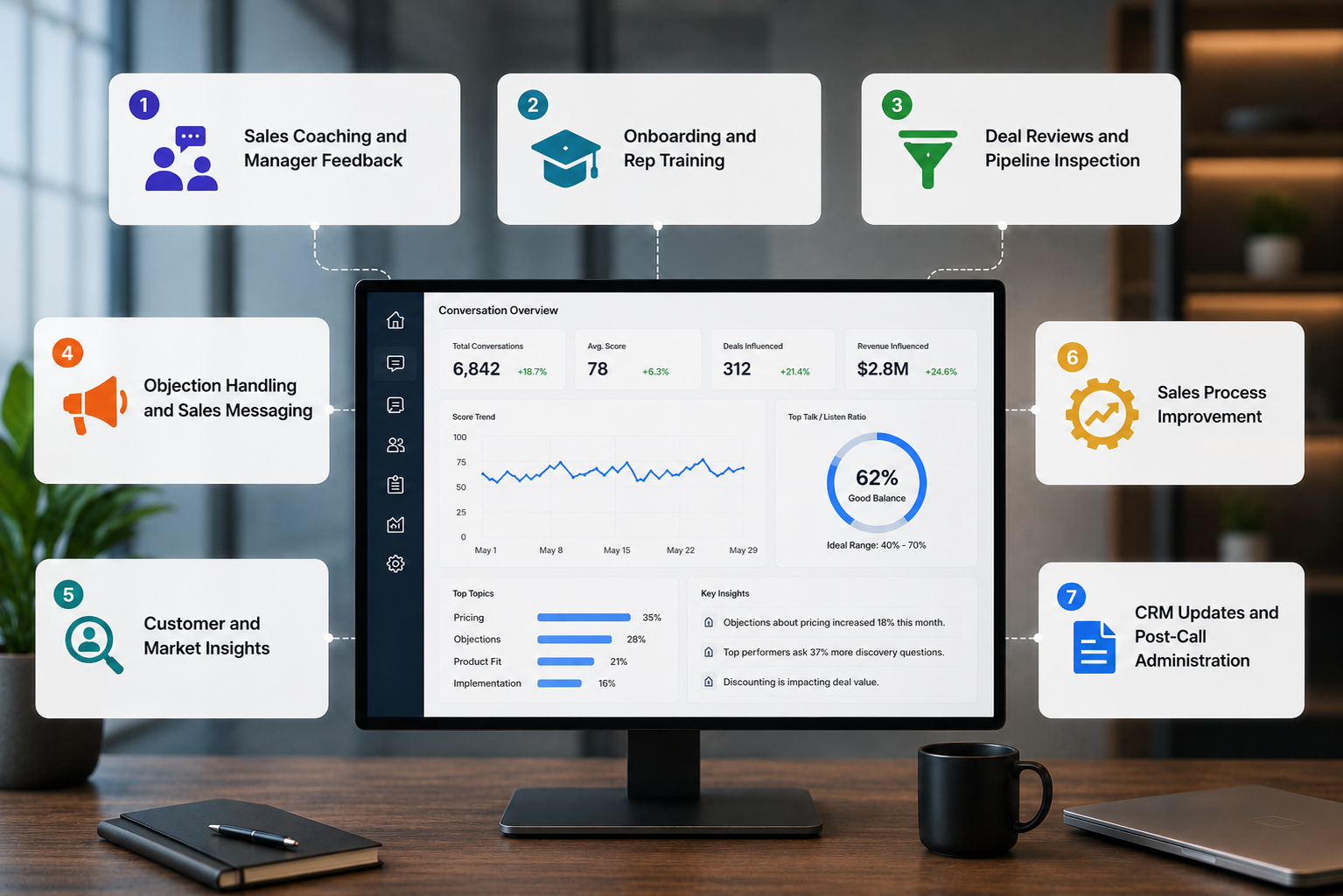
Understanding what sales conversation intelligence is only answers part of the question. The next step is knowing how sales organizations apply those insights to improve performance.
While different teams have different priorities, the most successful implementations focus on turning conversation data into actions that help managers coach more effectively, improve sales execution, and make better decisions.
Below are some of the most common ways sales leaders use sales conversation intelligence in their day-to-day operations.
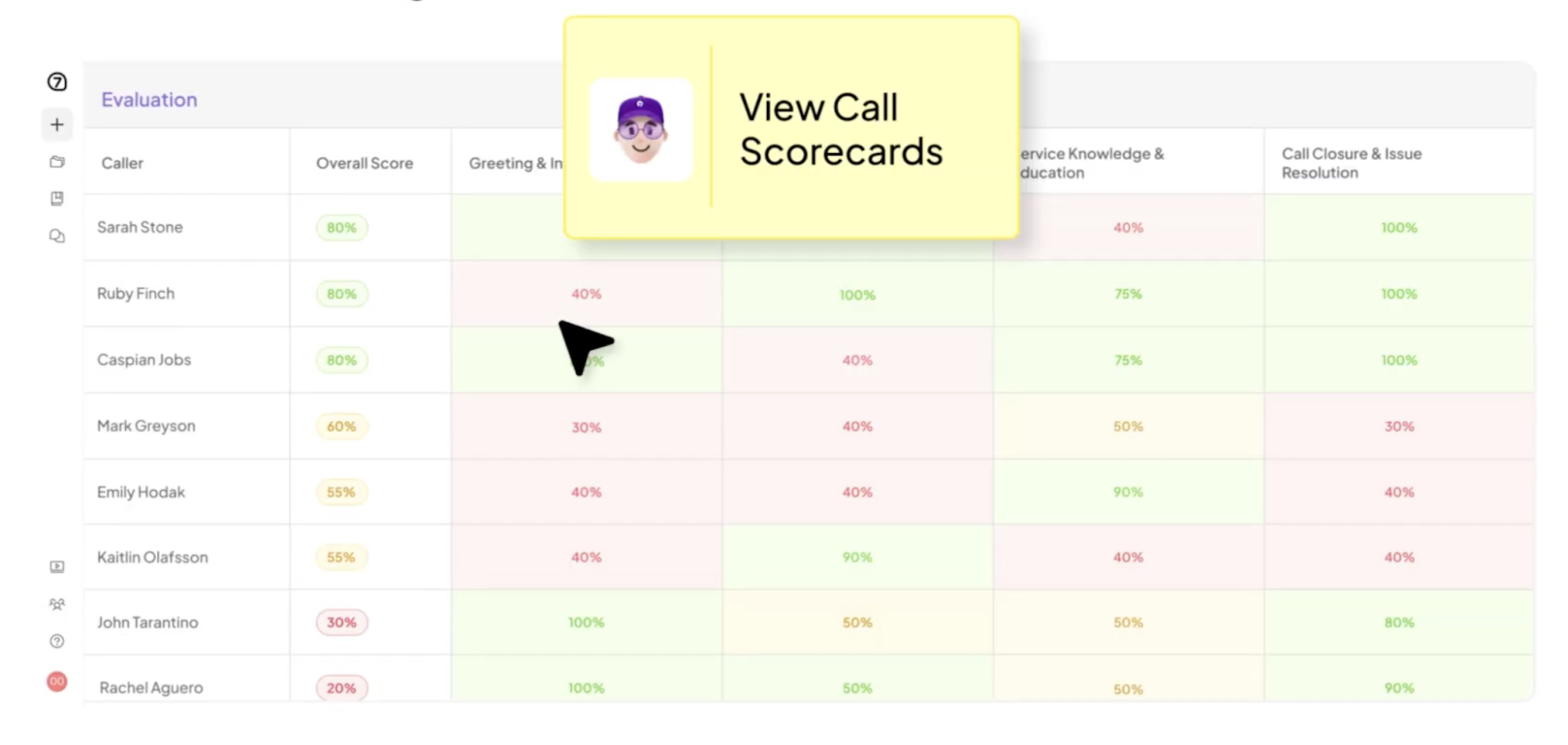
Coaching becomes more effective when it’s based on evidence instead of isolated observations. Sales conversation intelligence helps managers identify recurring behaviors, highlight key moments in sales calls, and understand where each rep needs the most support.
Without consistent conversation data, coaching often depends on the handful of calls managers have time to review, which only creates blind spots and makes feedback analysis more subjective.
That said, look for conversational intelligence software that helps managers prioritize sales coaching opportunities using patterns found in actual customer conversations instead of anecdotal feedback alone.
Insight7 can support this process by giving managers a more consistent view of rep conversations, as one verified G2 user also highlighted after using the platform.
Every sales organization has conversations that demonstrate successful discovery, objection handling, or closing techniques. Teams can use conversation intelligence to identify those examples and include them in onboarding and ongoing rep training.
When new hires learn primarily through shadowing or inconsistent coaching, ramp times often vary from one manager to another.
Using successful calls as training material creates a more consistent learning experience while helping new reps understand what effective sales conversations look like in practice.
Pipeline reviews become more meaningful when they include insights from previous interactions instead of relying solely on CRM updates.
Sales conversation intelligence gives managers additional context by revealing unresolved objections, missing next steps, weak buyer engagement, and other deal risks that might not appear in opportunity notes.
This helps revenue teams identify stalled opportunities sooner and gives them a better chance of moving more deals forward.
So when evaluating a platform, consider how easily conversation intelligence integrates with ongoing deal reviews rather than existing as separate reports.
Customer objections often reveal patterns that individual reps may not notice on their own. Sales conversation intelligence helps leaders see which concerns come up most often, whether they relate to pricing, competitor offers, or questions buyers keep asking during the sales process.
Enablement teams can use these insights to improve talking points and give reps clearer guidance for handling objections. These insights can also be utilized to reinforce messaging strategies that help conversations move forward.
Over time, recurring objections provide valuable feedback that can guide marketing decisions and product improvements.
Sales conversations also contain insights into what customers care about and how their expectations are changing.
Sales conversation intelligence helps leaders spot these patterns in buyer questions, feature requests, and competitor mentions, as they often already appear in conversations before they even show up in surveys or quarterly business reviews.
By reviewing these insights early and regularly, customer success teams can help their organization respond to changing customer priorities and market demands before they have a broader business impact.
Insight7 customers are already putting conversation data to work this way.
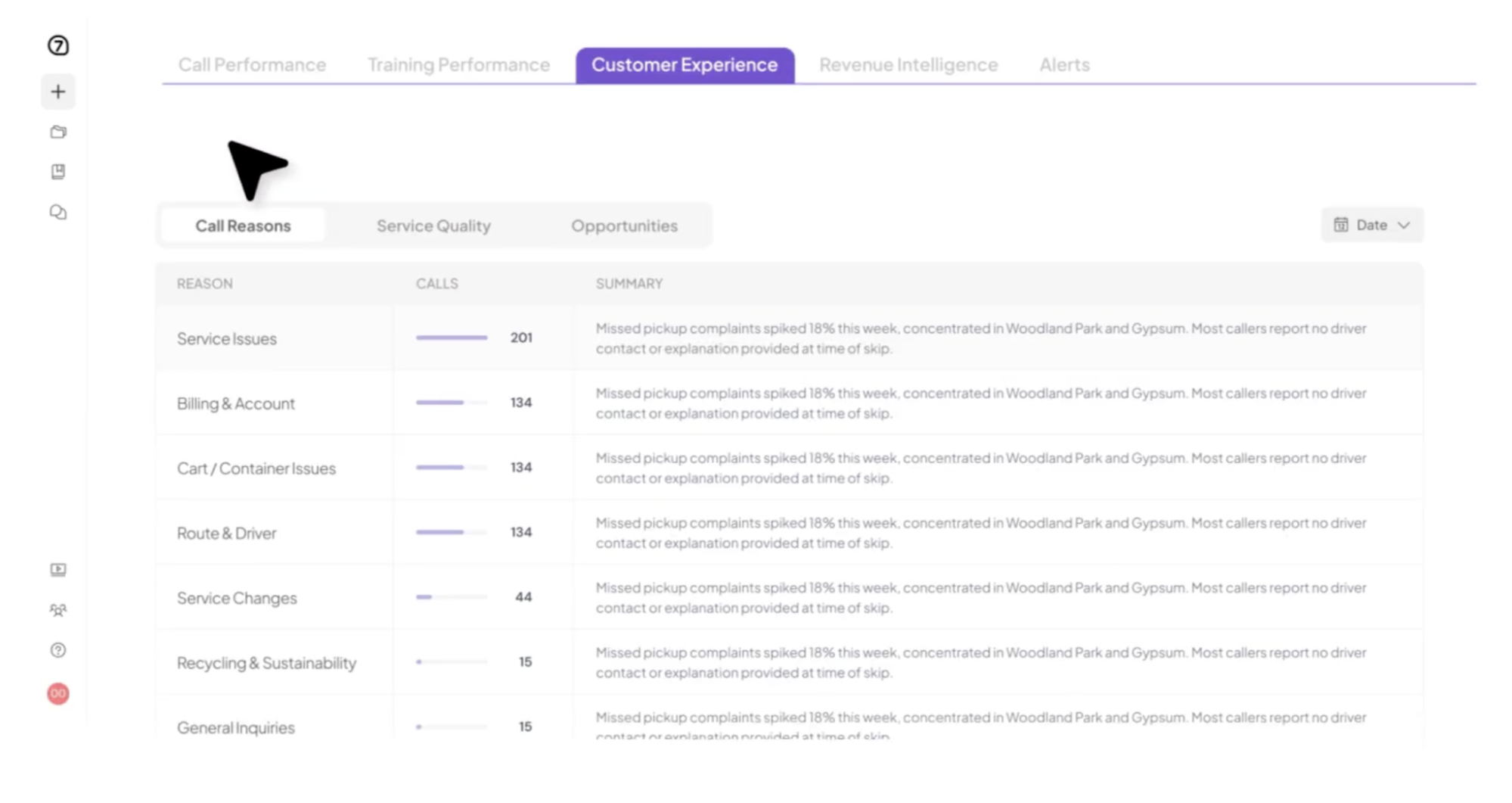
Claudia Skyehart, Client Director at Zoom Marketing, says that since she used the platform, insights from sales calls, conversations, and emails have helped her team improve its product roadmap to better address customer problems.
Conversation intelligence also highlights where the sales process itself creates problems. Teams can identify patterns such as discovery questions that are frequently skipped, inconsistent qualification, or deal stages where conversations regularly lose momentum.
Instead of treating every lost opportunity as an isolated event, leaders can identify trends that point to broader process improvements.
This creates opportunities to refine playbooks, reinforce sales methodologies, and improve execution throughout the sales cycle.
Sales reps spend valuable selling time documenting phone calls, writing follow-up notes, and updating CRM records after customer meetings.
Sales conversation intelligence reduces that administrative workload through post-call analysis that generates summaries and captures key points from each conversation.
Beyond saving time, this also improves the consistency of CRM records. More accurate documentation gives managers better visibility into customer interactions while allowing reps to spend more time preparing for their next conversation rather than completing manual data entry.
Every customer conversation contains information that extends beyond whether a deal was won or lost. Sales conversation intelligence helps leaders identify recurring patterns that are difficult to spot when reviewing only a small sample of calls.
Those patterns give managers the context they need to make better coaching, sales process, and business decisions. Here are some of the key insights sales conversation intelligence helps uncover.
One of the most valuable insights comes from understanding how sales reps conduct conversations.
Sales conversation intelligence highlights behaviors such as discovery questioning, talk-to-listen ratios, follow-up commitments, and how consistently reps follow the team’s sales methodology.
Over time, these patterns help managers identify what successful calls have in common. They also reveal where individual reps need additional sales coaching before those habits begin affecting performance.
As mentioned earlier, objections often appear long before they become visible in CRM reports or quarterly reviews. Sales conversation intelligence identifies recurring pricing concerns and other issues that influence buying decisions.
Looking at objection trends instead of isolated conversations helps leaders determine whether the issue stems from messaging, product positioning, or changing market conditions. Those insights often guide updates to sales enablement materials and objection-handling strategies.
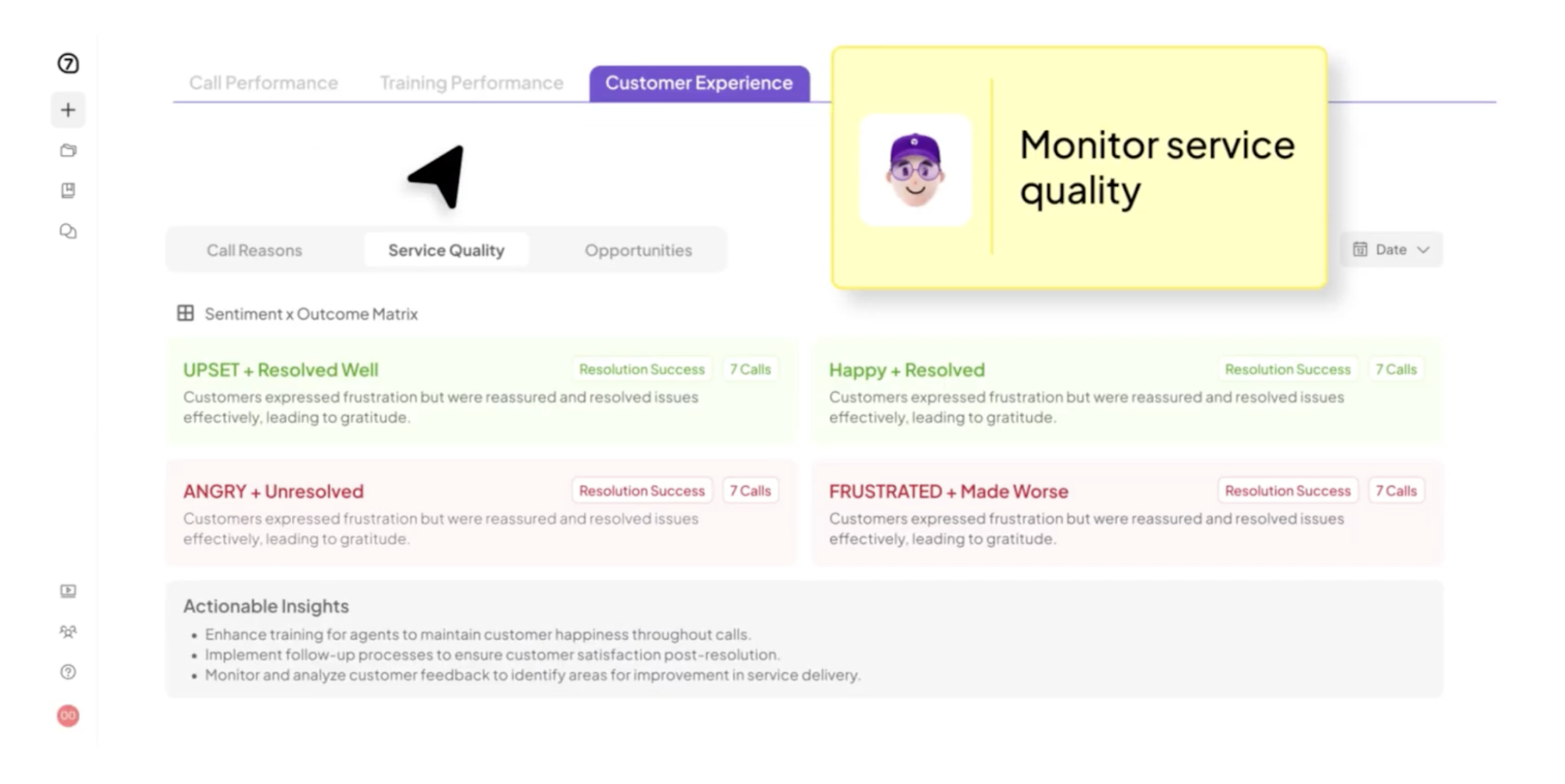
What customers say is important, but so is how they respond throughout the conversation. Conversation intelligence analyzes customer sentiment and engagement patterns to help sales leaders understand whether conversations are progressing positively or beginning to lose momentum.
Repeated signs of hesitation, uncertainty, or declining engagement often indicate opportunities for earlier coaching or adjustments to the sales process before deals become difficult to recover.
Insight7 customers also use this type of analysis to understand the context behind what customers say.
Tobi Oluwole, Co-founder of 3skillz, highlighted Insight7’s sentiment analysis after using the platform to analyze customer conversations, particularly its ability to show the sentiment behind individual comments.
Sales pipeline reports explain where opportunities sit today. Conversation intelligence explains why they reached that point.
By analyzing customer conversations, managers gain earlier visibility into deal risks such as unresolved objections, missing next steps, weak buyer commitment, or limited stakeholder engagement.
This additional context makes pipeline inspections more meaningful and helps leaders prioritize deals that require immediate attention.
Sales teams speak with customers every day, making sales conversations one of the richest sources of market intelligence available within an organization.
Conversation intelligence helps surface repeated customer questions, feature requests, competitor mentions, and changing buyer priorities.
These insights help sales leaders stay closer to evolving customer needs while giving product and marketing teams valuable feedback for future decisions.
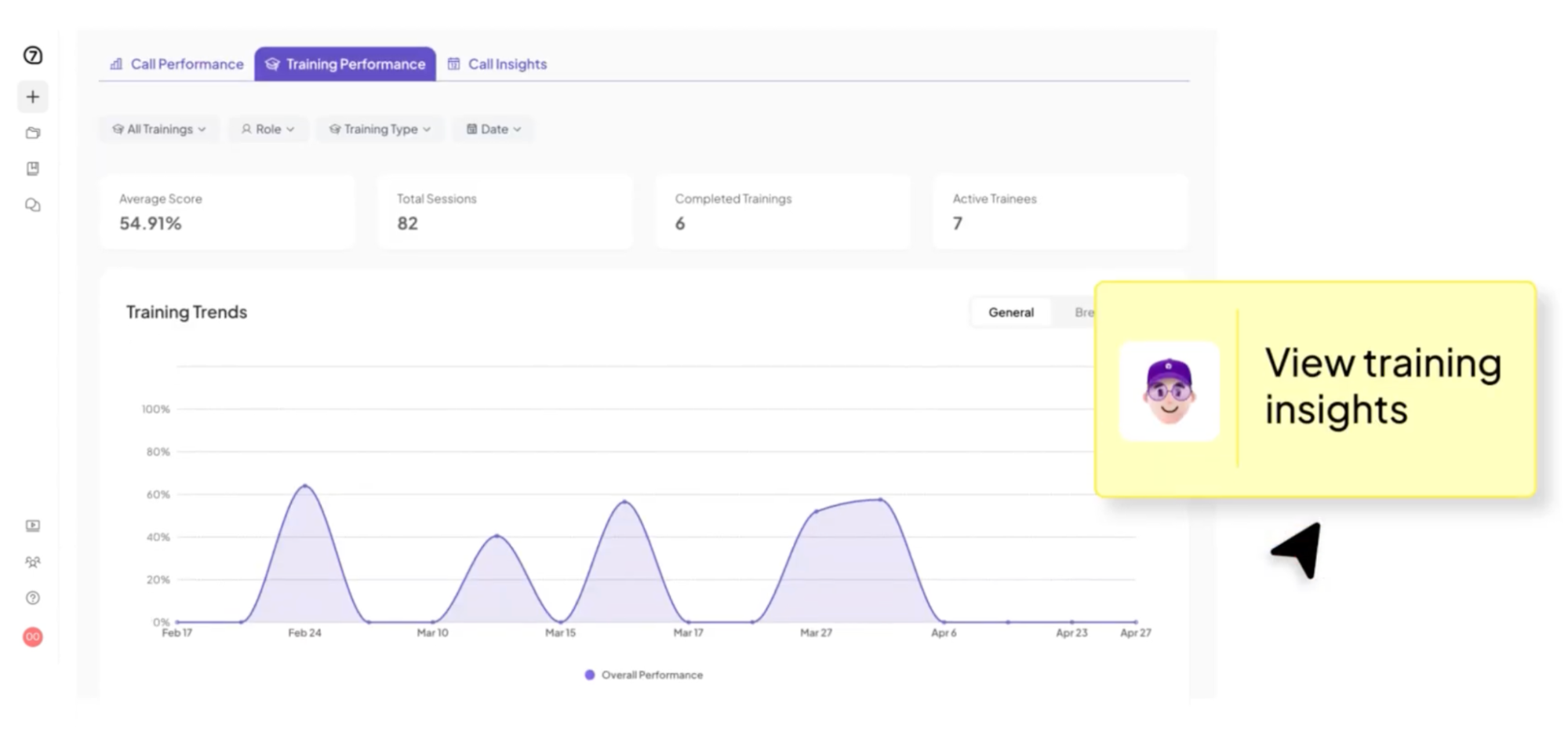
Sales conversation intelligence gives organizations valuable visibility into customer conversations, but insights alone don’t improve performance. Teams still need a consistent way to act on what those insights reveal.
Gartner’s survey of 210 CSOs and senior sales leaders in 2026 also uncovered the same insights, finding that although AI saves sellers an average of 4.8 hours per week, 72% of sales organizations struggle to reinvest those time savings into high-value sales activities.
The same principle applies to conversation intelligence. Giving managers more data about rep performance doesn’t automatically change how reps sell. Those insights have to become coaching priorities, practice opportunities, and measurable follow-up.
This is where many organizations encounter a gap. They successfully collect conversation intelligence data but struggle to translate it into day-to-day coaching that changes rep performance.
Managers often lack the time to build personalized coaching plans for every rep, while important call insights remain confined to reports and dashboards.
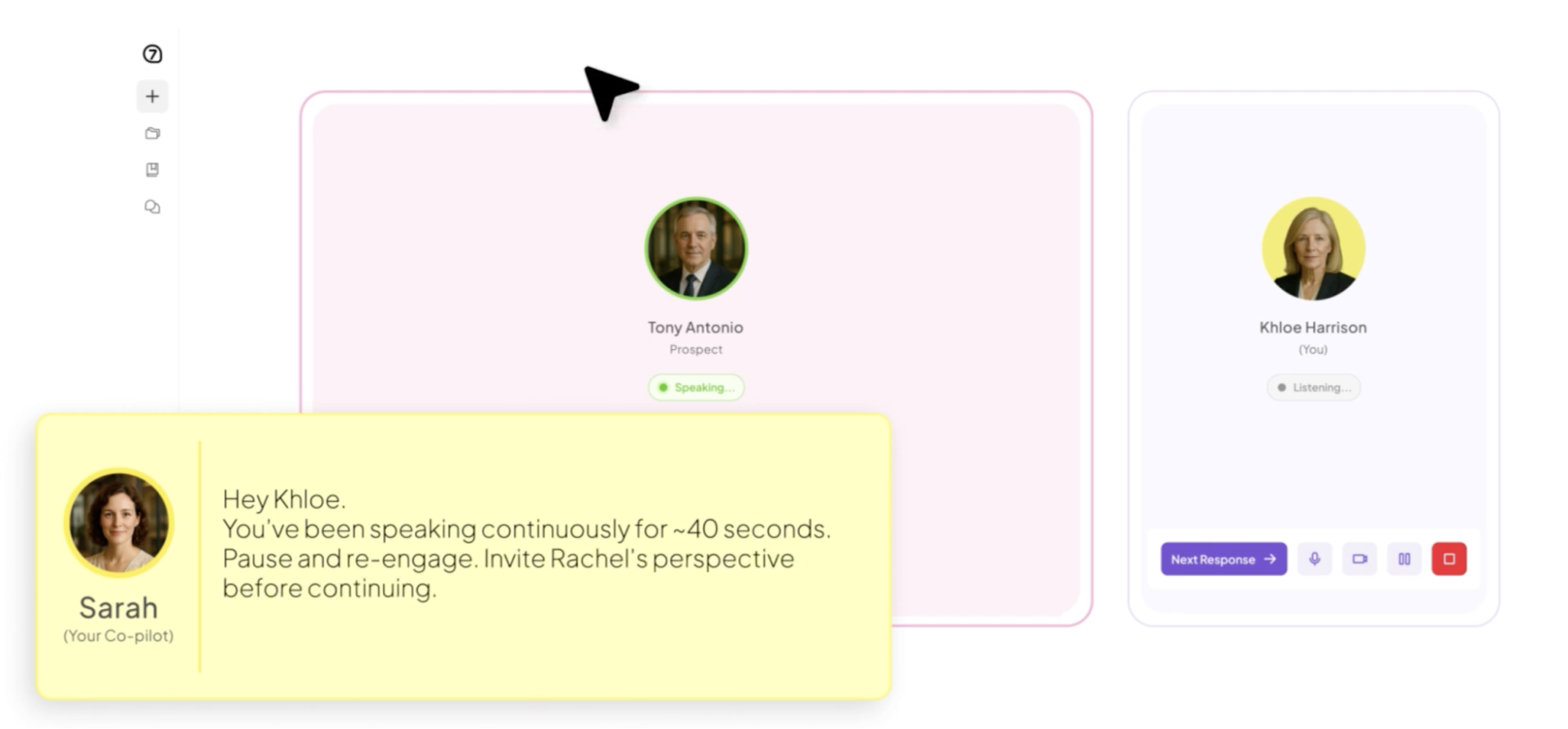
To get the full value from sales conversation intelligence, organizations need an efficient way to connect conversation analysis with continuous skill development. This is where platforms that use conversational AI, like Insight7, for key features like coaching and roleplay can make the greatest impact.
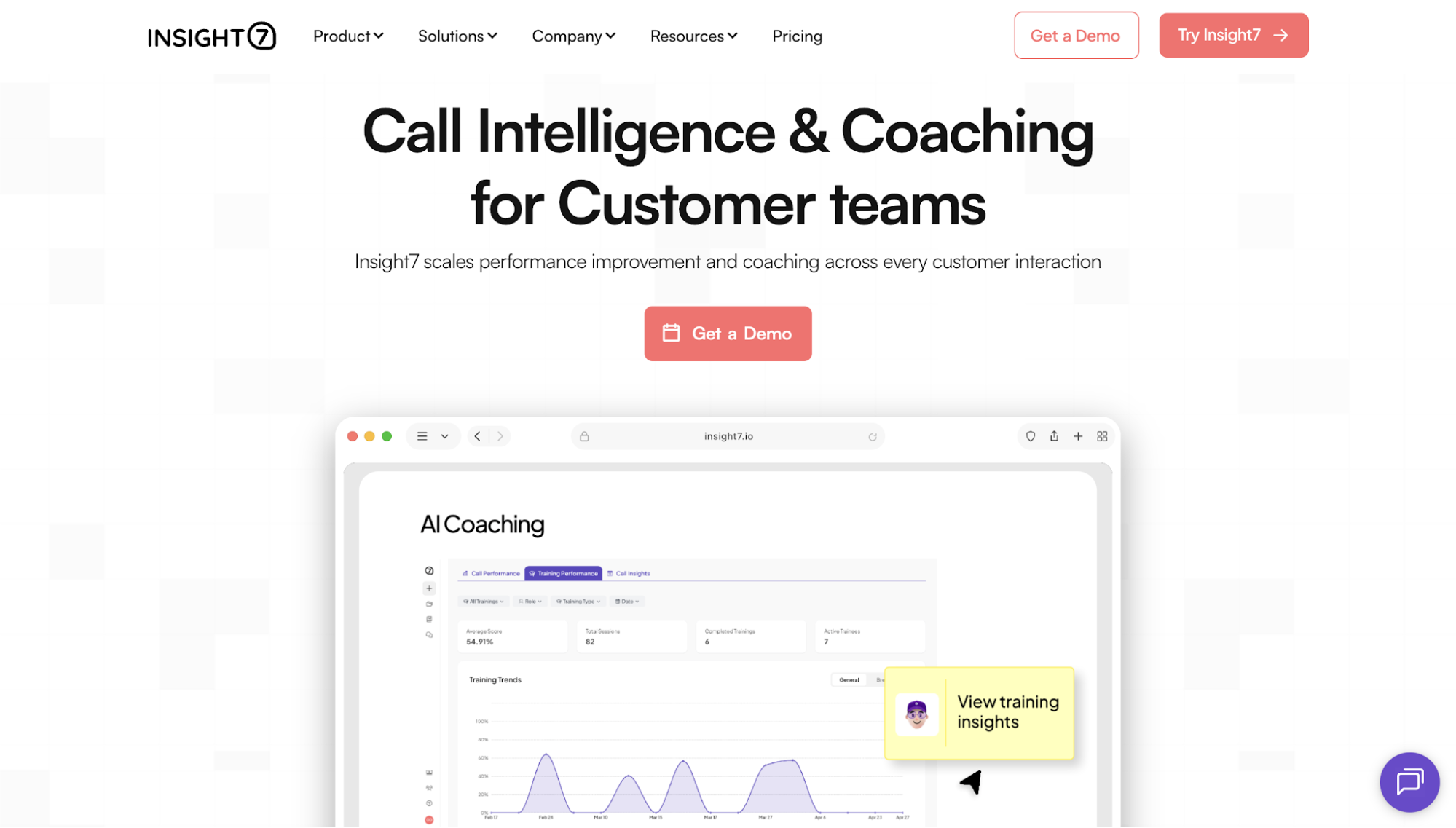
Sales conversation intelligence delivers the greatest value when it becomes part of a continuous improvement process.
Insight7, which currently holds a 4.7 rating out of 5 on G2, helps you do exactly that through real-time insights that move customer-facing teams beyond conversation analysis to coaching, skill development, and ongoing performance improvement.
Instead of leaving managers to interpret conversation data alone, Insight7 uses AI-powered insights from actual customer interactions to identify coaching priorities and reinforce them through coaching and roleplay.
