


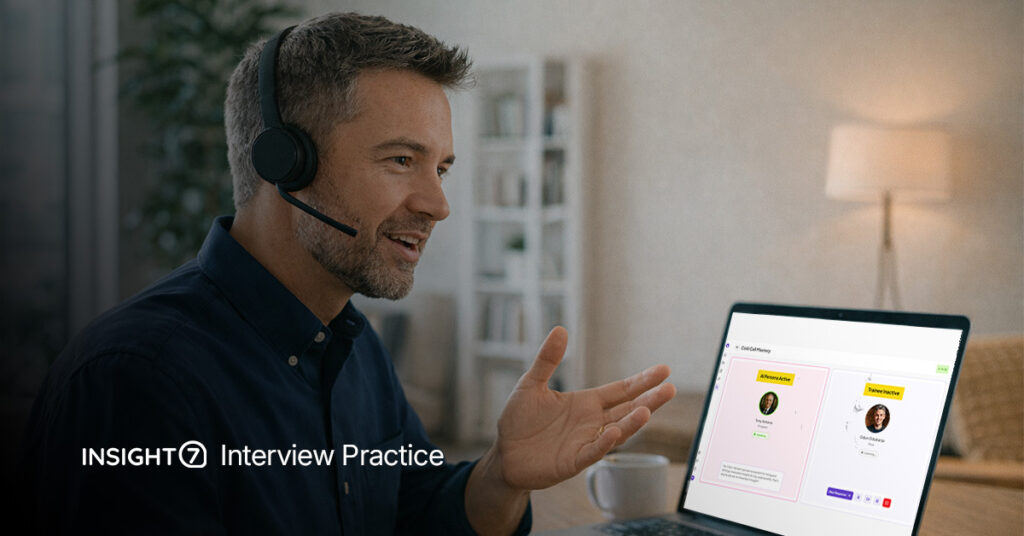
Oneok Leadership interviews reflect the demands of running a large midstream natural gas infrastructure company where safety is foundational, capital allocation decisions have decade-long consequences, and commercial and operational leadership must work in close alignment to maintain producer and utility relationships through volatile commodity markets. Oneok leaders are expected to drive disciplined execution, develop specialized technical talent, and make strategic decisions that reflect a deep understanding of natural gas market dynamics. This page runs a live mock session scored on the signals Oneok Leadership interviewers actually weigh.
Start your free Oneok Leadership practice session.
What interviewers actually evaluate
Decision-Making, Team Development & Strategic Thinking
Oneok Leadership interviews test your ability to make high-stakes decisions in a capital-intensive, safety-critical energy environment, develop specialized technical and commercial talent, and think strategically about Oneok's position in evolving natural gas and NGL markets. Interviewers look for leaders who combine operational discipline with strategic market awareness and genuine commitment to safety culture.
Safety-first leadership, strategic capital and commercial decision-making, technical talent development, organizational alignment, energy market strategic awareness, accountability culture
What gets scored in every session
Specific, sentence-level feedback.
| Dimension | What it measures | How to answer |
|---|---|---|
| Decision-making | Whether you apply a clear, defensible framework when making capital or operational decisions under uncertainty | Name your decision criteria, the trade-offs you accepted, and what you monitored after |
| Team development | How you develop specialized midstream technical and commercial talent over time | Give a specific development story with a defined action and a measured outcome |
| Strategic thinking | Whether you connect your team's decisions to Oneok's natural gas market position and long-term infrastructure strategy | Demonstrate awareness of NGL market dynamics, pipeline capacity trends, and energy transition considerations |
| Safety leadership | How you embed safety culture in organizational decisions, not just operational procedures | Show that safety considerations appear in your strategic and capital decisions, not just field operations |
How a session works
Step 1: Get your Oneok Leadership question
You get a realistic Oneok Leadership prompt drawn from themes that appear in actual interview loops: making a capital allocation decision between two competing pipeline expansion projects under commodity price uncertainty, developing a senior pipeline engineer for a regional operations leadership role, aligning commercial and operations teams on a new producer service commitment, and leading an organization through a safety culture improvement initiative following an incident.
Step 2: Answer by voice
You speak your answer out loud, exactly as you would in a live panel or phone screen. The session captures timing, structure, and specificity without requiring you to type.
Step 3: Get scored dimension by dimension
Each of the four dimensions above receives a separate score with sentence-level feedback. You see exactly which line lost points and why, not a vague overall rating.
Step 4: Re-answer and track improvement
You re-answer the same question with specific feedback in hand and track score deltas across attempts. Most candidates need three passes before answers sound built rather than recalled.
Frequently Asked Questions
What are the 5 C's of interviewing?
The five C's commonly referenced are competence, communication, culture fit, curiosity, and commitment. Oneok Leadership interviews weight technical competence in midstream energy and commitment to safety leadership culture as the foundational requirements, alongside the strategic and communication skills expected of any senior leader.
What is the biggest red flag to hear when being interviewed?
The biggest red flags in an Oneok Leadership interview are candidates who treat safety as a compliance obligation rather than a cultural value, who make capital decisions without adequate commodity price scenario analysis, who describe leadership through individual contribution rather than organizational impact, and who cannot connect their team's work to the energy market dynamics that shape Oneok's long-term strategic position.
How to prepare for a leadership interview?
Study Oneok's pipeline network, NGL market exposure, and strategic growth priorities in the midstream sector. Prepare specific leadership stories from energy, infrastructure, or capital-intensive industries that demonstrate strategic decision-making, technical team development, and safety leadership. Practice connecting your past decisions to energy market context.
What are the 5 hardest interview questions?
The hardest Oneok Leadership questions involve competing priorities under uncertainty: maintaining capital discipline during a commodity price spike that creates pressure to accelerate pipeline investment, developing a key technical leader who is also critical to current operations performance, aligning commercial and operations teams on a service commitment that stretches operational capacity, managing a safety culture improvement program in the wake of an incident, and making a strategic decision about Oneok's role in an evolving natural gas market.
What are the most common failure modes in Oneok Leadership interviews?
Common failure modes include treating safety as procedural rather than cultural, capital decision stories that lack commodity price scenario analysis, development examples without measurable talent outcomes, strategic thinking that does not reflect natural gas market dynamics, and leadership examples that conflate individual expertise with organizational leadership impact.
Also practice
All nine Oneok role interview practice pages.
- Sales
- Customer Service
- Product Management
- Marketing
- Finance
- Operations
- People & HR
- Legal & Compliance
One full session free. No account required. Real, specific feedback.








