


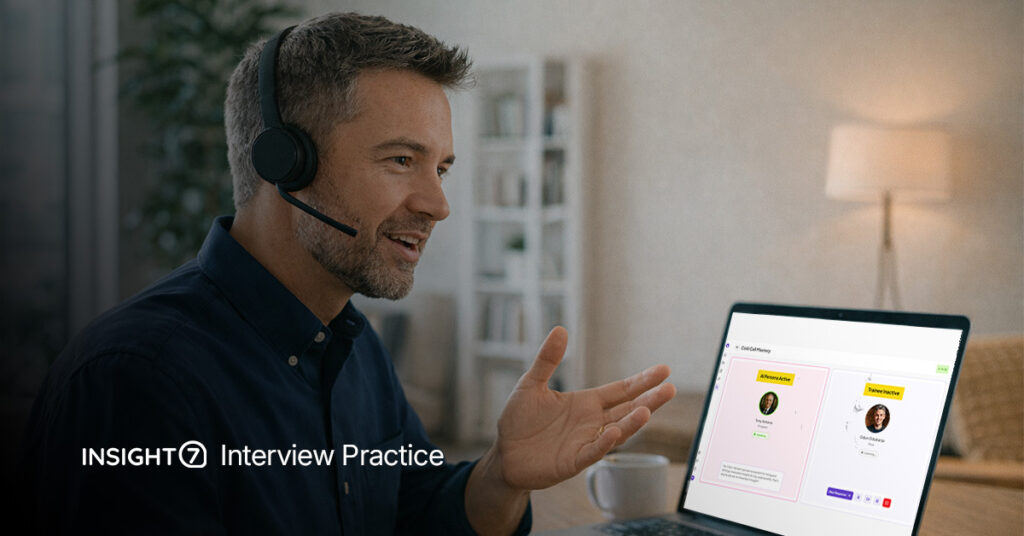
Starbucks Customer Service interviews assess your ability to handle high-volume customer interactions with empathy and speed, recover service failures in a brand-sensitive environment, and build the kind of genuine connection with customers that drives repeat visits and loyalty program engagement. The process typically includes a recruiter screen and behavioral interviews focused on past customer-facing experience and alignment with Starbucks's service values.
Start your free Starbucks Customer Service practice session.
What interviewers actually evaluate
Empathetic Service Recovery & Customer Connection
Starbucks Customer Service roles require candidates who can maintain warmth and genuine connection under high throughput pressure, de-escalate a customer who is disappointed by a product, wait time, or order error, and resolve the issue in a way that leaves the customer more loyal than before the problem occurred. Interviewers probe for whether your empathy is visible in the structure of your answer, not just stated as a value, and whether your service recovery produced a retention outcome. Strong candidates acknowledge the customer's specific experience before explaining what they did, and name a result that demonstrates the relationship was protected.
Empathy visibility, service recovery structure, escalation judgment, customer retention outcome
What gets scored in every session
Specific, sentence-level feedback.
| Dimension | What it measures | How to answer |
|---|---|---|
| Empathy Signal | Do you acknowledge the specific impact of the service failure on the customer before moving to the fix? We score whether your opening registers what the customer experienced and felt, not just what went wrong operationally. | Name what the customer experienced, then diagnose |
| Escalation Judgment | We flag answers that escalate to a manager before attempting resolution, and answers that absorbed issues requiring shift supervisor authority. Interviewers want to see your threshold for when to involve a leader. | Name the threshold, explain the decision |
| Resolution Clarity | What specifically did you do and say to resolve the customer's issue? We flag action blocks that describe general customer service approach without naming the specific communication or decision you made in the moment. | Specific words, actions, and sequence |
| Retention Outcome | Did the customer leave satisfied, return the next day, or engage with the Starbucks Rewards program? We flag answers that end with "the customer was happy" without a retention or loyalty signal. | Return visit, positive feedback, Rewards engagement, review |
How a session works
Step 1: Get your Starbucks Customer Service question
Questions are assigned based on where candidates for this role typically struggle most, which for Starbucks Customer Service means empathy signal clarity in high-volume service recovery scenarios and escalation judgment when a customer's experience requires a decision above the partner's authority level. Each session opens with a new question targeting a different evaluation dimension.
Step 2: Answer by voice
Speak your answer as you would in a real interview. The AI listens for STAR structure, empathy placement, and whether your Result includes a retention or loyalty signal. Starbucks interviewers expect candidates who understand that every service interaction is an opportunity to deepen the customer relationship, not just fix a problem.
Step 3: Get scored dimension by dimension
Instant scores across all four rubric dimensions. Each gets a score, a flagged weakness, and a specific sentence-level fix. You will see exactly where your answer lost points and what to change before your next attempt.
Step 4: Re-answer and track improvement
Revise based on feedback and answer again. See the before/after score change across Empathy Signal, Escalation Judgment, Resolution Clarity, and Retention Outcome. Your weakness profile updates across sessions so recurring gaps become the focus of your next question.
Frequently Asked Questions
What customer service interview questions does Starbucks ask?
Common questions include: "Tell me about a time you turned around a customer who was upset about their experience," "Describe how you handled a situation where a customer's order was wrong and they were already running late," and "Walk me through how you balance serving the customer in front of you while managing a line of customers behind them." Interviewers also ask about how you remember regular customers' preferences and build personal connections in a high-volume environment.
How should I prepare for a Starbucks Customer Service interview?
Prepare three to four STAR stories from past customer-facing roles that each include a specific service recovery outcome: a customer who returned the next day, a positive comment submitted to the store, or a situation where your intervention prevented a complaint from escalating further. Practice acknowledging the customer's specific experience in your opening sentence before explaining what you did. Starbucks interviewers are trained to listen for genuine warmth, not scripted empathy.
What does Starbucks look for in Customer Service candidates?
Starbucks looks for candidates who demonstrate genuine connection-orientation, not just transactional service efficiency. Interviewers assess whether you see every customer interaction as an opportunity to create a moment of connection, whether you make de-escalation decisions quickly and calmly without involving a manager unnecessarily, and whether your service recovery is anchored in the customer's specific experience rather than a generic apology-and-coupon approach.
What are the 5 hardest customer service interview questions at Starbucks?
The five most demanding questions are: (1) how you manage a customer who is loudly unhappy during a morning rush when the line is twelve people deep, (2) how you handle a customer who insists their order was made incorrectly when you believe it was made as requested, (3) how you build a genuine connection with a new customer in a 30-second window during a high-volume drive-through shift, (4) how you support a fellow partner who is struggling with a difficult customer while you are also managing your own station, and (5) how you maintain warmth and energy at the end of a five-hour peak shift when you are physically and mentally tired.
What are the 5 C's of interviewing and how do they apply to Starbucks Customer Service?
The 5 C's, Competence, Confidence, Communication, Character, and Culture, apply directly. Competence is your knowledge of Starbucks service standards and product offerings. Confidence is your ability to resolve a service issue without always deferring to a shift supervisor. Communication is your ability to connect with diverse customers across different moods, languages, and expectations. Character is how you handle a mistake made by a fellow partner in a customer-facing situation. Culture fit at Starbucks is assessed through your orientation toward genuine human connection, inclusion, and service as a form of care.
Also practice
All nine Starbucks role interview practice pages.
One full session free. No account required. Real, specific feedback.








