


Your QA team flags a call as “compliant” because the rep said all the right words.
But the customer hung up angry, left a one-star review, and cancelled their account within a week. The script was followed perfectly.
The tone was dismissive the entire time.
This is the gap that tone and emotion detection closes.
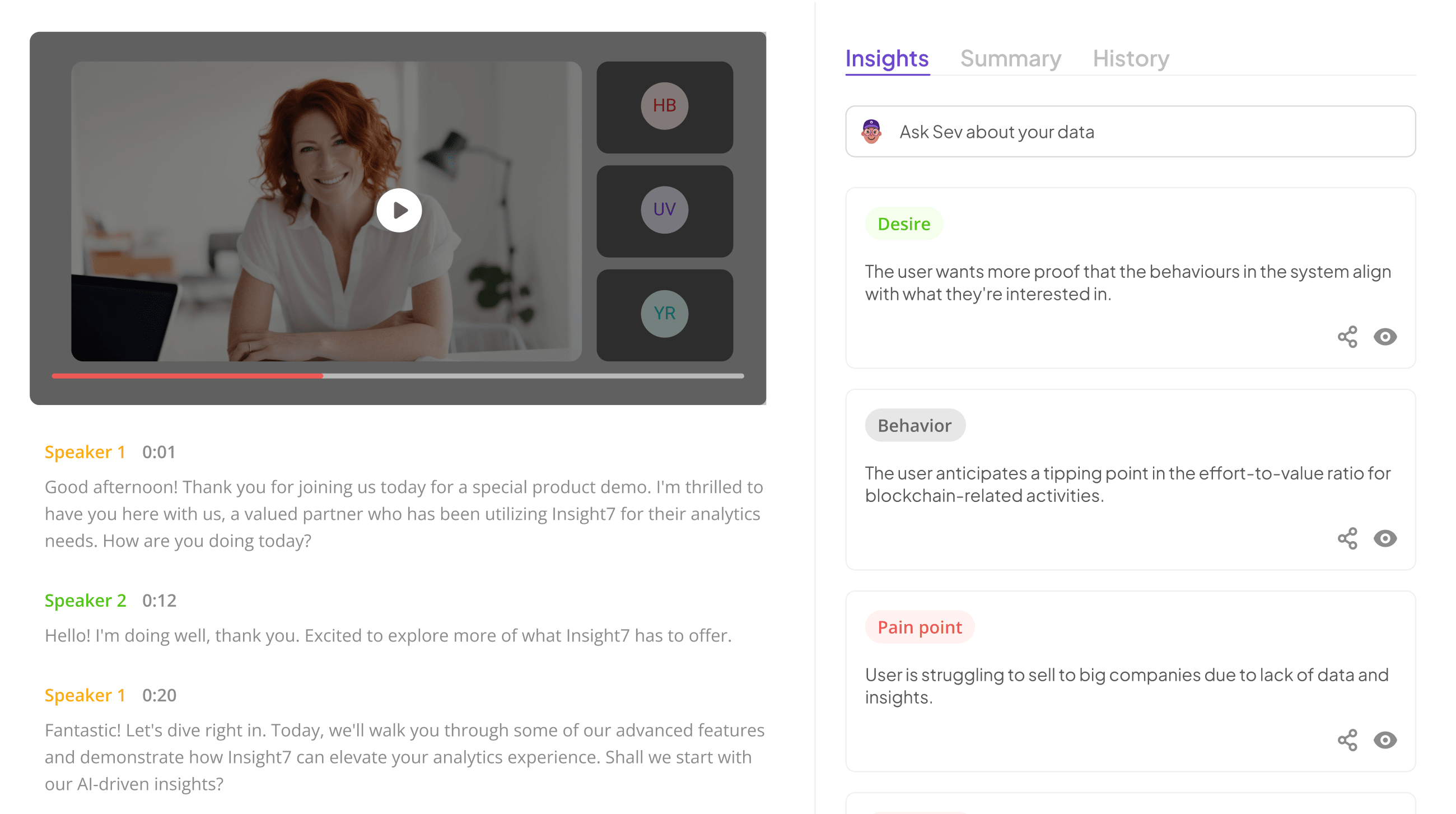
Insight7’s automated call analytics scores 100% of calls against custom QA frameworks that include empathy markers, frustration indicators, and sentiment shifts, not just script adherence.
For mid-market contact centers with 40+ reps handling thousands of calls monthly, the difference between a compliant call and a good call is often entirely in tone, and traditional QA scoring misses it because human reviewers only hear 2% to 5% of total volume.
AI tools that detect tone and emotion in calls use natural language processing and acoustic analysis to evaluate how something was said, not just what was said.
But these tools serve different use cases. Some are built for contact center QA.
Others focus on real-time agent coaching. Others specialize in compliance monitoring for regulated industries. Here is how six tools compare.
Which Tool Fits Your Situation
| Your scenario | Best fit | Why |
|---|---|---|
| 40–200+ rep contact center needing sentiment scoring integrated with QA and coaching workflows | Insight7 | Scores 100% of calls on custom criteria, including empathy, frustration, and tone, then connects scores to coaching actions |
| Contact center wants real-time agent nudges during live calls based on emotional cues | Cogito | Provides live behavioral cues to agents mid-conversation based on voice pattern analysis |
| Large enterprise needing deep speech analytics with compliance-specific emotion flagging | CallMiner | Granular acoustic and linguistic analysis across 100% of interactions, strong in regulated industries |
| Contact center focused on agent-level performance analytics with sentiment overlays | Observe.AI | Combines post-call sentiment analysis with agent evaluation forms and real-time assist |
| Enterprise already on the NICE platform needing native sentiment analytics | NICE CXone | Interaction analytics with sentiment scoring built into the broader CCaaS ecosystem |
| Mid-market contact center wanting AI-driven QA with emotion detection and agent self-coaching | Level AI | Generative AI-powered QA with sentiment analysis and conversation intelligence |
1. Insight7: Sentiment Scoring Inside Automated QA for Mid/Large-Market Teams
A 75-rep customer support operation runs QA on 5% of calls. Their scores look fine. But CSAT surveys tell a different story: customers report feeling dismissed, rushed, or talked down to. The QA rubric checks for greeting, verification, and resolution. It does not check for tone.
Insight7 scores every call against custom QA frameworks that include sentiment and empathy as scoring dimensions alongside compliance, script adherence, and resolution quality. When a call scores high on process but low on empathy, that gap surfaces automatically rather than hiding in the 95% of calls nobody reviewed.
The mechanism that matters here is the connection between sentiment scoring and coaching workflows. A sentiment score in isolation is a data point. Tied to a coaching action (a specific rep, a specific behavior, a specific call example), it becomes a performance lever. Insight7 closes that loop, connecting what the data found to what happens next in coaching.
Built for mid-market companies with 40+ customer-facing reps across sales, support, and customer success. SOC 2 Type II, HIPAA, and GDPR compliant. The trade-off: Insight7 is not a real-time agent assist tool. If your primary need is live-in-call nudges based on emotional cues, Cogito is built specifically for that.
2. Cogito: Real-Time Emotional Intelligence During Live Calls
Cogito analyzes voice patterns in real time during live calls, providing agents with behavioral cues as the conversation unfolds. If a customer’s tone shifts toward frustration or the agent is speaking too quickly, Cogito surfaces a visual nudge on the agent’s screen, prompting them to adjust.
Built for contact centers that want to intervene during calls rather than analyze them afterward. Cogito’s strength is the real-time feedback loop: agents receive live guidance based on acoustic signals, which can improve outcomes on the call that is happening right now, not just on future calls.
The trade-off: Cogito’s primary value is the live nudge. Teams that need comprehensive post-call QA scoring against custom frameworks, or structured coaching programs tied to call-level data, will need a separate QA and coaching platform like Insight7, alongside Cogito.
3. CallMiner: Deep Speech Analytics for Compliance-Heavy Enterprises
CallMiner provides granular speech and acoustic analytics across 100% of customer interactions, with particular strength in regulated industries. Its emotion detection capabilities analyze tone, tempo, stress markers, and silence patterns to identify customer frustration, agent fatigue, and compliance risk.
Built for large enterprises in financial services, healthcare, and insurance that need detailed acoustic analysis combined with compliance monitoring.
CallMiner’s depth in speech analytics is among the most granular in the market. The trade-off: that depth comes with implementation complexity and longer deployment timelines.
Mid-market teams with 40 to 100 reps often find the configuration overhead disproportionate to their operational scale, and the platform requires dedicated analyst resources to get full value from the data it produces.
4. Observe.AI: Agent Performance Analytics with Sentiment Overlays
Observe.AI combines post-call sentiment analysis with agent evaluation scorecards, providing contact center managers with a view of both what happened on a call and how the customer felt about it. The platform also offers real-time agent assist features that surface relevant guidance during live interactions.
Built for contact centers focused on agent-level performance management, where sentiment data enriches evaluation rather than replacing traditional QA.
Observe.AI’s strength is layering emotional context onto agent performance metrics so supervisors can see the difference between technically correct calls and genuinely effective ones.
The trade-off: while Observe.AI covers both post-call analytics and real-time assist, teams that need deeply customizable QA frameworks or structured coaching programs tied to specific behavioral patterns may find the coaching loop less direct than platforms where coaching workflows are a core product rather than an adjacent feature.
5. NICE CXone: Interaction Analytics Inside a Full CCaaS Platform
NICE CXone includes interaction analytics with sentiment scoring as part of its broader cloud contact center suite. Sentiment analysis runs across voice, chat, and email channels, flagging negative sentiment trends and correlating them with operational metrics like handle time and resolution rates.
Built for enterprises already running on the NICE ecosystem who want native sentiment analytics without adding another vendor. The analytics capabilities integrate with NICE’s workforce management, quality management, and routing modules.
The trade-off: the sentiment analytics are strongest when paired with the full NICE stack. Organizations that only need tone and emotion detection without the entire CCaaS platform will pay for infrastructure they do not use, and standalone sentiment analysis tools offer more deployment flexibility.
6. Level AI: Generative AI-Powered QA with Emotion Detection
Level AI uses generative AI to automate QA scoring with sentiment and emotion analysis as native dimensions. The platform evaluates customer interactions for emotional tone, agent empathy, and conversation flow, generating QA scores and coaching recommendations automatically.
Built for contact centers that want AI-driven QA with built-in sentiment capabilities and agent self-coaching features. Level AI’s generative approach means QA rubrics can be more flexible than rigid keyword-based systems.
The trade-off: as a newer entrant, Level AI’s integration ecosystem and enterprise reference base are smaller than those of established players like CallMiner or NICE. Teams in heavily regulated industries with complex compliance requirements may need to evaluate whether the platform’s maturity matches their risk tolerance.
Why Tone Detection Matters More Than Script Compliance
Most QA programs measure whether reps say the right things. Tone and emotion detection measures whether customers feel heard. Those are different outcomes, and the gap between them explains why many contact centers have high QA scores and mediocre CSAT.
The operational value of sentiment scoring is not the score itself. It is the ability to identify patterns that traditional QA misses: which reps consistently trigger negative sentiment despite following the script, which call types produce the most emotional escalation, and which coaching interventions actually move the sentiment needle over time.
That requires scoring every call, not a sample, and connecting the scores to structured coaching actions.
If your QA program scores for compliance but not for how customers feel, and your CSAT does not match your QA scores, book a demo with Insight7 to see how sentiment-aware QA scoring closes that gap.
Frequently Asked Questions
1. How does AI detect emotion in phone calls?
AI analyzes acoustic features like pitch, tempo, volume, pauses, and stress markers alongside linguistic cues such as word choice and sentence structure. These signals are processed through models trained on labeled emotional speech data to classify sentiment as positive, negative, or neutral, and in more advanced systems, to identify specific emotions like frustration or confusion.
2. Is tone detection accurate enough for QA scoring?
Current AI sentiment models are reliable for identifying directional sentiment shifts and flagging calls with strong negative or positive signals. They work best as a scoring dimension within a broader QA framework, not as the sole evaluation criterion. Combining tone data with compliance, resolution, and behavioral scoring produces a more complete picture than any single metric.
3. Which industries benefit most from emotion detection in calls?
Healthcare, financial services, and insurance see the highest impact because interactions carry emotional weight and compliance requirements. A frustrated patient or an anxious policyholder handled poorly creates both a satisfaction risk and a regulatory risk. Retail and e-commerce contact centers benefit as well, particularly for reducing churn after negative interactions.
4. Can emotion detection tools work in real time?
Some tools, like Cogito, provide real-time agent guidance based on live emotional cues. Others, like Insight7 and CallMiner, focus on post-call analysis across 100% of interactions. The choice depends on whether your priority is improving the current call or improving coaching and QA patterns across all calls.
5. What is the difference between sentiment analysis and emotion detection?
Sentiment analysis classifies interactions as positive, negative, or neutral. Emotion detection goes further, identifying specific emotional states such as frustration, confusion, satisfaction, or urgency. Most contact center tools use both, with sentiment as a broad scoring dimension and emotion detection for more targeted coaching insights.








