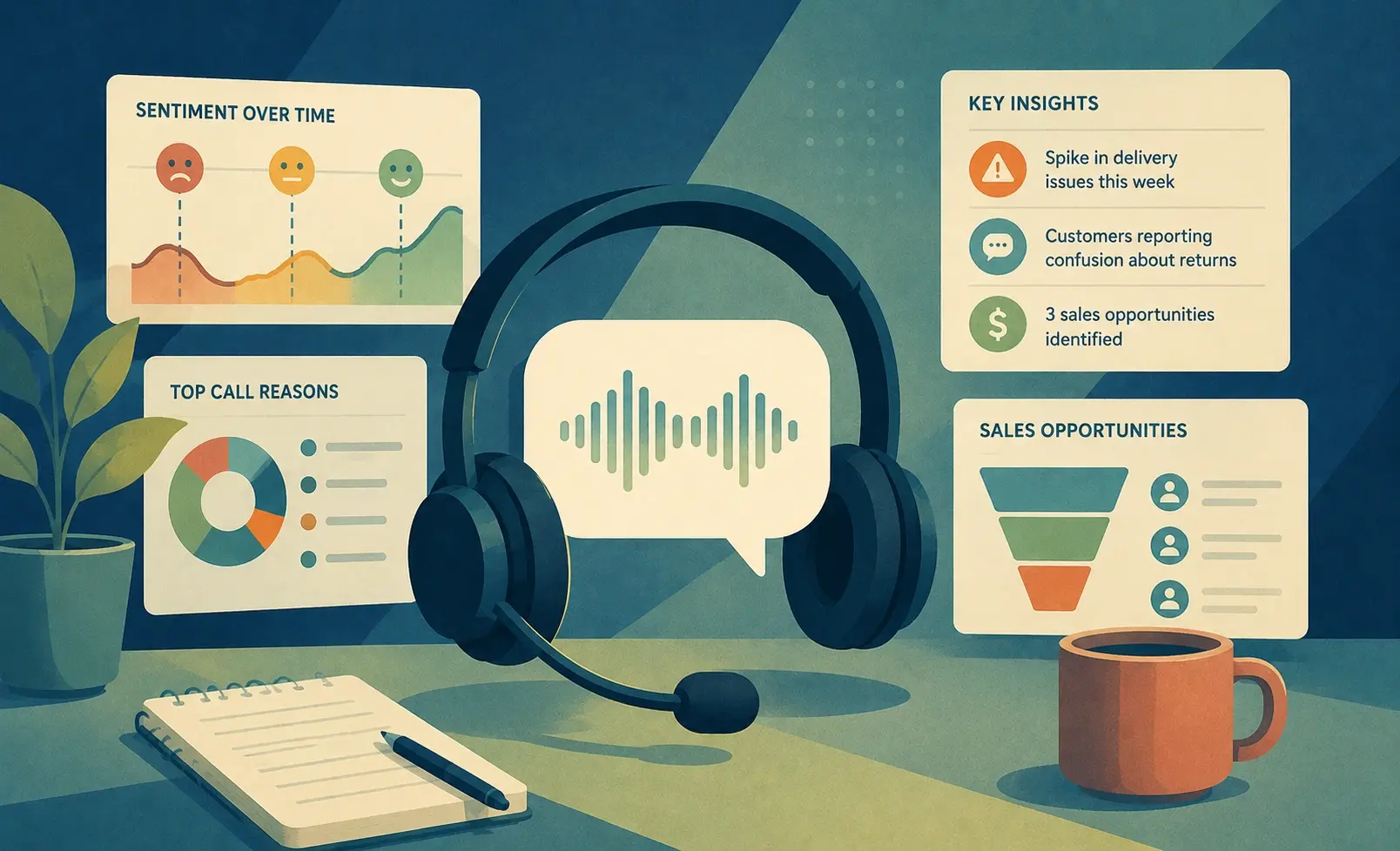
Customer success and sales enablement leaders evaluating coaching tools face a distinction that vendor marketing routinely blurs: the difference between platforms that recommend coaching based on CRM activity and those that use what was actually said in customer conversations. Activity-based recommendations tell you a rep logged three calls. Conversation-based recommendations tell you what happened in those calls and which behavior to address.
Methodology
Platforms were evaluated across four dimensions weighted for teams needing conversation-specific coaching path recommendations:
| Criterion | Weighting | Best For |
|---|---|---|
| Data source quality | 40% | Conversation data vs. CRM signals |
| Recommendation specificity | 35% | Naming the behavior, not the category |
| Cycle tracking over time | 15% | Showing whether coaching is working |
| Recording infrastructure fit | 10% | Deployment complexity |
According to Gartner on sales manager effectiveness, coaching that identifies specific behavioral gaps from conversation data produces significantly higher rep skill improvement than coaching relying on manager observation alone.
What is the difference between activity-based and conversation-based coaching recommendations?
Activity-based coaching uses CRM signals: calls made, emails sent, conversion rates. Conversation-based coaching uses what was said: which objections were not addressed, where talk-listen ratios fell outside effective ranges, or which moments led to deal stalling. Conversation-based recommendations are more specific and harder to game through activity volume.
How does customer conversation data improve coaching path accuracy?
Conversation data surfaces behavioral patterns activity data cannot see. A rep making 40 calls per week with a 20% connect rate looks productive in CRM. Conversation analysis may show consistent failure to establish value before discussing pricing, which is the actual reason for the poor close rate. That behavioral insight drives a more targeted coaching intervention.
Avoid this common mistake: assuming AI-powered coaching recommendations are using conversation data to generate them. Many platforms use CRM activity signals and self-reported skill assessments. Always verify whether the recommendation engine pulls from call analysis or from activity data.
Quick comparison
| Platform | Data Source | Recommendation Type | Best For |
|---|---|---|---|
| Insight7 | Call recordings | QA-gap scenario matching | Contact center and sales QA |
| Gong | Call + CRM | Deal signal + behavior | B2B complex sales rep development |
| Mindtickle | Call + assessment | Readiness gap training | Structured onboarding programs |
| Clari | CRM + forecasting | Revenue risk signals | Pipeline-focused revenue leaders |
Insight7
Insight7 generates coaching recommendations directly from QA scoring patterns in call data. When an agent consistently underperforms on a specific criterion, the platform auto-suggests a practice scenario matched to that precise gap using the objection types or behavioral failures appearing in their actual calls, not a generic training module. The mechanism runs from call scoring to gap identification to scenario suggestion in a single workflow, with supervisors approving suggested scenarios before they reach the rep.
TripleTen processes over 6,000 learning coach calls per month through Insight7, generating coaching recommendations at scale without adding QA headcount. Insight7 requires existing call recording infrastructure and team setup for the coaching module.
Insight7 is best suited for contact center and inside sales teams with 25 or more agents that have existing call recording infrastructure and want coaching recommendations driven by QA scoring patterns.
The clearest differentiator is recommendation specificity: Insight7 suggests scenarios matched to a named criterion gap in a rep's actual scored calls, not to a category bucket from a competency framework.
Gong
Gong analyzes recorded calls alongside deal and pipeline data. If a rep improves their discovery question score and pipeline conversion improves in the same period, Gong can surface that correlation in ways standalone QA platforms cannot. This connection between call behavior improvement and deal outcomes is Gong's unique mechanism. Outcome tracking is less granular at the competency level for teams wanting to isolate a single skill's improvement independent of deal context. Contact center teams without deal data will get less value from the revenue intelligence layer.
Gong is best suited for B2B sales teams with 20 or more reps where conversation behavior can be connected to pipeline movement as the ultimate coaching outcome.
Gong's mechanism is the deal intelligence layer: it links conversation behavior patterns to pipeline outcomes, making coaching ROI measurable in revenue terms.
Mindtickle
Mindtickle is a sales readiness platform that evaluates recorded calls against a defined competency framework and surfaces gaps as inputs to the learning path recommendation engine. A rep whose call assessment shows a competency gap gets assigned training content that closes that gap before advancing to the next milestone. Teams with evolving criteria or without existing training content will find setup time significant and recommendations less targeted until the content library is built.
Mindtickle is best suited for sales organizations with structured onboarding programs and defined competency frameworks that can be mapped to call assessment gaps for milestone-based recommendations.
Mindtickle's mechanism is the readiness score: call data feeds into a competency gap that triggers a specific training assignment, closing the loop between conversation performance and development path progression.
Clari
Clari is a revenue intelligence and pipeline management platform. Coaching signals come from CRM activity, deal stage data, and conversation metadata rather than deep call content analysis. Recommendations fire when deal patterns indicate risk: deals stalling at a particular stage or forecast commit rates deviating from historical patterns. For teams needing conversation-level behavioral coaching, Clari's recommendation depth is limited by its reliance on deal and activity signals rather than call content.
Clari is best suited for revenue operations leaders at organizations with 30 or more reps where pipeline forecast accuracy is the primary coaching driver.
Clari's coaching value is in deal risk signal, not conversation analysis: it tells managers which reps need attention based on pipeline behavior, not which specific behaviors in calls need changing.
Salesloft
Salesloft integrates conversation analytics into its sales engagement platform, surfacing talk-listen ratios and topic coverage as coaching inputs alongside the rep's cadence activity. Coaching recommendations sit within a broader outbound execution platform rather than as the primary focus. Teams needing deep call content analysis will find Salesloft's coaching depth insufficient compared to dedicated call intelligence platforms.
Salesloft is best suited for outbound sales teams already using Salesloft for cadence execution that want conversation analytics embedded in the existing workflow.
Salesloft's coaching value is in cadence context: conversation behavior makes more sense alongside outreach activity, but analysis depth is limited compared to dedicated call intelligence tools.
Chorus by ZoomInfo
Chorus by ZoomInfo tags recorded calls by topic, behavior, and outcome to drive coaching material recommendations. Managers build coaching playlists from tagged calls for reps with identified gaps. Recommendation depth depends on tagging quality and requires manager effort or configuration investment to make automatic tags accurate. For teams in the ZoomInfo ecosystem, Chorus benefits from tight integration with ZoomInfo contact and intent data.
Chorus by ZoomInfo is best suited for sales teams using ZoomInfo for prospecting data that want conversation intelligence integrated with their contact intelligence.
Chorus connects prospect intelligence to call behavior analysis, a strong fit for teams where outbound prospecting and conversation coaching share the same motion.
If/Then Framework
- If your primary coaching challenge is connecting QA score gaps to targeted practice scenarios from actual call data, use Insight7, because it generates scenario recommendations directly from scored call patterns rather than CRM activity.
- If coaching outcomes need to connect to pipeline movement and deal results, use Gong, because its deal intelligence layer surfaces the correlation between call behavior improvement and revenue outcomes.
- If your team runs structured onboarding with defined competency milestones, use Mindtickle, because readiness score gating prevents reps from advancing without demonstrating the skill.
- If your primary coaching driver is pipeline forecast risk rather than behavioral skill development, use Clari, because it surfaces which reps are affecting forecast accuracy based on deal signals.
- If your team runs high-volume outbound through Salesloft and conversation analytics within the existing workflow is sufficient, use Salesloft, because it eliminates tool switching for outbound-first teams.
- If you are in the ZoomInfo ecosystem for prospecting data and want coaching workflow connected to contact intelligence, use Chorus, because the integration benefits teams where outbound prospecting and conversation quality are the same motion.
FAQ
What is the difference between activity-based and conversation-based coaching recommendations?
Activity-based recommendations use CRM data: calls logged, conversion rates. Conversation-based recommendations use what was said: which objections were raised and where the conversation broke down. Insight7 and Gong are the strongest examples of conversation-data-driven recommendations. Clari and Salesloft lean toward activity and pipeline signals.
How does customer conversation data improve coaching path accuracy?
Conversation data identifies the specific behavioral gap causing a performance problem. Activity data shows a close rate is low. Conversation data shows which moment in the call caused it. That specificity makes recommendations actionable rather than directional, allowing coaching to target the exact behavior rather than a performance category.
Which coaching platform uses the most accurate conversation data for recommendations?
Accuracy depends on the scoring model and call analysis quality. Insight7 uses intent-based scoring rather than keyword matching, producing more reliable behavioral gap identification across varied conversation contexts. Teams should pilot any platform with their actual call recordings before committing, since model accuracy varies significantly across call types.