Most managers don’t have a coaching problem – they have a feedback lag problem. By the time a manager reviews a rep’s call or a team lead reflects on a tough conversation, the teachable moment is gone. AI tools for improving manager coaching skills are most valuable not when they generate generic advice, but when they surface specific, timely patterns from real interactions so coaches can act before performance compounds in the wrong direction.
What to Actually Evaluate Before You Pick a Tool
Before you look at a single feature list, get clear on four things: Does the tool work with the data type your coaching actually lives in – calls, tickets, surveys, or structured feedback?
Does it surface patterns at the team level, or only flag individual rep moments? Does it require your managers to change their workflow, or does it integrate into the one they already use?
And critically, does it tell you why performance is dipping, or only that it is?
Most tools answer the last question poorly. That gap is where coaching stalls.
The 10 Best AI Tools for Improving Manager Coaching Skills
1. Insight7 – AI-Powered Coaching Intelligence from Qualitative Data
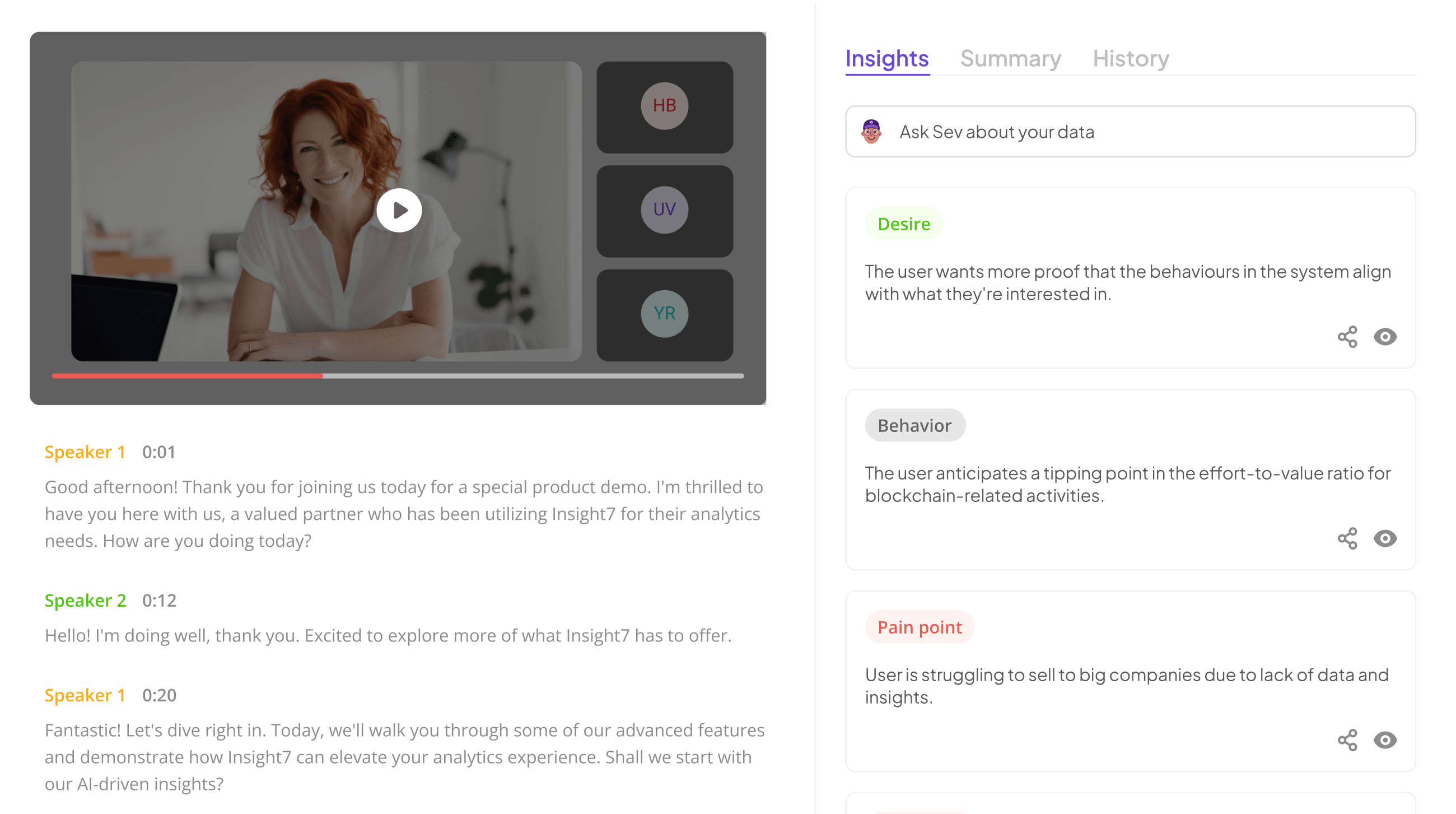
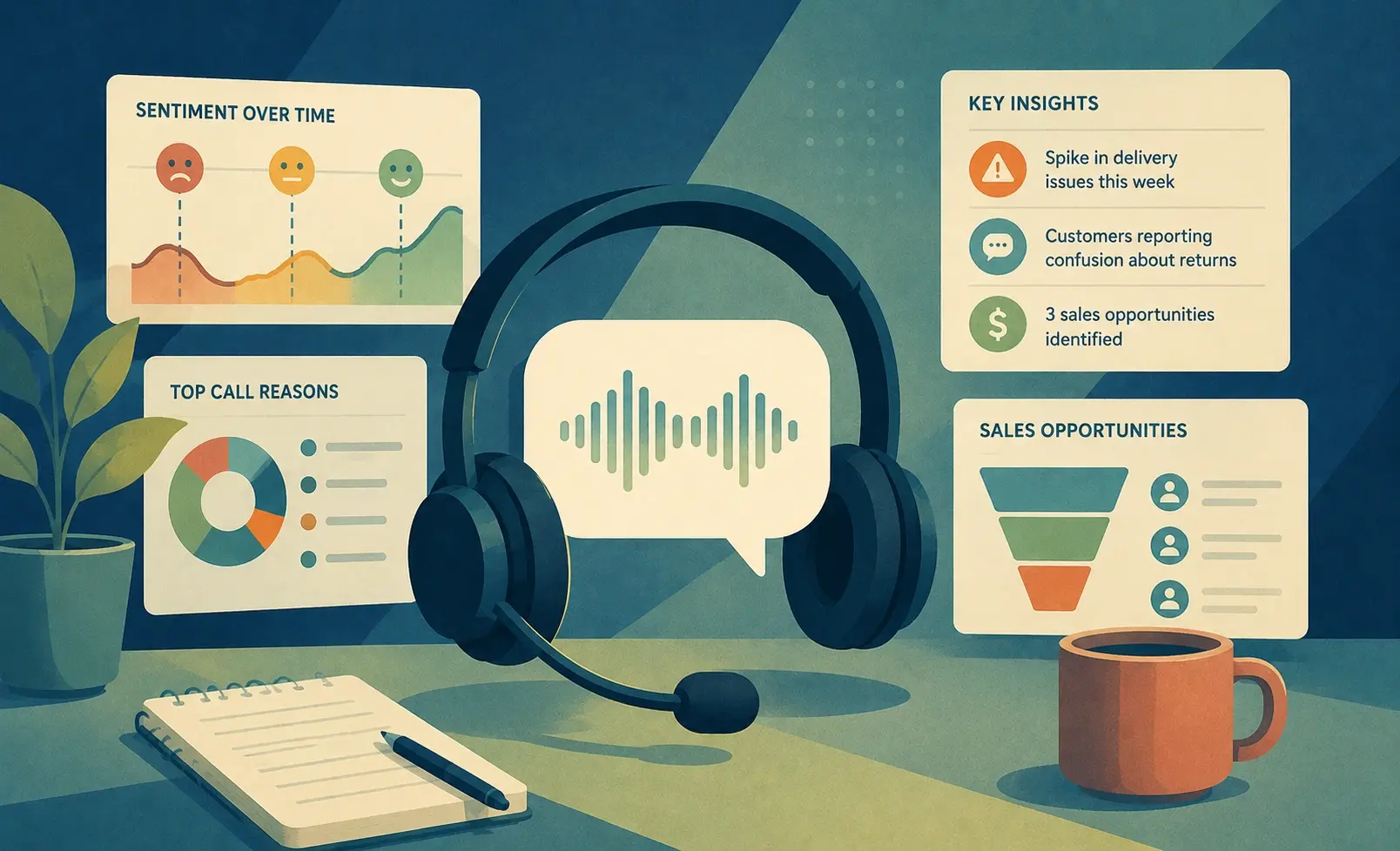
Insight7 analyzes qualitative data at scale – interviews, feedback sessions, call transcripts, open survey responses — and surfaces the coaching patterns managers need to act on before they become retention or performance problems.
Best for: Enablement leads, CX managers, and revenue team coaches who are drowning in unstructured feedback and need to identify systemic coaching gaps, not just individual rep moments. Particularly strong for teams running recurring 1:1s, skip-levels, or post-deal reviews at volume.
Limitation: Insight7 is built for teams with a meaningful volume of qualitative input to analyze. If your coaching practice is early-stage or mostly ad hoc, the platform’s pattern-detection capabilities won’t have enough signal to work with yet.
2. Gong – Revenue Intelligence with Call-Level Coaching Signals
Gong analyzes sales calls and meetings to identify coaching moments, talk-time ratios, topic trends, and deal risk signals.
Best for: Sales managers with high call volume who need visibility into rep behavior across a full pipeline – especially teams where deal outcomes correlate strongly with conversation patterns.
Limitation: Gong’s coaching insights are call-centric. Managers whose teams interact with customers across channels – email, tickets, async video, qualitative feedback – will hit the platform’s visibility ceiling quickly.
3. Chorus (ZoomInfo) – Conversation Intelligence for Revenue Teams
Chorus records, transcribes, and analyzes sales and CS calls to surface moments managers can use for targeted coaching.
Best for: Mid-market revenue teams already in the ZoomInfo ecosystem looking for a native conversation intelligence layer without adding a new vendor.
Limitation: The coaching features feel secondary to the deal intelligence use case. Teams buying Chorus primarily for manager coaching often find themselves working around a product designed for pipeline visibility first.
4. Second Nature — AI-Powered Sales Coaching Simulation
Second Nature uses AI roleplay simulations to let reps practice objection handling, discovery, and pitch delivery before live customer conversations.
Best for: Enablement teams onboarding new reps at scale, or managers who need a way to run consistent skills practice without consuming their own time for every repetition.
Limitation: Second Nature builds reps’ practice muscle, but it doesn’t analyze what’s actually happening in real customer interactions. Managers relying on it alone will coach to simulation performance, not real-world behavior – a meaningful gap.
5. Leapsome — People Development and Manager Effectiveness Platform
Leapsome combines performance reviews, 360-degree feedback, 1:1 meeting tools, and learning paths into a single platform with AI-assisted coaching prompts for managers.
Best for: HR and people ops teams trying to build a consistent coaching culture across managers who vary widely in coaching maturity – particularly useful where structured feedback cycles are already owned by HR rather than frontline managers.
Limitation: Leapsome’s AI coaching layer is advisory, not analytical. It suggests what a manager should discuss — it doesn’t tell them what the data actually shows about their team’s performance gaps.
6. Korn Ferry Architect – Competency-Based AI Coaching for Leadership Development
Korn Ferry Architect uses decades of leadership competency research combined with AI-assisted development planning to help managers build structured coaching conversations around defined behavioral gaps.
Best for: Enterprise L&D and HR teams running formal leadership development programs where coaching needs to map to a competency framework – especially useful in organizations where consistency across managers and geographies matters more than speed.
Limitation: Korn Ferry’s platform is built for structured enterprise programs, not agile coaching cultures. Teams that need real-time behavioral signals or fast iteration cycles will find the framework-heavy approach slows them down rather than helping them move.
7. Awarehouse (formerly Aware) – Behavioral Intelligence from Collaboration Data
Awarehouse analyzes communication and collaboration signals across tools like Slack, Teams, and email to surface behavioral patterns managers can use in coaching conversations.
Best for: People analytics teams and managers at mid-to-large organizations who want coaching signals rooted in how their teams actually communicate day-to-day — not just what happens on recorded calls or in performance reviews.
Limitation: The insights are behavioral and observational, not prescriptive.
Awarehouse tells you what patterns exist in collaboration data; it doesn’t translate those patterns into specific coaching actions, which means managers still need strong coaching fundamentals to use it effectively.
8. Retorio — AI Video Coaching for Behavioral Skills Development
Retorio uses AI to analyze video-recorded practice sessions – assessing tone, language, body language, and communication style – to give reps and managers structured feedback on behavioral coaching dimensions.
Best for: Sales and CS teams where presence, communication clarity, and delivery style directly affect customer outcomes, and where managers want to give reps objective behavioral feedback without relying entirely on subjective observation.
Limitation: Video-based analysis works well for communication skills coaching but has limited applicability to strategic, process, or knowledge gaps. Retorio is a strong tool for one slice of the coaching problem — don’t expect it to carry the full coaching program.
9. Qualtrics XM – Experience Data Intelligence for CX and People Coaching
Qualtrics captures structured and semi-structured feedback from employees and customers, with AI-assisted analysis that helps managers identify experience gaps worth coaching.
Best for: CX leaders and HR teams at enterprise organizations who want to connect customer and employee feedback signals to manager coaching priorities – particularly powerful when coaching decisions need to be grounded in large-scale experience data rather than anecdotal observation.
Limitation: Qualtrics is a research and measurement platform first. The coaching application requires significant configuration and usually a dedicated analyst to extract actionable manager coaching signals. Teams without that infrastructure will underuse it.
10. CoachHub – Digital Coaching Platform with AI-Matched Human Coaches
CoachHub connects managers and leaders with a global network of certified coaches, using AI to match coaching engagements by role, development need, and coaching style – and to track progress over time.
Best for: Organizations investing in leadership coaching at scale where human coaching relationships are the non-negotiable core, but where AI-assisted matching, tracking, and insight generation are needed to make that investment measurable and consistent across a large manager population.
Limitation: CoachHub’s model depends on the quality and consistency of the human coaches in its network. The AI layer improves matching and measurement, but it doesn’t solve for coach quality variance – and that variance matters significantly in leadership development outcomes.
Comparison Table
| Tool | Best For | Standout Feature | Key Limitation | Pricing Tier |
|---|---|---|---|---|
| Insight7 | Qualitative pattern analysis | Systemic gap detection from unstructured data | Needs sufficient data volume | Mid–Enterprise |
| Gong | Sales call coaching | Deal + conversation correlation | Call-only visibility | Enterprise |
| Chorus | ZoomInfo-integrated teams | Native ecosystem fit | Coaching is a secondary use case | Mid–Enterprise |
| Second Nature | Onboarding simulation | AI roleplay at scale | No real-interaction analysis | Mid-market |
| Leapsome | Culture-wide coaching | Structured feedback cycles | Advisory, not analytical | Mid-market |
| Korn Ferry Architect | Enterprise leadership programs | Competency framework depth | Too rigid for agile coaching | Enterprise |
| Awarehouse | Collaboration behavior signals | Day-to-day communication patterns | Not prescriptive | Mid–Enterprise |
| Retorio | Behavioral communication coaching | Video + tone + body language AI | Narrow coaching scope | Mid-market |
| Qualtrics XM | CX + people experience data | Large-scale feedback intelligence | High configuration overhead | Enterprise |
| CoachHub | Human coaching at scale | AI-matched certified coaches | Coach quality variance | Mid–Enterprise |
How to Choose – Decision Guide
- If you’re an enablement leader trying to understand why coaching isn’t moving the needle across a whole team, the best fit is Insight7 — because it surfaces systemic patterns from qualitative data across calls, feedback, and interviews rather than flagging individual rep moments.
- If you’re a sales manager whose primary coaching lever is call review, Gong is the strongest option because its conversation-to-outcome correlation is built specifically for that motion.
- If you’re an HR or L&D leader trying to install a coaching culture where none currently exists, Leapsome or CoachHub fits better than a pure conversation intelligence tool — the structure and human coaching relationships they provide matter more than analytical depth at that stage.
- If your coaching challenge is rep readiness before live conversations, Second Nature or Retorio solves that specific problem well. Neither is the right tool if your gap is understanding what’s actually happening in live customer interactions.
- If you’re a people analytics team that wants coaching signals from how your organization actually communicates, Awarehouse gives you a data layer that most coaching tools don’t touch — but you’ll need managers who can translate signals into conversations.
- If coaching investment needs to be tied to measurable leadership outcomes at enterprise scale, CoachHub or Qualtrics XM provides the tracking infrastructure to make that case internally — though both require meaningful implementation effort to deliver that value.
FAQ – AI Coaching Tools for Managers
What do AI tools for improving manager coaching skills actually do?
They reduce the time between a performance signal and a coaching action. The best tools analyze real interactions — calls, feedback sessions, written responses — and surface patterns a manager would otherwise need weeks to identify manually. Some simulate practice scenarios; others analyze live data. The distinction matters more than most buyers realize before they purchase.
Can AI replace a manager’s coaching judgment?
No — and any vendor claiming otherwise is overselling the category. AI tools surface what happened and identify patterns at scale. The coaching judgment – knowing which pattern to address first, how to frame it for a specific person, what underlying belief is driving the behavior – still belongs to the manager. Teams that treat AI output as a shortcut to skip that judgment tend to see weaker results than teams that use it to sharpen their preparation.
How much data does an AI coaching tool need to be useful?
It depends on the tool’s architecture. Conversation intelligence tools like Gong and Chorus become useful after roughly 50–100 recorded interactions, as pattern detection requires volume. Simulation tools like Second Nature are useful from day one. Qualitative intelligence platforms like Insight7 are most effective when there’s a consistent stream of structured or semi-structured input — interview transcripts, open feedback responses, 1:1 notes – not just a single data dump.
What’s the biggest mistake teams make when implementing AI coaching tools?
Buying the tool before defining the coaching workflow it’s meant to support. Most enterprise teams report that adoption stalls not because the technology failed, but because managers were handed a dashboard with no clear answer to “what am I supposed to do with this on a Monday morning?” The implementation question is a workflow design question first and a technology question second.
How do AI coaching tools differ from LMS or traditional training platforms?
Traditional platforms deliver content. AI coaching tools analyze behavior. An LMS can assign a module on active listening — an AI coaching tool can tell you which of your managers’ direct reports actually demonstrate it in customer calls, and which don’t. The shift from content delivery to behavioral analysis is a meaningful category distinction. Teams that treat these as interchangeable will underuse both.
Key Takeaways
- The most common failure in AI-assisted coaching is buying a tool that analyzes individual moments when the actual problem is systemic patterns across a team.
- Conversation intelligence tools (Gong, Chorus) are strongest when the coaching workflow is call-centric; they underperform when customer interaction data lives outside recorded calls.
- AI coaching tools reduce insight-to-action lag – the gap between when a performance signal appears and when a manager addresses it – which is where most coaching value is lost.
- Simulation tools build practice reps; analytical tools diagnose real behavior. Mature coaching programs need both, and they solve different problems.
- Effective AI coaching implementation is a workflow design problem before it’s a technology problem – teams that skip the former rarely get value from the latter.
- Human coaching platforms like CoachHub extend AI’s reach into leadership development, but the quality of the human coaching relationship remains the primary variable in leadership outcomes – AI improves the match and measurement, not the conversation itself.
- Industry patterns suggest teams that integrate AI coaching signals into existing 1:1 and review cadences see faster behavior change than teams that introduce it as a separate, standalone practice.
What This Category Is Actually Becoming
The most consequential shift in manager coaching isn’t the AI itself – it’s the move from episodic to continuous feedback loops. Managers who used to coach based on quarterly reviews are now working with weekly or real-time signals.
The tools that win this category long-term won’t be the ones with the most features; they’ll be the ones that make it easier for a manager to act on a signal before it becomes a pattern. Coaching that waits for the performance review has already lost.
The standard worth holding every tool to is simple: does it shorten the distance between insight and action?