Virtual listening sessions serve a different purpose than team meetings. A meeting shares information. A listening session is designed to surface what team members actually think, including things they would not say in a regular meeting. The design difference is what makes remote listening sessions work or fail.
This guide covers how to structure virtual listening sessions for remote teams, what to do with the data afterward, and how to build a sustainable listening cadence across a distributed organization.
What Is a Virtual Listening Session?
A virtual listening session is a structured, time-limited conversation designed to gather honest input from team members about their experiences, concerns, or observations. The facilitator asks questions and listens. The goal is not to present decisions or explain policies but to understand the team's perspective before decisions are made.
Listening sessions work differently from surveys because they allow follow-up questions. A survey response of "communication is unclear" does not tell you which communications, in which contexts, or what the impact is. A listening session follow-up question does.
They also work differently from town halls because the power dynamic is inverted. In a town hall, leadership presents and employees respond to what they hear. In a listening session, employees present and leadership listens.
How do you conduct virtual listening sessions for remote teams?
The mechanics of a virtual listening session for remote teams include five elements: a small group size (4 to 8 people works better than larger groups for honest disclosure), a facilitator who is not the direct manager of the participants, a defined question set shared in advance, a clear commitment about what happens to the input afterward, and a recording or note-taking process that participants consent to. Psychological safety is the primary variable; everything else is operational.
Step 1 — Design Questions That Surface Real Information
Listening session questions fail when they are too broad or when they telegraph the expected answer.
"Is communication working well for you?" triggers a socially acceptable response, not an honest one. "Walk me through the last time you felt unclear about a decision that affected your work" produces specific, usable information.
Effective listening session questions for remote teams:
- What information do you find out late that you wish you had earlier?
- What takes longer than it should because of how the team is set up remotely?
- If you were explaining to a new teammate how things actually work here, what would you tell them that is not in any documentation?
- What do you think your manager underestimates about your day-to-day experience?
Two to four questions per session is usually enough. More questions means less depth on any single topic.
Step 2 — Set Up the Session for Honest Participation
Psychological safety in virtual sessions is harder to establish than in in-person settings. Several structural choices help.
Separate the facilitator from the line manager. When team members are asked to share concerns with their own manager, self-censorship increases. Use a facilitator from HR, L&D, or a peer manager in a different part of the organization.
Define confidentiality clearly. Specify upfront what will be shared and with whom. "I will share themes with your manager but not who said what" is a clear and credible commitment. "Everything is confidential" is not, because participants know leadership is receiving some version of the input.
Use smaller groups. Four to eight participants per session allows everyone to speak. Groups larger than ten produce a dynamic where a few voices dominate and most people disengage.
Enable video-off if needed. For sessions where sensitive topics are expected, giving participants the option to be camera-off reduces social inhibition.
Step 3 — Capture and Analyze the Input
The value of listening sessions is wasted if the input is not systematically captured and analyzed. A single session with eight people produces enough qualitative data to generate meaningful themes, but only if it is transcribed and analyzed rather than recalled from memory.
Record sessions with participant consent and transcribe them. Then analyze transcripts for:
- Recurring themes across multiple participants
- Specific examples that illustrate systemic issues
- Language patterns that reveal how employees frame their experience
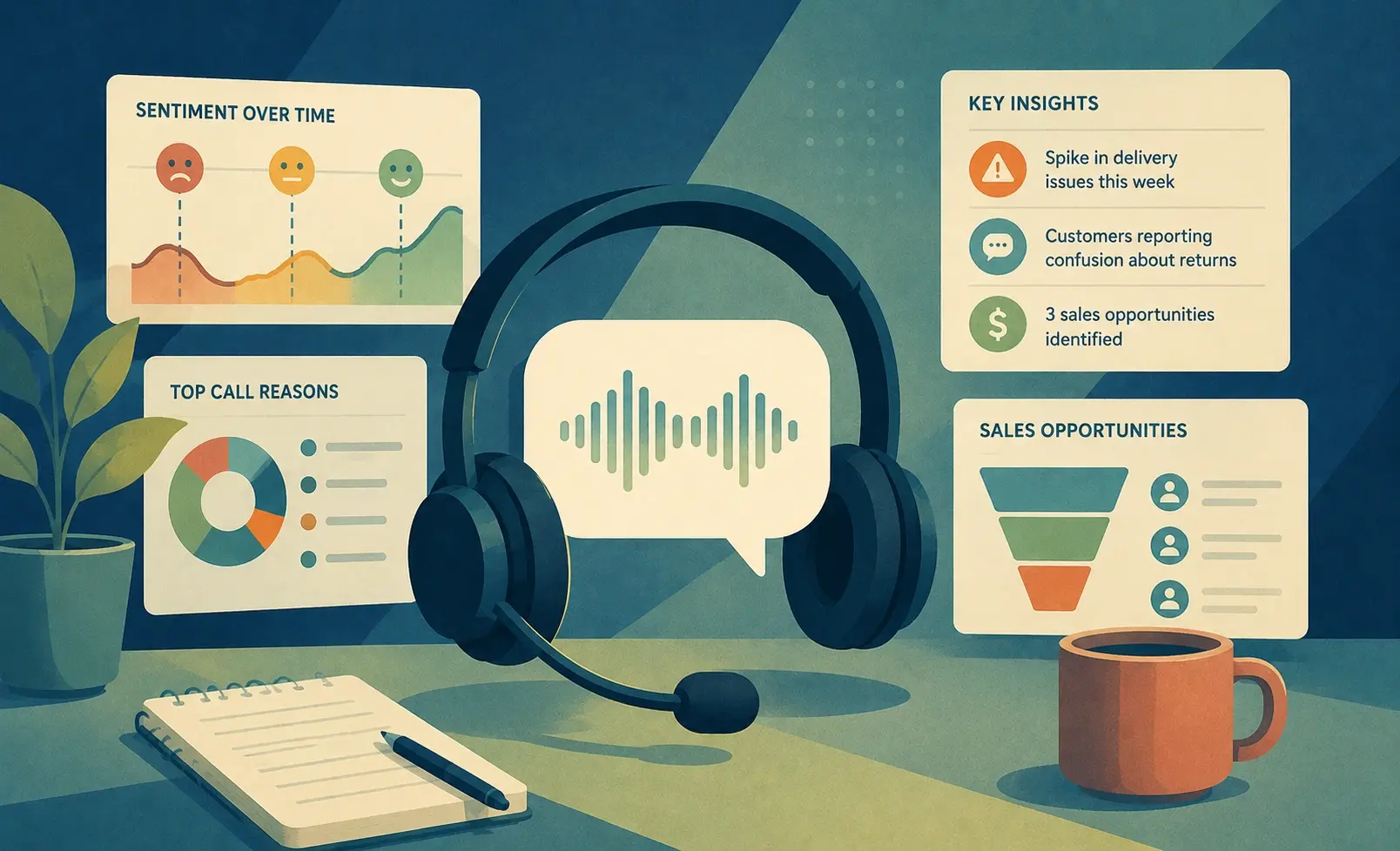
Manual analysis of 8 to 12 transcripts per quarter takes 8 to 12 hours. Insight7 processes interview and transcript data to extract themes with frequency counts and evidence-linked quotes. This allows L&D and HR teams to analyze an entire quarter's worth of listening session input in under an hour, with each theme connected to the specific statements that generated it.
What are effective listening techniques for virtual teams?
The most effective listening techniques for virtual sessions are: using silence deliberately after a participant finishes speaking (a 3 to 4 second pause often draws out an additional, more honest follow-up), reflecting back what you heard before asking the next question, asking for specific examples rather than accepting general statements, and tracking which topics a participant returns to unprompted, because those are the things they most want to communicate.
Step 4 — Route Findings to the Right Owner
Listening session findings typically fall into three categories: issues that require management response, issues that require training or resource changes, and systemic issues that require policy or structural change.
Routing matters. A communication gap that is actually a structural issue will not be solved by coaching a manager to communicate better. Identify the category before assigning ownership.
Insight7's thematic analysis classifies feedback by type, which simplifies the routing decision. A training director can see immediately which themes are development-related versus operational, rather than manually categorizing every response.
Step 5 — Close the Loop Visibly
The most common reason listening session participation declines over time is that employees do not see evidence their input changed anything. Closing the loop visibly is the accountability step most organizations skip.
After each listening cycle, communicate back to the group: these were the themes we heard, here is what we are doing about each one, and here is what is outside our control to change and why.
This communication does not need to promise action on every concern. It needs to show that the input was heard and taken seriously. The absence of any response teaches employees that participation is performative.
If/Then Decision Framework
If your remote team has never had a listening session and you are starting from scratch, then begin with a single round of four-person sessions and one trained facilitator before scaling.
If participation is low in virtual sessions, then check whether the confidentiality commitment is clear and whether line managers are present in sessions where they should not be.
If you are running listening sessions but themes are inconsistent across sessions, then standardize your question set across all groups so the data is comparable.
If you have themes from listening sessions but no clear path to action, then classify themes by owner type (manager, L&D, policy) and route each to the appropriate decision-maker within 5 business days of analysis completion.
FAQ
What are the key elements of an effective virtual listening session?
The five key elements are a small group size (4 to 8 participants), a facilitator who is not the direct manager, pre-shared questions, a clear confidentiality commitment, and a systematic note-taking or recording process. Of these, the facilitator separation from line management is the element most often skipped, and it is the element most directly responsible for whether honest input is shared.
How do you analyze listening session data for remote team insights?
Transcribe all sessions and analyze for recurring themes across participants. Do not rely on notes taken during the session, which capture what the note-taker thought was important rather than what was actually said. Automated theme extraction using a tool like Insight7 reduces the analysis time from hours to minutes and surfaces patterns a human reviewer might miss when reviewing transcripts individually.
Insight7 helps teams extract actionable themes from listening sessions, interviews, and team feedback at scale. Explore how the platform handles qualitative data analysis.