
A research lead opens a spreadsheet of 300 churned customers. The budget covers about 12 live interviews, and the other 288 stay a mystery. Customer research interviews with AI voice agents can reach all 300 in five steps, from goal to synthesis.
Start with one decision, not a topic
Write one research question that is tied to one decision and one owner. "Why do customers leave?" is a topic. "Which of three fixes should the retention lead fund next quarter?" is a question. Name the person who will act on the answer before you write a single interview question.
Then run a pass/fail test. Ask what changes if the answer is yes, and what changes if it is no. If the plan is the same either way, the goal is too vague. Rewrite it until each answer points to a different action.
Next, check that a phone call is the right tool. AI voice interviews fit best where you need many short, structured conversations:
- win-back and churn research
- onboarding drop-off
- satisfaction checks
Retention surveys and win-back calls came up on our own buyer calls as common first uses. A human interviewer is still better for sensitive topics and deep exploration, where follow-up questions cannot be planned.
Last, match the goal to a campaign type. Insight7's voice campaigns, which are in beta, have types that include customer survey and win-back. A churn study is a win-back campaign. A satisfaction study is a customer survey. Picking the type early sets the tone of your opener.
Research teams can also search existing call transcripts for pain points first, so you ask only what the calls cannot tell you.
Write a short guide the agent can follow
A good starting point is a call of 5 to 8 minutes with four parts: opener, questions, probes and close.
The opener. In the first sentence, say it is an AI, name the company and give the reason for the call. Then state the length and ask permission to continue.
The questions. Write 5 to 7 open questions. NN/g advises starting with open-ended questions, because closed ones mean you don't learn things you didn't think to ask. Ask about the past, such as "Tell me about the last time you used us." Do not ask people to predict what they might do. Keep each question short and to one idea, because a listener cannot reread a spoken question. Keep them neutral. "What led you to stop?" works. "Was price the problem?" plants the answer.
The probes. Give the agent two or three neutral probes: "Tell me more about that." "What happened next?" A first answer like "too expensive" is usually the stated reason. The probe pulls out the hidden one.
The rules. Write these into the guide:
- Probe twice at most per question, then move on.
- Accept "I don't know" and move on.
- On an off-topic answer, acknowledge it in one sentence and return to the question.
- If the customer is upset, asks for a person or raises something sensitive, end politely and flag the call for a human.
The test. Talk to the agent in the browser first, with no phone number needed. Then use the campaign's test call to ring your own phone. Listen for long pauses and for questions that sound read aloud. Fix the wording before any real customer is dialled.
Pick your sample and settle consent
Size the sample by segment, not by total. Guest, Bunce and Johnson found that themes settled within the first twelve interviews, and the basics showed by six. That was a fairly uniform group. If you have three segments, such as price leavers, service leavers and new-customer leavers, give each its own set of about twelve. Over-recruit, because many calls will not connect.
Build the list in the campaign. Upload a CSV or type names and numbers in directly. Then set consent marking, calling hours, retry rules and the do-not-call list. When you copy a campaign for the next wave, anyone added to the do-not-contact list since the original is left out.
Match the callers to the people you want to hear from. Churned customers often do not recognise the caller, or do not want to engage once they have stopped ordering. Send a short SMS or email first that says who will call and why. If only friendly customers pick up, your findings will lean towards people who still like you.
Then settle consent. Rules differ by region, so check yours with counsel. Three examples:
- United States: the FCC ruled in 2024 that AI-generated voices fall under the TCPA, so these calls need consent. A rule to say "this is AI" at the start was still not final in mid-2026.
- European Union: Article 50 has applied since 2 August 2026. Any AI that talks to people, including phone systems, must say it is AI from the first interaction.
- Colorado: public-facing conversational AI must disclose that it is AI from 1 January 2027.
An opener that says it is an AI, as in step 2, covers disclosure in all three.
Launch in waves, review the first ten
Send a first wave of about ten calls, read every transcript, fix the guide, and only then scale. A flaw in the opener or a leading question will repeat in all 300 calls if you skip this.
Check five things in wave one:
- Reach rate: how many people picked up.
- Call length: calls far shorter than your 5 to 8 minute plan usually mean people left early.
- Opener drop-off: how many hung up in the first seconds.
- Silent or AI-only calls: a call where the customer never spoke is not an interview. Insight7 does not count calls where only the AI spoke as reached.
- Specific answers: "It was fine" is thin. "My card failed twice and nobody called back" is data. If most answers are thin, rewrite the probes.
Retries need care too. A carrier's temporary refusal says nothing about the customer. In Insight7, such a refusal does not use up one of the contact's retry attempts. Set your own retry rules with the same logic: try again at a different time of day before you give up on a person.
Insight7 lets a manager build and launch an outbound AI calling campaign. You set a goal, an audience, the AI caller and the rules. Each call is held as a real conversation and scored when it ends. A dashboard shows calls in progress, and a reviewer can read each transcript once the call is over. This is in beta and is switched on per organisation.
Read each transcript and check whether the agent probed twice, led the customer, or skipped a question. Fix the guide, then launch wave two.
Synthesise themes, then check them against calls
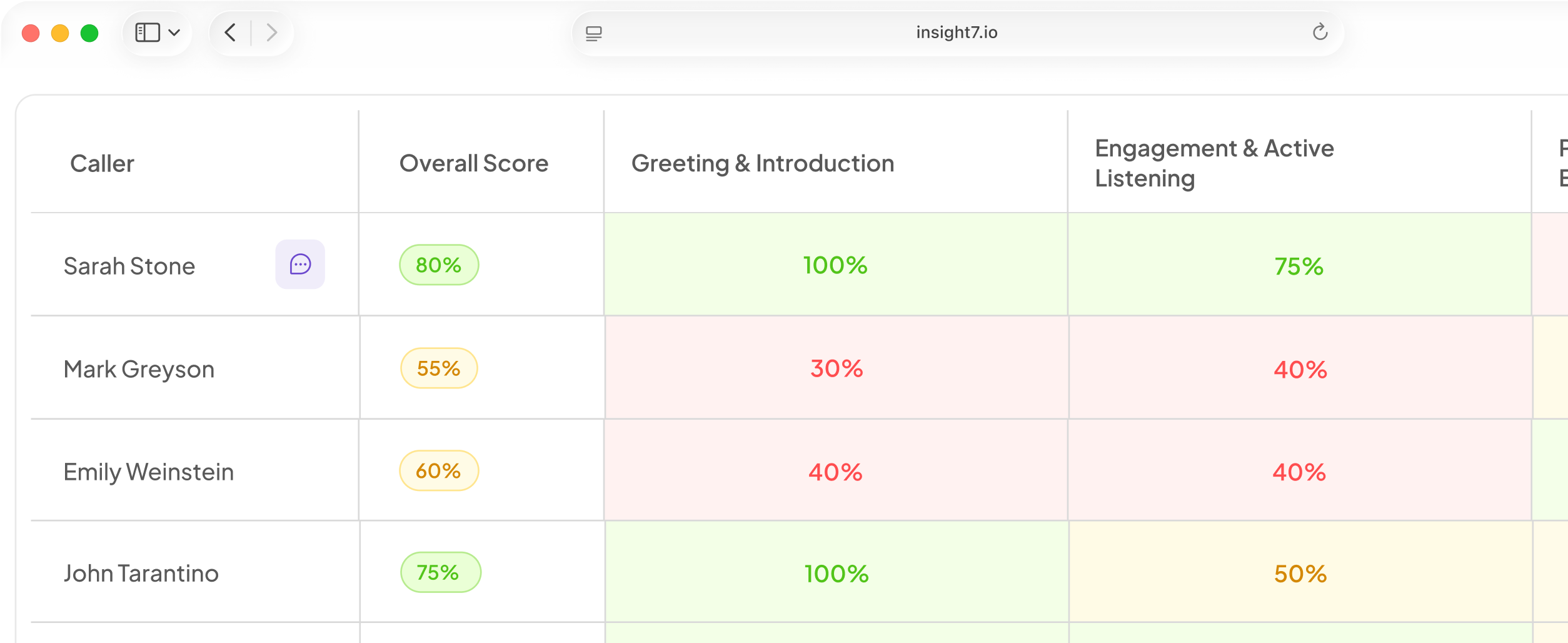
Code every transcript into themes, then count how many customers raise each one. Braun and Clarke's method has six phases: read the data, generate codes, search for themes, review them, name them, and write the report. For interviews, tag each answer with a short code. Group the codes into themes. Count customers per theme, not mentions. Pull one verbatim quote per theme. Then split the counts by segment, so price leavers and service leavers are not blended.
Read the probe answers to separate the stated reason from the real one. "Too expensive" is the first answer. After "tell me more", it may become "I never got set up, so I stopped using it." Code both, and report the second as the driver.
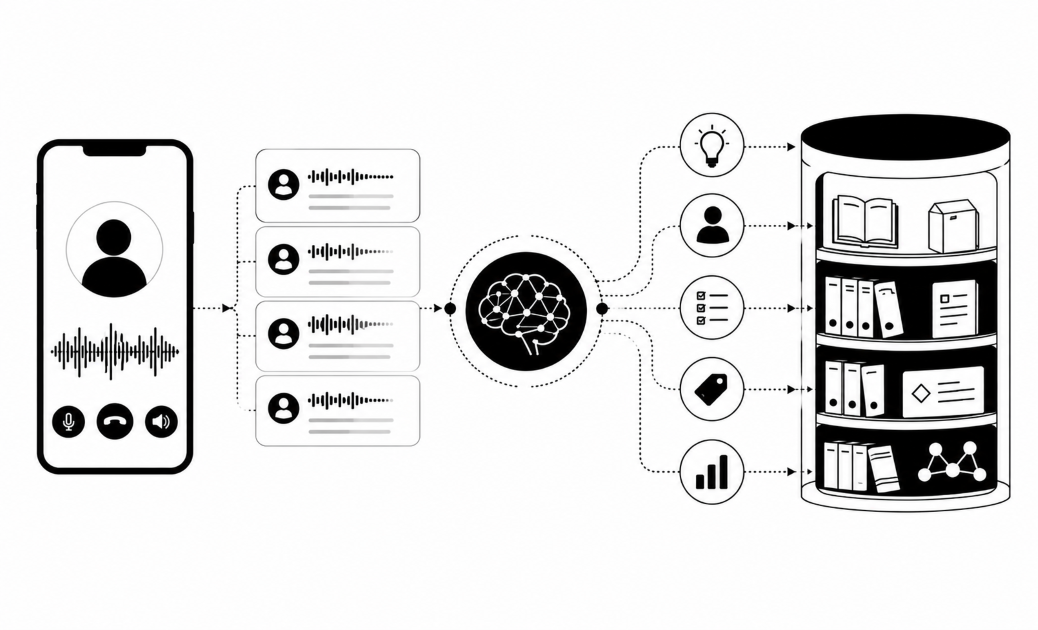
Check AI-generated themes by hand. Read a random sample of transcripts, code them yourself, and compare. If your themes differ, tighten the theme definitions and rerun. Keep a link from every theme to its source calls, so any reader can click through to the evidence. Automated theme tagging across call transcripts is a standard research use. Explorer Research used automated thematic analysis and quote extraction on shopper interviews and reported synthesis 10x faster.
End with a one-page readout:
- Decision: the question and its owner.
- Top 3 themes: each with a customer count and one quote.
- Next step: what the owner should do.
Related reading: How to Personalize AI Outbound Calls With CRM and Product Usage Data, 18 Customer Data Fields to Include in AI Calling Lists for Personalized Conversations and How to Break Down Customer Insight Silos Across Sales, Support and Field Teams.
Questions people also ask
Can AI voice agents run customer research interviews?
Yes, for structured interviews with planned questions and probes. They ask every customer the same neutral questions. Insight7's voice campaigns, in beta, hold each call as a conversation and let a reviewer read the transcript. Use people for sensitive topics.
How many customer interviews do you need for reliable research?
About twelve per uniform group lets themes settle, so multiply by your segments. Twelve will not give you percentages. To report shares, such as "40% left over setup", you need far more calls.
Do I have to tell customers they are talking to an AI?
Often yes. The EU requires it. Say it in the first sentence. Also offer a route to a person, because Gartner found 87% of customers expect one.
Will customers hang up on an AI interviewer?
Some will. Hang-ups tend to come early. Name the company, give the reason, state the length, and send a heads-up message first. Track opener drop-off in wave one.
How long should an AI phone interview be?
Aim for 5 to 8 minutes and no more than seven questions. If wave one runs long, cut questions rather than rushing the probes.
How do you test an AI voice agent before calling real customers?
Test in three passes. Talk to the agent in your browser. Ring your own phone with the test call. Then have a colleague play a silent, upset or off-topic customer, and check the agent hands off cleanly.
How do you analyse hundreds of interview transcripts?
As a rule of thumb, build your theme list from the first batch of transcripts, then apply it to the rest. Add a theme only when a few customers raise something it misses. Count customers per theme and link each theme to its calls.
Interviews at scale give you every customer's reason, not a few anecdotes. This week, write your research decision and five questions. Then talk to the agent in your browser. Book a demo to see it run.