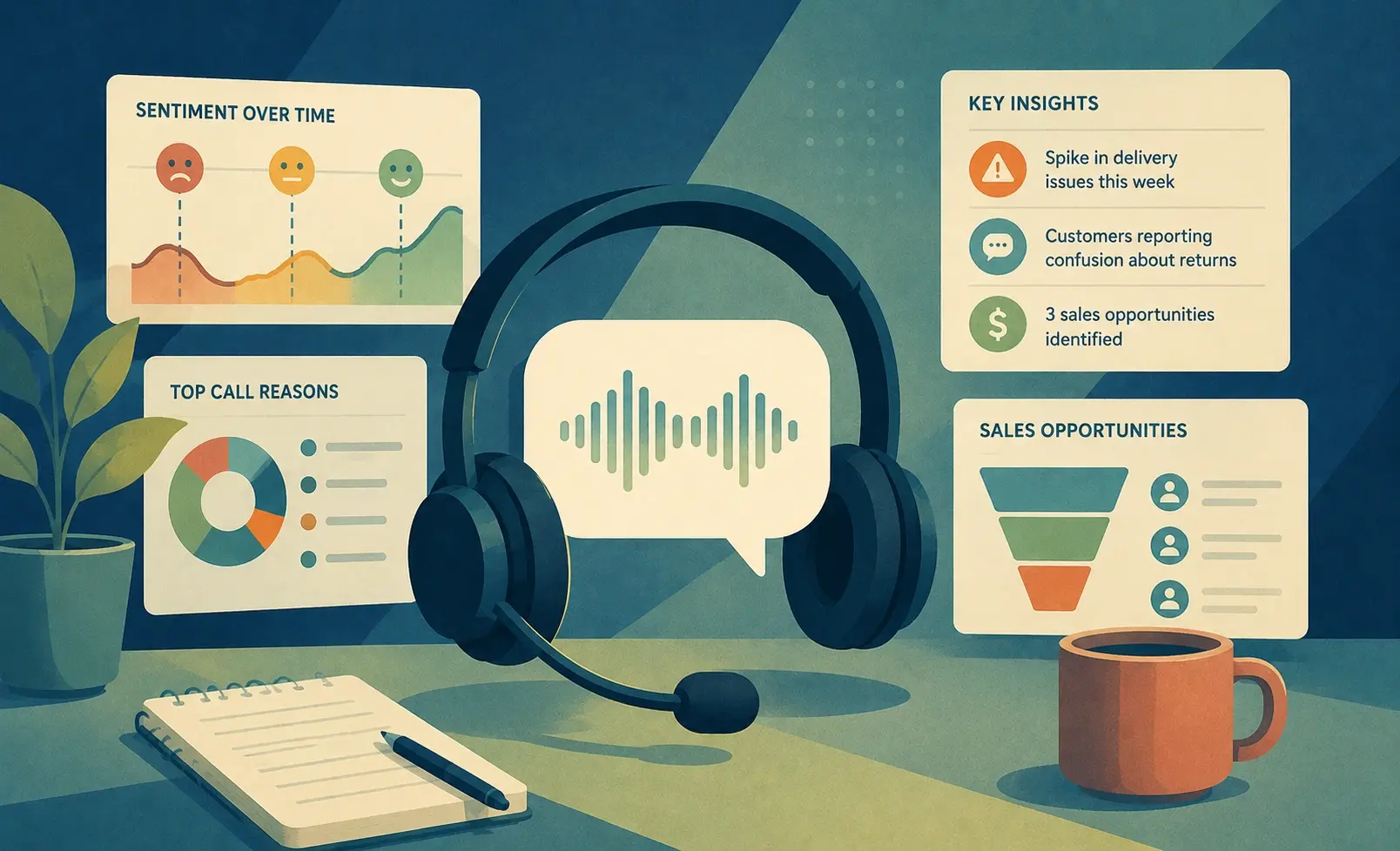
Sales managers evaluating performance management software face a specific decision: whether to buy a CRM-adjacent tool that tracks deals and activities, or a conversation-intelligence platform that connects coaching directly to call behavior. The right sales performance management software in 2026 links what reps do on calls to how they develop over time, not just pipeline dashboards.
This guide covers six platforms for sales managers at teams of 25 to 200 reps who need coaching connected to call data.
How We Ranked These Tools
Criteria for this evaluation reflect what sales managers need when reviewing rep development, not generic software feature counts.
| Criterion | Weighting | Why It Matters for Sales Managers |
|---|---|---|
| Coaching-to-call data integration | 35% | Coaching without call evidence is opinion; managers need specific call moments tied to development actions. |
| Scoring configurability | 25% | Generic rubrics miss company-specific sales behaviors; weighted custom criteria are required for accuracy. |
| Manager workflow efficiency | 25% | Time-to-coaching matters; platforms requiring manual call review before coaching compound the volume problem. |
| Integration breadth | 15% | Compatibility with Zoom, Salesforce, and HubSpot determines adoption speed. |
Price was intentionally excluded from the weighting. At 25 or more reps, the per-rep cost differential matters less than whether the tool changes coaching behavior.
What is the best sales performance management software?
The best sales performance management software for teams that need coaching connected to call behavior is one that scores calls automatically and routes the results to coaching without manual steps. Insight7 is best suited for contact center and high-volume sales teams where 100% call coverage drives coaching priorities. Gong and Salesforce Einstein are better fits when deal intelligence and CRM integration are the primary requirements.
Insight7
Insight7 scores 100% of sales calls against configurable weighted criteria, then auto-suggests rep practice sessions from low-scoring call moments. It is built for teams where call-level behavior drives outcomes, not just activity volume.
Who it's best for: Sales managers at 25 to 200-rep teams who need QA-driven coaching, not just call logging.
Key features:
Pro: The platform generates a practice scenario from the specific call moment where a rep scored low, creating direct continuity between what happened on a call and what the rep practices next. No other platform on this list automates this path without manual manager intervention.
Customer proof: Fresh Prints used Insight7 to expand from automated QA scoring to AI-driven roleplay coaching, giving reps immediate practice on identified gaps without waiting for scheduled review sessions.
Con: Initial scoring without company-specific context definitions can diverge from human judgment. Calibration typically takes 4 to 6 weeks. Insight7 does not offer native CRM write-back to Salesforce, so managers needing deal-level QA correlation must export data or use Zapier.
Insight7 is best suited for sales managers at 25 to 200-rep teams who need automated QA scoring connected directly to rep coaching, not just call summaries or activity tracking.
The direct path from a low call score to an auto-assigned practice scenario is the feature that most separates Insight7 from the other platforms on this list.
Salesforce Sales Cloud
Salesforce Sales Cloud is the dominant enterprise CRM, with performance management built around pipeline visibility, activity tracking, and quota attainment. Coaching flows through Salesforce Enablement or third-party integrations.
Who it's best for: Enterprise sales teams of 100 or more reps already running the full Salesforce ecosystem.
Key features:
Pro: Salesforce is the only platform where call performance data and deal performance data exist in the same record. For enterprise B2B teams managing long sales cycles, this removes a significant data reconciliation step.
Con: Einstein conversation insights have limited configurability for custom scoring criteria. Teams needing deep behavioral QA will find call scoring less granular than dedicated conversation intelligence platforms.
Salesforce is best suited for enterprise teams already on Salesforce who need performance data inside the same platform as pipeline and deal management.
Salesforce is the right choice when call performance needs to live in the same data environment as quota tracking and pipeline forecasting.
HubSpot Sales Hub
HubSpot Sales Hub connects call logging, contact management, and basic coaching workflows inside the HubSpot CRM. The platform is designed for SMB and mid-market teams who prioritize a unified view of prospect interactions over deep behavioral scoring.
Who it's best for: SMB sales teams of 10 to 50 reps already on HubSpot CRM who need call logging and basic performance tracking without a separate platform.
Key features:
Pro: HubSpot's call summary and CRM logging happen in the same platform as prospect records, removing the friction of switching between tools that matters for teams with limited operations support.
Con: Call scoring is not configurable against behavioral criteria. Teams needing weighted rubric scoring, compliance alerts, or rep-level behavioral trend data will quickly outgrow HubSpot's native call analytics.
HubSpot is best suited for SMB sales teams of 10 to 50 reps who are already in the HubSpot ecosystem and need basic call logging without a dedicated conversation intelligence platform.
HubSpot removes call-to-CRM friction for small teams, but its scoring depth is insufficient for teams that need behavioral rubric assessment.
Gong
Gong is a revenue intelligence platform built for enterprise B2B teams managing complex, multi-stakeholder deal cycles. Its core capability is tracking deal progression signals from call content, emails, and CRM activity.
Who it's best for: Enterprise B2B sales teams of 50 or more reps in complex sales cycles where deal intelligence and forecast accuracy are the primary manager use case.
Key features:
Pro: Gong's deal intelligence layer ingests CRM signals alongside call recordings, making it additive for revenue forecasting in ways QA-focused tools cannot replicate.
Con: Gong's call scoring is built around its own best-practice framework. Teams needing fully custom behavioral criteria weighted to their specific sales motion will find less configuration flexibility than QA-first platforms.
Gong is best suited for enterprise B2B sales teams in complex deal cycles where revenue forecasting and deal risk signals are more important than configurable behavioral QA scoring.
Gong is the right platform when deal intelligence and pipeline forecasting are the primary use case; it is not the right choice when QA-driven rep development is the priority.
Mindtickle
Mindtickle is a sales readiness platform that connects onboarding, enablement content, coaching, and assessment into a structured program framework. Performance management is expressed as readiness scores tied to content completion and simulation assessments.
Who it's best for: Enablement teams at organizations with 100 or more reps who need structured certification paths and sales readiness dashboards.
Key features:
Pro: Mindtickle combines structured enablement programs, simulation-based practice, and live call analysis in a single product, reducing coordination costs across a full readiness program.
Con: Platform depth creates setup complexity. Teams without a dedicated enablement function will struggle to configure and maintain the program infrastructure Mindtickle requires.
Mindtickle is best suited for enterprises with dedicated sales enablement teams who need a full readiness platform combining content, simulation, and live call coaching.
Mindtickle is the right choice when you need a full enablement program infrastructure, not just call scoring or isolated coaching workflows.
Lessonly (Seismic Learning)
Seismic Learning (formerly Lessonly) is a training platform connecting learning content to coaching workflows for customer-facing teams. Its core strength is content-based skill development: learning paths, assessments, and practice activities tied to role performance.
Who it's best for: Training and enablement teams at 50 to 500-rep organizations who need structured learning paths and content management without a call analytics layer.
Key features:
Pro: The lesson builder is the most accessible content creation tool on this list for managers without instructional design backgrounds. Teams can build and deploy training programs without outside support.
Con: Lessonly does not analyze call recordings for scoring or coaching triggers. There is no automated path from a call score to a training assignment.
Lessonly is best suited for training-first teams who need structured content-based learning paths and do not require automated call scoring or behavior-to-coaching routing.
Lessonly is a strong training platform, but the absence of call scoring means managers must manually connect what happens on calls to what reps practice.
If/Then Decision Framework
FAQ
How do I choose sales performance management software?
The most important criterion is whether the platform connects call-level evidence to coaching actions automatically or requires manager initiation. Evaluate this first. Then assess scoring configurability against your sales motion, integration with your existing recording infrastructure, and the platform's ability to track rep improvement over time on specific behavioral dimensions.