
Should you put AI on outbound calls, or fix the setup first? That depends on whether people hear spam robocalls in the first seconds. Ten mistakes earn that label: consent, disclosure, hours, redialling, numbers, dead air, scripts, openers, exits and launch.
1. Calling people who never agreed
Only call people who gave consent for this kind of call, and keep proof of it. In the US, AI-voice calls already need consent under the TCPA, per the FCC's 2024 ruling. Rules differ by region, so check the consent and opt-out terms in each market you dial.
The fix is plain record keeping:
- Log where each consent came from, and when.
- Scrub the list against your do-not-call list before every run.
- Mark consent on each contact, so the campaign only dials people who agreed to this call type.
- Rebuild any copied campaign list against the latest opt-outs.
2. Hiding that the caller is AI
Say it is AI in your first sentence, in plain words. The law is moving that way. Article 50 of the EU AI Act has applied since 2 August 2026, and it covers automated phone systems. The FCC's proposed rule to announce AI at the start of a call was still not final in mid-2026.
People forgive a bot that introduces itself. They punish one caught pretending. Gartner found that 87% of 3,566 customers say a company using GenAI for service must offer a way to reach a human. Open with something like: "Hi, I'm an AI assistant calling for [Company]."
3. Calling at the wrong hours
Set calling hours by the contact's local time, not yours. In the US, the FCC's rule bars telephone solicitations before 8 a.m. or after 9 p.m., local time at the called party's location, as the FDIC's TCPA guidance explains. Check local limits in every market you dial.
Staying legal is only the floor. People answer unknown numbers at dinner far less than at midday, and a Tuesday morning differs from a Sunday evening.
- Set the window in your campaign's calling hours.
- Apply it per contact time zone.
- Test a few windows on small batches, then keep the best.
4. Redialling like a machine
Cap your attempts and space them hours apart. A number that rings three times in ten minutes looks like a robocall to the person, and carriers may flag it too. Stop for good once someone says no.
Set these retry rules in the campaign:
- Pick a maximum number of attempts per contact.
- Wait several hours between tries, and vary the time of day.
- Remove anyone who opts out from every future retry.
- Do not count calls where only the AI spoke as reached, and do not count a carrier's temporary refusal as an attempt.
5. Using a number that carriers flag
Dial from numbers that carriers can verify and trust, and ramp volume slowly. In the US, carriers use STIR/SHAKEN. The originating carrier signs the caller ID, and the receiving carrier checks it before the call reaches the phone. As general practice, an unsigned or spoofed number is more likely to get a spam label.
Reputation matters too. As general practice, a new number that suddenly places thousands of calls looks like a robocall.
- Use authenticated numbers registered to your business.
- Warm up new numbers with a few calls a day, then grow.
- Prefer local numbers, which are more likely to be answered as general practice. Insight7 beta campaigns can use Nigerian local numbers through a gateway to Nigerian carriers.
- Make sure the number rings back to a real line.
6. Leaving dead air after hello
Speak first, the moment the line connects, and keep the gap before every reply under about a second. Each turn passes through speech-to-text, a language model and voice synthesis, and each step adds delay. A long silence after "hello" is a classic robocall signal, because older dialers waited for a free agent.
- Open with your line the instant someone answers.
- Keep turns short so the model has less to produce.
- Let people interrupt. The agent should stop talking when they start.
- Detect voicemail and answering machines, then leave a short message or hang up.
7. Reading a script out loud
Write the script for the ear, then test it by talking to it. Text written for a page sounds robotic when spoken, with long sentences, no pauses and one steady pace. Buyers fear AI that sounds scripted, and they ask what happens when the customer goes off script.
- Use short turns of one idea each, and ask one question at a time.
- Write answers to the five questions people most often ask.
- Pick a voice and accent close to your own reps'. Buyers ask for local accents and native languages.
- Read the script aloud, and rewrite whatever sounds stiff.
8. Hiding who, why and where
Use your first ten seconds to say who you are, why you called and where you got the number. Scammers hide those three things, so a vague opener sounds like a scam. Wary contacts hang up first.
- Name the company in one sentence.
- Give a one-line reason: "I'm calling about the application you started on Monday."
- Say where the number came from: "You gave it to us when you signed up."
- Offer another way to check: "You can confirm this call in the app."
Never ask for card numbers or passwords on the call. Lending and fintech teams often chase unfinished identity checks, because people start them and never finish. On those calls, say who you are before you ask for anything.
9. Offering no exit to a human
Let anyone reach a person at any point, and treat "stop" or "person" as a command the agent obeys at once. Buyers raise handover on their own. They ask whether it is polite, what happens with a sensitive issue or a disputed amount, and whether anyone chases a handover nobody picked up. Regulated buyers worry most about an agent that goes rogue in public.
Design the exit before launch:
- Route disputes and sensitive topics to a human by rule.
- Send each handover to a queue with an owner.
- Honour opt-outs on the call and on every later retry.
Insight7's voice campaigns are in beta. A campaign has consent marking, calling hours, retry rules, a do-not-call list and a test call to your own phone. Check the detail in the app before you rely on it. You can also talk to the agent in the browser with no phone number. A dashboard shows calls in progress and each transcript at the end.
10. Launching big and never listening
Start with a small sample, read what happens, then ramp. Gartner looked at 432 AI customer-service use cases. Only a quarter showed positive ROI, a quarter were negative, and 42% could not be measured. So build the measuring in before you scale. The industry framing is humans supervise, AI acts.
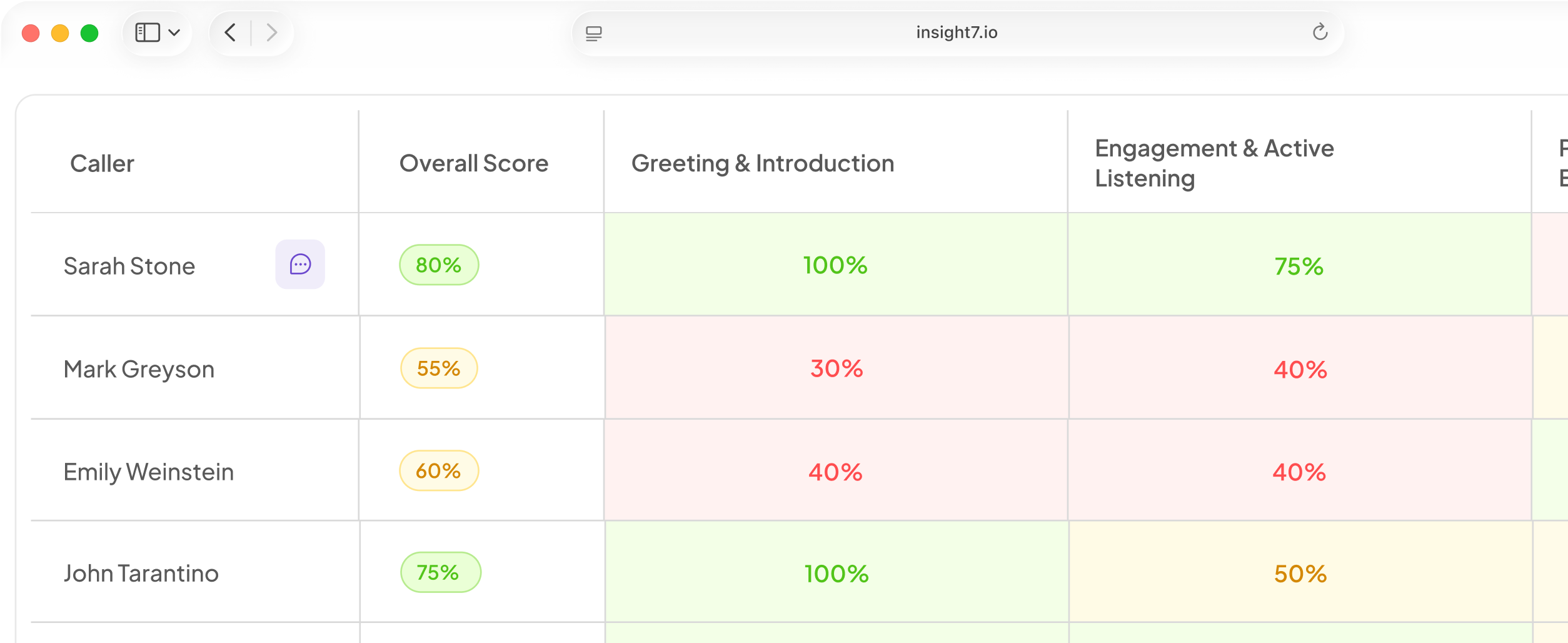
Read every transcript from the first batch, and score calls against a written scorecard.
Watch three numbers each day:
- Answer rate: a drop points to number or timing problems.
- Hang-ups in the first 10 seconds: this is your spam-reading metric. A high rate means the opener or the delay needs work.
- Opt-out rate: a spike means the list or the script is wrong.
Raise volume only when all three hold steady.
Related reading: How to Win Back Lapsed Subscribers With AI Renewal Calls, AI Telemarketing vs Traditional Telemarketing Services Compared on Cost, Compliance and Conversion and How to Use AI Check-In Calls After Purchase or Installation to Improve Retention and Repayment.
Questions people also ask
Are AI robocalls illegal?
In the US, they are illegal without consent. The FCC ruled in February 2024 that AI-generated voices count as "artificial or prerecorded" under the TCPA, so the usual consent rules apply. Other regions set their own rules.
Are robocalls legal?
Sometimes. The TCPA bars calls with an artificial or prerecorded voice unless the person gave prior express consent, with narrow exceptions such as emergencies. Marketing robocalls usually need written consent.
Do AI outbound calls need consent?
Yes in the US, and consent must fit the call type. A yes to a service survey does not cover a cold sales pitch. Store the date and source for each contact, and mark consent on the campaign.
Do AI voice agents have to say they are AI?
It depends on where you call. The EU has required it since 2 August 2026. The US federal proposal is not final. Other jurisdictions are adding their own rules, so check each market. Say it anyway to build trust.
How do I stop my AI calls from being marked as spam?
Check how your numbers are labelled before you launch. Use authenticated numbers, ramp volume slowly, and avoid quick hang-ups. As general practice, short calls and volume spikes are what make a number look like a robocall.
How many times should an AI voice agent redial a contact?
Keep it to a few attempts, spread over several days. This is our advice, not a benchmark. Tune it from your own data. Stop at once after a no, and do not count carrier refusals as attempts.
How do I test an AI voice agent before calling real customers?
Talk to the agent first, in a browser if your tool allows it. Then run a test call to your own phone. Listen for delay and stiff phrasing, then send a small live batch.
Say it fast, make leaving easy
Callers judge a call in the first ten seconds. Your rule of thumb: say who you are, why you called and that you are AI, then make leaving easy.