
A support lead opens the overnight log and finds an AI call that stopped mid-complaint, with no ticket and no owner. Handing off calls from AI voice agents to human agents works when eight habits are in place.
1. Set handoff triggers before the first call
Write the trigger list before launch, because rules written after a bad call only fix that one call. Start with six triggers:
- The caller asks for a human.
- The caller disputes a charge.
- The topic is sensitive or regulated.
- The agent misunderstands twice in a row.
- The line goes silent.
- The agent's answer has low confidence.
Our advice is to keep billing disputes and other sensitive topics away from the AI. It should hand them over without trying to resolve them. Banks say their main blocker is risk, meaning an agent that "goes rogue" or makes a public mistake. They also ask what happens to sensitive issues and disputed amounts, and whether anyone chases a handover nobody picked up.
Then test the rules. Run your trigger list through a test call to your own phone before launch.
2. Script the transfer line in plain words
A good transfer line says why the call is moving, who is next, and how long the wait is. Three samples:
- "This needs a billing specialist. I'm passing you to Sam's team now, and the wait is about two minutes."
- "I want a person to check this properly. Someone will pick up in about five minutes, and they will see what we've covered."
- "No one is free right now. I can book a callback today. Would 3 p.m. work?"
Avoid "I cannot help with that." It sounds like a wall. Skip jargon such as "escalating to Tier 2", and never drop the call without a word.
Tone matters even when the escalation was right. Buyers fear scripted AI, and they ask whether the handover is polite. A cold exit proves their fear.
Test every line before launch. Talk to the agent in a browser, say each trigger aloud, and listen for the gap before the promise of a human.
3. Transfer on the first human request
Transfer on the first request, because making a caller ask twice turns a service step into a barrier. In a Gartner survey of 3,566 customers, 87% said a way to reach a human is essential when GenAI is used. Put "human" and "agent" on your trigger list as an instant transfer.
Say it is an AI at the start of the call. Rules vary by region:
- EU: Article 50 has applied since 2 August 2026 to automated phone systems. The European Commission's FAQ says people must be told they are talking to AI, unless that is obvious.
- US: AI-voice calls need consent under the TCPA, per the FCC's 2024 ruling.
- Colorado: public-facing conversational AI must disclose it is AI from 1 January 2027.
4. Pass the full context to the human
Send the human a handoff packet, so the caller never has to start over. A good packet holds six things:
- Who the caller is.
- Why the call moved.
- What the AI already asked.
- The answers given.
- A link to the transcript.
- A note on mood or urgency.
Repeating yourself turns a small issue into a complaint. The human should open the packet and speak first, with something like "I see you've already confirmed your account."
Check one handoff yourself and ask whether a stranger could continue the call.
5. Open a ticket for every handoff
Log every handoff as a ticket, because a transfer with no record is a lost customer. Each ticket needs five fields:
- An owner.
- A reason code, such as dispute, regulated topic or caller request.
- A priority.
- A due time.
- A link to the call.
Together these form your audit trail. Your QA manager can then show who took each call and how fast.
Regulators in many regions treat complaint handling as a duty, and they fine failures. One central bank fined institutions N430M in 2025 for slow complaint handling. An unlogged handoff leaves you unable to show that you responded.
Tagged tickets also let you measure the AI. A Gartner analysis of 432 AI service use cases found that only a quarter show positive ROI. Another 42% cannot be measured. Reason codes give you the counts to prove value.
6. Offer a callback if no one is free
Warm transfer only when a person is free and the call falls inside staffed hours. If either is missing, book a callback slot and confirm it aloud: "No one is free right now. I've booked you for 3 p.m. today, and you'll get a text before we call." A caller left on hold with no one coming is worse off than one who gets a firm time.
Start with outbound if you can. We advise it because inbound volume often exists only because companies never send proactive updates. Outbound calls are planned, so you can match them to staffed hours.
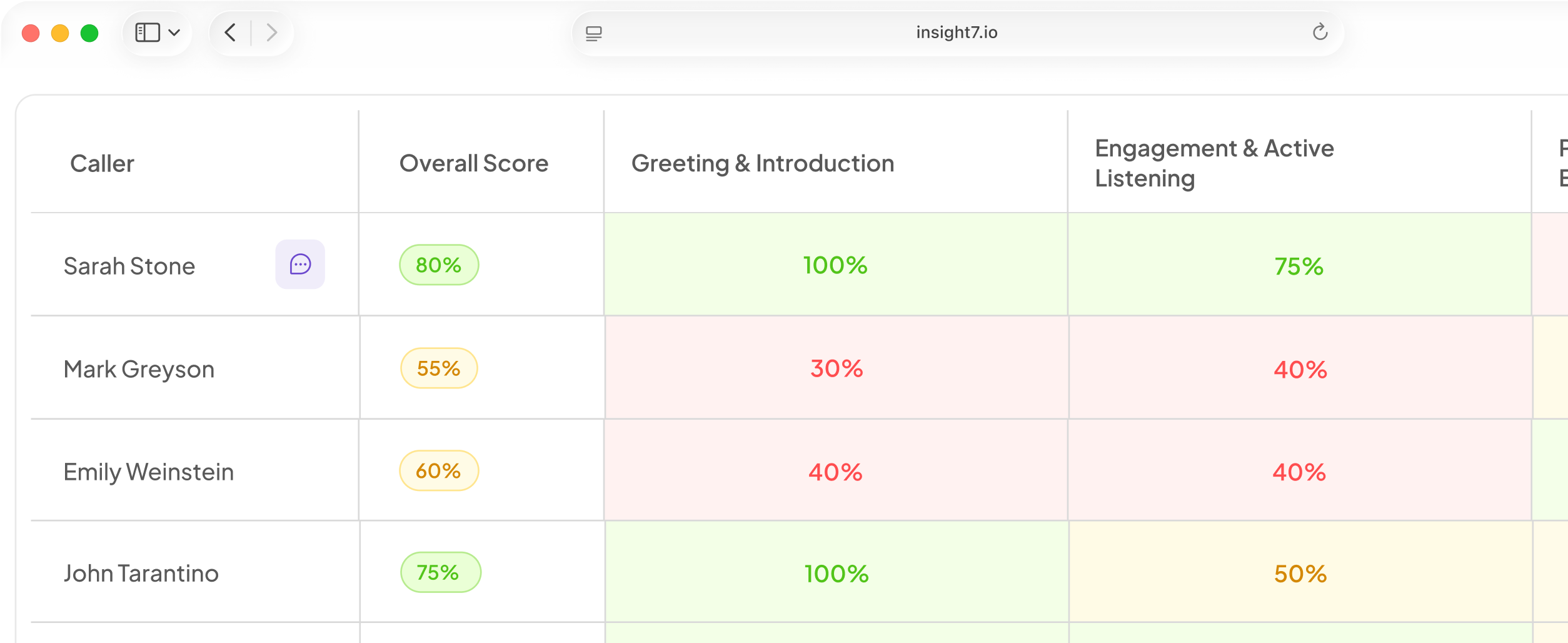
Insight7 voice campaigns are in beta. Each call is held as a real conversation and scored when it ends. Campaigns carry calling hours, retry rules and a do-not-call list. A dashboard shows calls in progress, and a reviewer can read each transcript when the call ends. On inbound lines, also in beta, the AI agent can look the caller up and callback requests go to a queue. A call where only the AI spoke is not counted as reached, and a carrier's temporary refusal does not use up a retry. Insight7 can also score every call against a weighted scorecard your team owns. Alerts can watch keywords and low scores and notify by email or Slack.
7. Remind the owner, and retry smartly
Set two reminders for every callback. The first goes to the human owner as the ticket nears its due time. The second goes to the customer shortly before you call, so they expect it. Keep both in your ticketing or calendar tool.
Cap retries for a callback nobody answers. Space the attempts out and skip anyone on the do-not-contact list.
8. Close the loop after every handoff
A handoff is finished when the customer has an answer, so run three loops. Tell the customer the outcome. Mark the ticket resolved with a reason code. Send the pattern back to the AI script, so the same trigger gets better wording.
Review handoff calls weekly and track five numbers:
- Handoff rate.
- Reasons for handoff.
- Repeat-contact rate.
- Time to human pickup.
- Time to resolution.
A rising repeat-contact rate means the loop is open somewhere.
Score every handoff call, not a sample. Set one critical error, such as a lost handoff or a broken callback promise, to fail the whole call. QA leaders say a checklist score can hide what matters, and automated scores must match the human auditor.
Gartner reported that customer-service AI spending rose 38% while overall service budgets rose 2%. Your weekly numbers show whether that spend is working.
Related reading: AI Voice Agent Escalation Rules Template for Customer Service and Operations Teams, How to Set AI Outbound Call Retry Rules for Collections, Renewals and Feedback Campaigns and How to Build an Automated Escalation Call Tree for On-Call and Incident Response Teams.
Questions people also ask
When should an AI voice agent hand off to a human?
Hand off when a wrong answer would cost more than a human's few minutes. That means a stated request, a disputed amount, a regulated topic, or repeated confusion. Review the trigger list monthly.
What should an AI agent say when transferring a call?
Keep it to two short sentences. Name the reason, name who is next, and give the wait. Do not repeat the caller's whole problem back.
Do customers have a right to talk to a human instead of an AI?
Disclosure laws require telling people they are speaking to AI. They do not, by themselves, promise a human. Complaint and consumer rules differ by region and sector, so check yours. Offer a human anyway.
What is the difference between a warm transfer and a cold transfer?
In a warm transfer, the human hears a short briefing before the caller joins. In a cold transfer, the caller is dropped into a queue with no briefing. If you must go cold, send the full packet.
What information should pass to the human agent during a handoff?
Pass what the caller needs to avoid repeating, plus what was promised in the call. Leave out data the human does not need, such as full card numbers.
What happens if no human agent is available during the handoff?
The agent should book a callback and confirm the time aloud. Give the ticket a due time and an owner, so the promise is tracked like any other task.
How do you measure whether AI-to-human handoffs are working?
Compare transferred callers with callers who never needed a handoff. Check whether they resolve as fast and rate service as high. A gap means the handoff, not the AI, is the weak point.
Finish every handoff with an answer
A handoff is done only when the customer has an answer. This week, pull ten transferred calls and check each for a ticket, owner and confirmed outcome.