
Should an AI voice agent make your payment reminder calls, and how far should you trust it? It depends on four things: when it calls, how it sounds, what it knows about the customer, and how easily the customer can reach a person.
Give the agent one job and real context
Give the agent one job: remind the customer, make paying easy, and stop there. A reminder is not a collection call, and customers who feel respected pay. An agent that argues, pressures or negotiates is doing a collector's job with a reminder's script.
Load four facts before every dial:
- Due date.
- Amount due.
- Last payment received.
- The usual reason a debit fails in your book, such as low funds on the due date.
Automatic debits often fail on the due date. So call beforehand to check funds, and call again after a failure to offer other ways to pay.
A stale balance does the most damage. If the agent quotes an amount the customer already paid, trust drops and a person must clean up. Check whether the agent can read your CRM or loan system at call time. Buyers want a tool that sits alongside what they already run. If it cannot read live data, cut the amount from the script and send the customer to a payment link.
Set hard limits on what the agent never says:
- No threats, no talk of legal action or credit damage.
- No details of the debt to anyone but the account holder.
Rules differ by region. In the US, Regulation F covers anyone whose main business is collecting debts owed to another, and it also bars discussing a debt with most third parties. A lender reminding its own customers may fall outside it, so check.
Call at the right time, not too often
Start with a reminder before the due date. Add one follow-up after a failed debit that offers other ways to pay, such as a payment link or a transfer. Anything beyond that starts to feel like collection.
Test your calling windows instead of guessing. In one consumer lender's campaign, mornings and evenings answered better than midday. The team moved its start to 8pm and avoided the 9 to 10am window. Run two or three windows on small batches and compare answer rates.
Treat three to four attempts per contact as a starting point to test, because many people only pick up on the second or third try. Spread the attempts across different times of day.
Set these as campaign rules, not agent habits. Then check the legal limits for your region:
- Consent. The US FCC ruled in February 2024 that AI-generated voices count as an "artificial or prerecorded voice" under the TCPA. The TCPA requires the called party's prior express consent for such calls, per this summary of the ruling.
- Hours. Regulation F treats a time before 8am or after 9pm at the customer's location as inconvenient, unless you know otherwise.
- Frequency. The same regulation bars covered collectors from calling about a debt more than seven times in seven days, and from calling within seven days of a conversation about that debt.
If you are not a covered collector, treat these as a sensible ceiling.
Sound polite, brief and human-paced
Open with who is calling, say it is an AI, state the reminder, offer one easy action, then close. Keep the call short. A sample opening: "Hello, this is an automated assistant calling for [Lender]. Your payment of [amount] is due on [date]. Would you like a payment link by text?"
Say it is an AI at the start. The EU AI Act's Article 50 has applied since 2 August 2026 and requires AI that talks to people to say so. Colorado's Chatbot Safety Act, effective 1 January 2027, adds a similar disclosure rule. The US rule requiring a spoken AI notice was still not final in mid-2026. Hiding AI status carries legal risk, so disclose.
Fraud-wary clients, such as older high-net-worth ones, need proof the call is real. Name the lender. Offer to let them hang up and call back on a number printed on their statement.
Buyers fear AI that sounds scripted or robotic, and always ask what happens when the customer goes off script. Local language and accent make a voice easier to trust.
Keep these tone rules:
- No guilt and no false urgency.
- Acknowledge hardship in one sentence, then offer help.
- Never argue. If the customer disagrees, move to a handover.
- Pause after each question and let the customer finish.
Make opting out instant and honest
Treat every "stop calling" as final, and act on it during the call. Record consent when you collect the number. Then sync every opt-out to one do-not-contact list that all campaigns read.
A separate FCC revocation rule lets customers opt out by any reasonable method, including a key press on the call. Callers must honor the request within ten business days. Set your system to act in minutes.
Offer a softer exit before a hard no. Say: "Would a different time suit you better?" Expect some customers to ask for a callback, so decide in advance who rings them back and when.
Handle wrong numbers fast. If the person is not the account holder, end the call and say nothing about the debt. Then flag the number so it is never dialled again.
Let customers pick the channel. Some prefer app or WhatsApp messages and ask for "no calls" outright. Offer a text link instead.
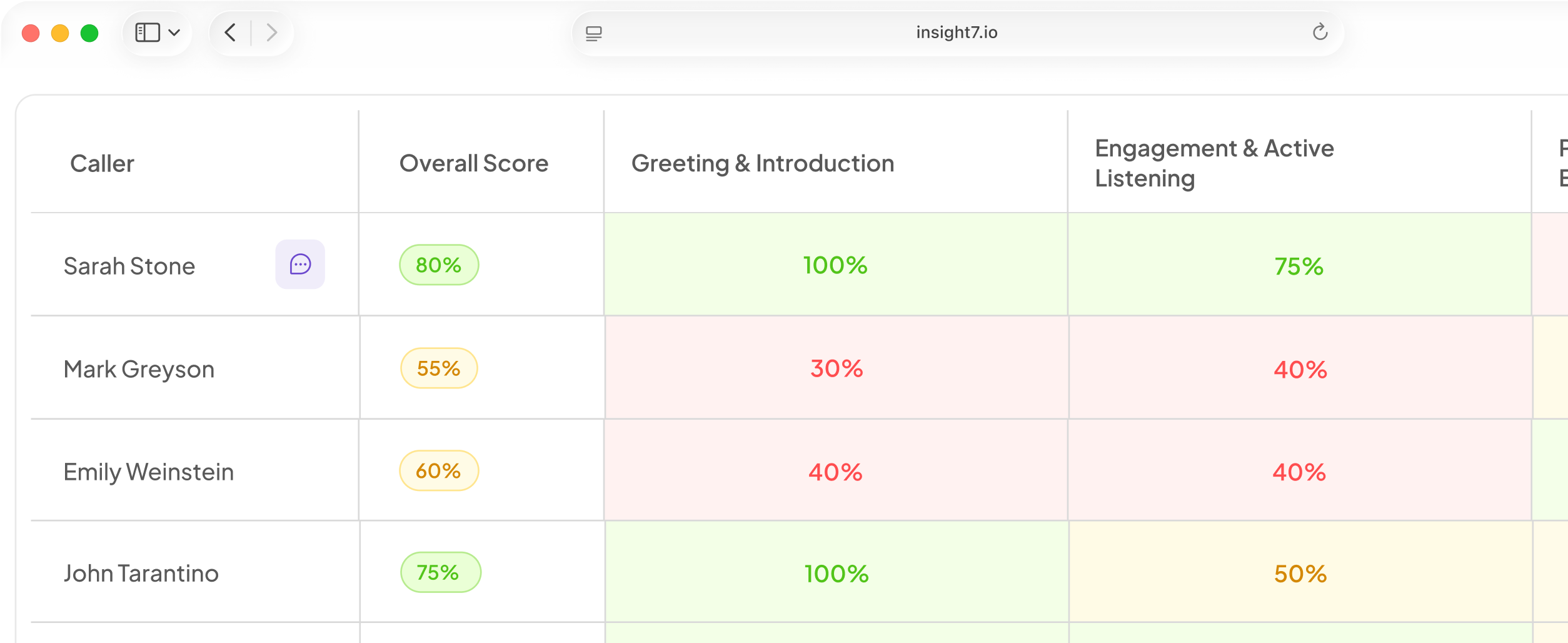
Insight7 voice campaigns are in beta. They include consent marking, calling hours, retry rules, a do-not-call list and a test call to your own phone. A carrier's temporary refusal does not use up a contact's retries, and calls where only the AI spoke are not counted as reached. A copy of a campaign leaves out anyone added to the do-not-contact list since the original. Managers can test the agent in the browser with no phone number. A dashboard shows transcripts after each call.
Hand off to a person, fast and warmly
Hand off whenever the customer needs judgment, not a script. Set these triggers before launch:
- The customer disputes the amount.
- They mention hardship, illness, bereavement or distress.
- They ask for a person, even once.
- They sound angry or abusive.
- The agent cannot answer a question.
- The agent has misheard or re-asked the same thing twice.
- You have flagged the account as vulnerable.
Design the handover itself, because buyers raise it unprompted. They ask whether it is polite, what happens to a disputed amount, and whether anyone chases a handover that nobody picked up. Have the agent say what happens next ("I'll pass you to a colleague who can fix this"). Pass along the transcript so the customer never repeats themselves. Give every handover an owner and a time limit.
People expect this. Gartner found that 87% of 3,566 customers say a company using GenAI for service must offer a way to reach a human. If your agent hides the exit, customers will see a flaw.
Then measure outcomes, not calls made. Score a sample of calls each week. Track opt-out rate, handover rate and payment after the call. Gartner found only a quarter of 432 AI service use cases show positive ROI, and 42% cannot be measured.
Start with a small pilot and pay on measured results.
Related reading: AI Telemarketing vs Traditional Telemarketing Services Compared on Cost, Compliance and Conversion, How to Use AI Check-In Calls After Purchase or Installation to Improve Retention and Repayment and Proactive Customer Service Call Examples That Reduce Churn and Complaints.
Questions people also ask
Is it legal to use AI voice agents for payment reminders?
Often yes, with conditions that vary by region. In the US, AI voices fall under the TCPA, so you need prior consent. Record when and how each customer gave consent, and keep that record for every number you dial.
What time of day should payment reminder calls be made?
Stay inside the legal window for the customer's location, then let your data pick the slots. Compare answer rates by time band and customer segment. Call a few days before the due date, while the customer can still act.
How many times should an AI agent call about a payment?
Treat the number as a limit you tune, not a target. Stop once a real conversation happens. Stay under any regional contact cap, such as the seven-in-seven rule for covered collectors.
Should an AI voice agent say it is an AI on a payment reminder call?
Yes, in the first sentence, before any amount is mentioned. EU rules already require it. Customers who feel tricked tend to hang up.
What should a payment reminder call script say?
Use five short lines: who is calling, that it is an AI, the reminder, one easy action, and a way out. Make each line sayable in one breath.
How do you stop automated payment reminder calls?
Accept "stop" in any reasonable form, including a key press. Have the agent confirm aloud that the number is removed. Then test that the opt-out reaches the shared do-not-contact list before the next dial.
When should a payment reminder go to a human instead of an AI?
Hand over when the customer disputes the amount, mentions hardship, asks for a person, sounds angry, or when the agent is unsure. Outside office hours, offer a callback from a named person.
Keep the exit open
A payment reminder works when the customer can stop it or reach a person at any moment. This week, write down your three handover triggers and opt-out phrase. Test both on 20 calls before you scale.