
A working AI voice agent implementation timeline runs about eight weeks from demo to launch. Spend two weeks on scope, two on build and test, two on a small pilot, and two on the go or no-go decision.
The eight-week plan at a glance
| Week | Phase | Owners | Deliverables |
|---|---|---|---|
| 1 | Scope | Sponsor, ops lead | Named sponsor, one campaign chosen, one number to beat |
| 2 | Scope | Compliance lead, IT lead, ops lead | Campaign brief, pass or fail rules, consent and disclosure plan, clean contact list |
| 3 | Build | Campaign manager, IT lead | Final script, configured campaign, contacts loaded |
| 4 | Test | QA lead, compliance lead | Test call log, written sign-off |
| 5 | Pilot | Campaign manager, QA lead | Live pilot with control group, daily transcript notes |
| 6 | Pilot | QA lead, compliance lead | Pilot results sheet, ranked fixes list |
| 7 | Decide | Sponsor, finance, ops lead | Go or no-go memo, cost per outcome |
| 8 | Launch prep | Ops lead, campaign manager | Rollout plan with call volume and staffing |
Weeks 1 to 2: Scope one campaign
Pick one campaign and one number to beat, and write the go or no-go rules now. Owners: the sponsor sets the goal, the ops lead picks the call type, the compliance lead lists consent and disclosure duties, and the IT lead checks data access. Deliverables: a one-page campaign brief, written pass or fail rules, and a clean contact list.
- Sponsor: Name one person with budget authority. Deals stall when the person on the call is not the user or the budget holder.
- Direction: Start with outbound. Buyers feel the pain on inbound, but we advise outbound first.
- Price: Ask for a price range in writing at the demo. Buyers want it early so they can compare vendors.
- Lead times: Ask IT and compliance how long reviews take. A CRM integration or security review adds weeks. A spreadsheet upload is a fast start.
- CRM sync: Decide what data the agent needs before the call and what must flow back after it, such as outcome and next step. Write both lists down. If the CRM has a limited API, a CSV in and a CSV out can carry the pilot.
- Rules: Write the pass mark, such as cost per outcome against today's cost, before any call is placed.
Weeks 3 to 4: Build and test
Build the script and the campaign, then test before a real customer hears it. Owners: the campaign manager builds, the QA lead tests against the script, and the IT lead loads contacts. Deliverables: a final script, a configured campaign with calling hours, retry rules and consent marking, a test call log, and a written sign-off.
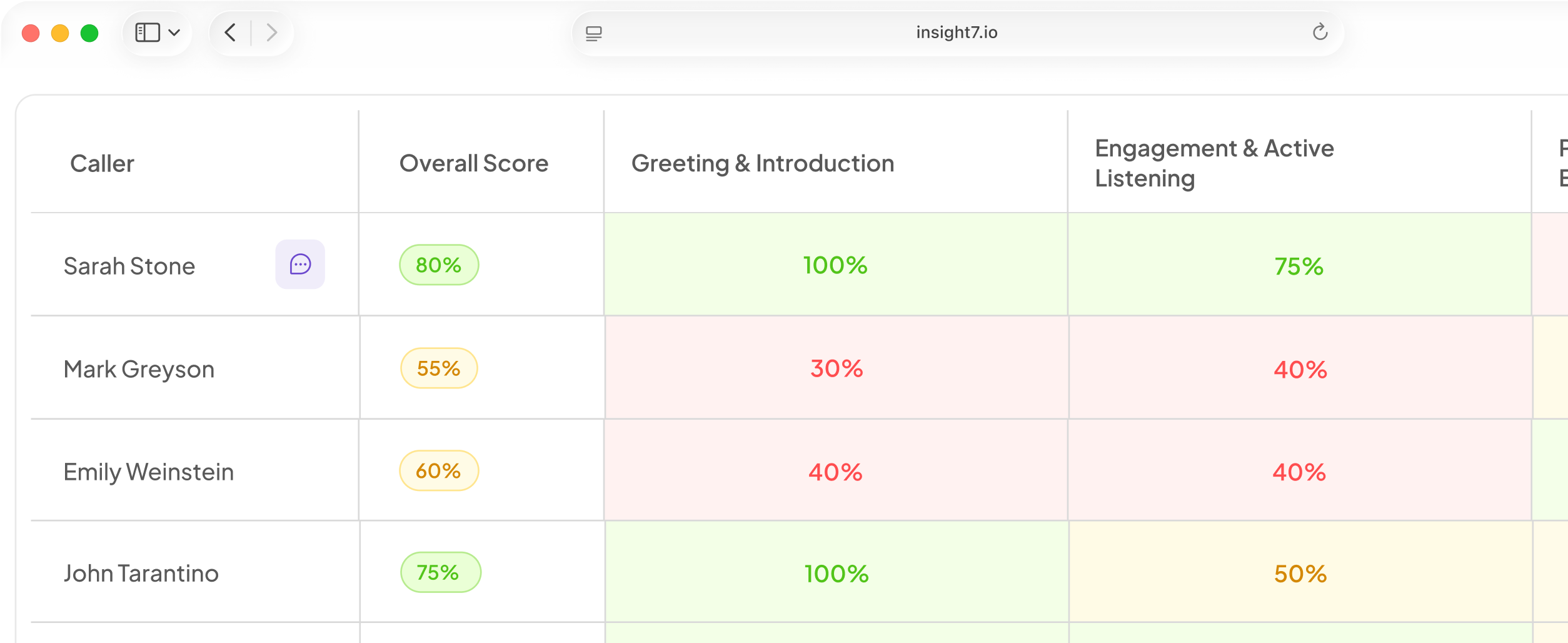
In Insight7's campaign tools (beta), a campaign has a type, consent marking, calling hours, retry rules and a do-not-call list. Check the detail in the app before a demo. You can talk to the agent in the browser with no phone number, then place a test call to your own phone. During a pilot, a dashboard shows calls in progress. A reviewer can read each transcript when a call ends, and yes/no answers and outcomes are pulled from it. Calls where only the AI spoke are not counted as reached. A carrier's temporary refusal does not use up a contact's retry. To scale after a go, you can duplicate a campaign with its contacts. People added to the do-not-contact list since the original are left out of the copy.
- Read every transcript: The QA lead checks each test call against the script. Fix wrong answers and awkward wording before week 5.
- Score by severity: A checklist score can hide what matters. Decide which errors fail a call outright, such as a wrong balance or a missed consent step.
- Handover design: Test what happens when a caller asks for a person or raises a dispute. The handoff should be polite and quick, and the human should get the context.
- Disclosure: Have the agent say it is AI at the start. EU AI Act Article 50, as summarised by Cooley, has applied since 2 August 2026 and covers automated phone systems.
Sign-off at the end of week 4 means the QA lead and compliance lead both approve in writing.
Weeks 5 to 6: Run the pilot
Run the pilot on a small list with a control group, and review transcripts every day at the start. Owners: the campaign manager runs it, the QA lead reviews it, and the compliance lead spot-checks it. Deliverable: a pilot results sheet with reach rate, outcome rate, transcript notes and a list of fixes.
- Size and window: Use a small list over a fixed window of two weeks. A small sample keeps risk low and matches what buyers want: a short trial, with payment only after a measured lift.
- Control group: Keep a slice of the same list on today's channel, such as SMS or human calls. Then any lift can be credited to the voice agent. A cleaner way is a sublist that only voice reaches.
- What counts as reached: Count a call only when the customer spoke. Silence or a voicemail greeting is not a reach.
- Calling choices to test: Vary the start time and the number of redials. Do not assume midday works.
A waste-management operator discussed a small collections pilot, still pending its team's review.
End week 6 by writing the fixes list. Rank each fix by how many calls it touched.
Weeks 7 to 8: Decide go or stop
Hold the go or no-go meeting in week 7, and apply the rules you wrote in week 1. Owners: the sponsor decides, finance checks cost per outcome, and the ops lead plans the rollout. Deliverables: a go or no-go memo, cost per outcome against today's cost, and a rollout plan with call volume and staffing.
Judge the pilot on three numbers:
- Cost per completed outcome: Compare it with what it costs you to serve or acquire a customer today. Champions need that figure to make the case upstairs.
- Escalation and complaint rate: Count calls that reached a human and people who complained.
- Consent or disclosure issues: One serious miss can outweigh a good lift.
The memo matters because money is moving fast. Gartner's August 2026 survey found AI spending up 38% while overall service budgets rose 2%. Your budget holder will be asked for proof, so expect your finance lead to ask for cost per outcome.
If the answer is go, scale in steps. Widen the audience a little at a time, and keep a human reviewing weak-scoring calls. Week 8 is for the rollout plan: how many calls a day, who handles escalations, and when you review again.
For a baseline, the free Call Quality Monitor scores uploaded recordings against quality standards.
Related reading: How to Scale Customer Support to 10x More Customers Without Hiring More Agents, AI Voice Agent Pricing Guide With Per-Minute Cost Breakdowns and Hidden Fees to Watch For and Outbound Call Center Pricing Explained With Per-Hour and Per-Call Models Compared to AI Voice Agent Costs.
Questions people also ask
How long does it take to implement an AI voice agent?
About eight weeks from demo to launch, when you run one campaign from a CSV list. A CRM integration or a long security review adds time. Ask IT and compliance for their lead times in week one.
How do you test an AI voice agent before launch?
Run scripted scenarios, including angry callers, wrong numbers, off-script questions and requests for a human. Have the QA lead read each transcript against the script, and log every failure. Retest after each fix before sign-off.
What are the consent requirements for AI outbound voice calls?
They depend on the region. In the US, AI-voice calls already need consent under the FCC's 2024 TCPA ruling. Mark consent per contact, and have counsel confirm each market.
How much does an AI voice agent pilot cost?
Ask for a range in writing at the demo. It should cover setup, per-call or per-minute charges, the pilot length and what is included. Then tie payment to measured results.
Who should own an AI voice agent project?
A named sponsor with budget authority. Under the sponsor, put one owner each on ops, compliance, IT and QA. Each owner signs off their own deliverable, so no phase ends without a named approver.
Do AI voice agents need to say they are AI?
Rules beyond the EU are arriving. Colorado's Chatbot Safety Act requires operators to disclose that users are talking to AI, and it takes effect on 1 January 2027. The FCC's proposed disclosure rule was not final as of mid-2026.
Should you start with inbound or outbound AI voice calls?
Start with outbound. Buyers feel the pain on inbound, but much of that volume exists because companies never send proactive updates. Outbound also gives you a small list, a control group and one number to beat.
Name your sponsor this week
Eight weeks works when every week has an owner and a deliverable. This week, name your sponsor, pick one campaign, write down the single number the pilot must beat, and ask IT and compliance for their lead times. Then book a demo.