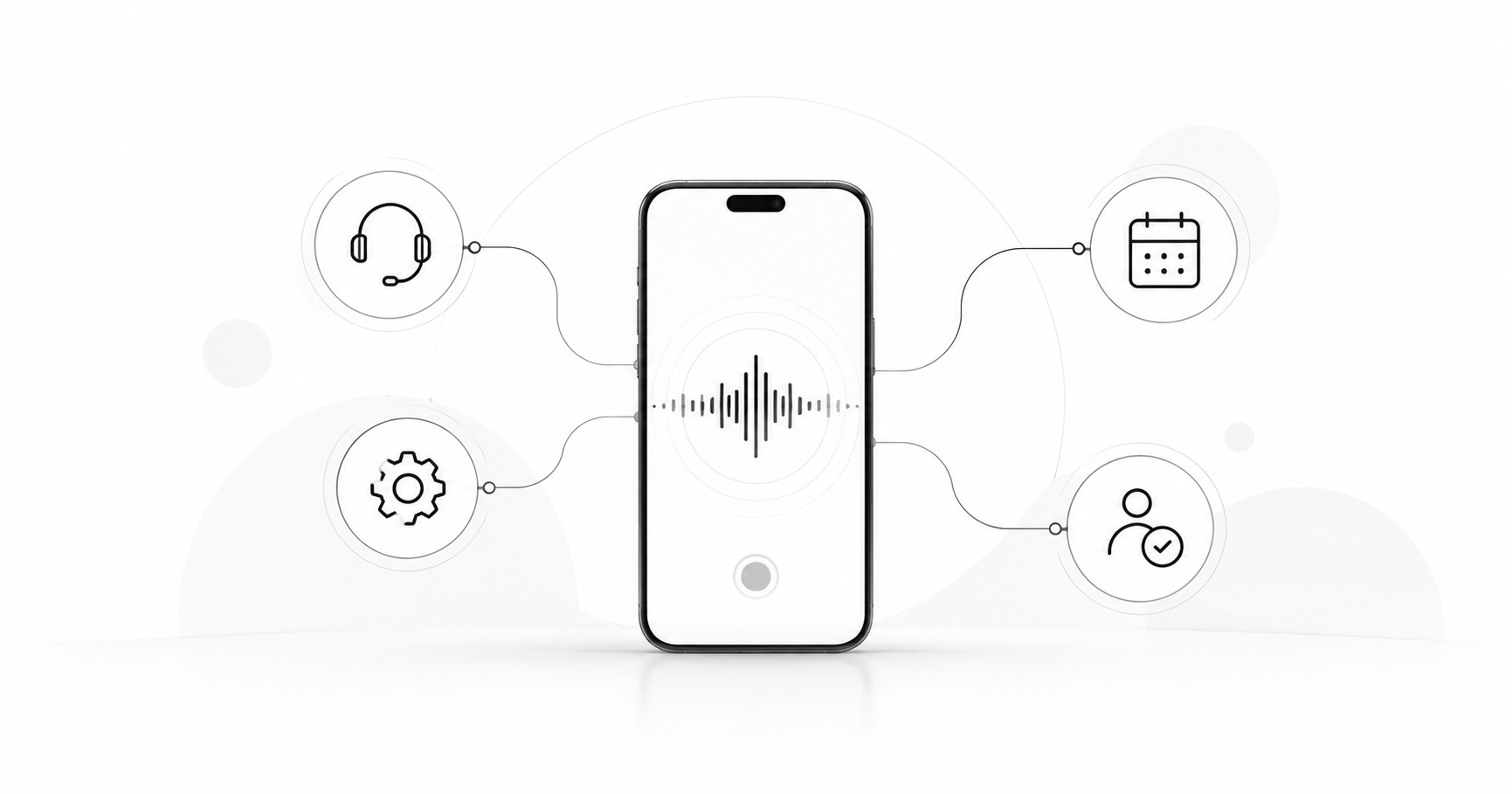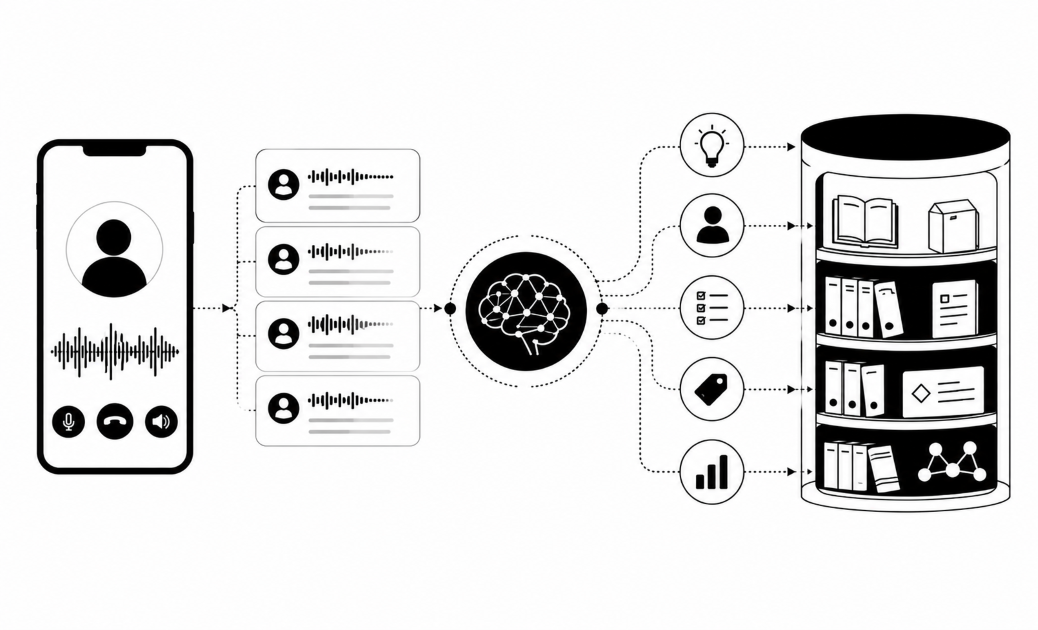

Scaling customer support means serving many more customers while headcount stays flat. To do it without hiring more agents, sort contacts first. Then let self-service, automation and AI take the simple ones.
Measure and sort your contacts first
Start with a contact-reason table. List your top 10 reasons by volume. Add average handle time. Then mark each one as a lookup, an action or a judgement. Lookups, such as "where is my order?", are the first to leave the queue. Judgement contacts, such as a disputed charge, stay with people.
Then find your cost per contact. Divide the monthly cost of the support team by contacts handled. The cost includes pay, tools and management.
Here is an illustrative example with assumed numbers, so swap in your own. Assume 20 agents at $4,000 each per month, or $80,000. They handle 16,000 contacts. That is $5 per contact. At 10x volume, 160,000 contacts at the same handling model needs about 200 agents. The gap is about 180 hires under these assumptions, and that is the number to shrink.
Set this baseline before you buy anything. Gartner's review of 432 AI service use cases found only a quarter produced a positive return, and 42% had value nobody could measure. Without a baseline, you cannot show a gain.
Do not sample to build the table. Manual QA usually covers 2% to 5% of calls. Review every call, or a large random set, so the table shows the real reasons customers contact you.
Deflect with self-service that answers
Deflection means a customer solves the problem alone, without opening a contact with an agent. Deflection rate is the share of issues solved that way. Count only resolved issues. A customer who gives up on a weak help page, or calls back tomorrow about the same thing, is not a deflection. Check for repeat contacts within a week before you call it a win.
Start with the lookups in your contact table, then work through these steps:
- Write help articles in customer words. Pull phrases from call transcripts and tickets, not from your internal product names.
- Publish a status page. Customers who can see an outage will not call to ask about it.
- Message first. Operators want to tell customers about outages, delays and check-ins before a complaint arrives. Let customers choose the channel.
- Add in-app help. Put the answer on the screen where the question starts, such as the payment page.
- Review monthly. Every failed search and every repeat contact points to an article that needs a fix.
Self-service only deflects when the answer behind it is right, so keep one source of truth for your content.
Keep the integration deep. Inbound AI needs links into the CRM and the knowledge base. A bot that cannot see the order cannot answer "where is it?", so the customer calls anyway.
Automate the repeat tasks behind the queue
Split your contact table into lookups and actions, then automate the ones that follow fixed rules. Lookups include order status and account balance. Actions include refunds under a set limit, address changes, ticket tagging, routing and after-call summaries. Leave out anything that needs judgement.
Ask the integration question before you pick a tool. Every company with a working call centre asks whether a new tool replaces its stack or plugs into it. Buyers want it to sit alongside the CRM and helpdesk and read from them.
Start with outbound. We advise it as the first step. Inbound needs deeper integration, so it is the harder place to begin. Reminders, surveys and win-back calls are good first jobs.
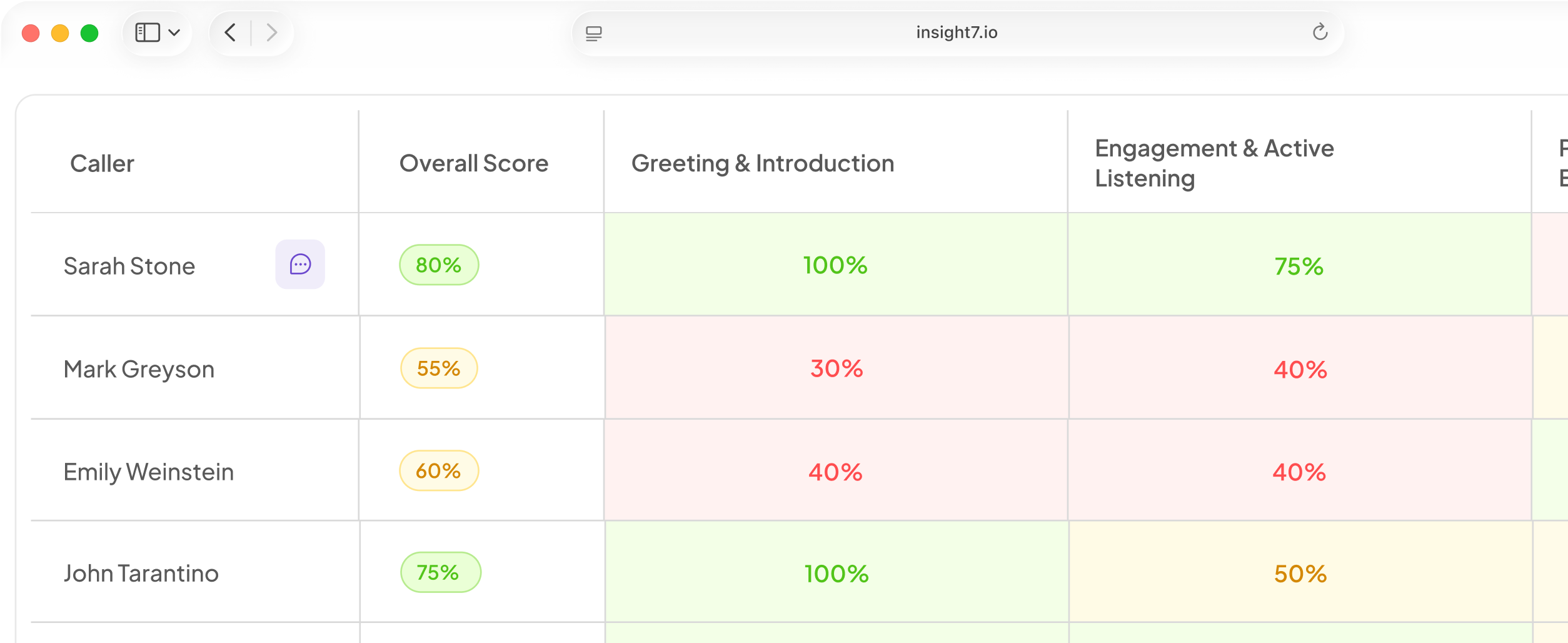
Insight7 covers several of these jobs. It scores every call against a weighted scorecard your team owns, not a sample. Managers can review and override the AI's ratings. It connects with telephony systems such as Dialpad, Aircall, RingCentral, Talkdesk and Five9, and writes summaries and transcripts back to Salesforce and HubSpot, so nobody retypes notes. Its AI Knowledge Base gives reps answers during live conversations, which cuts handle time. Outbound calling campaigns are in beta: managers set a goal, an audience and rules, and each call is scored when it ends. Campaign types include customer survey and win-back, with calling hours, retry rules and a do-not-call list.
Put AI first, with a human exit
AI first contact means an AI agent greets every customer, solves what it can and passes the rest to a person. Start small. Pick one or two lookup reasons from your table. Run them on a small share of traffic for a few weeks. Compare resolution and repeat contacts against your baseline.
Design the handover before launch. Buyers raise it on their own: is the handover polite, and what happens to sensitive issues or a disputed charge? The AI should pass the full transcript, so the customer never repeats themselves. Set triggers for an instant handover, such as a complaint, a payment dispute or a customer who asks for a person.
The human exit is also what customers expect. Gartner found that 87% of 3,566 customers say a company using GenAI for service must offer a way to reach a human. Treat that as a design rule, not an option.
Tell customers it is AI. The EU AI Act requires any AI that talks to people, including automated phone systems, to say it is AI. Colorado's law will require the same disclosure from 1 January 2027. Build the disclosure into the first line of every conversation.
Build a staffing model around the exceptions
Restructure your team into tiers. The AI and self-service layer takes lookups. Automation takes rule-based actions. A small group of agents takes judgement cases, disputes and sensitive customers. Two other roles keep the system honest: a knowledge owner who fixes articles and answers, and a QA lead who reviews scores and failed handovers.
Here is the 10x example again, with assumed numbers. Take 160,000 monthly contacts. Assume self-service and automation remove half, leaving 80,000. Assume AI first contact resolves 60% of those, leaving 32,000 for people. At the old pace of 800 contacts per agent, that is about 40 agents, plus the two owner roles. It beats 200 agents, but it holds only if your real rates match. Use your own figures and test each rate in a pilot.
Plan peaks and training too. Keep a small flexible pool for spikes, such as a campaign launch. Train your remaining agents for harder work, because the easy contacts are gone. Practice on difficult scenarios helps them handle what is left.
Related reading: What Is an AI Call Center Agent and How It Handles Inbound and Outbound Calls, Contact Center AI Pricing Compared Across Google, Amazon, Microsoft and Specialist Vendors and AI Call Center Companies Buyer's Guide With Evaluation Criteria and a Vendor Shortlist Template.
Questions people also ask
How do you scale customer support without hiring more agents?
Change who handles each contact. Sort contacts by reason, move lookups to self-service, automate rule-based tasks, and let AI answer first. Pilot each step on a small sample and measure it first.
What is customer service deflection rate and how do you calculate it?
Divide issues resolved through self-service by all issues, meaning self-service resolutions plus agent contacts. Remove customers who contacted you again within a week, so only true resolutions count.
What is a good deflection rate for customer support?
No single figure fits every team. The ceiling is the share of your contacts that are lookups. Track your own rate monthly. If repeat contacts climb, the rate is flattering you.
Can AI replace customer support agents?
Not fully. AI can take simple, repeatable contacts, but people still handle disputes and sensitive cases. Gartner found 87% of 3,566 customers say a company using GenAI must offer a route to a human.
How do you decide which support tickets to automate first?
Rank reasons by volume, handle time and the cost of a wrong answer. Start where volume is high and a mistake is cheap. Check the pilot's repeat-contact rate before you widen it.
Do customers have to be told they are talking to AI?
Often yes. The EU AI Act requires AI that talks to people to say so, and it has applied since 2 August 2026. Colorado's law takes effect on 1 January 2027. Separately, in the US, the FCC's 2024 ruling means AI-voice calls already need consent under the TCPA.
How do you measure the ROI of AI customer support?
Compare cost per resolved contact before and after, over the same period. Include AI fees, review time and repeat contacts. Count a contact as resolved only if the customer does not return.
Start with the contacts you can move
Flat headcount at 10x volume is a sorting problem before it is a technology problem. Insight7 scores every call against a scorecard your team owns. Which three contact reasons in your table could leave the queue this quarter?