
Your voice agent passed every demo. Then a carrier connects a call, delivers silence, and the dashboard still shows green. This AI voice agent reliability checklist covers four things: redundancy, synthetic test calls, alerting and capacity limits.
Checklist: redundancy that survives a carrier failure
Tick every box before launch. One carrier is one point of failure.
- Two or more carriers or SIP trunks, with automatic failover. RFC 3261 defines the 503 Service Unavailable response and the Retry-After header. A client that gets a 503 should move to an alternate destination and hold off the failed one for the Retry-After period.
- Separate fallbacks for STT, LLM and TTS. A backup for each keeps one vendor outage from silencing every call.
- Failover triggers by signal. Use SIP 503, high post-dial delay, and answered calls with no customer speech. The last never raises a SIP error.
- A number pool per carrier. Track caller-ID reputation for each pool, because carriers can label heavily dialed numbers as spam.
- Retry rules that separate a carrier refusal from a customer no-answer. Refusals should not use up a retry. Count a call as reached only when the customer spoke.
- A human or voicemail fallback path.
Checklist: synthetic test calls that catch silent failures
A synthetic call fails the way a real customer's call fails, so it finds problems a green dashboard hides.
- Call through every carrier and number pool on a schedule. Test busy pools more often than quiet ones, and tune the interval to your volume.
- Script three checks per call. The agent speaks, the callee's reply is transcribed, and the right tool or CRM call fires.
- Time answer-to-first-word and every turn. Your STT, LLM and TTS time eats into your delay budget, so measure each stage. Compare the total with the one-way delay guidance in ITU-T G.114.
- Vary region, language and peak hour.
- Rerun after every prompt, model or voice change. Talk to the agent in a browser first, with no phone number needed. Then place a test call to your own phone, if your platform offers it.
- Keep a pass/fail log with recordings.
- Set a silence rule that pauses the campaign. Pick a share of answered calls with no customer speech, and pause when it is crossed.
Checklist: alerts that page the right person
An alert with no owner is only a log line. Name an owner and an escalation time for each one.
- Watch answered-call rate, silence rate and connect-to-first-word time.
- Watch error-code spikes per carrier, transcription failures, queue depth and retry backlog.
- Set thresholds against a rolling baseline. A fixed number fails on a quiet Sunday and a busy Monday.
- Route by severity. A silent carrier pages on-call. A slow trend goes to Slack.
- Keep a kill switch that pauses a campaign.
- Read a live dashboard, and each transcript after the call.
- Send a weekly digest of the weakest calls.
- Run a monthly alert drill.
Checklist: capacity limits set before launch
Your real ceiling is the lowest limit anywhere in the chain.
- Get written concurrency caps from every carrier and every AI provider. Cover STT, LLM and TTS. Take the lowest number as your ceiling.
- Set a calls-per-second dial rate. Do not release a whole list at once.
- Apply a peak-hour multiplier to your average load.
- Write a ramp plan from pilot to full volume.
- Queue over limit, never drop. Ask each provider what happens above the cap: queueing, burst allowance, extra cost or lower priority.
- Keep headroom below the cap.
- Load test before any marketing push.
- Plan for inbound spikes. Campaigns send callers back to your line, so size inbound first.
How to use this checklist in a pilot
Run the pilot in three weeks, and start with capacity. Week 0 is for limits, week 1 for tests and alerts, and week 2 for the ramp.
Week 0: size the line. Calls per hour equal concurrent lines times 60, divided by average handle minutes. Then adjust for answer rate and retries.
Here is a hypothetical for a lender with a payment-reminder campaign. The lowest written cap in the chain is 20 lines, and a call averages 2 minutes. That gives 600 attempts an hour.
The list has 10,000 contacts and averages 1.5 attempts each, so it needs 15,000 attempts. Keep 20% headroom and plan on 480 attempts an hour. That is about 31 hours, or roughly 8 days in a 4-hour calling window. Ask each provider for a pilot cap and a written path to raise it, because pilot limits can be set low.
Week 1: prove the failure paths. Start scheduled synthetic calls on every carrier and number pool. Wire up the alerts, and kill one carrier on purpose to watch the failover.
Week 2: ramp. Raise volume in steps. Only move up when the last step met the exit criteria below.
Write the exit criteria as numbers before launch:
- Answered rate at or above your baseline.
- Silence rate under your pause threshold.
- Answer-to-first-word and turn latency inside your budget.
- One failover drill passed, with a recording.
Banks usually want a short pilot on a small sample, with payment only after a measured lift. Those exit criteria give both sides the same scoreboard.
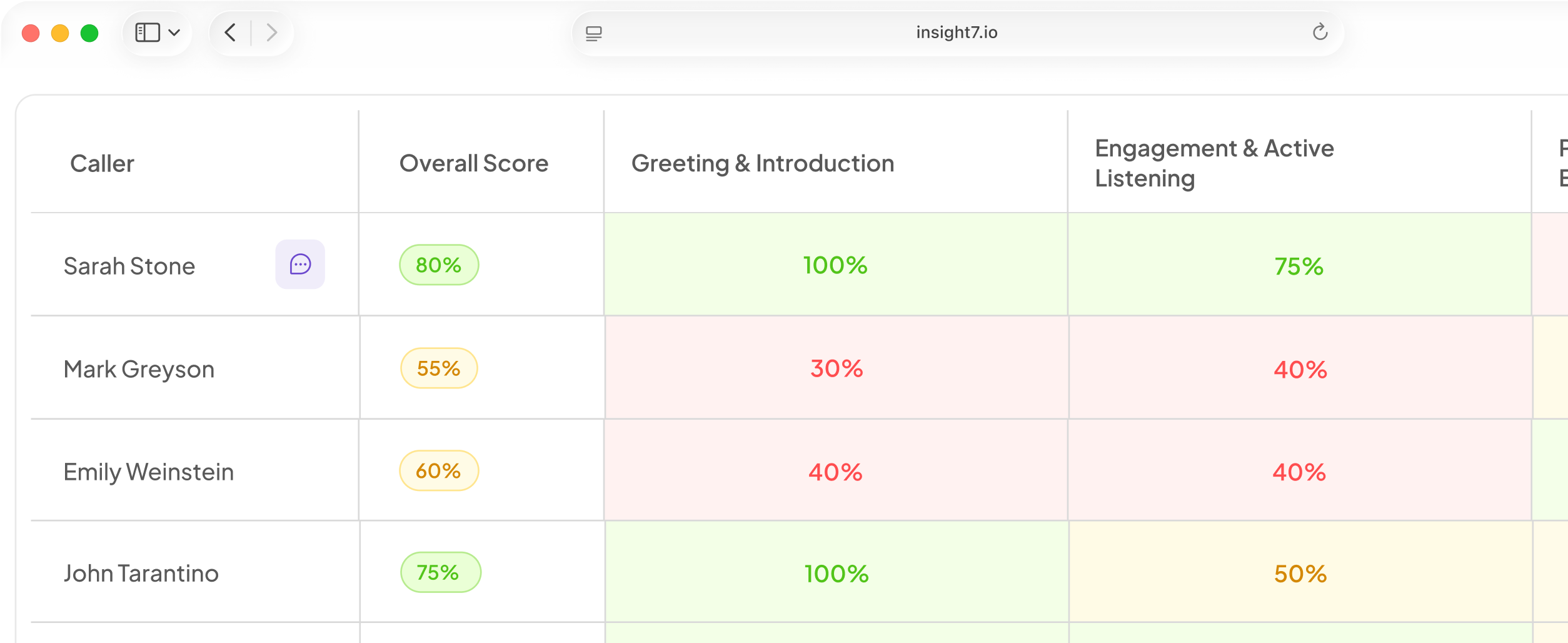
Where Insight7 fits. Insight7 voice campaigns are in beta and are switched on per organisation. Managers set a goal, an audience, the AI caller and the rules, and each call is scored when it ends. The campaign spec includes calling hours, retry rules and a test call to your own phone, so confirm these in the app before you rely on them. You can also test the agent in a browser first. A dashboard shows calls in progress and each transcript when the call ends. Calls where only the AI spoke are not counted as reached. A carrier's temporary refusal does not use up a retry. Separately, Insight7's call QA alerts can watch keywords and low scores, send a weekly digest of the weakest calls, and notify by email or Slack. Confirm the setup in the app first. We are building an auto-pause that stops a campaign when nine of the last ten answered calls carry no customer speech.
Related reading: 30 Questions a CTO Should Ask Before Building or Buying an AI Voice Agent Platform and Simulated Caller Testing vs Live Pilot Testing for AI Voice Agents Compared.
Questions people also ask
How do you test voice AI agents before going live?
Test in layers. Start with a browser conversation, then a call to your own phone, then scheduled synthetic calls through every carrier. Try interruptions, long silences, noise, accents and a failing CRM call. Finish with a small-sample pilot.
What consent is required for AI voice outbound calls?
In the US, the FCC's February 2024 ruling treats AI-generated voices as "artificial" under the TCPA, so prior express consent is needed. The EU also requires AI to say it is AI from the first interaction. Check local rules too.
How many concurrent calls can an AI voice agent handle?
It depends on the lowest cap in your chain, not the agent. At 600 attempts an hour and 2-minute calls, you need 20 lines, plus headroom. Get that number in writing from every provider.
What uptime should I ask a voice AI vendor to commit to?
Ask for a written uptime figure and how it is measured. A good definition counts answered calls with no customer speech as downtime. Convert the percentage into minutes per month, and ask about credits and a status page.
How does carrier failover work for AI phone calls?
The platform watches signals such as SIP 503s, slow call setup and silent answered calls. When a trunk crosses a threshold, new attempts go to the backup trunk. Calls in progress usually drop, so use a cool-down before sending traffic back.
What should I monitor on a live AI voice agent?
Add outcome checks to the technical metrics. Track the share of answered calls with customer speech, tool-call success, handoff completion and the weakest-scoring calls each day. Transport metrics can look healthy while conversations fail.
Should I build or buy an AI voice agent stack?
Buy if you need it fast or voice is not your product. Teams that built their own chatbots often find voice harder. You would own SIP, carriers, latency tuning, monitoring and on-call. Build only if you will staff all five.
Check your lowest cap first
A green dashboard does not prove a caller heard anything, so track answered calls that contain customer speech. Before you start, get the lowest concurrency cap across your carriers and AI providers in writing.