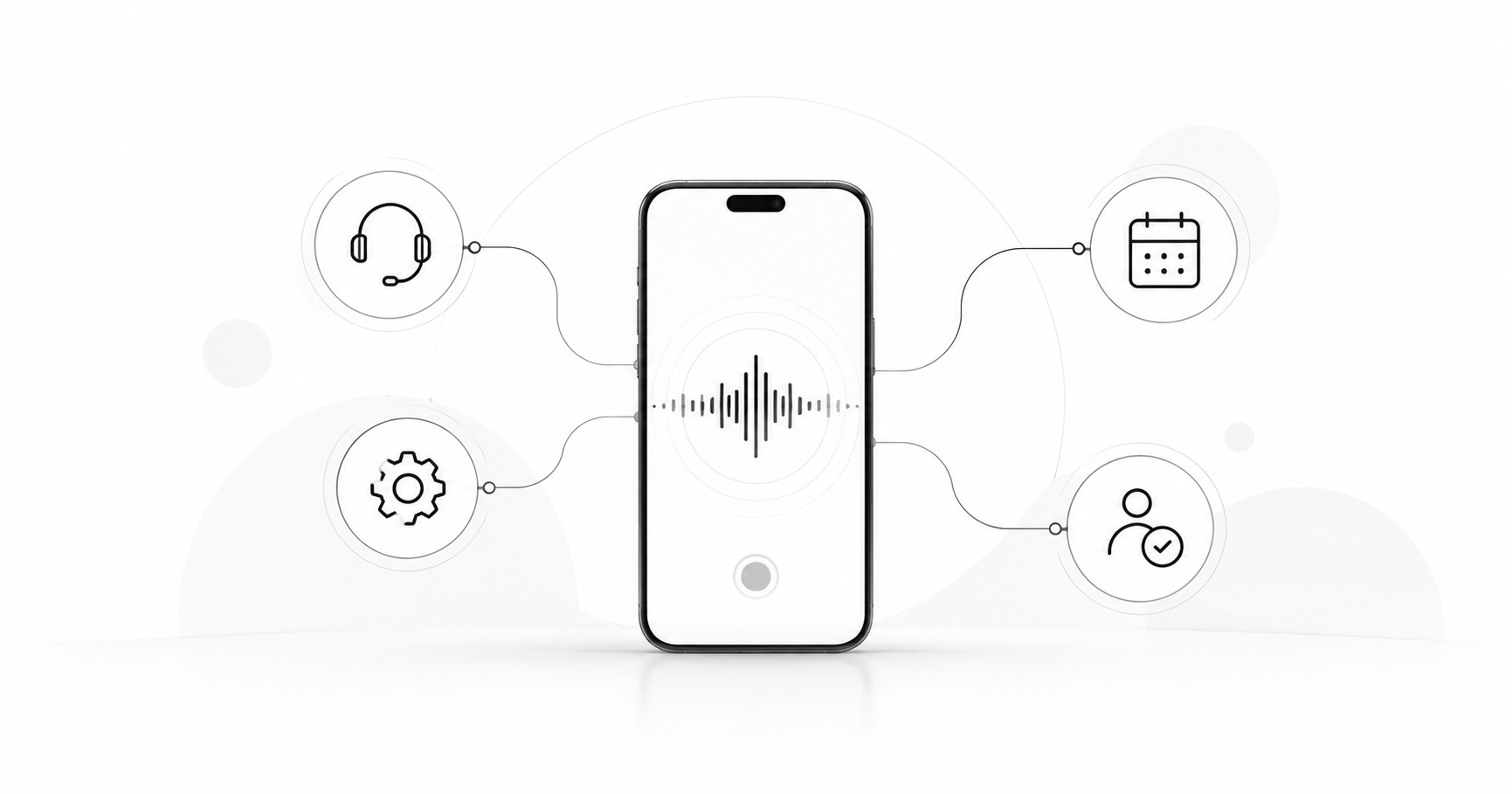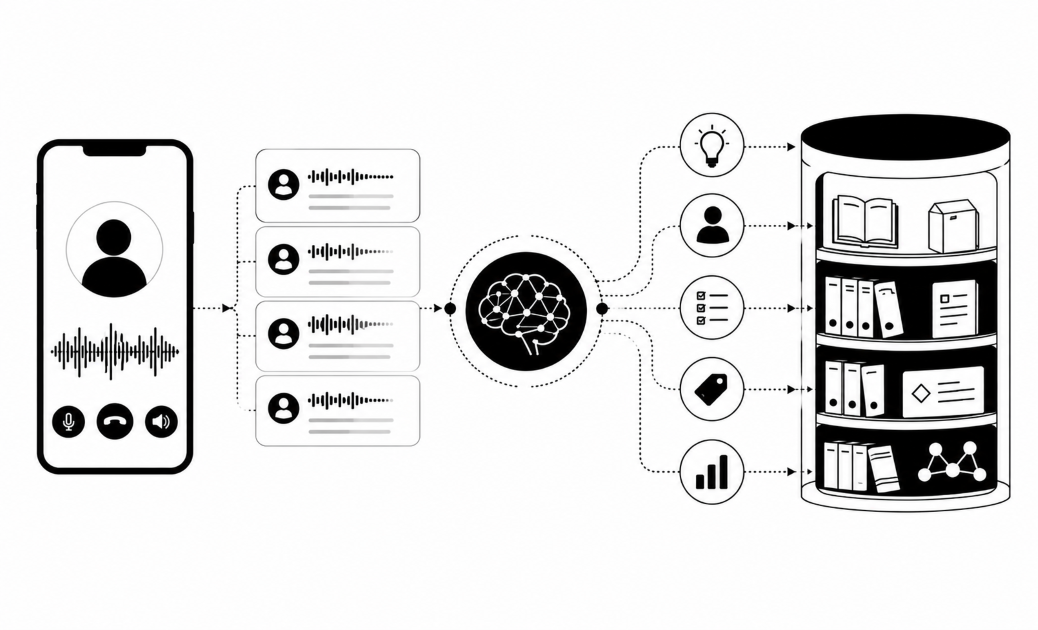

You have to decide whether to build an AI voice agent platform or buy one. The answer depends on how fast you need it, whether voice is core to your product, whether your team can run real-time audio, and what a failed call costs. These 30 questions cover architecture, security, reliability, cost and roadmap. Use them to check your build team or interview vendors.
Decide build or buy before the questions
Buying is usually right if you need voice soon or have no real-time audio team. Companies that built their own apps and chatbots still say voice is too hard to build. A bank's IT team built its app, portal and chatbots itself, yet plans to partner for voice.
Score each question 0 to 2 for your build plan and each vendor: 0 is no answer, 1 is a claim in a deck, 2 is a result you saw in a test.
Architecture: six questions on the stack
1. Is the pipeline cascaded or speech-to-speech, and can we swap each part?
A cascaded stack chains speech-to-text, an LLM and text-to-speech. You want to change one part without a rewrite.
2. What is end-to-end latency at the 95th percentile, and how is barge-in handled?
A study of 10 languages found turn gaps in conversation cluster near 200 ms. A caller who waits a full second thinks the line is dead. Ask for the 95th percentile on real calls, then interrupt the agent mid-sentence.
3. How does it connect to our CRM, dialer and telephony?
Buyers first ask whether a platform replaces their stack or plugs into it. They want it to read from what they already run. Expect answers on SIP trunking, webhooks and API rate limits.
4. Which languages, accents and diarization settings are supported?
Diarization means labelling who spoke when. Have the vendor run your own audio and report accuracy per language.
5. How does the agent get knowledge, and who controls prompts and versions?
Look for retrieval over your documents, plus prompt edits, history and one-step rollback.
6. Can we export transcripts, call logs and configuration, and bring our own model?
Demand named export formats and support for a custom model.
Security: six questions on data and control
7. Where do audio, transcripts and recordings live, and in which region?
Buyers ask this often. Insist on a named region for each data type, backups included. An investment firm told us it needed local hosting first, because US hosting created compliance hurdles under strict local and European data standards.
8. Which AI models and sub-processors touch the data, and is it used for training?
Ask for the sub-processor list and a written "no training on our data" term.
9. Who owns the recordings and derived data, and how is deletion proven?
Derived data includes transcripts, scores and summaries. The vendor should confirm you own it and give a deletion certificate.
10. Which audits does the vendor hold, and can we read the report?
Buyers ask for a SOC 2 report. Read it, and check its scope covers the voice product you will use.
11. How is the agent stopped from going rogue?
Regulated buyers name a rogue agent or public mistake as their main blocker, and want proof from real deployments. Ask for guardrail rules, scripted limits and red-team results you can read.
12. How does the agent disclose that it is AI, and how does it handle consent?
Ask to see a configurable disclosure line. Rules differ by region:
- EU: Article 50 of the AI Act says people must be told at the latest at first interaction.
- US: the FCC's 2024 ruling puts AI voices under the TCPA, so calls need consent.
- Colorado: a chatbot law takes effect on 1 January 2027 and requires public-facing AI to disclose itself.
Check that consent is logged per contact and that legal can edit the wording.
Reliability: six questions on failure and handover
13. What is the uptime commitment, and what happens to live calls during an outage?
A phone call cannot wait for a retry. Get a written uptime figure, and ask what the caller hears if a speech or LLM provider fails.
14. How does the system detect a carrier that connects but delivers silence?
Listen for separate counts of reached calls and AI-only calls, and an automatic pause when silence builds up.
15. How are retries and carrier refusals handled?
Ask whether a temporary carrier refusal uses up a retry, and how the do-not-contact list is checked before each dial.
16. How does handover to a human work?
Buyers ask whether handover is polite, where disputed amounts go, and whether anyone chases a handover nobody picked up. Gartner's 2026 survey of 3,566 customers found 87% say a route to a human is essential. Hear a handover in a live test.
17. Can we test the agent before launch, and review each transcript after?
Expect a browser test, a test call to your phone and simulated calls.
18. How are hallucinations, wrong answers and "I don't know" moments caught?
A small review sample misses rare failures. Ask what share of calls get reviewed, and see a flagged wrong answer next to its fix.
Insight7's outbound voice campaigns are in beta. You can test a campaign's agent by talking to it in the browser, with no phone number needed. A dashboard lets a reviewer read each transcript when the call ends. Calls where only the AI spoke are not counted as reached, and a temporary carrier refusal does not use up a retry. Campaigns also carry consent marking and a do-not-call list.
Cost: six questions on the real price
19. What is the all-in price per connected minute?
Ask for one number that adds telephony, speech-to-text, the LLM, text-to-speech and platform fee. Buyers want a range early and in writing, so they can compare vendors. Expect a table with each layer on its own line.
20. Which costs are fixed, and which scale with volume?
Minutes, tokens and retries grow with volume. Ask for the bill at 10x pilot volume.
21. What would a build need?
Count the engineers, on-call rota, telephony contracts and upkeep. Your internal answer should name who carries the pager at 2 a.m.
22. Can we run a short pilot with payment tied to a result?
Banks want a short, low-risk pilot on a small sample, with payment only after results show a measured lift. Agree the success number before the first call.
23. How is ROI measured?
Set the cost against your cost to acquire or serve a customer, so champions have numbers to carry upstairs. Gartner's analysis of 432 AI customer service use cases found about a quarter show positive ROI and a quarter negative. In 42% the value cannot be measured, so agree the baseline first.
24. What are the exit costs?
Check contract length, number porting and data export fees.
Roadmap: six questions on what comes next
25. What shipped in the last two quarters, and is the changelog public?
Ask for a dated public list.
26. Which items are beta and which are generally available?
Red flag: a vendor that will not label beta items or state their limits in writing.
27. How are model changes handled, such as a new LLM or voice version?
Look for advance notice, regression tests on fixed calls, and a way to pin the old version.
28. Can the platform grow from outbound into inbound, QA and coaching on the same data?
Look for a vendor that can score every call against a weighted scorecard you own. That replaces sampling with full coverage.
29. How does the vendor plan for new rules on AI disclosure and on AI in hiring or finance?
One central bank's March 2026 AML guidelines accept AI but ask for transparency, governance and yearly independent model validation. Ask who tracks rules and how changes reach your agent.
30. If the vendor fails, how fast can another provider take over live traffic?
Want a tested runbook, a named second provider and a timed drill. Write notice periods and step-in rights into the contract.
Related reading: AI Voice Agent Reliability Checklist for Carrier Failover, Uptime Monitoring and Concurrency Limits and When to Use Human Agents Instead of AI Voice Agents With a Customer Call Decision Framework.
Test every answer before you sign
Score vendors on what you see in a live test. This week, pick the ten questions that carry the most risk for your stack, usually latency, data location, handover and all-in cost per minute. Send them in writing to two vendors and your lead engineer, and ask each vendor for a pilot plan with agreed success numbers. If you want to see Insight7's beta voice campaigns, ask for the browser test on your script.