
Choosing an AI voice for your brand means deciding which accent, gender and tone your callers will keep listening to. That depends on who picks up the phone and why you call. This guide gives you five steps, ending in a test.
Start with who picks up the phone
Profile your audience before you listen to a single voice sample. Write down five things for each campaign:
- Home language: the one people speak with family, which may not be the one they use at work.
- Region: where they live, since accent and slang change between cities.
- Age: older callers often need a slower pace and more trust cues.
- Channel habits: do they answer unknown numbers, or only reply on WhatsApp?
- Trust level: how likely are they to think the call is a scam?
Accent comes from that profile. Staff tune out training voiced in foreign accents. Callers will likely react the same way, so pick the accent your audience hears every day.
Language comes before accent. A microfinance lender told us most of its customers are informal traders who do not understand English. Its confirmation calls had to be in a local language and two-way, because it needed a reply from each customer.
Next, check what your platform covers. In Insight7, the manager picks the campaign language before the voice, and Yoruba and Igbo campaigns run on Insight7 Voice in beta. Nigerian Pidgin is a new campaign language, also in beta, spoken through Spitch or Intron voices. Ask any vendor for the same list, in writing.
Last, look at the phone number. Local numbers are more likely to be answered, and in supported markets such as Nigeria, campaign calls can go out on local numbers through a gateway connected to local carriers.
Match the voice to the campaign goal
Pick the voice after you pick the campaign type, because the goal sets the tone. In Insight7's beta, a campaign has a type: customer survey, lead follow-up, cold outreach or win-back. The setup then lets you choose the voice, language, caller name and opening line.
This table is our judgement, a starting point to test and not a measured standard.
| Campaign type | Tone | Pace | Formality |
|---|---|---|---|
| Customer survey | Neutral, curious | Medium | Medium |
| Lead follow-up | Friendly, direct | Medium to quick | Medium |
| Cold outreach | Warm, brief | Medium, clear first line | Medium to high |
| Win-back | Warm, unhurried | Slow | Low to medium |
| Reminder or KYC nudge | Calm, clear | Slow | Medium |
A survey voice should not lean toward any answer. A warm voice can nudge people to say what they think you want to hear. A reminder or identity-check call needs the opposite: steady words, short sentences and one clear action.
Sensitive calls need the most care. Reminders are not collections, and a happy customer pays. A payment reminder in a pressing voice turns a helpful call into a threat. For collections and disputes, choose a steady, low-pressure voice and keep the pace slow.
Then check for the robot problem. Buyers fear AI that sounds scripted or robotic. They also ask for an agent that sounds like their own reps, not a generic voice. Listen to samples for these signs:
- Flat rhythm that never rises or falls.
- The same stress on every sentence.
- No pause after a question.
- Words that sound stiff next to how your reps talk.
Write the opening line in your reps' own words, then hear it spoken in each candidate voice.
Choose gender and accent with care
Choose gender and accent from your audience profile. Many brands default to a calm female voice for service and a deep male voice for finance. Those defaults are stereotypes.
One crowdsourced experiment used synthetic voices to deliver forecasts. Voice gender and most other voice traits had minimal effect on trust and decisions. It covered forecasts, not brand calls, so read it as a warning against assumptions. Test a male and a female voice with your listeners. Then match the voice to your human reps, so a transferred caller does not hear a jarring switch.
Accent needs more care. The same study found lower trust ratings for information delivered in Indian and Kenyan accents. The words were identical, so accent alone moved trust. Choose the accent your callers hear every day. In our judgement, avoid exaggerated regional accents, because an over-the-top imitation sounds fake and puts listeners off. Ask a native speaker from your region to listen first.
Last, tell people it is AI, in the opening line. The rules by region:
- EU: Article 50 has applied since 2 August 2026. Any AI that talks to people, including automated phone systems, must say it is AI from the first interaction. The agent must also say on whose behalf it calls.
- US: AI-voice calls need consent under the TCPA. The FCC's February 2024 ruling treats AI-generated voices as "artificial" voices under that law.
- Colorado: The Chatbot Safety Act takes effect on 1 January 2027. It requires public-facing conversational AI to disclose that it is AI.
Shortlist three voices and set rules
Pick three voices that differ on one thing at a time. Start with three accents at the same tone and gender. Take the winning accent, then try three tones. If you change everything at once, you cannot tell which change made callers hang up.
Then fix the rules around the voice, so every candidate is tested under the same conditions:
- Agent name: one a caller can say and remember.
- Opening line: short, in your reps' words, with the AI disclosure in it.
- Calling from: the place or number callers will see.
- Speaking language: set before the voice.
- Voicemail: leave a short message, or hang up.
In Insight7, a manager sets a goal, an audience, the AI caller and the rules, and each call is scored when it ends. The same screen holds the voice, language, caller name, opening line and voicemail choice. Insight7 Voice is a lower-cost engine that uses the same ElevenLabs voices. The campaign tools are in beta.
Last, plan the handover to a human. Buyers ask whether it is polite and what happens to a disputed amount. Gartner found that 87% of customers say a company using GenAI for service must offer a way to reach a human. Make that route easy to find.
Test the voice before you scale
Test in three stages, each bigger than the last. Drop any voice that fails a stage.
- Talk to it in the browser. In Insight7, you can talk to a campaign's agent in the browser with no phone number needed. Check the opening line, the AI disclosure and the handover. Interrupt the agent and then stay silent, to see how it recovers.
- Call your own phone. Campaigns include a test call to your own phone (beta). Phone lines squeeze audio, so a warm voice on a laptop can sound thin on a call.
- Run a small live pilot. Send each shortlisted voice to a small sample of real contacts. Banks ask for a short, low-risk pilot on a small sample and want to pay only after a measured lift. Any buyer can use that rule.
Before the pilot, run a listening panel with a small group from your real audience. Ask them to score each voice from 1 to 5 on clarity, trust, naturalness and "would I stay on the line?"
In the pilot, compare these numbers per voice:
- Answer rate. Calls where only the AI spoke are not counted as reached.
- Early hang-ups. Count callers who leave in the first few seconds.
- Opt-outs and call length.
- Completion. Did the caller finish the survey, confirm the payment or give the answer?
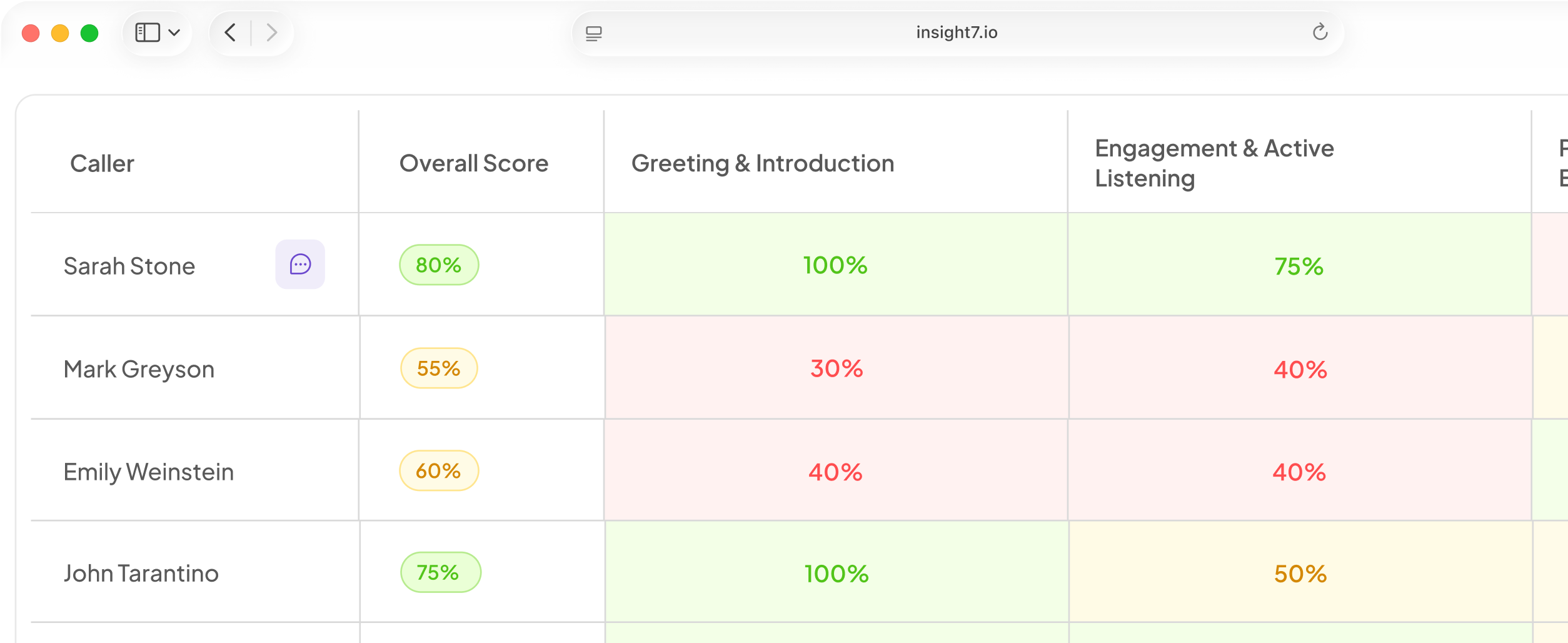
- Transcripts. A reviewer can read each transcript when the call ends. The campaign also gets a scorecard when it ends.
Change one variable at a time. Time of day and the number of redials move answer rates, so keep them equal across voices. Test call times too, because mornings and evenings often answer better than midday. Use the same kind of number for every voice, since local numbers are more likely to be answered.
Set your pass mark before you look at results. Small samples are noisy, so treat the pilot as a filter and repeat it with the winner.
Related reading: Multilingual AI Voice Agents Guide for Contact Centers Serving Customers in Several Languages and AI Voice Agent Test Call Checklist With 20 Things to Check Before Going Live.
Questions people also ask
Which accent should an AI voice have?
Use the accent your callers hear every day. If your audience spans several regions, start with a clear standard accent and test it against one local option. Avoid heavy imitations, because listeners tend to read them as fake.
Should an AI voice be male or female?
Pick the one that fits your audience and your human reps, then test both with real listeners. Keep the same gender when a call moves to a person.
What tone works best for an AI voice on sales calls?
Warm, brief and clear. Cold-outreach callers decide in seconds, so the first line should say who is calling and why. Keep a medium pace and avoid a pushy voice.
Do you have to tell customers a voice is AI?
Often yes. The EU requires it from the first interaction. In the US, AI-voice calls need consent, and more states are adding disclosure rules. Say it in your opening line anyway, and check local rules with counsel.
How do you test an AI voice before launch?
Move in three stages: browser chat, a test call to your own phone, then a small live pilot. Set a pass mark first. In the browser stage, interrupt the agent and stay silent to check recovery.
Can an AI voice speak local languages like Yoruba, Igbo or Pidgin?
In Insight7, Yoruba and Igbo campaigns run on Insight7 Voice, and Nigerian Pidgin is available too, all in beta. Training personas can also speak Hausa. Have a native speaker review every script.
How do you make an AI voice sound less robotic?
Write for the ear. Use your reps' own words, short sentences and a pause after each question. Buyers fear scripted voices, so remove anything your reps would never say.
Keep the voice callers stay for
The best voice is the one callers keep listening to, and a small live test shows which one that is. In Insight7's beta, you can try a campaign's agent in the browser first. Which voice would your callers stay on the line for?