
A multilingual AI voice agent is a phone agent that understands and speaks more than one language, and follows the caller when they switch. Plan by caller language and test each one on its own. Don't treat it as "English plus extras."
Map your languages from real call data
Rank your languages by call share, not by guess. Pull three months of recordings, transcribe them, and tag each call with its main language. Then count calls and minutes per language, by call type and by hour. A collections lead at a 200-agent lender may find that a second language is a small share of calls but a large share of the night shift.
Then check coverage in three layers. Each one can be strong in one language and weak in another.
- Hearing: speech recognition turns audio into text. In a 2020 Stanford-led study, five commercial recognisers made nearly twice as many errors for one group of speakers as another, even on the same words.
- Understanding: the model reads the text and picks a reply.
- Speaking: the voice says the reply.
Test all three for every language on your list.
Accent is part of the voice layer, and a fake accent costs trust. A CX manager at a mobility business had tried another vendor's voice with an exaggerated regional accent. She stopped recommending it and tested our accent quality live on the call. Staff feel the same way. They tune out training voiced in foreign accents.
For languages outside any vendor's published list, ask the vendor to run your own call samples through the agent before you commit.
Decide how the agent handles a language switch
Pick one of three designs, then test it. You can ask the caller up front ("English, Yoruba or Pidgin?"). You can detect the language from the first words. Or you can follow a switch mid-call. Asking up front is the most reliable. Following a switch is the hardest.
Mid-call switching is hard for three reasons:
- The speech recogniser is often set to one language for the whole call.
- Short phrases give weak language ID. Google advises keeping the language list to the bare minimum, because fewer candidates make a correct pick more likely.
- Code-mixing, such as English words inside a Yoruba or Pidgin sentence, confuses both the recogniser and the model.
Detection also costs time. Microsoft's docs say initial latency is higher with language identification, so use it only where needed. Dead air on a phone line feels like a dropped call.
Set these in every campaign:
- the main language
- a short list of allowed languages
- a fallback line that offers a choice ("I can continue in English or Igbo")
- a handover to a human after two failed tries
In a Gartner survey, 87% of 3,566 customers said a company using GenAI for service must offer a way to reach a human.
Say it is AI, in every language. Write the disclosure line in each language and test it. The rules differ by region:
- EU: AI Act Article 50 has applied since 2 Aug 2026. Any AI that talks to people, including phone systems, must say it is AI from the first interaction.
- US: AI-voice calls need consent under the TCPA, per the FCC's 2024 ruling.
- Colorado: public-facing conversational AI must disclose it from 1 Jan 2027.
Ask any vendor to switch languages live on a call you choose.
Test every language before go-live
Build a separate test plan for each language, and don't let a pass in English cover the rest. Book a few native speakers and have each make 20 to 30 scripted calls. Cover these cases:
- Names, phone numbers, amounts and dates, because these are the facts that break.
- An angry caller who talks fast.
- A noisy room or a bad line.
- A switch to another language mid-call.
- A question the agent cannot answer.
Set pass marks before the first call. Track four numbers per language:
- the share of key facts understood
- replies in the wrong language
- handover rate
- call length
Without these, "it sounded fine" becomes the verdict. Gartner looked at 432 AI customer-service use cases. Only a quarter showed positive ROI, and 42% could not be measured. So pick the measures per language now, or you will not be able to prove it worked later.
Start with the browser test, which needs no phone number. It is in beta, and it lets a tester talk to a campaign's agent in minutes. Then use the test call to your own phone, which is part of the campaign setup. Phone audio is compressed and noisy, and the browser hides that.
Let the callers judge "natural enough." A team at a digital lender made a live test call and said he could tell it was AI. He still understood the agent and was understood. Count understanding first, and treat the "sounds like a bot" feeling as a smaller issue.
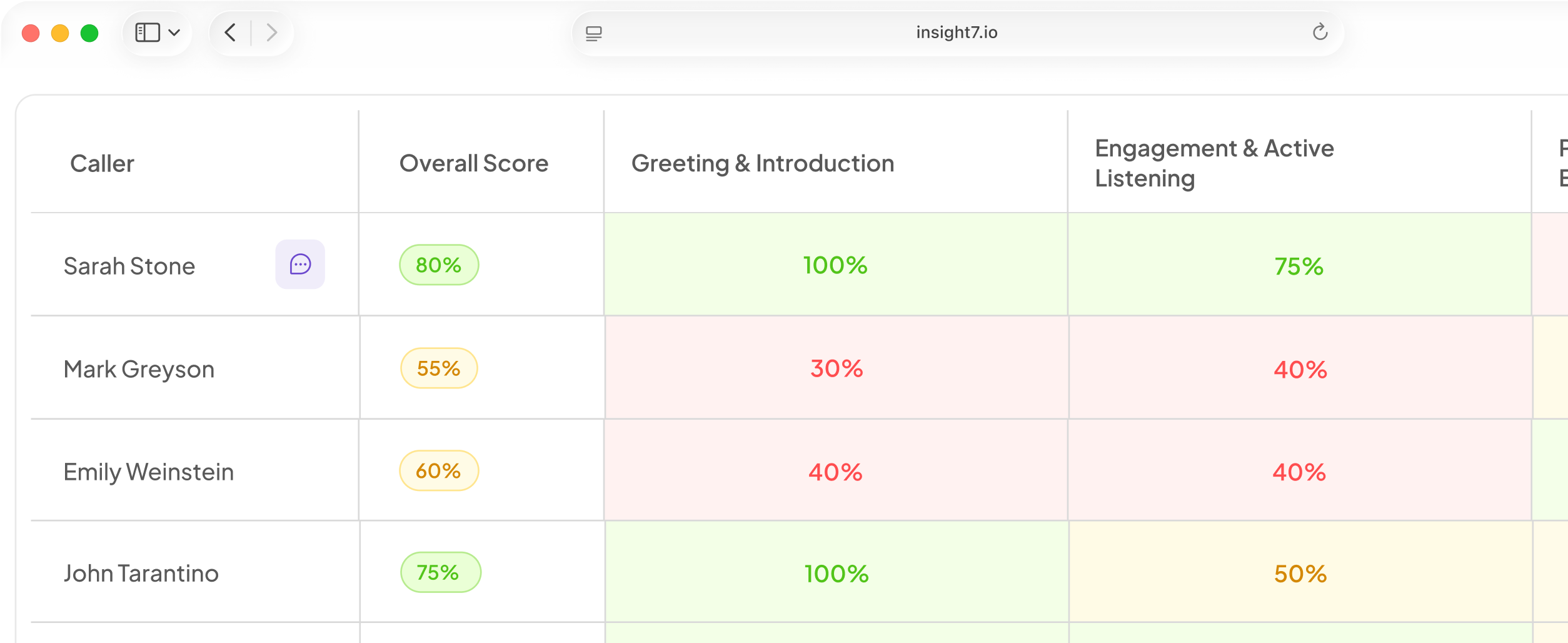
After launch, score every real call, not a sample. Insight7 scores calls against a weighted scorecard your team owns. Starter rubrics on the Criteria screen give you a first scorecard to adapt. The Pro plan lists transcription in 60+ languages. Make one critical error, such as a wrong amount read out, fail the whole call. A call can be perfect on procedure and still leave the customer angry.
Plan staffing around language, not headcount
Count the shifts where nobody speaks a caller's language, and fix those first. Bilingual agents are hard to hire, and some centres need agents who speak two local languages. Ask what happens when no one on shift speaks the caller's language.
AI changes the roster at the edges. It can take the first line and after-hours calls in languages that are hard to hire for. Humans keep the sensitive, disputed and complex calls. Buyers raise this handover on their own. They ask if it is polite, what happens to a disputed amount, and whether anyone chases a missed handover.
Design the handover before launch:
- Use a warm transfer to a human who speaks that language, with the transcript passed on.
- Use a callback queue out of hours, so no after-hours caller is lost.
- Give every handed-over call a named owner.
Roles shift too. Add a QA reviewer for each language. Add a language lead who owns scripts and word lists. Plan first-line agents around the calls the AI does not cover.
Support your remaining humans. Live Assist coaches an agent during a live call from a playbook the manager sets. Roleplay personas can speak Yoruba, Igbo or Hausa, so agents practise in the caller's language.
Our advice is to start with outbound in one or two languages before inbound. Gartner found customer-service AI spending rose 38% while overall service budgets rose 2%. Leaders are spending fast, so show per-language results early.
Run a small pilot and review by language
Pilot one language and one call type on a small sample, and pay more only after you see a measured result. Banks ask for this. They won't pay to find out whether it works. Use your pass marks from the test plan.
Each week, read the weakest calls in that language and fix the script. Alerts can watch for keywords and low scores, and send a weekly digest of the weakest calls by email or Slack.
On the product side, Insight7 Voice campaigns can run in Yoruba and Igbo, in beta, and the manager picks the language before the voice. Its call scoring evaluates 100% of conversations instead of a 2% manual sample, and managers can review and override AI ratings. See the AI call scoring page.
Set an exit rule. If a language falls below its pass mark, route that language back to humans until the fix is tested.
Related reading: AI Voice Agent Test Call Checklist With 20 Things to Check Before Going Live and How to Choose an AI Voice for Your Brand Based on Accent, Gender and Tone.
Questions people also ask
How many languages can an AI voice agent support?
The number matters less than the depth. A vendor may list dozens of languages but be strong in only a few. Ask for a demo in each language you need, on your own call samples.
Can an AI voice agent switch languages in the middle of a call?
Some can, but it is the hardest design. Ask the vendor to switch live, using a sentence that mixes two languages. If it stumbles, have the agent offer a language choice.
How do you test a multilingual AI voice agent?
Run 20 to 30 scripted calls per language with native speakers. Try the browser test first, which needs no phone number. Log each failure by type, such as a misheard amount or a wrong-language reply. Fix the script, then retest.
Will multilingual AI voice agents replace bilingual call center agents?
No. They cover the first line and after-hours calls in languages that are hard to hire for. Buyers raise the handover themselves, and humans keep the sensitive and disputed calls.
Do AI voice agents understand accents and dialects?
Accuracy varies by accent and dialect, and a voice that exaggerates a regional accent loses trust. Buyers ask for local accents and native languages. Have native speakers from your callers' region test the agent before launch.
Do I have to tell callers they are speaking to AI in every language?
Plan to, yes. In the EU, Article 50 requires AI that talks to people to say so from the first interaction. Colorado adds a disclosure rule from 1 Jan 2027. Write and test the line in each language.
How do you measure call quality across languages?
Score every call against a weighted scorecard your team owns. Scores roll up to the person, the project and the organisation, so one project per language gives you a view by language.
Set a pass mark for every language
Each language needs its own pass mark and human fallback. Before you start, ask a native speaker to call the agent in every language on your list and count the failures.