6 Best Sales Coaching Software Tools for Sales Teams in 2026

Sales managers cannot coach what they cannot consistently see. When only a fraction of sales calls are reviewed, skill gaps remain hidden, and feedback often arrives after the deal has moved forward.

Sales coaching software helps close that visibility and development gap, although each platform approaches it differently. The right choice depends on how your team sells and where its coaching process needs more support.

This guide compares the six best sales coaching software platforms, each representing a distinct approach.

Get a demo with Insight7 today and start building a sales team that consistently closes deals with confidence!

TL;DR

These are the six best sales coaching software platforms for sales teams in 2026:

  1. Insight7: Best for AI sales coaching
  2. Gong: Best for conversation-based coaching
  3. Mindtickle: Best for structured sales training
  4. Allego: Best for video and peer coaching
  5. Ambition: Best for manager-led coaching
  6. Highspot: Best for sales guidance and coaching

Why You Should Invest in Sales Coaching Software

Sales coaching software helps managers evaluate how reps perform and turn those findings into focused development. Depending on the platform, it may analyze sales calls, guide reps during live conversations, or help organize manager-led coaching.

Its ultimate goal is to give sales teams a consistent way to identify skill gaps and track improvement.

That matters because sales coaching software makes it easier to bring performance data and coaching activities into one place, giving managers a structured foundation for building a more consistent coaching process.

The Impact of Sales Coaching Software

According to Korn Ferry’s 2026 Sales Performance Research, organizations with strong coaching processes achieved 14% higher quota attainment and 15% higher win rates, while also reporting nearly 20% lower voluntary turnover.

Building and maintaining that level of coaching, however, requires time and visibility that many managers simply do not have. This is where sales coaching software becomes valuable.

It helps managers organize performance data, identify coachable moments faster, and spend more time delivering high-quality coaching instead of manually piecing together key insights.

6 Best Sales Coaching Software Tools in 2026

Here’s a quick breakdown of the six best sales coaching software solutions in 2026.

SoftwareBest forOverviewProsConsPricing
Insight7AI sales coachingCall intelligence and coaching platform that uses real sales conversations to identify skill gaps and support ongoing rep development.
  • Coaching based on actual rep performance
  • Practice before calls and guidance during calls
  • Less manual post-call analysis
  • AI findings still require human review
  • Advanced analysis is limited to higher plans
  • Free: $0/month
  • Pro: $99/month or $83/month annually
  • Business: $299/month or $250/month annually
  • Enterprise: Custom pricing
GongConversation-based coachingRevenue intelligence platform that captures customer interactions and connects conversation analysis with deal visibility.
  • Coaching grounded in real conversations
  • Less manual note-taking
  • Coaching linked to pipeline performance
  • Steeper learning curve
  • AI outputs need verification
  • Large insight volume requires prioritization
Custom pricing with a per-user license and platform fee
MindtickleStructured sales trainingRevenue enablement platform centered on readiness, structured learning, and formal development programs.
  • Supports structured coaching program
  • Makes readiness measurable
  • Connects training with coaching
  • Better suited to larger enablement programs
  • Advanced reporting takes time to master
Custom pricing
AllegoVideo and peer coachingRevenue enablement platform that combines learning with video practice and shared feedback.
  • Video-based coaching is easy to share
  • Peer knowledge becomes reusable training material
  • Well suited to distributed teams
  • Limited video editing options
  • Large content libraries are harder to organize
Per-user monthly pricing billed annually; final cost depends on seats and contract length
AmbitionManager-led coachingRevenue execution platform that combines performance data with recurring one-on-one coaching.
  • Repeatable coaching structure
  • Performance data guides each session
  • Progress stays visible between meetings
  • Results depend on connected CRM data
  • Some workflows are less intuitive
  • Starter: $45/user/month
  • Pro: $65/user/month
  • Enterprise: $75/user/monthAI add-ons cost extra
HighspotSales guidance and coachingSales enablement platform that combines content and training with guidance during active deals.
  • Guidance appears within the sales workflow
  • Coaching draws from multiple performance signals
  • Content and training stay aligned
  • Limited content organization options
  • Learning tools are less flexible than dedicated LMS platforms
Custom pricing based on capabilities and license count

1. Insight7 — Best for AI Sales Coaching

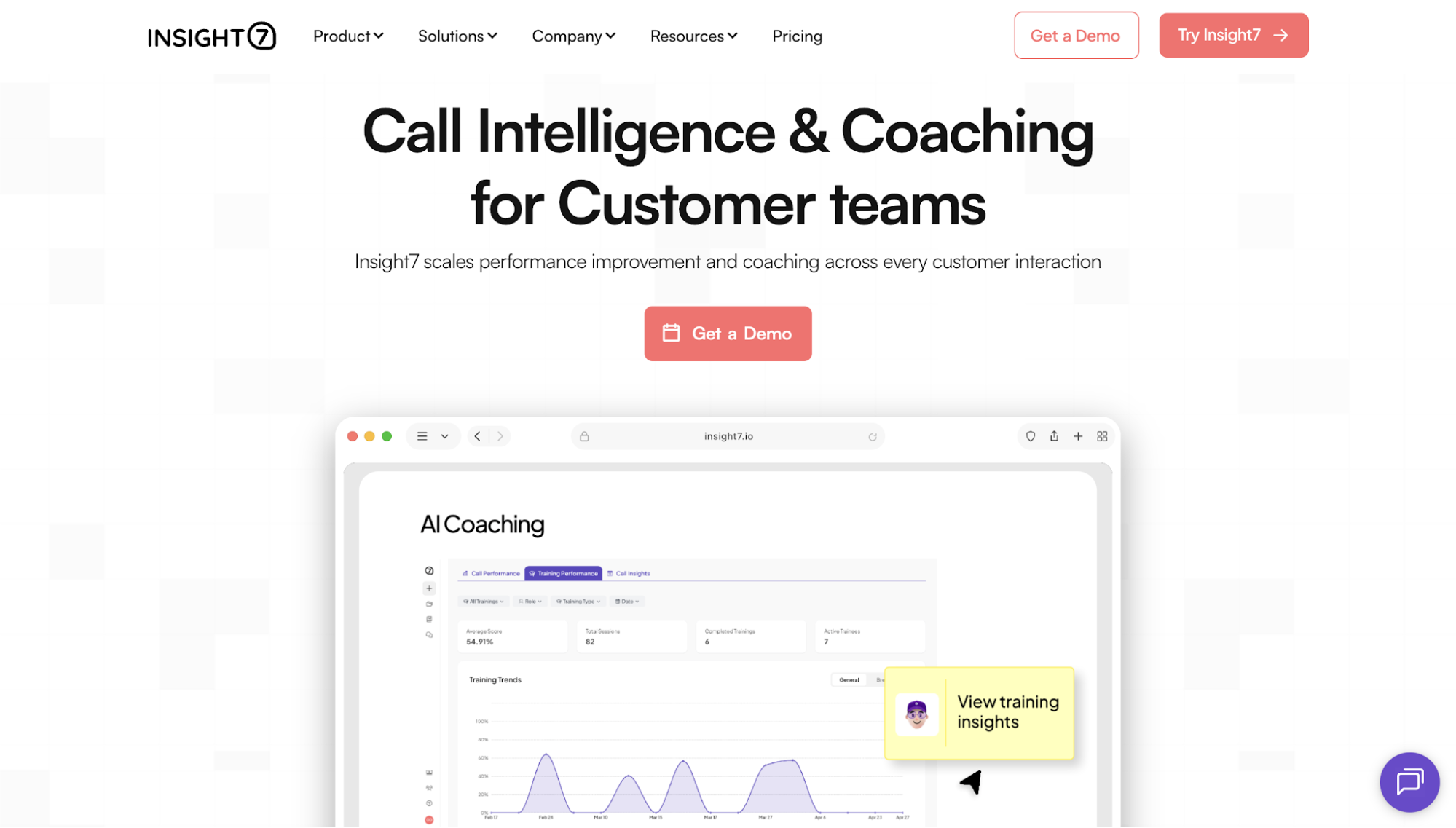
Insight7 is a call intelligence and coaching platform built for customer-facing teams. Using AI, Insight7 turns sales interactions into performance insights that leaders use for coaching.

The platform also connects call scoring with personalized coaching so managers can identify skill gaps from real conversations and turn those findings into focused development.

Sales reps can then practice those sales skills through AI roleplay and receive live coaching during calls, creating a more continuous coaching process.

Key Features

  • AI call scoring: Evaluates every sales conversation against custom criteria to give leaders a consistent view of rep performance.
  • AI coaching: Delivers personalized feedback based on patterns found in each rep’s calls.
  • AI roleplay: Lets reps practice realistic sales scenarios and receive instant feedback before speaking with customers.
  • Live assist: Provides real-time coaching and next-step prompts during live calls.
  • AI knowledge base: Surfaces answers from company resources without forcing reps to search through several tools.
  • Revenue intelligence: Identifies objections and missed opportunities from customer conversations.
  • System integrations: Connects with platforms such as Zoom and Microsoft Teams, along with more than 50 other tools.

Pros

  • Coaching starts with actual rep performance: Insight7 connects feedback to real sales conversations, giving managers a clearer basis for deciding where each rep needs support.
  • Development continues before and during calls: AI roleplay supports practice before a conversation, while Live Assist provides guidance as the call happens.
  • Post-call analysis takes less manual effort: Automated scoring and summaries reduce the time managers spend reviewing conversations before coaching begins.

Cons

  • AI findings still need human review: Automated analysis is not flawless, so managers still need to check important findings before using them for coaching decisions.
  • Advanced analysis sits behind higher plans: The lower-priced plans limit call volume and project analysis, while features such as advanced dashboards are available from the Business plan upward.

Pricing

Insight7 offers the following pricing plans:

  • Free: $0 per month for one user, with three call or transcript analyses.
  • Pro: $99 per month. It includes 50 analyses and four projects.
  • Business: $299 per month. It includes 200 analyses and three users.
  • Enterprise: Custom pricing with unlimited users and unlimited call analysis.

Try Insight7 today and use real sales conversations to help your reps drive better sales results!
2. Gong — Best for Conversation-Based Coaching

Gong

Image source: gong.io


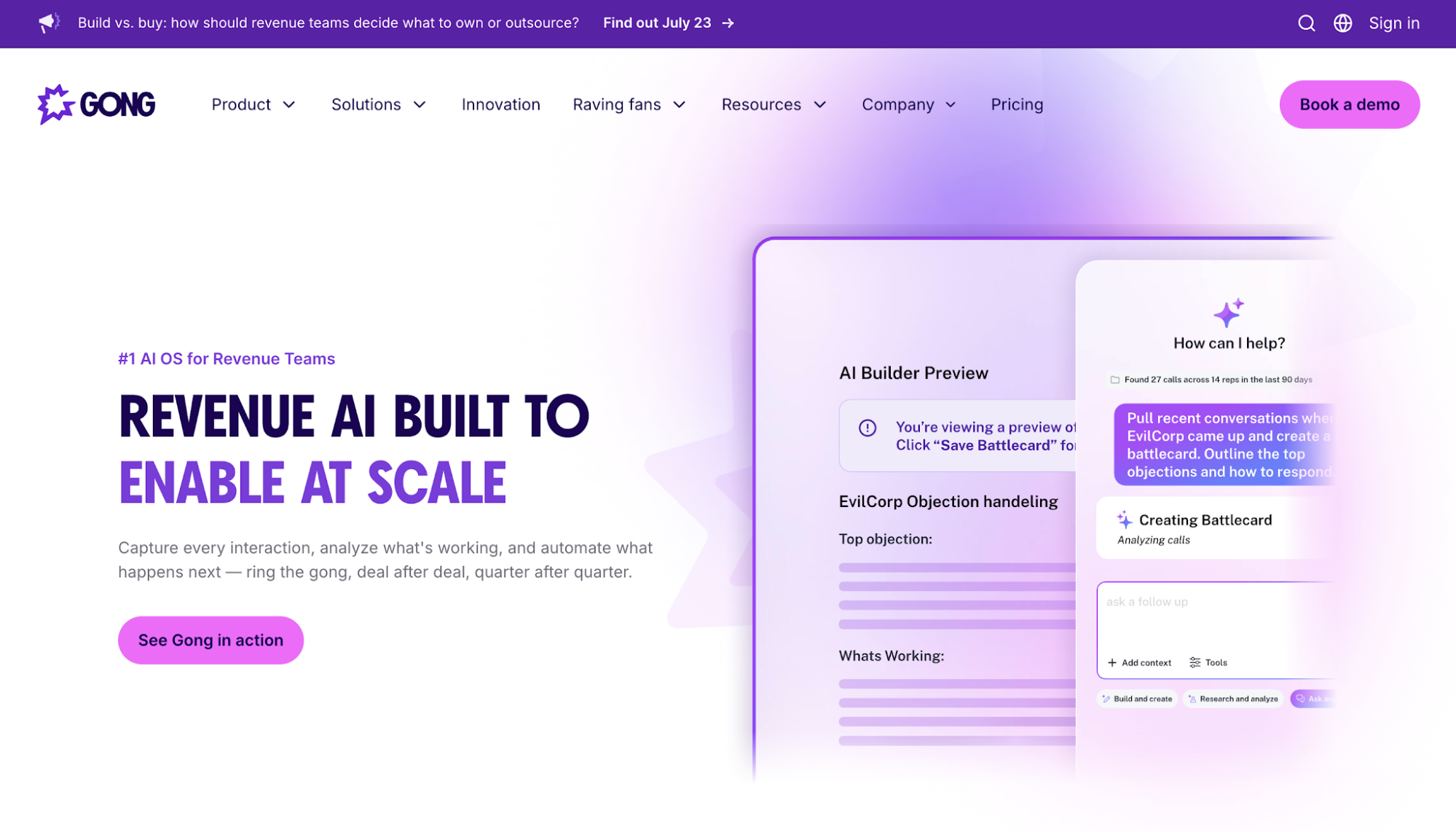
Gong is a revenue intelligence platform built for sales teams and other revenue functions. It captures customer interactions and analyzes sales activity so leaders can see what is happening in deals and how reps are performing.

Beyond forecasting and sales engagement, Gong also supports coaching through its enablement tools. Managers can review real conversations and spot patterns that point to where reps need more support.

Key Features

  • Conversation intelligence: Captures customer interactions and analyzes call patterns such as talk-to-listen ratios.
  • Gong Enable: Helps managers identify skill gaps and deliver coaching based on real conversations.
  • Gong Engage: Supports sales engagement workflows and prospect communication.
  • Gong Forecast: Gives revenue leaders visibility into pipeline health and forecast risk.
  • Gong Revenue Graph: Connects customer interactions with account context and revenue activity.
  • Gong Agents: Uses AI agents to support revenue workflows and surface relevant actions.
  • Gong Collective: Connects Gong with the rest of a company’s technology stack through its partner ecosystem.

Pros

  • Coaching is grounded in real sales conversations: Managers review actual customer interactions instead of relying on self-reported updates, making coaching more specific and evidence-based.
  • AI reduces administrative work: Automatic call recording and AI-generated summaries reduce manual note-taking, giving managers more time to focus on coaching.
  • Coaching connects with revenue performance: Gong combines coaching with pipeline management and forecasting, helping sales leaders relate rep behaviors to deal outcomes.

Cons

  • The platform has a steeper learning curve: Gong offers a broad set of revenue intelligence capabilities, so teams often need time to become proficient with the platform.
  • AI-generated outputs still need verification: Transcriptions and summaries occasionally require manager review, particularly when conversations include technical terminology or industry-specific language.
  • The volume of insights requires prioritization: Gong surfaces a large amount of coaching and deal data, making it important for teams to establish clear coaching priorities to avoid information overload.

Pricing

Gong doesn’t disclose its pricing publicly.
3. Mindtickle — Best for Structured Sales Training

Mindtickle

Image source: mindtickle.com

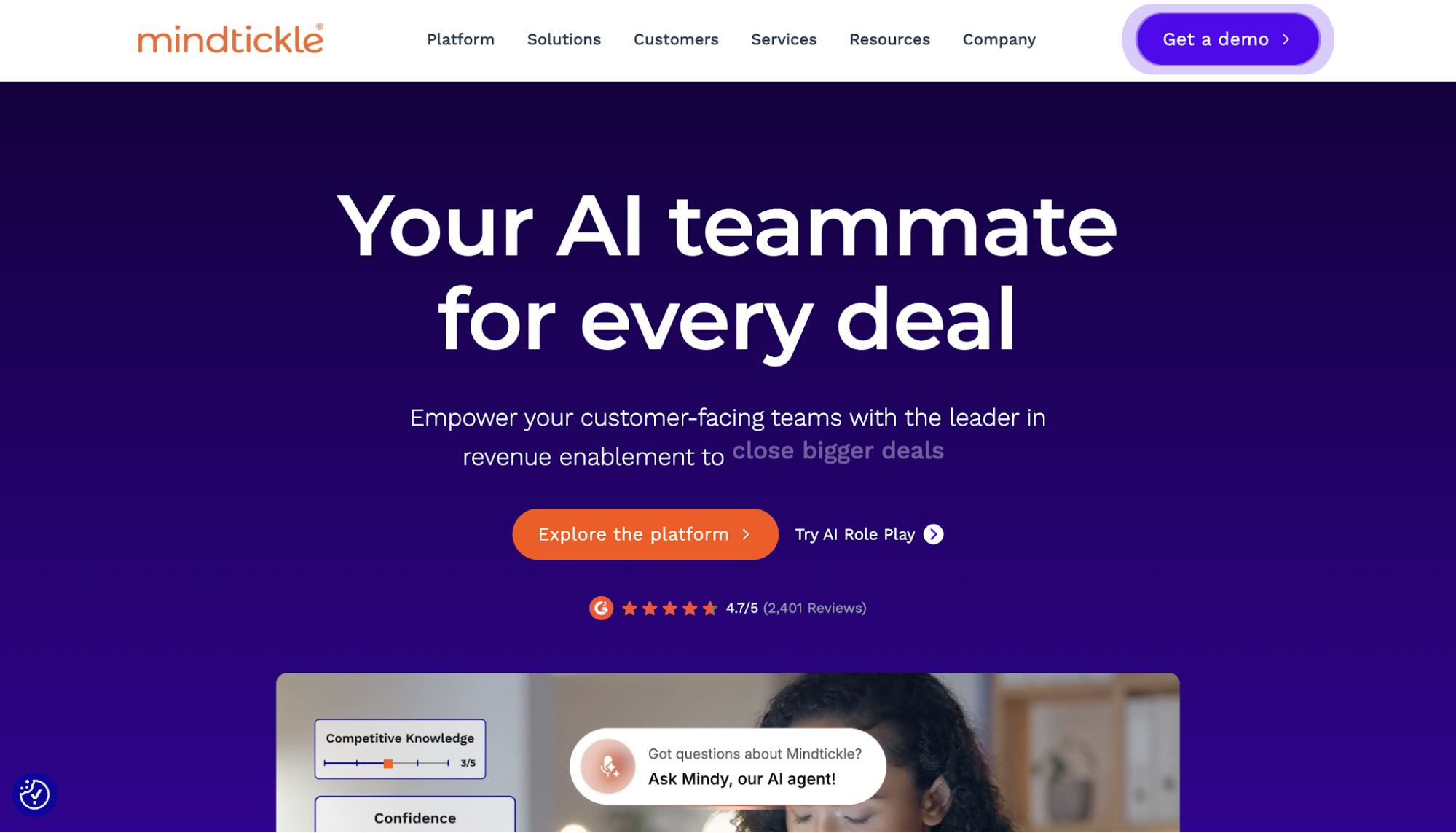
Mindtickle is a revenue enablement platform designed to help sales organizations improve rep readiness and performance. It brings training, coaching, and analytics into one platform so revenue teams can build more consistent development programs.

The platform places a strong emphasis on structured learning through customizable training programs, skill assessments, and readiness tracking. This approach suits organizations that want a more formal system for onboarding reps and supporting ongoing development.

Key Features

  • Revenue enablement: Combines training, coaching, and readiness programs into a single platform.
  • Sales readiness: Helps managers assess rep knowledge and measure readiness before customer interactions.
  • Sales ccoaching: Supports structured coaching programs with guided feedback and skill development.
  • Sales enablement analytics: Tracks learning progress and coaching effectiveness through performance analytics.
  • Integrations: Connects Mindtickle with CRM, LMS, communication, and productivity tools.
  • Security: Provides enterprise-grade security and compliance for customer data.

Pros

  • Built for structured coaching programs: Mindtickle helps organizations standardize onboarding, training, and ongoing coaching through structured learning paths.
  • Readiness is measurable: Managers can assess rep knowledge and track progress before moving them into customer-facing conversations.
  • Training and coaching work together: Learning activities, coaching programs, and analytics are integrated into a single platform to support continuous development.

Cons

  • Designed for larger enablement programs: Organizations without dedicated sales enablement teams may not use the platform to its full potential.
  • Some reporting and customization have a learning curve: Advanced dashboards and program configuration can take time to master.

Pricing

Mindtickle doesn’t disclose its pricing publicly.
4. Allego — Best for Video and Peer Coaching

Allego

Image source: allego.com

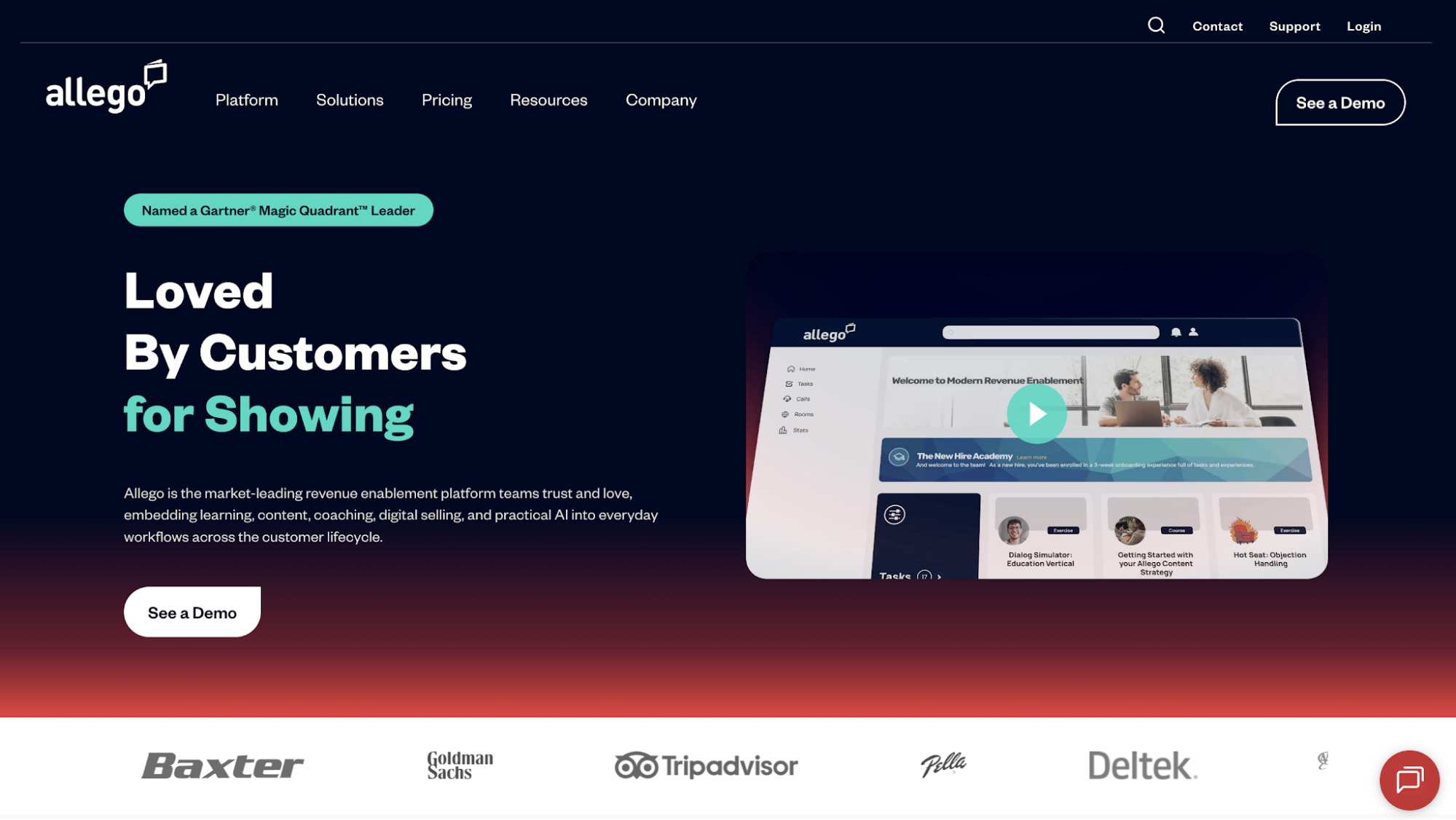
Allego is a revenue enablement platform for sales teams and other customer-facing functions. It brings learning and coaching into the same workspace as sales content and digital selling.

Its coaching approach places a clear emphasis on video practice and knowledge sharing. Reps record examples, exchange feedback, and learn from real conversations contributed by peers or managers.

Key Features

  • Modern learning: Delivers mobile-first training with reinforcement built into the rep’s daily workflow.
  • AI roleplay and coaching: Supports pitch practice through realistic selling scenarios with instant feedback.
  • Conversation Intelligence: Captures sales conversations and connects observed behaviors with coaching.
  • Content management: Organizes approved sales content and keeps current versions accessible to reps.
  • Digital sales rooms: Creates personalized spaces where sellers share content and coordinate next steps with buyers.
  • Integrations: Connects Allego with existing sales tools and business systems

Pros

  • Video-based coaching is easier to share: Reps record practice sessions or call examples, then receive feedback directly within the content. This supports peer-to-peer learning without requiring every coaching interaction to happen live.
  • Peer knowledge becomes part of the training program: Teams capture practical examples and effective talk tracks from experienced sellers, then distribute them when others need support. This helps turn individual expertise into reusable coaching material.
  • Learning fits distributed sales teams: Allego supports web and mobile access, while its training experience is designed for reps working in different locations. This suits organizations that need to deliver consistent coaching beyond scheduled classroom sessions.

Cons

  • Video editing options are limited: Creating polished coaching content may require another tool when teams need more advanced editing than Allego provides.
  • Large content libraries require close organization: As more employees create and upload material, keeping content easy to find becomes more demanding. Older call recordings may also take longer to retrieve.

Pricing

Allego doesn’t disclose its pricing publicly.
5. Ambition — Best for Manager-Led Coaching

Ambition

Image source: ambition.com

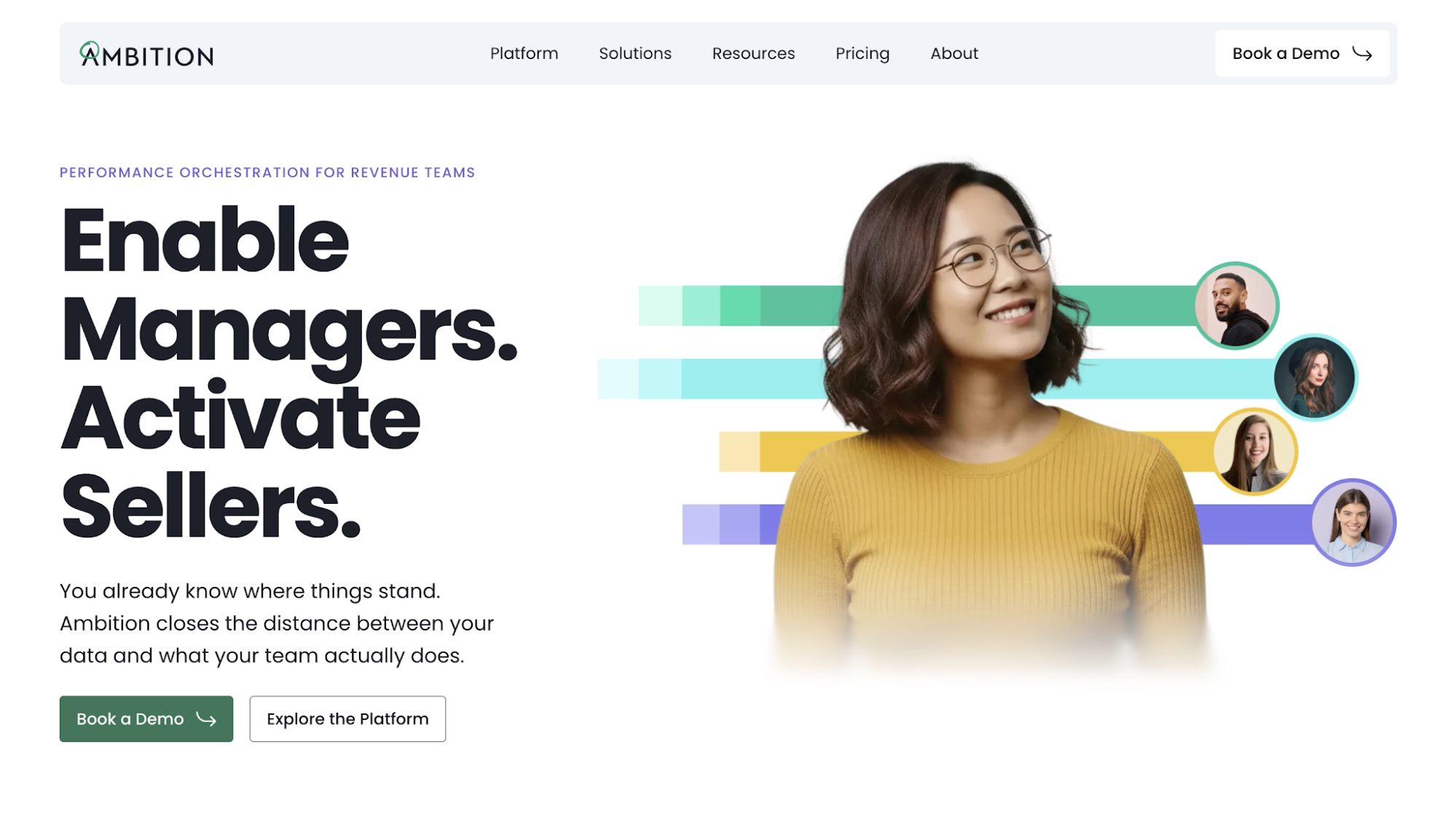
Ambition is a revenue execution platform built for sales leaders and frontline teams. It brings performance data and coaching into one system so organizations can track rep activity and reinforce the behaviors tied to revenue goals.

Its coaching model centers on structured manager-led development. Ambition supports recurring one-on-ones and documented coaching plans, while performance data gives each session a clearer starting point.

Key Features

  • Coaching orchestration: Organizes recurring coaching sessions and keeps development plans documented in one place.
  • Sales activation: Uses scorecards and competitions to help reps focus on the activities tied to their goals.
  • Performance intelligence: Connects coaching activity with performance data so leaders can see where support is needed.
  • Coaching analytics: Tracks program participation and links coaching efforts with changes in rep performance.
  • Real-time performance tracking: Shows progress against individual goals and team targets as sales activity is recorded.
  • Integrations: Pulls data from CRM and sales tools into dashboards or coaching workflows.

Pros

  • Coaching follows a repeatable structure: Recurring sessions and shared documentation help managers maintain consistent one-on-ones instead of relying on informal check-ins.
  • Performance data informs each session: Scorecards and activity trends give managers specific areas to address during coaching.
  • Progress remains visible between meetings: Reps and managers can track goals in real time, which keeps coaching tied to daily execution.

Cons

  • Results depend heavily on connected data: Incomplete or delayed CRM data affects the accuracy of scorecards and performance insights.
  • Some workflows feel less intuitive: Creating challenges or individual goals takes more navigation than routine performance tracking.

Pricing

Ambition offers three plans:

  1. Starter – Seller Activation: $45 per user each month.
  2. Pro – Coaching Orchestration: $65 per user each month.
  3. Enterprise – Revenue Execution System: $75 per user each month.

AI Insights costs an additional $5 per user each month. AI Actions costs another $4 per user each month. Extra AI credits are available separately
6. Highspot — Best for Sales Guidance and Coaching

Highspot

Image source: highspot.com

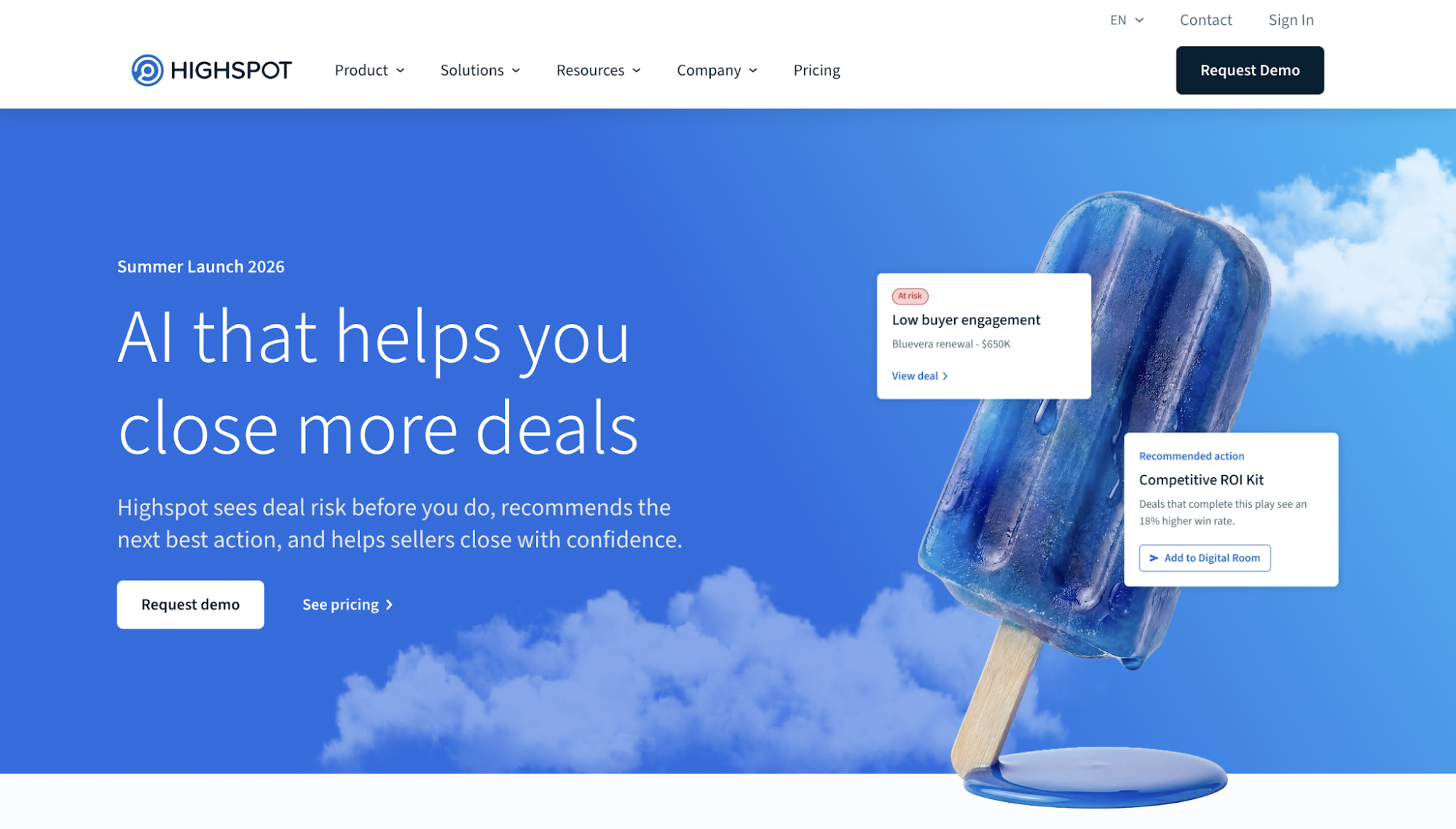
Highspot is a sales enablement platform built for go-to-market teams. It brings sales content and training into one system, while giving teams guidance during active deals.

Its coaching approach connects rep development with everyday sales activity. Highspot uses signals from training and customer interactions to identify skill gaps, then gives reps feedback and next-step guidance.

Key Features

  • Sales content management: Organizes approved content and helps reps find materials for each selling situation.
  • Sales training: Delivers role-based learning and assessments within existing sales workflows.
  • Sales coaching: Evaluates seller skills and gives managers clearer areas to address during coaching.
  • Sales plays and playbooks: Guides reps through defined sales motions with relevant content and recommended actions.
  • Buyer engagement: Supports personalized digital rooms where sellers share materials and coordinate with buyers.
  • Deal guidance: Uses buyer signals and CRM data to recommend next steps for active opportunities.
  • Analytics: Measures content use and seller behavior, then connects those findings with sales outcomes.

Pros

  • Guidance appears within the sales workflow: Reps receive recommended content and next steps while working on active opportunities. This reduces the need to switch between separate training and deal-management systems.
  • Coaching draws from several performance signals: Highspot connects skill assessments with calls and buyer engagement. Managers get a broader view of where each rep needs support.
  • Content and training stay connected: Enablement teams manage approved resources alongside learning programs. This helps keep coaching aligned with current sales messaging.

Cons

  • Limited content organization options: Highspot’s library becomes harder to manage as content volume grows, especially when teams need more control over how materials are grouped and surfaced.
  • Learning tools are less flexible than dedicated LMS platforms: Highspot includes training and coaching capabilities, but organizations with complex certification or learning requirements may find them less robust than specialized learning platforms.

Pricing

Highspot doesn’t disclose its pricing publicly.

How to Choose the Right Sales Coaching Software

Now that you know your options, the next step is understanding what separates one sales coaching platform from another. While many solutions share similar features, the way they support coaching, measure progress, and fit into your existing sales process can vary significantly.

Personalized Feedback

Not every sales rep needs the same coaching. One rep might need help improving discovery calls, while another struggles with objection handling or moving deals forward. Giving everyone the same feedback often results in slower improvement because it doesn’t address individual performance gaps.

Personalized feedback helps managers coach reps on the skills they need to develop. When comparing sales coaching software, look for a platform that tailors coaching recommendations to individual performance instead of applying the same feedback across the team.

Conversation Intelligence

Sales coaching is most effective when it’s based on actual customer conversations instead of relying on assumptions or memory. Conversation intelligence analyzes sales calls to identify patterns in how reps communicate, respond to objections, and guide buyers through the sales cycle.

Without this level of visibility, managers often coach based on a limited number of calls or anecdotal feedback. Look for software that analyzes customer conversations and turns those insights into clear coaching opportunities.

Practice and Roleplay

Feedback alone rarely changes performance. Reps also need opportunities to apply what they’ve learned before they face the same situation with a customer.

Practice and roleplay give sales teams structured training that reinforces new skills in a low-risk environment. When evaluating sales coaching software, consider whether the platform supports realistic practice scenarios that help reps build confidence before live conversations.

Continuous Coaching

Sales coaching isn’t a one-time event. Rep performance changes over time as products evolve, buyer expectations shift, and new challenges emerge. Coaching should keep pace with those changes instead of ending after a single session.

Platforms that support continuous coaching make progress tracking easier and reinforce improvements over time. Look for software that helps managers track coaching activities and measure whether feedback improves performance.

Integrations

Sales coaching works best when it’s part of the tools your team already uses every day, especially for inside sales teams that rely on CRM systems and conversation platforms throughout the sales process.

If coaching lives in a separate system, managers spend more time moving between platforms and less time developing their teams.

Strong integrations keep customer conversations, CRM data, and coaching activities connected in one workflow. When comparing platforms, look for software that integrates naturally with your existing sales technology stack so you won’t have to make major changes to your workflow.

Reporting and Analytics

Coaching becomes much more effective when managers can measure what is improving and what still needs attention. Reporting and analytics help teams identify trends in team performance and prioritize where additional support is needed.

Without meaningful reporting, it’s difficult to know whether your coaching investment is producing measurable results. Look for software that provides clear data-driven insights and tracks coaching outcomes over time.
Build a Higher-Performing Sales Team With Insight7

Insight7 analytics

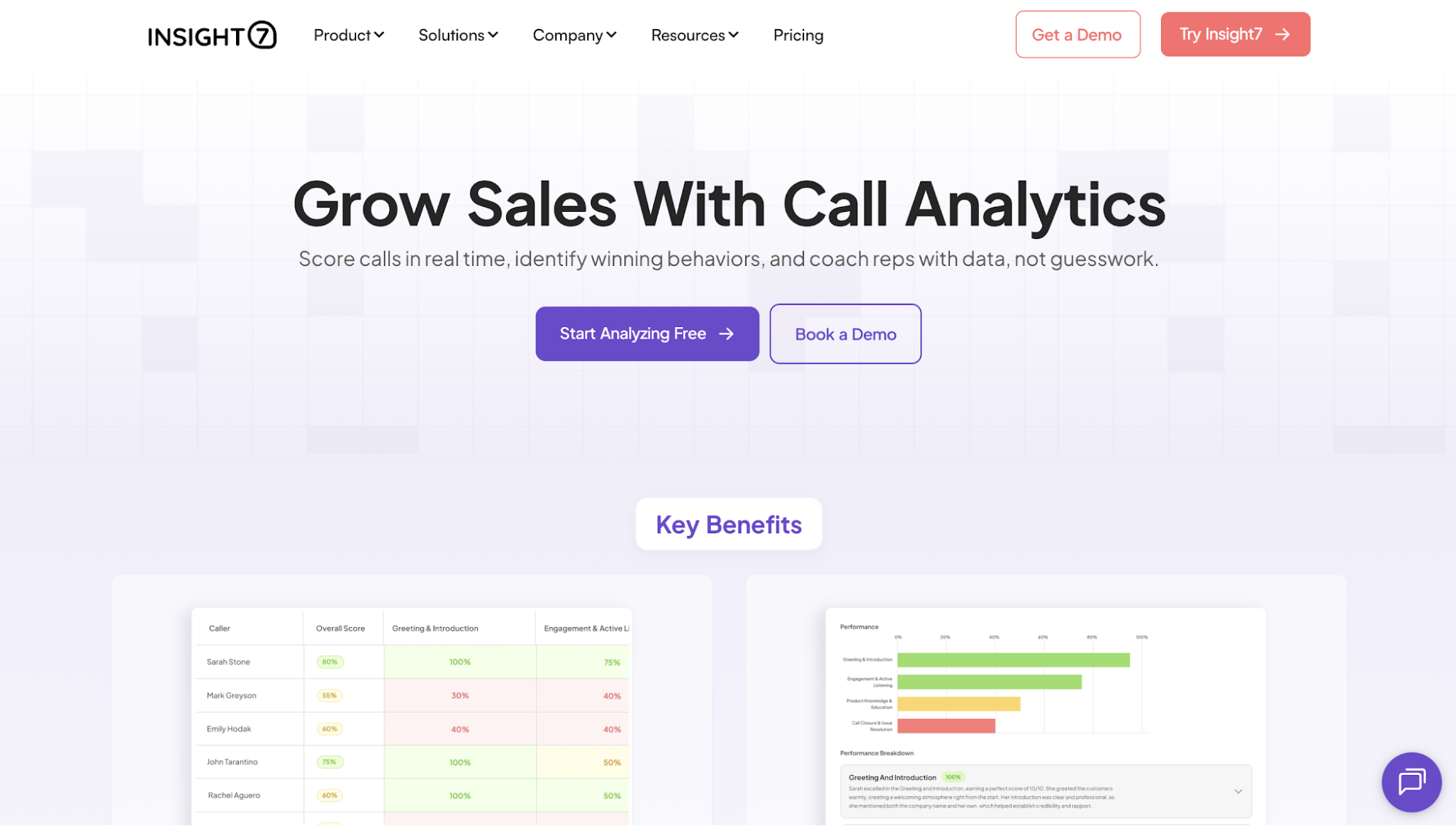
Choosing the right sales coaching software isn’t just about finding the platform with the most features. It’s about investing in a system that helps managers develop their reps consistently and gives every salesperson the support they need to improve over time.

Insight7 is built around that goal, helping mid-market teams make coaching part of everyday sales performance so every customer conversation becomes another opportunity to learn, improve, and sell more effectively.

Revenue growth should not depend on a few strong quarters or the instincts of a small number of top reps. With the right coaching and guidance, selling becomes a skill that the whole team can keep practicing and improving.

Schedule a demo with Insight7 today and build a sales team that improves with every customer conversation!

FAQs About Sales Coaching Software

What is AI sales coaching software?

AI sales coaching software uses artificial intelligence to analyze sales conversations, identify performance patterns, and provide coaching recommendations. It helps managers deliver more personalized feedback while reducing the time spent reviewing calls manually.

How does call coaching help sales reps improve?

Call coaching helps sales reps improve by reviewing real customer conversations and identifying specific areas for development. Managers can use those insights to reinforce effective selling behaviors, address skill gaps, and improve future sales conversations.

How do coaching insights help sales managers coach more effectively?

Coaching insights highlight patterns in rep performance that might otherwise go unnoticed. They help managers focus on the skills that need the most attention, making coaching sessions more targeted and productive.

What should sales teams look for in coaching tools?

Sales teams should look for coaching tools that provide personalized feedback, analyze real sales conversations, support practice through roleplay or training, track coaching progress, and integrate with the tools they already use.

Webinar on Sep 26: How VOC Reveals Opportunities NPS Misses
Learn how Voice of the Customer (VOC) analysis goes beyond NPS to reveal hidden opportunities, unmet needs, and risks—helping you drive smarter decisions and stronger customer loyalty.