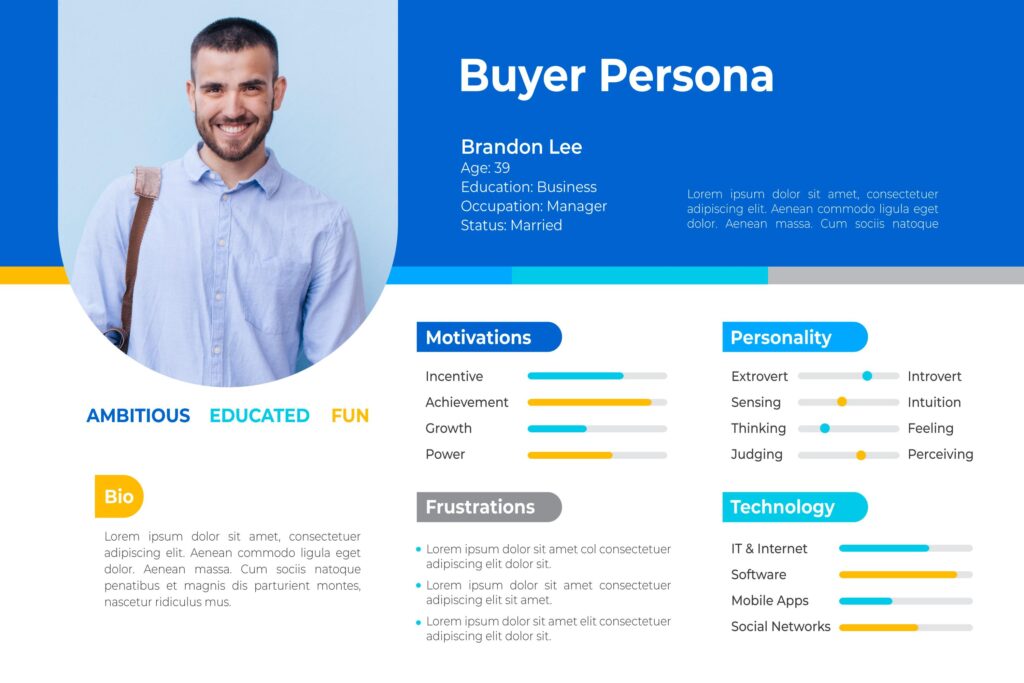
Top 5 AI User Persona Generator with Templates
In the rapidly evolving landscape of digital marketing and product management, understanding your audience is more crucial than ever. With the rise of artificial intelligence (AI), the creation of user personas has become a sophisticated process that can yield highly accurate and actionable insights. In this exploration, we delve into the top 5 AI user persona generators that come with templates, providing marketers and product managers with the tools they need to craft detailed profiles of their target customers. Furthermore, AI has revolutionized the way we approach market research and customer analysis. By leveraging machine learning algorithms and vast amounts of data, AI user persona generators can identify patterns and predict behaviors, giving businesses a competitive edge. These tools not only streamline the persona creation process but also enhance the accuracy of the personas, making them invaluable for strategic planning and tailored marketing campaigns. PersonaGen AI: This powerful tool utilizes advanced analytics to create comprehensive user personas. With a rich library of templates, PersonaGen AI allows users to quickly generate personas that include demographic information, behavioral traits, and psychographic insights. Its intuitive interface and customization options make it a favorite among product managers. AI Persona Creator: Known for its precision and depth, AI Persona Creator harnesses the power of big data to construct detailed user profiles. It offers a variety of templates that cater to different industries and user types, ensuring that every persona is relevant and specific to the business’s needs. InsightBot: InsightBot stands out with its ability to integrate with various data sources, including CRM systems and social media platforms. It generates dynamic user personas that reflect real-time customer interactions, providing a constantly updated view of the target audience. PersonaAI: This generator emphasizes the user experience, offering an easy-to-use platform with customizable templates. PersonaAI’s strength lies in its ability to translate complex data into clear, visual personas that can be easily understood and applied by marketing teams. DataPersona Suite: With a focus on B2B markets, DataPersona Suite offers specialized templates that address the unique challenges of B2B persona creation. Its AI-driven insights help identify key decision-makers and influencers within target organizations, making it an essential tool for B2B marketing strategies. Moreover, each of these AI user persona generators provides a unique set of features and benefits, but they all share a common goal: to create user personas that are not only data-driven but also human-centric. In essence, by understanding the motivations, needs, and behaviors of their target audience, businesses can design products and campaigns that truly resonate. Conclusion Ultimately, the use of AI in creating user personas is about more than just efficiency; it’s about crafting a deep, empathetic understanding of the people you aim to serve. Finally, with the right AI user persona generator, organizations can achieve a level of insight that informs every aspect of their product development and marketing efforts, setting the stage for success in an increasingly competitive marketplace.
How To Create User Personas for Product Management With AI
In the dynamic world of product management, understanding the user is pivotal to creating products that resonate and succeed in the market. As product managers, one of the most valuable tools at your disposal is the user persona, a semi-fictional character that represents your ideal customer. With advancements in artificial intelligence (AI), the process of creating user personas has evolved, becoming more insightful and efficient. In this article, we delve into the process of leveraging AI to craft user personas that can significantly enhance product management strategies. In the realm of product management, the creation of user personas is a strategic exercise that goes beyond mere demographic data. It involves a deep dive into the psychographics, behaviors, needs, and motivations of your target audience. By understanding who your users are, how they interact with your product, and why they seek solutions to their problems, you can tailor your product development to meet their expectations. The integration of AI in the process of creating user personas offers a myriad of benefits. AI tools can analyze vast amounts of data, identify patterns, and provide insights that might be missed by the human eye. This not only saves time but also adds a layer of precision to the persona creation process. Let’s explore how to create user personas for product management with AI in five simple steps. Step 1: Data Collection and Analysis The first step in creating a user persona with AI is to gather and analyze data. This includes demographic information, user behavior data, customer feedback, and social media interactions. AI tools can process this data quickly and identify key traits and trends among your users. Step 2: Segmenting the Audience Once the data is analyzed, AI can help segment the audience into distinct groups based on common characteristics. These segments form the basis of your user personas, with each representing a different part of your target market. Step 3: Persona Development Moreover, using the insights from the data analysis, you can begin to develop detailed user personas. AI can assist in this process by suggesting attributes, pain points, and goals that are common to each segment, ensuring that your personas are grounded in data. Step 4: Validation and Refinement Furthermore, after the initial personas are created, they should be validated with real users. Surveys, interviews, and user testing can provide feedback that AI can analyze to refine the personas further. In essence, this iterative process ensures that your user personas remain accurate and relevant. Step 5: Implementation and Monitoring Finally, the final step is to implement the user personas into your product management process. Use them to guide product development, marketing strategies, and customer support. With AI, you can continuously monitor user interactions and update personas as necessary to keep them aligned with changing user behaviors. Conclusion In conclusion, AI has transformed the art of user persona creation into a science, offering product managers a powerful tool to understand their audience. Furthermore, by following these steps, you can create detailed, data-driven user personas that will inform every aspect of your product management strategy, ultimately leading to products that truly meet the needs of your users. Remember, the goal is to deliver value to your customers, and by leveraging AI in creating user personas, you are well on your way to achieving that goal.
Top 10 B2B User Persona Templates For Product Managers
In the competitive landscape of B2B markets, understanding your customer is not just a part of the job for product managers—it’s the core of any successful product strategy. Crafting a product that resonates with your target audience requires a deep dive into who they are, what they need, and how they operate. This is where user personas come into play, serving as invaluable tools in the product development process. In this article, we’ll explore the top 10 user persona templates specifically designed to aid product managers in the B2B sector. Understanding User Personas in B2B A user persona is a semi-fictional character that represents a segment of your target market. In the B2B context, these personas are particularly important because they help product managers understand the various stakeholders within a client organization, each with their own unique set of challenges, goals, and decision-making processes. A well-crafted user persona provides a vivid, relatable profile that guides product development, marketing strategies, and sales pitches. The Value of Templates Templates serve as a starting point for creating user personas. They ensure consistency and comprehensiveness in the information gathered and presented. By using templates, product managers can quickly generate personas that are both detailed and aligned with the organization’s goals. Templates also facilitate sharing and collaboration among team members, ensuring that everyone is on the same page regarding customer insights. Top 10 User Persona Templates for Product Managers The Comprehensive AI-Generated Template: This template leverages artificial intelligence to pull in data from various sources and generate a detailed persona. It includes demographic information, behavioral patterns, and even predictive insights into future needs. The Role-Based Template: Tailored for the B2B market, this template focuses on the different roles within a client organization. It helps product managers understand the specific needs and pain points of each role, from executives to end-users. The Goal-Oriented Template: Centered around the objectives and key results (OKRs) of your target persona, this template helps in aligning your product’s features with the customer’s goals. The Journey Mapping Template: This template outlines the customer’s journey, from awareness to purchase, and identifies key touchpoints where your product can make a difference. The Scenario-Based Template: It presents various scenarios your persona might encounter and explores how your product fits into these situations. The Feedback Loop Template: This dynamic template incorporates customer feedback and allows for continuous updates to the persona based on real user experiences. The Empathy Map Template: A visual tool that captures what the persona is thinking, feeling, seeing, and doing, providing deeper insights into their experiences. The Psychographic Template: Goes beyond basic demographics to include attitudes, aspirations, and other psychological traits of your persona. The E-E-A-T Aligned Template: This template ensures that the personas created are experienced, expert, authoritative, and trustworthy, aligning with Google’s content quality guidelines. The Modular Template: Offers flexibility by allowing product managers to mix and match different sections to create a custom persona that fits their specific needs. Implementing Persona Templates in Product Management Once you have chosen a template, the next step is to gather data to fill it out. This can be done through customer interviews, surveys, market research, and data analytics. The key is to be thorough and objective, ensuring that the persona accurately reflects your target audience. Conclusion In conclusion, user personas are essential for B2B product managers to effectively understand and meet the needs of their customers. The right template can streamline the process of creating these personas, providing a clear and actionable profile that can guide the entire product lifecycle. By selecting from the top 10 templates we’ve discussed, product managers can ensure that they’re not just creating products, but crafting solutions that truly resonate with their B2B clientele.
5 Best Examples of User Personas Generated With AI Tools
[vc_row type=”in_container” full_screen_row_position=”middle” column_margin=”default” column_direction=”default” column_direction_tablet=”default” column_direction_phone=”default” scene_position=”center” text_color=”dark” text_align=”left” row_border_radius=”none” row_border_radius_applies=”bg” overflow=”visible” overlay_strength=”0.3″ gradient_direction=”left_to_right” shape_divider_position=”bottom” bg_image_animation=”none”][vc_column column_padding=”no-extra-padding” column_padding_tablet=”inherit” column_padding_phone=”inherit” column_padding_position=”all” column_element_direction_desktop=”default” column_element_spacing=”default” desktop_text_alignment=”default” tablet_text_alignment=”default” phone_text_alignment=”default” background_color_opacity=”1″ background_hover_color_opacity=”1″ column_backdrop_filter=”none” column_shadow=”none” column_border_radius=”none” column_link_target=”_self” column_position=”default” gradient_direction=”left_to_right” overlay_strength=”0.3″ width=”1/1″ tablet_width_inherit=”default” animation_type=”default” bg_image_animation=”none” border_type=”simple” column_border_width=”none” column_border_style=”solid”][vc_column_text]In the realm of digital marketing and product management, understanding your audience is paramount. The creation of user personas is a vital step in this process, providing a semi-fictional representation of your ideal customer based on market research and real data. With the advent of artificial intelligence (AI), the process of crafting these personas has become more efficient and accurate. Here we explore five exemplary cases where AI tools have been leveraged to generate insightful user personas, showcasing the power of technology in enhancing customer understanding for B2B organizations. Harnessing AI for Enhanced User Personas The use of AI in generating user personas offers a multitude of benefits. AI tools can analyze vast amounts of data to identify patterns and trends that might be missed by the human eye. They can also process information at a speed unattainable by humans, allowing for the rapid creation and refinement of user personas. This speed and accuracy are crucial in today’s fast-paced business environment where understanding customer needs and preferences is essential for success. Example 1: Tech Startup’s Agile Persona Development A tech startup utilized an AI user persona generator to swiftly adapt to the changing needs of its target market. The AI analyzed behavioral data from the company’s platform and social media interactions to create a dynamic persona that accurately reflected the evolving preferences of their tech-savvy audience. This allowed the startup to pivot its product development and marketing strategies effectively. Example 2: SaaS Company’s Comprehensive Persona Profiles For a Software as a Service (SaaS) company, detailed user personas are critical for product management and marketing. By employing an AI tool, the company was able to generate comprehensive personas that included not just demographics but also psychographics, usage patterns, and pain points. This depth of insight facilitated more targeted and impactful product features and marketing campaigns. Example 3: B2B Enterprise’s Global Persona Segmentation A global B2B enterprise used AI to create user personas that spanned multiple regions and industries. The AI’s ability to handle large datasets enabled the company to segment its audience into distinct personas with unique needs and preferences, leading to more personalized and effective engagement strategies. Example 4: Marketing Agency’s Persona Validation A marketing agency employed AI tools to validate and enhance the personas they had manually created for a client. The AI cross-referenced existing personas with real user data, providing insights that led to the refinement of target personas and more accurate marketing messages. Example 5: E-commerce Platform’s Real-Time Persona Adaptation An e-commerce platform leveraged AI to monitor user behavior in real-time and adjust its personas accordingly. This dynamic approach ensured that the personas always represented the current state of the customer base, enabling the platform to optimize its user experience and marketing efforts continuously. Conclusion The integration of AI into the process of creating user personas represents a significant advancement for B2B organizations. By embracing these tools, companies can gain a deeper, more nuanced understanding of their customers, leading to better product development and more effective marketing strategies. As AI technology continues to evolve, we can expect its role in persona generation to become even more integral, offering businesses the insights they need to stay ahead in a competitive market.[/vc_column_text][/vc_column][/vc_row]
How To Create User Personas for B2B in 5 Simple Steps 2024
In the dynamic world of B2B marketing, understanding your audience is paramount. Creating user personas is a fundamental step in this process, allowing businesses to tailor their strategies to meet the specific needs and behaviors of different segments within their target market. As we move into 2024, leveraging AI tools to generate user personas has become increasingly popular, offering a sophisticated and data-driven approach to this critical task. Step 1: Gather Comprehensive Data The first step in creating user personas for B2B is to collect detailed data about your current and potential customers. This involves a combination of quantitative and qualitative research methods. Surveys, interviews, and analytics tools are instrumental in gathering this information. The goal is to understand the ‘Who’ in your audience – their job roles, industries, goals, challenges, and the solutions they are seeking. Step 2: Identify Common Patterns With a wealth of data at your disposal, the next step is to identify common patterns and behaviors among your customers. This is where AI-powered user persona generators can be particularly useful. These tools can analyze large datasets and highlight trends that may not be immediately apparent, helping to form the foundation of your personas. Step 3: Create Draft Personas Using the insights gathered, draft several user personas that represent the main segments of your audience. These should include demographic information, behavior patterns, preferences, and goals. At this stage, tools like the top 10 B2B user persona templates for product managers can provide a structured format for your personas, ensuring they are comprehensive and aligned with your business goals. Step 4: Refine and Validate Once your draft personas are created, it’s important to refine and validate them. This can be done by sharing them with your team, particularly those in customer-facing roles, and seeking feedback. Additionally, testing your personas against real-world scenarios can help ensure they accurately reflect your target audience. AI tools can assist in this process by simulating customer interactions and predicting responses based on the persona profiles. Step 5: Implement and Update Regularly In essence, the final step is to implement your user personas into your marketing strategy and update them regularly. As markets evolve and new data becomes available, your personas should be reviewed and adjusted to remain relevant. Furthermore, this continuous cycle of refinement is essential for maintaining a people-centric approach that resonates with your audience and aligns with Google’s E-E-A-T principles. In conclusion, creating user personas for B2B involves a systematic approach that blends traditional research methods with the latest AI tools. By following these five simple steps, you can develop personas that provide valuable insights into your audience, allowing you to create targeted and effective marketing strategies. Remember, the key is to focus on the value and trustworthiness of your content, ensuring it meets the needs of both your audience and search engine criteria.
How To Build User And Buyer Personas From Interview Data With AI
In the rapidly evolving landscape of product development and marketing, the creation of user and buyer personas has become an indispensable tool for organizations seeking to better understand their customers and tailor their offerings accordingly. The integration of Artificial Intelligence (AI) into this process has revolutionized the way we collect, analyze, and interpret interview data to build these personas. This article will delve into the nuances of leveraging AI to construct user and buyer personas from interview data, offering insights and practical advice for organizations aiming to enhance their product development and marketing strategies. Understanding User and Buyer Personas User and buyer personas are fictional, generalized representations of your ideal customers. They help businesses to focus their time on qualified prospects, guide product development to suit the needs of target customers, and align all work across your organization – from marketing to sales to service. As such, creating accurate personas is critical for the success of your product and marketing efforts. To build these personas, data is king. Traditionally, this data has been gathered through customer interviews, surveys, and market research. However, the manual analysis of this data can be time-consuming and prone to human error. This is where AI comes into play, offering the ability to quickly sift through large volumes of data, identify patterns, and extract actionable insights. The Role of AI in Building Personas AI has the capacity to transform raw interview data into detailed personas by employing a variety of techniques such as natural language processing (NLP), machine learning, and thematic analysis. These technologies enable AI to understand and categorize the information provided by customers in a way that is both efficient and insightful. For instance, NLP can analyze the language used by customers during interviews to detect sentiment, intent, and specific needs. Machine learning algorithms can then process this information to identify common characteristics among different customer segments, which can be used to create distinct personas. Steps to Build Personas with AI Collecting Data: Begin with gathering interview data, which can be transcripts from one-on-one interviews, focus groups, or online surveys. Processing Data with AI: Utilize AI tools to process the data. These tools can transcribe audio recordings, analyze text for sentiment, and categorize responses based on predefined criteria. Analyzing Data: AI can perform thematic analysis to identify recurring themes that are significant to your customer base. This step is crucial for understanding the pain points, desires, and behaviors of your customers. Creating Personas: Based on the analysis, construct detailed personas that include demographic information, behavioral patterns, goals, challenges, and preferred channels of communication. Refining Personas: As your product evolves and you gather more data, use AI to update and refine your personas, ensuring they remain accurate and relevant. Best AI Tools for Persona Creation There are several AI tools available that can aid in the persona creation process. Some of the best tools in 2024 include: PersonaGen AI: A tool that specializes in creating user and buyer personas from interview data. InsightBot 2024: An AI that performs deep thematic analysis to prioritize product features based on customer feedback. FeedbackAI 360: This tool helps to find opportunities from customer feedback and optimize marketing messaging. RoadmapAI Planner: Uses customer insights to create a product roadmap in the B2B space. QualiSurvey Analyst: Analyzes surveys for customer insights and assists in the qualitative research process. Conclusion The use of AI in building user and buyer personas from interview data is a game-changer for organizations. It not only saves time and resources but also provides a level of depth and accuracy in understanding customer needs that was previously unattainable. By harnessing the power of AI, businesses can create personas that truly resonate with their target audience, leading to more effective product development and marketing strategies. In an era where the customer is king, the ability to quickly and accurately understand their needs is a competitive advantage that cannot be overlooked. As such, organizations should embrace AI as a critical component of their persona-building processes, ensuring they stay ahead in the dynamic world of product development and marketing.
How To Use AI To Create User Personas With Examples And Templates
In the swiftly evolving world of marketing and product development, understanding your audience is paramount. With the advent of Artificial Intelligence (AI), the creation of user personas has been revolutionized, offering a level of precision and insight previously unattainable through traditional methods. In this post, we will explore the transformative power of AI in crafting user personas and provide you with practical examples and templates to implement in your strategy. The Power of AI in User Persona Creation AI tools have the ability to sift through vast amounts of data, identifying patterns and behaviors that might escape even the most diligent human analysts. By leveraging machine learning algorithms, AI can analyze customer interviews, surveys, and online interactions to construct detailed personas that reflect the nuanced needs and preferences of your target audience. For organizations looking to stay ahead of the curve, integrating AI into the persona creation process is not just beneficial; it’s imperative. AI’s capacity to process and interpret large datasets allows for a more dynamic and accurate representation of your customer base, which in turn informs product development, marketing strategies, and customer experience initiatives. Crafting Personas with AI: A Step-by-Step Guide To harness the full potential of AI in creating user personas, follow these steps: Gather Data: Collect data from various sources such as customer interviews, social media interactions, and website analytics. The more diverse the data, the more comprehensive the personas. Choose the Right AI Tool: Select an AI tool that is best suited for analyzing the collected data. Look for features like natural language processing, sentiment analysis, and predictive analytics. Analyze and Interpret: Feed the data into the AI tool and allow it to identify patterns and insights. This will form the basis of your user personas. Refine Personas: Use the insights to create initial drafts of your personas. Refine these drafts by adding details and context to ensure they accurately represent your audience segments. Validate and Update: Continuously validate your personas with real-world data and feedback. Update them regularly to reflect changes in customer behavior and market trends. Examples and Templates Let’s look at a hypothetical example to illustrate the process. Imagine a company, ‘TechSavvy Tools’, specializing in B2B software solutions. Using an AI-powered tool, they analyzed customer feedback and identified three distinct personas: Persona 1: The Innovator – Tech-savvy, always looking for the latest trends and technologies to improve efficiency. Persona 2: The Pragmatist – Values reliability and straightforward solutions that integrate seamlessly with existing systems. Persona 3: The Visionary – Focuses on long-term strategic growth and is willing to invest in cutting-edge solutions. TechSavvy Tools then created templates for each persona, highlighting key characteristics, pain points, and preferred communication channels. These templates serve as a foundation for personalized marketing campaigns and product development plans. Conclusion The integration of AI into the creation of user personas is a game-changer for organizations aiming to understand and serve their customers better. By following the outlined steps and utilizing examples and templates, you can craft personas that truly resonate with your audience and drive your business forward. Remember, the goal is not to replace human insight but to augment it with AI’s analytical prowess. As you embark on this journey, keep in mind the principles of E-E-A-T (Experience, Expertise, Authoritativeness, Trustworthiness) to ensure that your content is not only valuable but also trusted by your audience and favorable in search engine rankings.
Best AI Tools for Creating User Persona Templates

[vc_row type=”in_container” full_screen_row_position=”middle” column_margin=”default” column_direction=”default” column_direction_tablet=”default” column_direction_phone=”default” scene_position=”center” text_color=”dark” text_align=”left” row_border_radius=”none” row_border_radius_applies=”bg” overflow=”visible” overlay_strength=”0.3″ gradient_direction=”left_to_right” shape_divider_position=”bottom” bg_image_animation=”none”][vc_column column_padding=”no-extra-padding” column_padding_tablet=”inherit” column_padding_phone=”inherit” column_padding_position=”all” column_element_direction_desktop=”default” column_element_spacing=”default” desktop_text_alignment=”default” tablet_text_alignment=”default” phone_text_alignment=”default” background_color_opacity=”1″ background_hover_color_opacity=”1″ column_backdrop_filter=”none” column_shadow=”none” column_border_radius=”none” column_link_target=”_self” column_position=”default” gradient_direction=”left_to_right” overlay_strength=”0.3″ width=”1/1″ tablet_width_inherit=”default” animation_type=”default” bg_image_animation=”none” border_type=”simple” column_border_width=”none” column_border_style=”solid”][vc_column_text] Creating user persona templates is essential for businesses aiming to understand their target audience better. These templates allow businesses to create detailed profiles of their ideal customers, capturing demographics, behaviors, pain points, and preferences. Companies can tailor their products, marketing strategies, and customer experiences by developing detailed personas to meet different segments’ specific needs and preferences. Traditionally, building user personas required extensive manual research and data analysis. With the advancement of artificial intelligence, user personas have become more sophisticated, accurate, and efficient. AI tools can analyze vast amounts of data, identify trends, and generate detailed user personas in minutes. In this article, we’ll explore the best AI tools for creating user persona templates in 2025, highlighting their features, benefits, and how they can help businesses gain deeper insights into their customers. By the end, you’ll clearly understand which tools can help your business better understand and serve its customers. What is a User Persona? A user persona is a semi-fictional representation of a business’s ideal customer. It includes demographic information, behaviors, needs, motivations, and challenges that the target audience faces. User personas help businesses understand their customers on a deeper level. This allows them to create more effective marketing strategies, develop products that resonate with their audience, and improve overall customer satisfaction. Benefits of Using AI in Creating User Personas Accuracy: AI tools can analyze vast amounts of data to generate highly accurate user personas, reducing assumptions and biases. Efficiency: Automating the data collection and analysis process saves time and resources, allowing teams to focus on strategic tasks. Personalization: AI-driven insights help businesses create highly personalized customer experiences, enhancing engagement and loyalty. Scalability: AI tools can process large datasets, making it possible to create personas for various customer segments across different markets. Why Creating User Persona Templates is Important in 2025 Evolving Customer Expectations In 2025, customers expect personalized experiences tailored to their unique needs. Generic messaging no longer resonates, making detailed user personas necessary for effective communication and engagement. The Role of AI in Persona Creation AI has revolutionized how businesses approach user persona development. By leveraging machine learning and natural language processing, AI tools can: Analyze customer data from multiple sources. Identify patterns in behavior and preferences. Generate detailed and actionable user personas. Challenges of Traditional Methods Traditional persona creation relies on manual surveys, interviews, and data aggregation, which can be: Time-Consuming: Months of data collection and analysis. Prone to Bias: Human error and subjective interpretation. Limited in Scope: Difficulty processing large datasets. AI-Driven Solutions AI addresses these challenges by automating data analysis and providing objective, data-driven insights. This not only saves time but also ensures personas are accurate and comprehensive. Read: 7 Best Tools for Marketing Research Projects Best AI Tools for Creating User Persona Templates in 2025 Thanks to advanced AI tools, creating user persona templates is now more efficient than ever. Here are some of the top AI tools that are revolutionizing how businesses create user persona templates: Insight7 – Best for Automated Qualitative Analysis Crystal Knows Userforge – Best for Narrative-Based Personas HubSpot Make My Persona – Best for Beginners Xtensio – Best for Visual Persona Design Personapp – Best for Simple Persona Creation Affinity – Best for Visual Collaboration UXPressia – Best for Comprehensive UX Mapping Vizia – Best for Interactive Data Storytelling 1. Insight7 Insight7 is a leading AI tool designed to transform how businesses understand their customers. It offers an end-to-end solution for generating user persona templates by analyzing qualitative data from interviews, calls, and surveys to derive actionable insights. Insight7 empowers businesses with the tools they need to build accurate and comprehensive user personas. Features: Automated Transcription: Insight7 automatically transcribes interviews and focus group discussions, making it easier to extract valuable information. AI-Powered Analysis: The platform uses advanced AI algorithms to analyze qualitative data and identify key themes, sentiments, and trends. Persona Creation: Generate detailed user personas based on real customer interactions and feedback. Integrations: Seamlessly integrate with platforms like OneDrive, SharePoint, Gong, and Google Drive for enhanced data accessibility. Benefits: Comprehensive Insights: Gain a deep understanding of your audience by analyzing qualitative data to create data-driven user personas. Efficiency: Streamline the persona creation process by automating transcription and analysis, saving time and resources. Customization: Tailor personas to meet the specific needs of different business segments and goals. Enhanced Decision-Making: Use insights to inform product development, marketing strategies, and customer experience improvements. Insight7 provides a complete solution for businesses seeking to create user personas that accurately reflect their customers’ needs and preferences. This leads to more successful marketing campaigns and improved customer experiences. 2. Crystal Knows Crystal Knows is a powerful AI tool that analyzes public data and user behavior to create detailed personality profiles. It leverages psychometric data to provide insights into individual communication styles, motivations, and preferences. Features: Personality Predictions: Analyze personality traits and predict communication styles using DISC (Dominance, Influence, Steadiness, Conscientiousness) assessments. Email and LinkedIn Integrations: Integrate with email and LinkedIn to provide personalized communication recommendations. Team Dynamics: Analyze team members’ personalities to improve collaboration and communication. Benefits: Enhances communication strategies by tailoring messages to resonate with specific audience segments. Improves team collaboration by understanding personality dynamics. Facilitates more effective marketing campaigns by aligning them with audience preferences. 3. Userforge Userforge is an intuitive AI-driven tool for creating detailed user persona templates. It offers a range of customizable templates that help businesses build comprehensive personas based on customer data. Features: Persona Builder: A simple drag-and-drop interface to create and customize user personas. Collaboration Tools: Collaborate with team members in real-time to refine personas. Data Integration: Integrate with various data sources to ensure personas are data-driven. Benefits: Streamlines the persona creation process with user-friendly tools. Enables data-driven decision-making by integrating real customer data. Enhances team
How to Create Effective User Personas for B2B SaaS Products with Example and Template
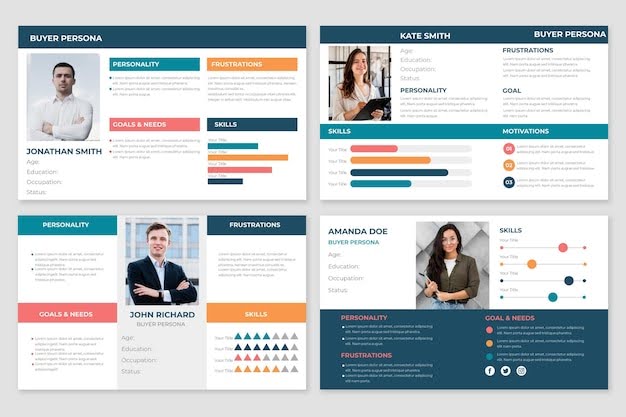
User personas play a crucial role in understanding and catering to the needs of your target audience. For B2B SaaS products, creating accurate and detailed user personas is essential for developing effective marketing strategies and providing a seamless user experience. In this comprehensive guide, we will walk you through the process of creating user personas step by step, and provide you with real-life examples and templates to inspire your research and marketing efforts. What are User Personas? User personas are fictional representations of your ideal customers based on real data and insights gathered through research and interviews. They help you understand your target audience’s goals, motivations, pain points, and behaviors. User personas enable you to tailor your product, marketing messages, and user experience to meet the specific needs and preferences of your users. How to Create User Personas Creating user personas involves a combination of qualitative and quantitative research methods. The following steps will guide you through the process: Step 1: Identify Your Target Audience Start by defining your target audience for your B2B SaaS product. Consider factors such as industry, job title, company size, and specific pain points that your product aims to solve. This will help you narrow down your research focus and create more accurate user personas. Step 2: Conduct Research Gather both qualitative and quantitative data to gain insights into your target audience. Qualitative methods include conducting interviews, surveys, and observing user behavior. Quantitative methods involve analyzing user data, such as website analytics and customer feedback. Use a combination of these methods to gather a comprehensive understanding of your users. Step 3: Identify Patterns and Themes Analyze your research findings to identify common patterns and themes among your target audience. Look for similarities in goals, pain points, and behaviors that can be grouped together to form distinct user personas. Step 4: Create User Persona Profiles Based on your research, develop detailed user persona profiles for each segment of your target audience. Each persona should include the following information: Name: Give each persona a name to make them more relatable. Description: Provide a brief overview of the persona’s background, job role, and responsibilities. Demographics: Include details such as age, gender, location, education, and income. Goals: Outline the persona’s primary goals and objectives related to your product or service. Pain Points: Identify the challenges and pain points that the persona faces in their job or industry. Motivations: Understand the motivations and drivers behind the persona’s decision-making process. Behaviors: Describe the persona’s typical behaviors, preferences, and habits related to your product. User Journey: Map out the persona’s journey through your product, from initial awareness to adoption and beyond. Needs and Expectations: Determine the specific needs and expectations the persona has for your product. Step 5: Validate and Refine Once you have created your user personas, validate them by sharing them with your team, stakeholders, and even existing customers. Gather feedback and make any necessary refinements to ensure the accuracy and relevance of your personas. User Persona Examples for B2B SaaS Products To provide you with a clear understanding of how user personas can be applied to B2B SaaS products, let’s explore some real-life examples for three different tools: Userpilot, ActiveCampaign, and Kontentino. User Persona Example 1: software-brandX – Product Manager Name: Mark Thompson Description: Mark is a product manager working for a fast-growing tech startup. He is responsible for overseeing the development and optimization of the company’s product. Demographics: Age: 35 Gender: Male Location: San Francisco, CA Education: Bachelor’s Degree Job Title: Product Manager Income: $100,000-$150,000 Goals: Improve user engagement and retention, increase product adoption Pain Points: Limited resources, difficulty in understanding user behavior and needs Motivations: Enhance the product experience, drive user satisfaction Behaviors: Analyzes user data, conducts user research, collaborates with cross-functional teams User Journey: Awareness -> Onboarding -> Active Usage -> Retention -> Advocacy Needs and Expectations: Intuitive user onboarding, in-app guidance, data-driven insights User Persona Example 2: ActiveSaas-brand – Independent Blogger Name: Sarah Johnson Description: Sarah is an independent blogger who relies on her blog to generate income. She is constantly looking for ways to grow her audience and engage with her readers. Demographics: Age: 28 Gender: Female Location: New York City, NY Education: Bachelor’s Degree Job Title: Blogger Income: $30,000-$50,000 Goals: Increase blog traffic, improve email marketing campaigns Pain Points: Limited technical knowledge, time constraints Motivations: Build a loyal audience, monetize her blog Behaviors: Creates content, manages email lists, analyzes campaign performance User Journey: Awareness -> Sign up -> Email Campaign Setup -> Campaign Performance Tracking Needs and Expectations: Easy-to-use email marketing automation, customizable templates, audience segmentation User Persona Example 3: Softwarefirm – In-house Social Media Marketer Name: Emily Davis Description: Emily works as a social media marketer for a medium-sized e-commerce company. She is responsible for managing the company’s social media presence and engaging with customers. Demographics: Age: 32 Gender: Female Location: Chicago, IL Education: Bachelor’s Degree Job Title: Social Media Marketer Income: $60,000-$80,000 Goals: Streamline social media management, improve collaboration with team members Pain Points: Manual scheduling, lack of approval process, inefficient content creation Motivations: Increase brand visibility, drive customer engagement Behaviors: Plans and schedules social media posts, collaborates with design and content teams User Journey: Awareness -> Sign up -> Social Media Planning -> Collaboration -> Publishing Needs and Expectations: Social media scheduling, content approval workflow, team collaboration features Conclusion Creating effective user personas is a crucial step in developing successful B2B SaaS products. By understanding the goals, pain points, motivations, and behaviors of your target audience, you can tailor your product, marketing messages, and user experience to meet their specific needs. Use the step-by-step guide and user persona examples provided in this article as a starting point to create your own user personas for your B2B SaaS products. Remember to continuously validate and refine your personas based on real data and feedback to ensure their accuracy and relevance. Get Started for free today or Book a demo
How Product Managers Can Breakdown Customer Pains Using Buyer Persona.

In the intricate landscape of B2B relationships, understanding and addressing customer pains stand as pivotal elements for long-term success. Unraveling these pain points requires more than just observation; it demands a personalized and empathetic approach. This is where the power of buyer personas comes into play, acting as guiding beacons to illuminate the often complex path of customer needs. Significance of Customer Pains in B2B In the B2B realm, the satisfaction and loyalty of customers hold paramount importance. Addressing customer pains is not merely a service; it’s a commitment to forging lasting and mutually beneficial relationships. Conversely, overlooking or inadequately addressing customer pains can lead to dissatisfaction, erosion of trust, and, eventually, severed business ties. What is Buyer Persona Buyer personas serve as indispensable tools in the arsenal of businesses aiming to comprehend their customers deeply. These fictional, yet highly detailed, representations of ideal customers bring a human touch to data and statistics. By personifying customer segments, buyer personas provide insights that transcend traditional market analysis. The Role of Buyer Personas in Uncovering Customer Pains Imagine buyer personas as detectives, delving into the intricacies of customer experiences to uncover hidden pains. By stepping into the shoes of these fictional characters, businesses gain a nuanced understanding of the challenges their customers face. This understanding, in turn, becomes the compass guiding the development of strategies to alleviate those pains effectively. Common Challenges in Identifying Customer Pains Identifying customer pains accurately is often a challenging task for businesses. Raw data might not provide the depth needed to comprehend the intricacies of customer struggles. Here, buyer personas act as a magnifying glass, focusing on the specific attributes and pain points that might be overlooked in broader analyses. Creating Effective Buyer Personas Crafting detailed and actionable buyer personas requires a meticulous approach. Businesses should invest time in researching their target audience, conducting interviews, and leveraging data analytics. The result is not just a fictional character but a strategic asset that informs decision-making processes across the organization. Technology plays a vital role in streamlining the creation and management of buyer personas. Various tools and platforms facilitate the efficient development of these personas, ensuring that they remain dynamic and reflective of evolving customer behaviors. Example of such tools is Insight7 AI, and its data analytics function further enriches buyer personas, providing quantitative validation of their attributes. Aligning Product or Service Offerings with Identified Pains The true essence of buyer personas is realized when businesses align their products or services with the identified pains. This isn’t a mere optimization; it’s a conscious effort to tailor offerings to directly address the needs and challenges faced by customers. In doing so, businesses position themselves as empathetic partners rather than mere service providers. Real-world Examples of Successful Pain Point Identification To understand the practical impact of leveraging buyer personas, real-world examples offer invaluable insights. Businesses that have effectively used these personas witness improved customer satisfaction, loyalty, and even increased market share. Their success stories serve as beacons for others navigating the terrain of customer-centric strategies. Amazon: Personalizing the Shopping Experience Amazon, the e-commerce giant, utilizes robust buyer personas to understand the diverse preferences and pain points of its vast customer base. By tailoring product recommendations, personalized marketing messages, and optimizing the user interface based on buyer personas, Amazon enhances the overall shopping experience. This approach has led to increased customer satisfaction and strengthened brand loyalty. HubSpot: Addressing Marketing Challenges HubSpot, a leading marketing and sales platform, employs detailed buyer personas to identify pain points faced by marketers in their day-to-day operations. By understanding the specific challenges marketers encounter, HubSpot has developed targeted solutions and features within its platform. This approach not only attracts more users but also fosters a community of loyal customers who appreciate the platform’s responsiveness to their needs. Toyota: Designing Cars for Diverse Audiences Toyota, a global automotive manufacturer, invests in comprehensive buyer personas to understand the preferences and pain points of different customer segments. By incorporating insights from these personas into their design and marketing strategies, Toyota creates cars that align with the specific needs of diverse customer groups. This has resulted in increased market share, as the brand resonates with a wide range of consumers. Spotify: Enhancing Music Discovery Spotify, a leading music streaming service, leverages buyer personas to understand how users discover and engage with music. By identifying pain points related to music discovery, such as overwhelming choices or difficulty in finding new favorites, Spotify has introduced features like personalized playlists and algorithm-driven recommendations. This approach has significantly improved user satisfaction and increased user engagement. Airbnb: Tailoring Experiences for Travelers Airbnb utilizes buyer personas to understand the diverse needs and pain points of travelers seeking unique accommodation experiences. By tailoring their platform to cater to the specific preferences of different traveler personas, Airbnb has created a marketplace that offers personalized options. This has resulted in increased customer satisfaction and strengthened Airbnb’s position in the competitive travel industry. Ensure Consistency in Addressing Customer Pains Buyer personas are not static entities. Consistency in addressing customer pains requires an ongoing commitment to refining and validating these personas. Regular reviews and updates ensure that businesses stay attuned to evolving customer needs, maintaining the relevance and effectiveness of their strategies. Quantifying the impact of addressing customer pains is essential for businesses seeking tangible evidence of success. Key performance indicators (KPIs) tailored to buyer personas help measure the effectiveness of strategies, providing a clear understanding of the value derived from aligning business practices with customer insights. Overcoming Challenges in Implementation The integration of buyer personas into business processes, although a valuable strategy, may face resistance or skepticism within an organization. To navigate these challenges successfully, it’s crucial to address concerns, communicate the benefits effectively, and foster a culture where customer-centricity becomes more than just a buzzword—it becomes an ingrained practice. Acknowledging Concerns: Resistance often arises due to misconceptions or fear of change. Some team members may question the relevance or effectiveness of buyer personas. Begin by acknowledging these concerns. Create