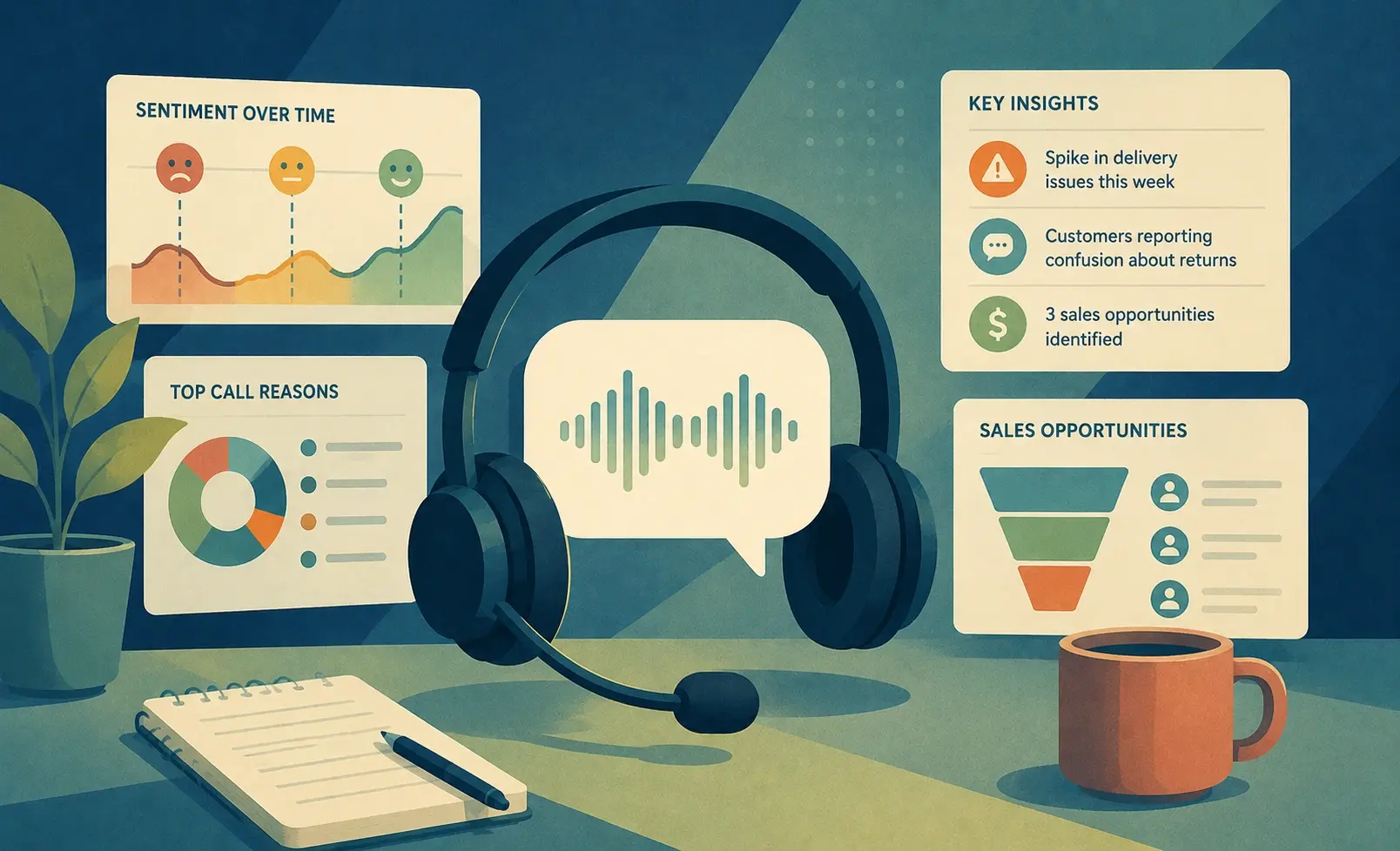
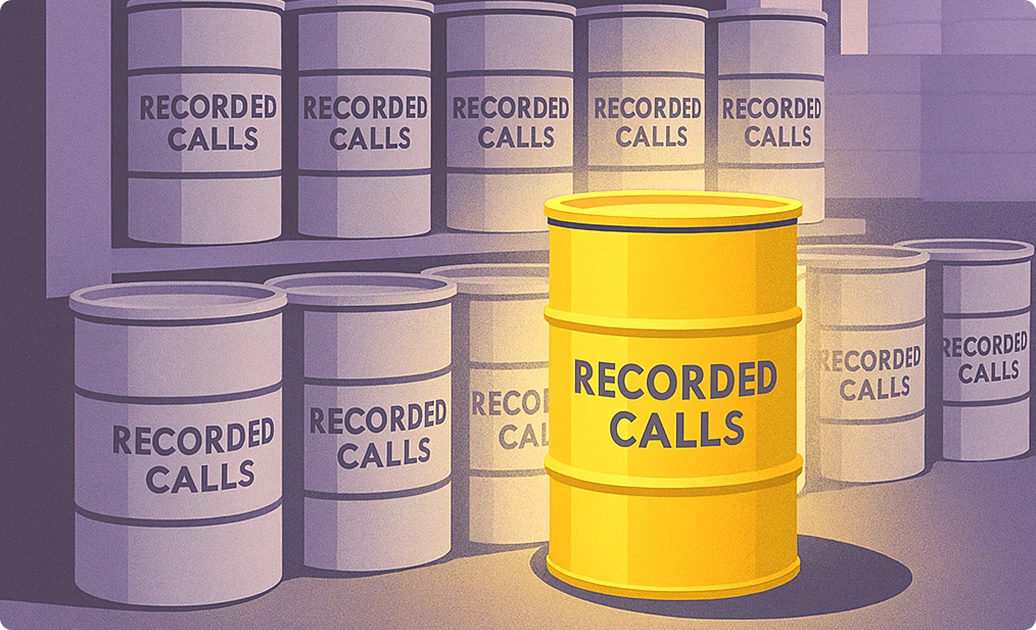
You’re managing a 50-rep contact center. Your QA team manually reviews maybe 3% of calls each week. Coaching feedback reaches agents 10 days after the call it was based on. When a new compliance requirement lands, you have no idea how many calls in the last 30 days were non-compliant.
That is the exact situation voice analytics software is built to solve. But the platforms in this space are not interchangeable. Some are engineered for enterprise compliance teams with dedicated analytics staff and 18-month implementation cycles. Others are built for mid-market contact centers that need to close the coaching and QA gap fast, without a six-figure services engagement.
Picking the wrong one costs you a year.
This guide breaks down seven leading platforms by the specific scenarios they are designed for, so you can match the tool to your actual situation before you sit through a single demo.
Three Questions to Ask Before You Compare Platforms
Most buyers approach this decision by comparing feature matrices. That is the wrong starting point. Answer these three questions first, and you will cut your shortlist in half.
1. Is your biggest gap in QA coverage, agent coaching, or compliance monitoring? These are related but distinct problems. A platform optimized for compliance flagging is not the same as one optimized for coaching pipeline efficiency.
2. Do you need real-time guidance during live calls or post-call analysis? Real-time assist and post-call analytics require different architectures, and most platforms do one significantly better than the other.
3. What does your current QA process look like, and where is it breaking down? If you are reviewing calls manually, you need automated scoring. If scoring is in place but feedback is not reaching agents, you need a coaching workflow layer on top of analytics.
The 7 Platforms and the Scenarios They Are Built For
1. Insight7 – For Mid/Large-Market Teams That Need QA, Coaching, and Live Assist in One Platform
Insight7 is purpose-built for contact centers with 40 to 500 customer-facing reps where the core problem is threefold: QA coverage is too low, coaching is reactive rather than proactive, and managers lack the time to connect call data to rep development.
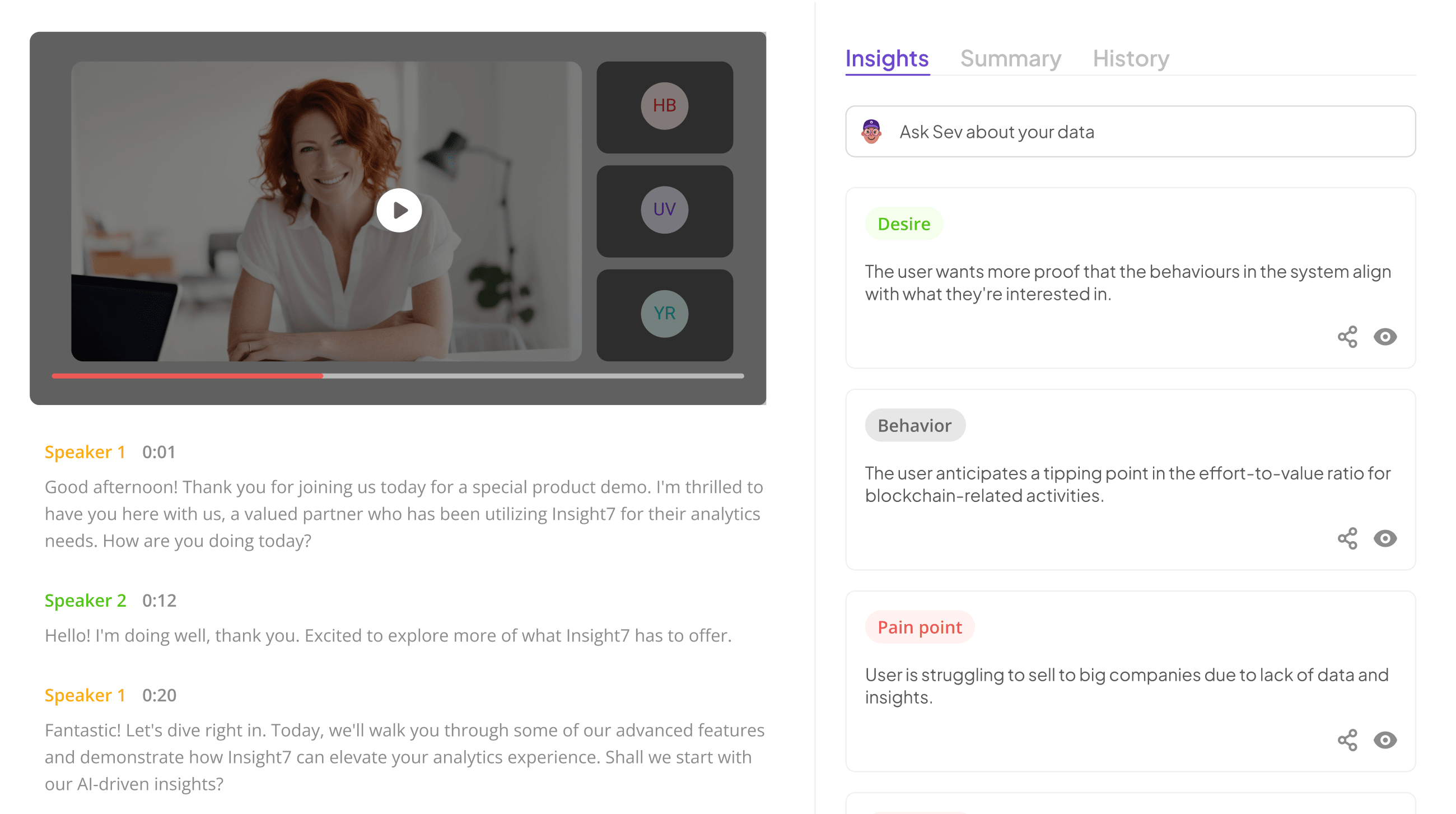
The platform automatically scores every call against customizable QA frameworks – not just a sample. That means a 60-rep sales team gets 100% call coverage, compared with the 3 to 5% most manual QA processes achieve. Scores surface immediately after each call, so coaching conversations happen the same day instead of the same week.
Where Insight7 stands apart from pure analytics tools is its integrated coaching layer. The platform does not just flag that a rep struggled with objection handling on 40% of calls. It generates specific coaching prompts tied to those moments, and routes them to the manager as structured feedback ready to act on. For teams running AI Roleplay alongside live call analytics, reps can practice the exact scenarios they are failing on before the next customer conversation.
Live Assist adds real-time battle cards and prompts during calls, which makes it relevant for industries where compliance language matters in the moment – financial services and healthcare in particular – not just in post-call review.
Insight7 is the right fit for a mid/large-market team that has outgrown manual QA, wants coaching embedded in the analytics workflow, and needs a platform that does not require a dedicated analytics team to deliver value.
Where it is not the right fit: If your primary requirement is workforce management integration at the enterprise level, or if you are operating in a complex multi-site environment that needs a decades-long vendor relationship, the platforms below serve that use case better.
2. NICE inContact (NICE Nexidia) – For Large Enterprises with Complex Compliance Environments
NICE inContact is the incumbent enterprise choice for organizations with 500-plus agents, strict regulatory requirements, and existing investments in the NICE ecosystem. Its speech analytics engine, Nexidia, is built for high-volume environments running multichannel operations across voice, chat, and email simultaneously.
The compliance monitoring capability is deep. It handles automated detection of required disclosures, prohibited language, and regulatory scripts across every call, not a sample. For banks, insurance carriers, and healthcare networks where a single non-compliant call is a liability event, that coverage matters.
The trade-off is implementation complexity and cost. Most NICE deployments require professional services engagements and months of configuration. For a mid-market team that needs to move in weeks, not quarters, this is a significant friction point.
Best for: Large enterprises in financial services, insurance, or healthcare with existing NICE infrastructure and dedicated analytics staff.
3. Verint Speech Analytics – For Organizations Running Full Workforce Optimization Suites
Verint’s strength is integration. If your contact center already runs Verint for workforce management, quality management, and scheduling, adding speech analytics inside the same platform makes operational sense. The data flows between modules without custom connectors.
For organizations where workforce optimization is the primary strategic driver, Verint’s pattern recognition across large call populations surfaces trends in agent behavior and customer sentiment at scale. It is not the most intuitive standalone analytics tool, but as part of a broader Verint deployment, it adds analytical depth with minimal additional overhead.
Best for: Mid-to-large contact centers already in the Verint ecosystem that want analytics without managing a separate platform.
4. CallMiner Eureka – For High-Volume Omnichannel Operations That Need Custom Analytics Build-Out
CallMiner processes voice, chat, email, and text within a single platform, which makes it relevant for contact centers where the customer journey spans multiple channels and analysts need to track behavior and sentiment across all of them in aggregate.
The platform is highly customizable, which is both its strength and its challenge. Organizations with analytics teams that want to build proprietary scoring models and custom dashboards will find significant flexibility here. Organizations that want out-of-the-box value without deep configuration work will struggle with the time-to-insight curve.
Best for: Large enterprise contact centers with in-house analytics capabilities and high call volumes requiring cross-channel analysis.
5. Observe.AI – For Teams That Want QA Automation with Structured Coaching Pipelines
Observe.AI is purpose-built for QA automation and the coaching workflows that should follow from it. Its transcription accuracy is strong, and its performance scoring engine is designed to turn QA results into structured agent feedback with less manual intervention than traditional QA processes require.
For contact center leaders whose specific problem is the gap between QA data and actual coaching, where scores exist but nothing changes agent behavior, Observe.AI’s feedback loop architecture addresses that directly. It is a more focused tool than Insight7, without the live assist layer, but for teams that want depth in QA-to-coaching conversion, it is worth evaluating.
Best for: Contact centers of 100-plus agents where QA automation is the primary goal and coaching workflow efficiency is the secondary priority.
6. Enthu.AI – For Small Teams Starting Their Voice Analytics Journey
Enthu.AI targets teams of 10 to 50 agents that are moving off spreadsheet-based QA for the first time. The dashboards are accessible, setup is relatively fast, and the core capabilities – transcription, sentiment flagging, trend spotting – cover the basics without the configuration overhead of enterprise platforms.
For a growing team that needs visibility into call quality before investing in a full-featured platform, Enthu.AI provides a practical starting point. The trade-off is limited depth in coaching workflows and compliance monitoring as team size and regulatory requirements grow.
Best for: Small contact center teams (under 50 agents) beginning to formalize QA processes.
7. Talkdesk – For Cloud-Native Contact Centers Wanting Analytics Inside Their CCaaS Platform
Talkdesk is primarily a cloud contact center platform, not a standalone analytics tool. Its voice analytics capabilities are built into the broader Talkdesk platform, which makes them most valuable for organizations that are also running Talkdesk for their telephony and routing infrastructure.
For teams already on Talkdesk that want to add call scoring and customer behavior insights without managing a separate analytics vendor, the native integration is a real advantage. For teams evaluating a standalone analytics layer on top of an existing telephony stack, purpose-built analytics platforms will offer significantly more depth.
Best for: Contact centers already running Talkdesk as their CCaaS platform.
Comparison by Decision Scenario
| Your Situation | Best Fit |
|---|---|
| Mid-market team, 40-300 reps, needs QA + coaching in one platform | Insight7 |
| Large enterprise, 500+ agents, strict compliance requirements | Insight7, NICE inContact |
| Already running Verint for workforce management | Verint Speech Analytics |
| High call volume, multiple channels, and an in-house analytics team | Insight7, CallMiner Eureka |
| QA automation is the primary goal, coaching workflow is secondary | Observe.AI |
| Small team, under 50 agents, first-time QA automation | Enthu.AI |
| Already on Talkdesk CCaaS, want native analytics | Talkdesk |
Frequently Asked Questions
1. Can voice analytics software replace a QA team?
It replaces the manual call review work, not the people. Instead of QA analysts spending hours listening to calls and filling out scorecards, the software scores every call automatically against your defined criteria. Your QA team shifts from data collection to coaching action – reviewing flagged calls, delivering feedback, and identifying patterns that need manager attention.
2. What is the difference between real-time voice analytics and post-call analytics?
Real-time analytics processes the conversation as it happens and surfaces prompts or guidance to the rep during the call, useful for compliance language, objection handling, or competitive mentions. Post-call analytics processes the recording after the call ends and feeds into QA scoring and coaching workflows. Most mid-market teams need both, but post-call delivers the faster initial ROI because it requires no change to how reps behave on live calls.
3. How does voice analytics software integrate with CRM platforms like Salesforce or HubSpot?
Most platforms in this category connect to Salesforce and HubSpot via native integrations or API, pushing call scores, transcripts, and coaching flags directly into the contact or deal record. The practical value is that managers see call quality data alongside pipeline data in the same view, rather than toggling between systems. Integration depth varies significantly by vendor, so it is worth asking specifically which fields sync and whether the connection is bidirectional.
4. How long does it typically take to see ROI from voice analytics software?
For teams replacing manual QA, meaningful ROI usually appears within 60 to 90 days – driven by QA coverage going from 3 to 5% of calls to 100%, and coaching feedback cycles compressing from weeks to days. Teams that layer in live assist or AI roleplay alongside call analytics see rep performance improvements on a similar timeline, though the specific metrics depend on what your baseline looks like before implementation.
5. Is voice analytics software worth it for a team under 50 reps?
It depends on what is breaking. If your QA process is informal and you have no visibility into what reps are actually saying on calls, even a lightweight platform pays for itself quickly. If you are a team of 20 reps with a functioning manual QA process and low call volume, the ROI math is tighter. The inflection point for most teams is around 40 reps and 500-plus calls per week. At that volume, manual QA becomes statistically meaningless, and automated scoring starts to create a real competitive advantage.
The Decision That Matters Most
The most common mistake in this evaluation process is selecting the platform with the longest feature list rather than the one that solves the specific bottleneck in your current QA and coaching workflow.
If you are a mid-market contact center where QA coverage is low, coaching is lagging, and managers are spending hours reviewing calls rather than developing reps, Insight7 is built directly for that problem. It is the only platform that connects automated QA scoring, structured coaching workflows, live call guidance, and AI roleplay practice in a single product without requiring a dedicated analytics implementation team.
If you want to see how Insight7 handles your specific call scenarios, book a demo here and bring a sample of your current QA scorecard. The session is built around your data, not a generic product walkthrough.