


Key Takeaways
- Best for scoring every call at scale: Insight7; 100% call coverage with behavioral scoring that flags upsell-ready moments as they happen.
- Best for large enterprise revenue teams already forecasting in Salesforce: Gong
- Best for teams already inside the ZoomInfo ecosystem: Chorus by ZoomInfo
- Best for budget-conscious SMB teams that also need meeting scheduling: Avoma
Somewhere in last week’s calls, a customer probably hinted they wanted more from you. Did anyone catch it? Tools for identifying upsell opportunities in sales conversations answer that question with data instead of a hunch.
This guide compares five of the best options on the market today, breaking down pricing, standout features, and the type of team each one is built for, so you can find the right fit without sitting through five separate demos.
| Tool | Best For | Standout Feature | Price Starting Point |
|---|---|---|---|
| Insight7 | Teams that need every call scored, not sampled | Behavioral scoring + AI roleplay coaching in one platform | $99/month |
| Gong | Large enterprise revenue orgs | Deal intelligence and forecasting | Custom quote only |
| Chorus by ZoomInfo | Companies already on ZoomInfo | Conversation data linked to buyer intent data | Custom quote only |
| Clari Copilot | Live-call battlecards and competitor tracking | Real-time talk-track alerts during the call | Custom quote only |
| Avoma | Small teams on a tight budget | Meeting scheduling bundled with note-taking | $19/seat/month |
Insight7: Best for Scoring Every Upsell Signal Across Every Call
Insight7 is a conversational intelligence platform built for customer-facing teams who need more than a transcript.
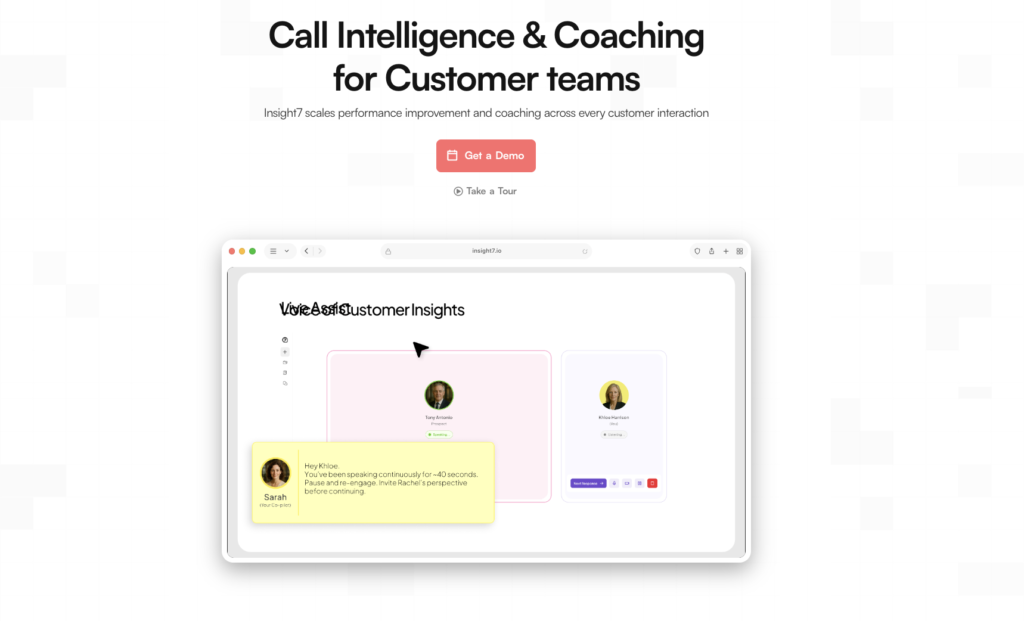
It scores 100% of your calls against custom criteria, which matters because most teams still rely on managers manually sampling around 2% of calls. That’s a blind spot covering 98% of the moments where a customer hints they’d buy more.
Key Features
Here’s what drives upsell detection inside Insight7:
Automated QA & Scoring.
Every call gets evaluated against custom rubrics, not just compliance phrases, but buying signals like budget mentions, team growth, or frustration with a competitor’s tool.
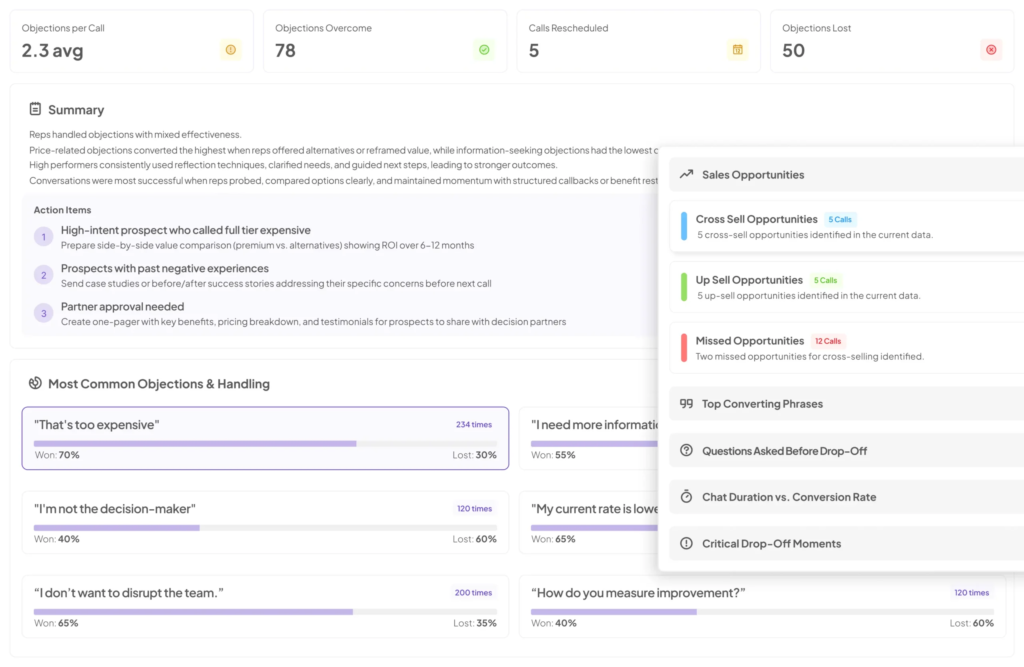
A financial services firm can flag “asked about a second product line” the same way it flags a disclosure violation.
Keyword & Phrase Tracking
You define the phrases that signal expansion interest e.g “we’re scaling,” “our other team needs this,” “what does the next tier include” ,and Insight7 tracks them across every rep, weekly, without anyone reviewing a single transcript by hand.
AI Roleplays & Coaching
Once you know your top reps ask 37% more discovery questions than average performers, you can turn that into a practice scenario. Reps rehearse upsell conversations against an AI buyer before they try it live, so the skill gets built before the deal is on the line.
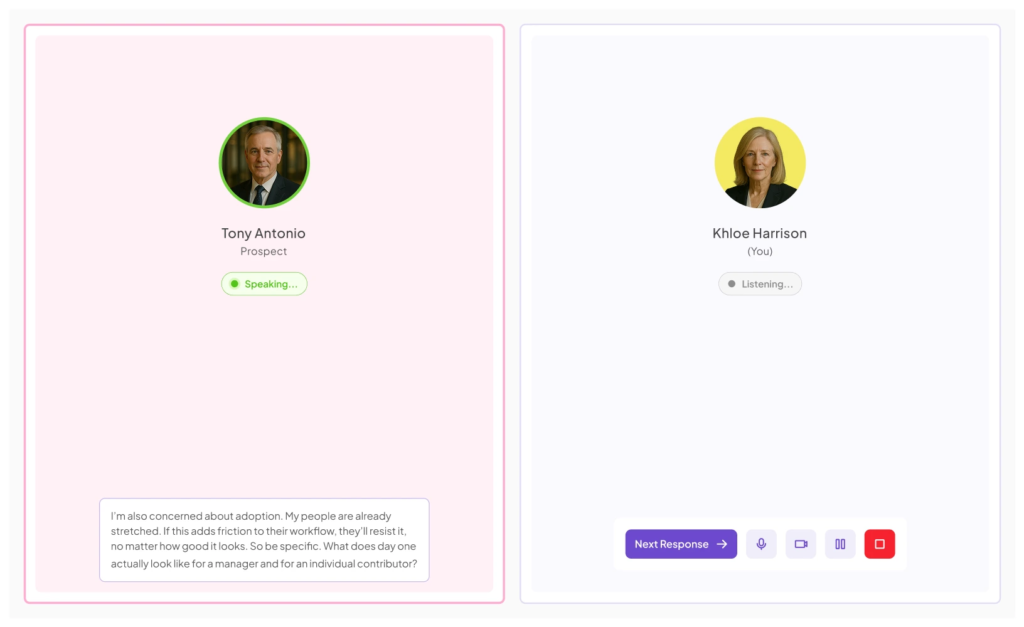
Pro tip: Pair scoring with roleplay. A dashboard that tells you reps are missing upsell cues is only half the fix. The other half is giving reps a low-stakes way to practice asking the right question before the next renewal call.
Pricing
| Plan | Price | Best For |
|---|---|---|
| Pro | $99/month | Individual reps or small teams analyzing higher call volume |
| Business | $299/month | Growing sales and CS teams needing keyword and scorecard alerts |
| Plus | $1,499/month | Larger orgs needing AI coaching and dedicated support |
| Enterprise | Custom | Full API access, dynamic criteria, and unlimited call analysis |
Where Insight7 Shines
- Full call coverage, not a sample: Every rep, every call, scored the same way, so you’re not guessing what happened on the 98% of calls no one listened to.
- Coaching and detection live in one platform: You don’t need a separate tool to turn a missed upsell cue into a training scenario. It’s built in.
- Works across the customer lifecycle: The same scoring engine that flags an upsell cue in a sales call also flags a churn risk in a support call, so revenue and retention teams aren’t working from two different truths.
Where Insight7 Falls Short
- Not built as a pure forecasting tool: If your primary need is pipeline forecasting math rather than conversation-level coaching and QA, a dedicated revenue forecasting platform may fit better alongside it.
Customer Reviews
“For the cost of a project manager in the United States, we cover over 6,000 calls on Insight7 every month,” —Elise Dietrich, CPO at TripleTen.
“Insight7 has saved us analysis time. I’ve been feeding feedback from sales calls, conversations, and emails and it’s been great input into the product roadmap and helped us better address people’s problems.” — Daniel Patricio, CEO, Abra
Who Insight7 Is Best For
- Customer service leaders who also own upsell and retention and need one tool instead of stitching together a QA platform and a coaching platform.
- Managers coaching remote or hybrid teams who can’t sit in on every call but still need to know exactly what happened on it.
Note: Managers on the go can also review flagged calls from the Insight7 mobile app between meetings.
Try Insight7 for free and start closing upsells today
Gong
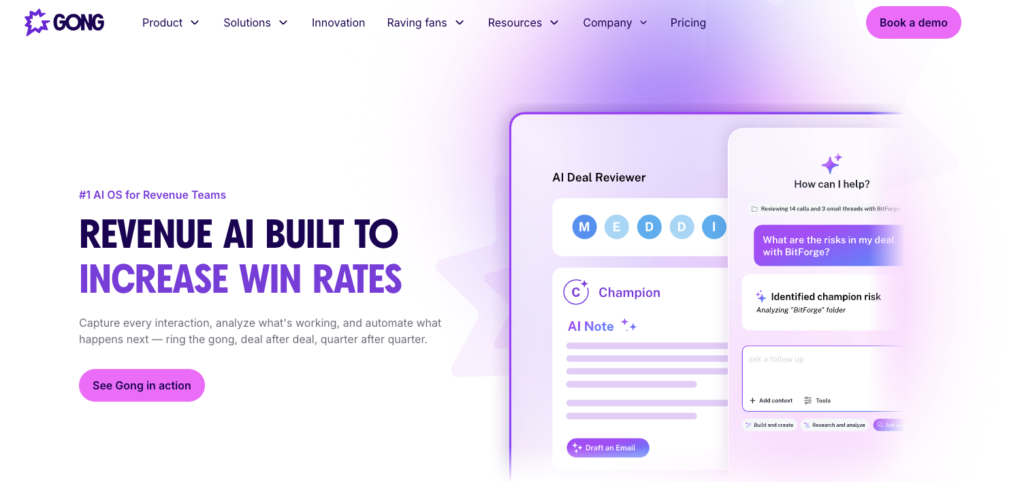
Gong is one of the most recognized names in conversation intelligence, built primarily around pipeline visibility and deal risk for larger sales organizations. It pulls call, email, and CRM data into one view so revenue leaders can forecast and spot deal risk earlier.
Key features
- Deal intelligence that flags stalled opportunities
- Forecasting rollups by team and region
- A large library of CRM and calendar integrations.
Pricing
Gong does not publish pricing.
Where Gong shines
- Enterprise-grade forecasting accuracy
- A mature integration ecosystem
- Strong brand recognition inside large sales organizations.
Where Gong falls short
The platform fee structure can put it out of reach for teams around 50- 100 seats.
Customer reviews
G2 reviewers frequently praise Gong’s forecasting depth and searchability, while a recurring critique in reviews is the cost relative to smaller conversation intelligence tools, especially for mid-market teams.
Who Gong is best for
- Enterprise sales orgs with a dedicated RevOps budget that need deep forecasting alongside conversation review.
Chorus by ZoomInfo
Chorus is ZoomInfo’s conversation intelligence product, built to connect what happens on a call with the firmographic and intent data ZoomInfo already tracks on that account.
Key features
- Call recording and transcription tied to ZoomInfo account records
- Deal scorecards and moment tracking for competitor and pricing mentions
Pricing
Chorus is quote-based and typically sold as part of a broader ZoomInfo package.
Where Chorus shines
- Teams already using ZoomInfo for prospecting get a single data layer connecting outreach, firmographics, and conversation history
Where Chorus falls short
- Value drops for teams not already invested in the ZoomInfo ecosystem, since much of the connective tissue is built around that data.
Customer reviews
G2 reviewers note strong integration with ZoomInfo’s broader suite, with some reviews citing a learning curve for teams new to the platform.
Who Chorus is best for
- Sales teams already running ZoomInfo for prospecting who want conversation data in the same system.
Clari Copilot
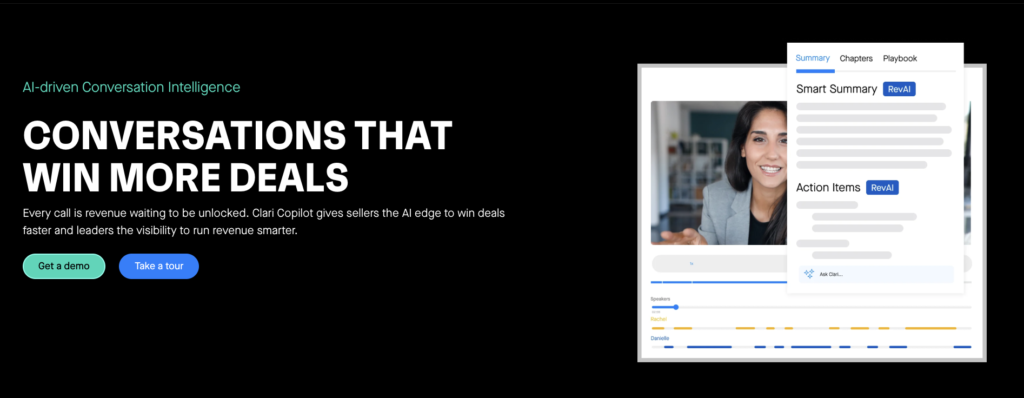
Clari Copilot (formerly Wingman) focuses on real-time guidance during live calls: battlecards, competitor mentions, and talk-track prompts that surface while the rep is still on the phone.
Key features
- Live battlecards triggered by keywords
- Real-time competitor mention alerts
- Post-call deal scoring synced with Clari’s forecasting platform
Pricing
Quote-based.
Where Clari Copilot shines
- Real-time nudges during the call itself, which helps newer reps respond to objections or upsell openings in the moment rather than after a post-call review.
Where Clari Copilot falls short
- Its strongest value comes when paired with the full Clari forecasting suite, which raises the total cost for teams that only want conversation intelligence.
Customer reviews
G2 reviewers highlight the real-time battlecard feature as a standout, while some reviews mention that setup and admin configuration take longer than lighter-weight tools.
Who Clari Copilot is best for
- Sales teams that want live, in-call coaching rather than only after-the-fact review.
Avoma
Avoma started as an AI meeting assistant and has layered conversation and revenue intelligence on top through paid add-ons.
Avoma bundles unlimited meeting recording and note-taking into its base plan, with conversation intelligence and revenue intelligence sold as separate add-ons. A team wanting the full stack, scoring, coaching, and deal risk, can expect to pay closer to $70–$90 per seat per month once those add-ons are stacked on the base plan.
That’s a meaningfully different number than the $19 headline price, so budget for the full stack, not the starter tier, if upsell detection is the goal.
Avoma is best for small teams that want an affordable notetaker first and are willing to add coaching features later as budget allows.
How to Choose the Right Tool for Identifying Upsell Opportunities
The right upsell identification tool connects usage data with real customer sentiment so your team knows who to upgrade, when to reach out, and what to pitch. Here are the core frameworks, features, and evaluation criteria to consider.
Does it score every call or just a sample?
Most QA teams still review a tiny fraction of calls by hand. Gartner reports that sales leaders expect 70% or more of company revenue to come from existing customers, yet expansion efforts stall when reps lack visibility into what customers are actually asking for.
If your tool only samples 2% of calls, you’re building an expansion strategy on a guess. Insight7’s model scores 100% of calls against the same criteria, which is the difference between knowing your top rep’s habits and assuming them.
Does it separate coachable behavior from noise?
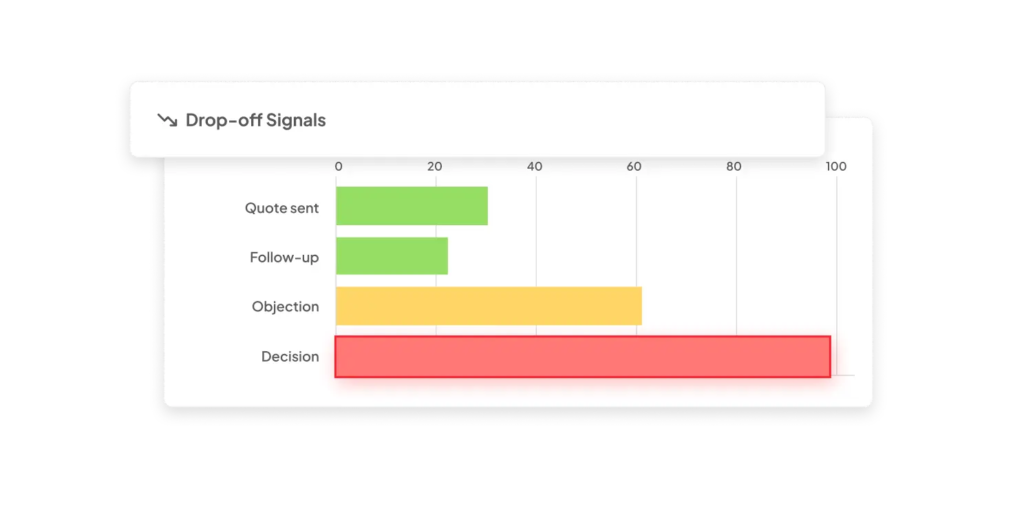
A keyword hit isn’t the same as a buying signal. In an analysis of 6,209 scored conversations, Insight7 found that top-performing reps asked 14.3 questions per call versus 10.4 for average performers, a 37% gap, and scored 68% higher on empathy and rapport.
Those are specific, trainable behaviors, not vague “good call” ratings. A tool that only flags keywords will miss the pattern; one that scores behavior will show you exactly what to coach.
Does it close the loop with practice, not just reporting?
Neil Rackham, author of SPIN Selling, found across an analysis of over 35,000 sales calls that reps can’t successfully expand an account until they use real investigation techniques to surface a customer’s implied needs and turn them into explicit ones.
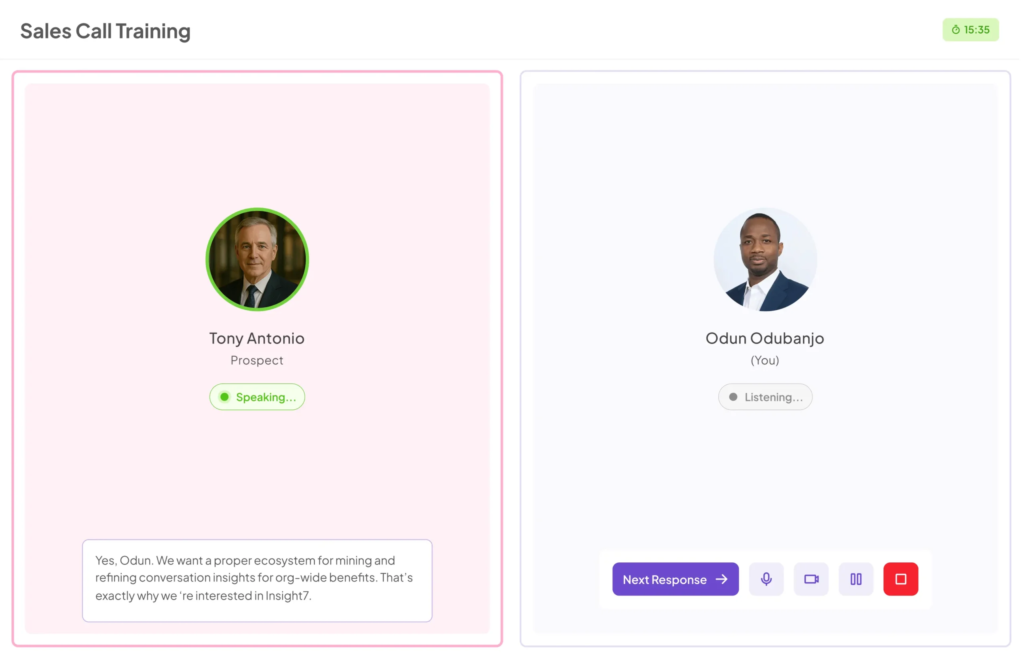
A dashboard that flags a missed opportunity after the call is useful. But a tool that lets a rep rehearse that exact scenario before the next call is what changes the outcome. This is where Insight7’s roleplay module pairs directly with its scoring, so a coaching gap doesn’t just sit in a report; it becomes a practice session.
Reality check: Insight7 analyzed hundreds of real insurance sales conversations and found top agents closing at 65% while bottom agents closed at 0%, on the same leads, same products, same tools. The entire 204% funnel gap came down to behavioral differences invisible to a QA process that only reviews 2% of calls.
Does it work beyond sales alone?
Upsell signals don’t stay in the sales team’s calls. A customer mentioning they’re outgrowing your current plan might surface in a support ticket or a CS check-in first.
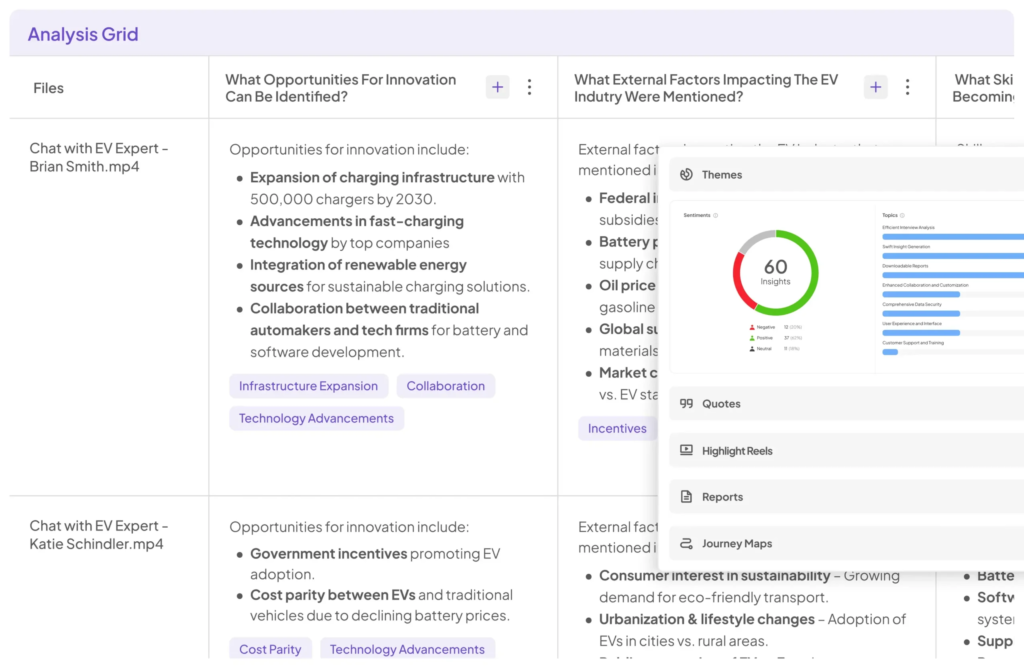
Understanding how a customer’s usage and needs shift over time is essential to any real share-of-wallet strategy. But A tool locked to sales-only conversations misses those earlier signals entirely.
Turn Every Sales Conversation Into an Upsell Signal
Data-driven account growth models that pinpoint cross-sell and upsell opportunities typically deliver under 5% sales uplift alongside up to a 35% reduction in churn. That’s not a small number for a company managing renewal risk across hundreds of accounts.
And Bain’s research shows acquiring a new customer costs 5 to 25 times more than expanding an existing one. Every upsell cue your team misses on a call is a more expensive new-logo deal you’ll need to close instead.
If you’re a RevOps leader trying to figure out why only your top rep hits expansion targets, or a CX leader who suspects upsell opportunities are getting missed in support calls, that’s exactly the gap Insight7 is built to close.
See how Insight7 scores every conversation for revenue signals, or read how teams like TripleTen standardized their call reviews to catch what manual sampling never could.
FAQs
What’s the difference between cross-selling and upselling in sales conversations?
Cross-selling suggests a related product; upselling suggests a bigger version of what the customer already has. Both show up as similar verbal cues, like a customer mentioning growth, budget increases, or team expansion.
Can conversation intelligence tools really predict upsell readiness?
They don’t predict certainty, but they do surface patterns. McKinsey found cross-selling and category-penetration techniques applied during customer interactions increase sales by 20% and profits by 30%, and that only happens when the signals get caught consistently.
How much does an upsell detection tool typically cost?
Insight7 starts at $99 monthly with scoring included, and enterprise tools like Gong and Chorus are quote-based, often running into thousands per month for larger teams.
Do I need a separate coaching tool alongside a scoring tool?
Not necessarily. Gartner found that 77% of sales reps struggle to complete their assigned tasks efficiently, which points to a need for tools that surface next steps directly in the workflow rather than adding another dashboard to check. A platform that combines scoring and roleplay practice in one place avoids that extra step.
Does call coverage really matter if my team already reviews top and bottom performers?
Yes. Reviewing only your best and worst reps tells you what those two people did. It tells you nothing about the average performer sitting in the middle of your team, who is usually where the biggest coachable upside sits.








