Sales directors and training managers who want to develop critical thinking in their sales teams face a specific challenge: traditional training teaches scripts and product knowledge, but does not build the reasoning skills reps need to handle complex objections, navigate ambiguous buyer situations, or adapt on the fly when a call goes in an unexpected direction. AI-driven training is closing this gap by making thinking skills trainable from real call behavior rather than classroom exercises.
What AI-Driven Thinking Skills Training Means for Sales Teams
Thinking skills in sales break down into three practical competencies: reading the situation accurately (diagnostic thinking), deciding what to do next (decision-making), and adapting the approach in real time (adaptive reasoning). Generic training programs address these as concepts. AI-driven training addresses them as observable, scoreable behaviors extracted from actual calls.
The difference is that AI can analyze thousands of calls and identify where reps fail at the decision point, not just where they fail on the outcome. A rep who consistently loses deals after the pricing conversation is not necessarily failing on pricing knowledge. They may be failing on a thinking skills gap: not reading the stakeholder's real objection before pivoting to price defense. AI call analysis surfaces this at the pattern level, across the entire call population, not just in the calls a manager happened to review.
What are the 4 C's of critical thinking?
The four dimensions most commonly applied to critical thinking in professional development programs are: Comprehension (understanding what is actually being said, not what was expected), Calculation (assessing which response options are available and at what cost), Construction (building a response that advances the goal), and Calibration (adjusting based on real-time feedback from the other person). AI-driven training can score sales reps on all four dimensions when their calls are analyzed against criteria that map to each one.
How AI Surfaces Thinking Skills Gaps from Call Data
Traditional QA looks at whether a rep said the right things. Thinking skills analysis looks at whether a rep read the situation correctly before saying anything.
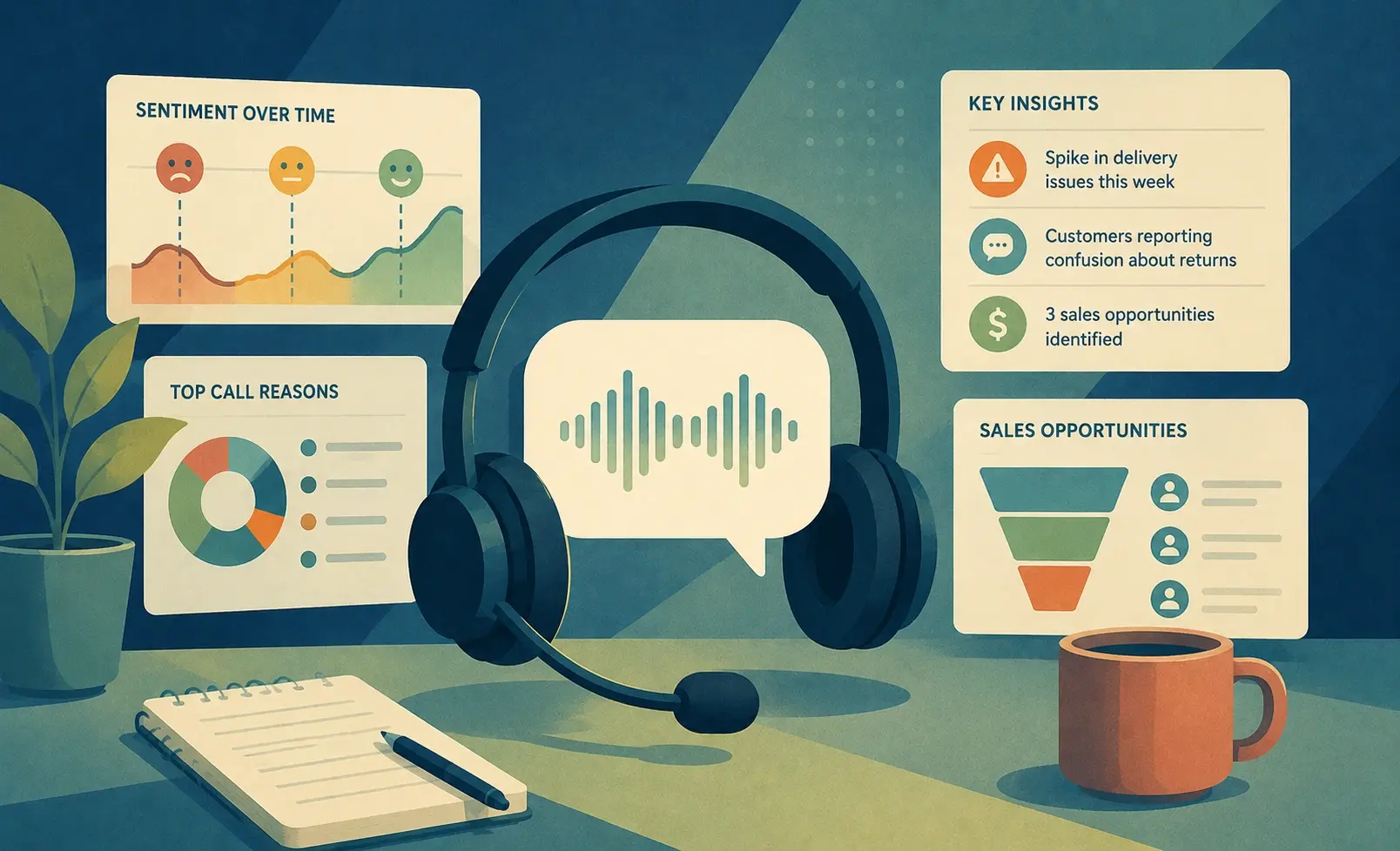
Insight7's call analytics platform uses intent-based scoring criteria, not just script compliance checking. A criterion like "Rep identifies the real objection before responding" requires the AI to evaluate whether the rep's response was constructed from accurate situational reading or from a reflexive script. When a rep jumps to price defense before the buyer has named price as their actual concern, that gets flagged as a diagnostic thinking failure, not just a technique failure.
The value of analyzing this at scale is that you can identify reps who have good product knowledge but poor situational reading, and reps who have strong instincts but inconsistent application. Those are two different coaching problems requiring different training responses.
How to train AI to think?
The same question applies to training reps: you do not teach thinking skills by lecturing about them. The method that works is structured practice on ambiguous situations with immediate feedback. AI coaching platforms generate scenarios that present the exact situational ambiguity types where a rep fails, require a decision response, and then debrief the reasoning process through a post-session AI coach dialogue.
Insight7's AI coaching module includes a voice-based post-session debrief where the AI coach asks the rep to explain their reasoning, not just whether they got the right answer. This engages the metacognitive layer: reps who can explain why they made a decision are developing the reflection habit that makes thinking skills transfer to new situations.
Building a Thinking Skills Training Program from Call Data
Step 1: Identify your thinking skills failure patterns. Run AI call analytics on your last 90 days of closed-lost deals. Sort by the specific moment in the conversation where momentum shifted. Most teams find 2 to 3 recurring decision points where reps consistently misread the situation or chose the wrong response.
Step 2: Build scenarios from the actual failure moments. Take the 5 most common misread situations and build coaching scenarios around each one. The scenario should reproduce the ambiguity that caused the failure, not just the surface-level objection. If reps are failing because they cannot distinguish a budget objection from a timing objection, the scenario needs to present both cues at the same time and require the rep to identify which is primary.
Step 3: Score for reasoning, not just outcome. Configure your evaluation criteria to include diagnostic accuracy: did the rep correctly identify what was happening before responding? This is separate from technique: did the rep say the right thing in response? You can have correct technique applied to the wrong diagnosis, and that is a thinking skills problem, not a skills knowledge problem.
Step 4: Use AI debrief to build reflection habits. After each coaching session, require a short reflection dialogue. The AI coach asks two questions: "What did you think was happening at that moment?" and "What would you change about how you read it?" This is the practice layer that builds transferable thinking, not just memorized responses.
If/Then Decision Framework
If your reps have good product knowledge but inconsistent results: The gap is likely situational reading, not product training. AI analysis of call recordings will show you the decision moments where they diverge from high performers.
If you are onboarding new reps: Front-load thinking skills scenarios early. New reps who start with situational reading practice before product deep-dives develop better adaptive skills than those who learn product first and try to apply thinking skills later.
If your deal sizes are growing (moving upmarket): Enterprise deals have higher situational complexity. Thinking skills gaps that are survivable in SMB deals become fatal in enterprise cycles. AI coaching on complex scenarios before reps engage enterprise buyers is a direct investment in deal quality.
If QA scores are flat despite training: Flat QA scores after training usually mean the training is addressing the wrong problem. Switching from content-based training to thinking skills coaching from actual call failures typically breaks the plateau.
FAQ
Can AI actually teach critical thinking, or does it just test it?
AI-driven training does both, but the teaching mechanism is practice volume, not explanation. A rep who completes 20 decision scenarios with immediate AI feedback builds pattern recognition faster than a rep who reads 20 case studies. The AI does not teach thinking; it creates the conditions for deliberate practice that develops thinking. The post-session reflection dialogue is where the learning consolidates from unconscious pattern to conscious skill.
How long does it take to see measurable improvement in thinking skills from AI coaching?
Teams typically see measurable QA score improvement in the specific competencies being trained within 4 to 6 weeks of consistent practice. The key variable is practice frequency: reps who complete 2 to 3 sessions per week improve faster than those who complete one session every two weeks. Insight7's coaching platform tracks score trajectories over time, showing improvement curves per rep and per competency so managers can see whether the training is producing results before the end of the quarter.
Start developing thinking skills from your team's actual call behavior at Insight7.