


Your QA team manually reviews 3% of calls. Your coaching sessions reference the same five cherry-picked recordings every month.
Meanwhile, the patterns that actually drive churn, compliance risk, and missed revenue sit buried in the 97% of conversations nobody listens to.
That is the problem AI call analysis solves. These tools automatically transcribe, score, and surface patterns across every customer conversation, replacing sample-based guesswork with census-level visibility.
For mid-market contact centers with 40 to 200+ reps, the shift from manual QA sampling to automated call analysis is not an efficiency upgrade. It is a fundamentally different operating model for coaching, compliance, and performance management.
But not every AI call analysis tool solves the same problem. Some are built for sales pipeline visibility. Others focus on marketing attribution. Others handle contact center QA and agent coaching.
Picking the wrong category wastes budget and creates adoption problems.
Here is how eight tools compare, organized by what they are actually built to do and where they fall short.
Your Situation Determines Your Best Fit
| Your scenario | Best fit | Why |
|---|---|---|
| 40–200+ rep contact center needing automated QA scoring and coaching tied to call data | Insight7 | Scores 100% of calls against custom QA frameworks, connects scoring directly to coaching workflows |
| Enterprise sales team tracking deal progression and pipeline health | Gong | Deep deal intelligence and forecasting, built for complex B2B sales cycles |
| Contact center focused on agent performance analytics and real-time assistance | Insight7, Observe.AI | Purpose-built for contact center agent evaluation with real-time guidance |
| Large enterprise needing speech analytics across compliance-heavy operations | CallMiner | Deep speech analytics with compliance-specific modules for regulated industries |
| Enterprise is already on the NICE ecosystem, needing integrated QA | NICE CXone | Full CCaaS platform with native interaction analytics, best when you are already a NICE customer |
| Sales team needing conversation intelligence inside an existing ZoomInfo stack | Chorus (ZoomInfo) | Tight integration with ZoomInfo prospecting data, lower cost than Gong |
| UCaaS team wants built-in call transcription and AI summaries | Dialpad | Native AI transcription within a phone system, not a standalone analytics platform |
| Marketing team tracking which campaigns drive phone calls | CallRail | Call attribution and source tracking for marketing ROI, not agent performance |
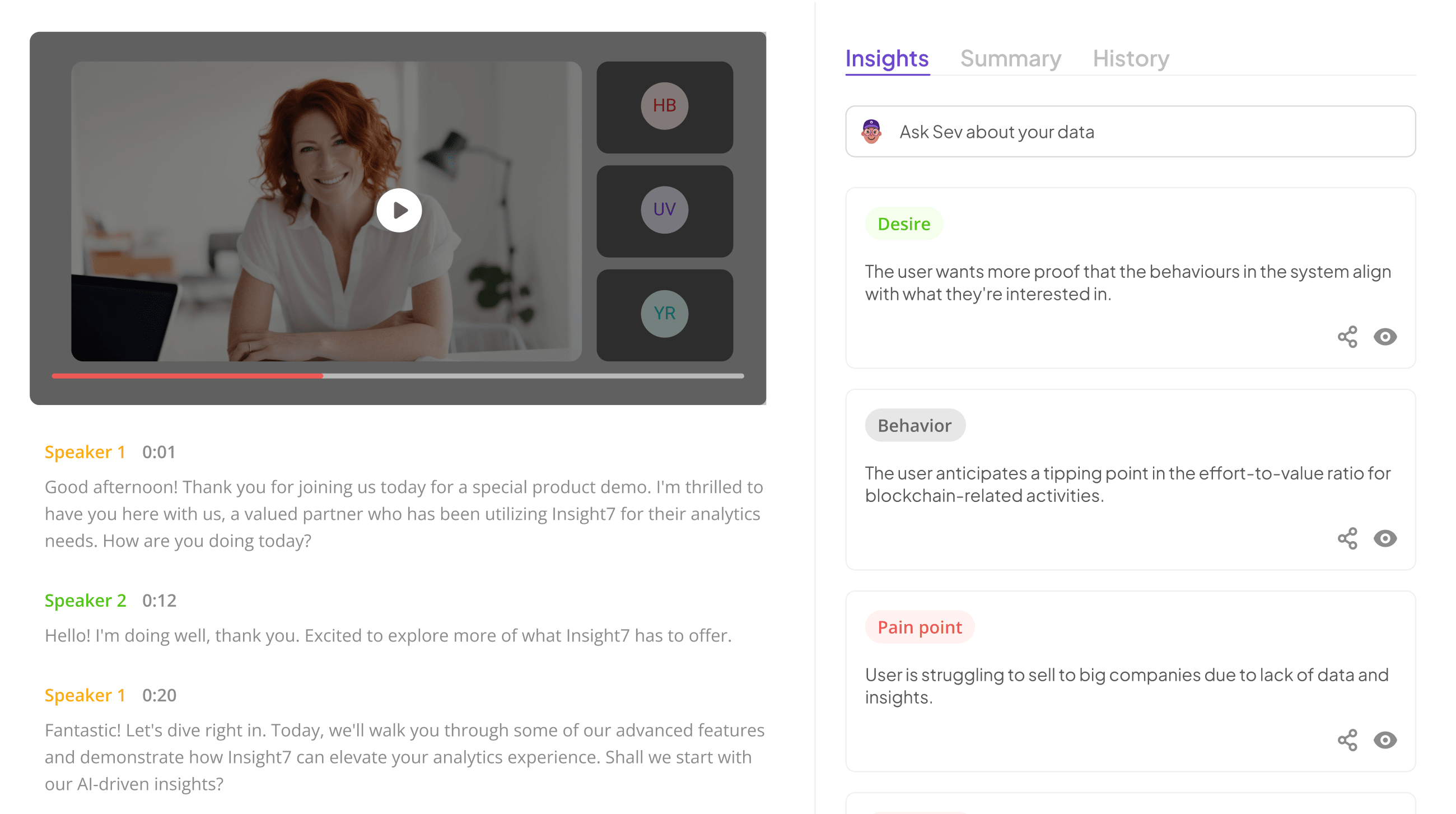
1. Insight7: Automated QA and Coaching for Mid-Market Contact Centers
A 60-rep customer support team is manually scoring 8 calls per agent per month. Their QA manager spends 30 hours a week listening to recordings, and coaching sessions still rely on anecdotal feedback because the sample is too small to surface real patterns.
Insight7 scores 100% of calls automatically against custom QA frameworks, eliminating the sampling bottleneck. Every call gets evaluated on the specific criteria that matter to your operation, whether that is compliance disclosures, empathy markers, objection handling, or script adherence.
The difference from other tools on this list is that Insight7 connects QA scoring directly to structured coaching workflows. A QA score is not useful if it sits in a dashboard. It becomes useful when it triggers a coaching action tied to the specific behavior gap the score reveals. Insight7 closes that loop automatically.
Built for mid-market companies with 40+ customer-facing reps across sales, support, and customer success. SOC 2 Type II certified, HIPAA and GDPR compliant.
The trade-off: Insight7 is not a sales pipeline or forecasting tool. If your primary need is deal tracking and revenue forecasting, Gong or Chorus will serve that use case better.
2. Gong: Revenue Intelligence for Enterprise Sales
Gong captures and analyzes sales calls, emails, and meetings to surface deal risks, winning behaviors, and pipeline health. Its deal boards and forecasting modules give sales leadership visibility into which opportunities are progressing and which are stalling.
Built for B2B enterprise sales organizations with complex, multi-stakeholder deal cycles. Gong’s strength is connecting conversation patterns to revenue outcomes across long sales cycles. The trade-off: Gong’s pricing structure includes a platform fee plus per-seat costs that make it expensive for teams under 50 reps.
It is built for sales pipeline intelligence, not contact center QA or agent coaching workflows. If your primary need is scoring support calls and coaching agents, Gong does not solve that problem.
3. Observe.AI: Contact Center Agent Performance
Observe.AI focuses specifically on contact center agent evaluation, combining post-call analytics with real-time agent assist during live interactions. It scores interactions against custom evaluation forms and surfaces coaching opportunities at the agent level.
Built for contact centers that want AI-driven agent performance management with real-time guidance. The trade-off: Observe.AI is primarily an agent analytics tool. It does not extend into sales pipeline management, deal forecasting, or marketing attribution.
Teams that need QA scoring tightly integrated with structured coaching workflows (rather than just surfaced as dashboards) may find the coaching loop less direct than purpose-built coaching platforms.
4. CallMiner: Speech Analytics for Compliance-Heavy Enterprises
CallMiner provides deep speech analytics with a particular strength in compliance monitoring for regulated industries like financial services and healthcare. It analyzes 100% of interactions to detect compliance violations, sentiment trends, and process adherence at scale.
Built for large enterprises in regulated industries that need granular speech analytics and compliance alerting. The trade-off: CallMiner’s depth comes with implementation complexity.
Deployment timelines tend to be longer, and the platform requires dedicated resources to configure and maintain. Mid-market teams with 40 to 100 reps often find the setup overhead disproportionate to their needs.
5. NICE CXone: Interaction Analytics Inside a Full CCaaS Platform
NICE CXone includes interaction analytics as part of its broader cloud contact center suite. If your operation already runs on NICE for routing, workforce management, and quality management, the analytics layer integrates natively.
Built for enterprises already invested in the NICE ecosystem who want analytics without adding another vendor. The trade-off: the analytics capabilities are strongest when paired with the full NICE stack.
Organizations that only need call analysis without the entire CCaaS platform will pay for infrastructure they do not use. Standalone AI call analysis tools typically offer more flexibility and faster deployment.
6. Chorus (ZoomInfo): Conversation Intelligence for ZoomInfo Customers
Chorus, now part of ZoomInfo, offers conversation intelligence with tight integration into ZoomInfo’s prospecting and enrichment data. It records and analyzes sales calls, surfacing deal insights and coaching recommendations within the ZoomInfo workflow.
Built for sales teams already using ZoomInfo who want conversation intelligence tied to their prospecting data. Pricing typically runs lower than Gong for comparable seat counts.
The trade-off: since the ZoomInfo acquisition, Chorus’s development has focused on integration with the ZoomInfo suite rather than standalone innovation. Teams that do not use ZoomInfo get less value from the integration advantage that justifies choosing Chorus over alternatives.
7. Dialpad: AI Transcription Built Into a Phone System
Dialpad provides real-time transcription, AI-generated call summaries, and sentiment detection as native features within its UCaaS and CCaaS phone platform. You do not need a separate tool for basic call transcription and keyword tracking.
Built for teams that want a phone system with built-in AI features rather than a dedicated analytics platform. The trade-off: Dialpad’s AI capabilities are a feature of a communications platform, not a standalone call analysis engine.
The analytics depth, scoring customization, and coaching integration are lighter than purpose-built AI call analysis tools. If you need custom QA frameworks, automated compliance scoring, or structured coaching workflows, Dialpad will not replace a dedicated solution.
8. CallRail: Marketing Attribution, Not Call Analysis
CallRail tracks which marketing campaigns, channels, and keywords drive inbound phone calls. It assigns unique tracking numbers to campaigns and provides call recording, transcription, and basic conversation tagging for marketing teams.
Built for marketing teams and agencies that need to attribute phone leads to specific campaigns. It is particularly strong for local businesses, law firms, home services, and healthcare practices running multi-channel advertising. The trade-off: CallRail is a marketing attribution tool, not a contact center QA or coaching platform.
It does not score calls against custom frameworks, provide agent-level performance analytics, or connect to coaching workflows. If your goal is understanding which ad drove a call, CallRail is the right tool. If your goal is to improve what happens on that call, you need a different category of solution.
What Actually Matters When Choosing
The biggest mistake teams make with AI call analysis is buying a sales intelligence tool when they need a QA and coaching platform, or buying a marketing attribution tool when they need agent performance analytics.
The tools on this list serve genuinely different use cases, and the right choice depends on three things: whether your primary goal is QA and coaching, sales pipeline visibility, or marketing attribution; how many reps you need to cover; and whether you are in a regulated industry that requires compliance-specific scoring.
If your contact center has outgrown manual QA sampling and needs automated scoring tied directly to coaching workflows, book a demo with Insight7 to see how 100% call coverage changes what your coaching sessions look like.
Frequently Asked Questions
1. What is AI call analysis?
AI call analysis uses speech recognition, natural language processing, and machine learning to automatically transcribe, score, and extract patterns from phone conversations. It replaces manual call review with automated evaluation across 100% of interactions.
2. How is AI call analysis different from call recording?
Call recording captures audio. AI call analysis evaluates that audio against specific criteria, including compliance adherence, sentiment, talk-to-listen ratios, and custom QA frameworks, then surfaces actionable patterns. Recording is the input; analysis is the output.
3. Which AI call analysis tool is best for contact centers?
It depends on your team size and primary need. Insight7 is built for mid-market contact centers (40+ reps) that need automated QA scoring connected to coaching workflows. Observe.AI and CallMiner serve similar contact center use cases with different strengths in real-time assist and compliance analytics, respectively.
4. Can AI call analysis tools replace manual QA?
They replace the sampling model, not the QA function. Instead of manually reviewing 2% to 5% of calls, automated scoring evaluates every interaction. QA managers shift from listening to calls toward analyzing patterns, managing exceptions, and calibrating scoring criteria.
5. How much do AI call analysis tools cost?
Pricing varies widely by category. Marketing attribution tools like CallRail start around $50 per month. Conversation intelligence tools like Gong run $1,400 to $2,000+ per seat annually with additional platform fees. Mid-market QA and coaching platforms vary based on team size and feature requirements. Always evaluate total cost against the specific problem you are solving.








