
Google Contact Center AI is Google Cloud's set of chatbots, agent assist and call analytics. For outbound voice, the change that matters is campaign control: consent, calling hours and retries. Compare Google Contact Center AI alternatives on those.
Eight options compared at a glance
Judge each option on the campaign controls it ships and on how it charges. Google's own baseline is usage based. Its Conversational Agents pricing bills voice agents by the second of audio, at $0.001 for Flows and $0.002 for Playbooks.
| Tool | Best for | Key features | Pricing model |
|---|---|---|---|
| Retell AI | Engineering-led teams | Batch calls from dashboard or API | Per minute, no platform fee |
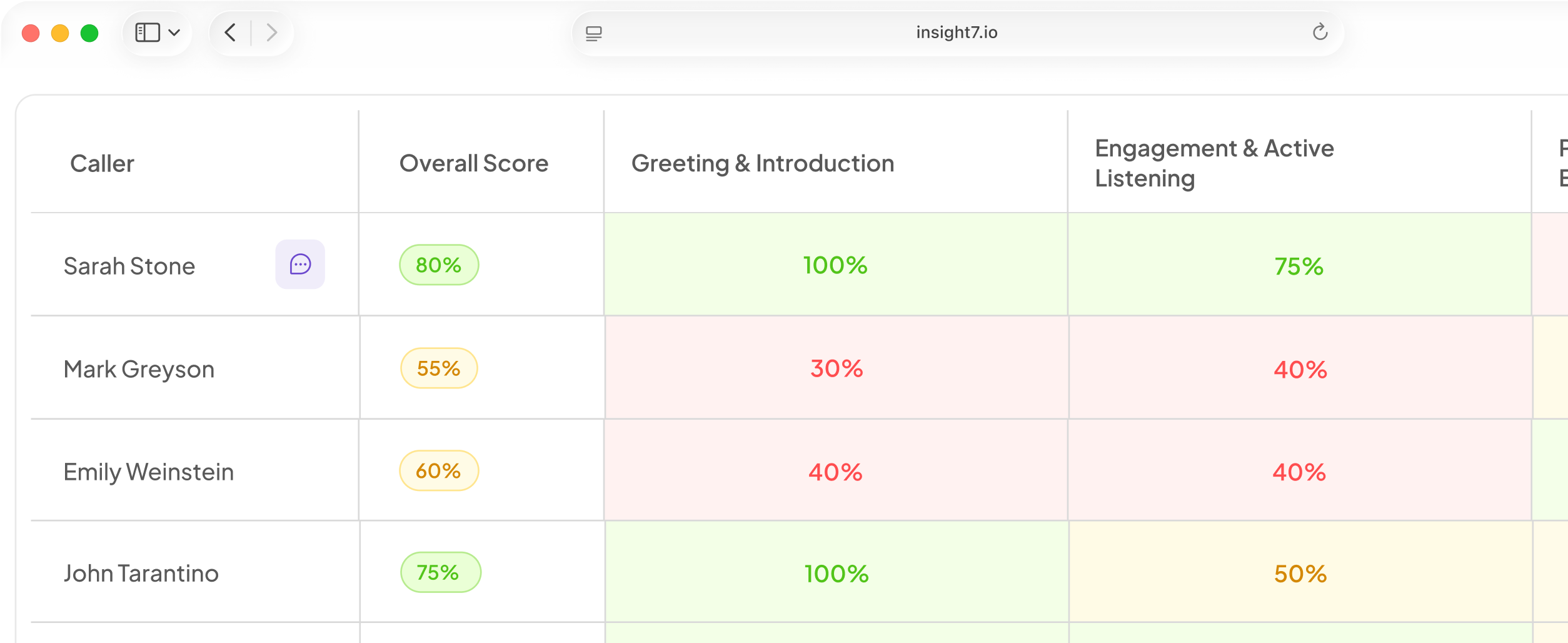
| Insight7 (beta) | Teams wanting campaigns and QA together | Consent marking, calling hours, retry rules. CSV upload. Each call scored when it ends. | See insight7.io/pricing/ |
| Bland AI | Very high call volumes | Bulk outbound, call pathways | Per minute, set by plan |
| Synthflow | Ops teams without developers | Voice agents, confirm outbound controls | Ask for written rates |
| Vapi | Builders mixing providers | Outbound calling API, batch calls | Ask for written rates |
| Five9 | Large human-agent floors | Dialer-based contact center | Ask for written rates |
| Genesys Cloud CX | Full-stack replacement | Outbound modes, multichannel campaigns | Per user per month |
| Amazon Connect | Teams already on AWS | Predictive dialer, voicemail detection | Pay as you go |
1. Retell AI: fast API-built phone agents
Retell AI suits an engineering-led team that wants to build and own its call flow. Batch calls start from the dashboard or the API. Each recipient's details come in from a CSV template. The batch runs on concurrency slots, so a big list queues and dials as slots free up.
Pricing model: Retell's pricing page shows pay as you go at $0.07 to $0.31 per minute with no platform fee. The first 20 concurrent calls are free. Extra concurrency is $8 per slot each month.
Check: ask how consent and calling-hour rules are set for your campaigns.
2. Insight7: outbound campaigns plus call scoring (beta)
Insight7 suits teams that want campaigns and QA in one place. Its voice campaigns are in beta and switched on per organisation. A manager sets a goal, an audience, the AI caller and the rules. Each call is held as a real conversation and scored when it ends. Campaigns carry consent marking, calling hours, retry rules and a test call to your own phone. Contacts come in by CSV, and you can test the agent in the browser.
Two details protect your cost per reached contact. Calls where only the AI spoke do not count as reached, and a carrier's temporary refusal does not use up a retry. In beta, campaigns also run in Yoruba and Igbo on a lower-cost voice engine that uses ElevenLabs voices.
The same platform scores every call on a scorecard your team owns.
Pricing model: see the pricing page for plans.
3. Bland AI: high-volume outbound at scale
Bland AI suits a developer-backed team sending very large call volumes. Its voice product page lists unlimited concurrent calls on enterprise plans, pacing controls, call disposition tracking, and dialer and CRM integration. It also describes conversational pathways for regulated workflows.
Pricing model: per connected minute, set by plan. Billing docs show Start (free) at $0.14, Build ($299) at $0.12 and Scale ($499) at $0.11. Transfer time is billed separately.
Check: the voice page lists no call scoring or coaching, so ask what QA you get or plan your own.
4. Synthflow: agents for ops teams
Synthflow suits a small or mid-sized team without developers that wants to launch voice agents. Before you shortlist it, test one outbound campaign end to end. Check how it handles voicemail, a request for a human and calling hours. Confirm these on its product pages and in a demo.
Pricing model: check Synthflow's pricing page for the current model. Ask for tiers, bundled minutes, concurrency and telephony charges in writing.
Check: confirm whether call scoring and coaching are included. If not, plan your own QA.
5. Vapi: a flexible voice-agent toolkit
Vapi suits builders who want to mix providers. Its outbound calling API places single or batch calls, which you can schedule. That gives engineers control over each part of the stack. It also means someone must own testing and monitoring.
Pricing model: see Vapi's pricing page. Ask what is charged per minute by Vapi and what passes through from model, voice and telephony vendors. Forecast cost per minute from a test batch.
Check: ask who sets consent rules, QA scoring and coaching in your build.
6. Five9: a dialer-centred contact center
Five9 suits a large human-agent outbound floor that adds AI in stages. It is a cloud contact center, so you are choosing a platform with dialing built in. Ask how its outbound dialer paces calls when an AI agent, not a person, takes them.
Pricing model: see Five9's pricing information. Ask for the seat price and any AI usage rates in writing.
Check: a small team may pay for more platform than it needs, so size the seats first.
7. Genesys Cloud CX: full suite, outbound included
Genesys Cloud CX suits an enterprise replacing its whole stack. Its outbound dialing supports preview, progressive, power, predictive and agentless modes, plus SMS, email and WhatsApp campaigns. Campaigns can skip numbers on a do-not-call list.
Pricing model: per user each month, billed annually. Genesys's pricing page lists CX 1 at $75, CX 2 at $115, CX 3 at $155 and CX 4 at $240. Certain AI features also need usage tokens.
Check: you pay for seats, so an AI-only campaign team buys more than it needs.
8. Amazon Connect: pay-as-you-go outbound
Amazon Connect, now branded Amazon Connect Customer, suits a team already on AWS that wants usage-based cost. Its outbound campaigns include a predictive dialer with machine-learning detection of voicemail greetings and busy signals. Both are native, so you need no third-party dialer. The page also lists AI "agentic voices" in 50+ languages.
Pricing model: pay for use, with no minimums and no seat licensing. Voice is $0.038 per minute plus standard telephony rates. SMS is $0.014 per message. Budget for telephony separately.
Check: the dialer paces calls to predicted agent availability, so ask how an AI-only campaign is paced and billed.
How to choose for outbound campaigns
Pick by the team you already have. Engineers who want to own the call flow fit Retell AI, Vapi or Bland AI. An ops team with no developers fits Synthflow. A large human-agent floor fits Five9 or Genesys Cloud CX. A team already on AWS fits Amazon Connect. A team that wants campaigns and QA together can look at Insight7, in beta.
Then run three buying checks:
- Consent and AI disclosure. In the US, the FCC ruled in 2024 that AI-generated voices count as "artificial" under the TCPA, so these calls need consent. In the EU, providers must make sure people know they are talking to an AI system, which has applied since 2 August 2026. Ask each vendor which settings it switches on.
- Cost per reached contact. Divide total spend by the contacts who actually spoke to the agent. Voicemail and silent calls add minutes but no reach.
- A short pilot on a small sample. Banks want to pay only after results show a measured lift.
Plan the human handover too. Gartner found that 87% of 3,566 customers say a company using GenAI for service must offer a way to reach a human. Buyers also ask whether handover is polite and who chases a missed one. Finally, ask each vendor how it connects to your CRM and dialer.
Related reading: 12 Best AI Call Center Software Platforms for Customer Service and Outbound Campaigns, AI Contact Center Glossary With 40 Terms CX and Operations Leaders Should Know and How to Write an RFP for AI Call Center Software With a Free Template.
Questions people also ask
What is Google CCAI?
Google Contact Center AI (CCAI) is Google Cloud's set of tools for contact centers. It covers chatbots, agent assist and call analytics. Check Google's pages for how each part is packaged.
How much does Google CCAI cost?
It depends on the part. Conversational Agents voice is billed per second of audio. Conversational Insights bills voice conversations per minute. Price outbound dialing separately.
Can Google CCAI Agent Assist be used for outbound campaigns?
Agent Assist helps a human agent during a live call, so it can support people who take outbound calls. Ask Google whether it covers consent, calling hours or retries. A dialer or campaign tool may need to do that.
Can AI make outbound calls?
Yes. An AI caller dials a contact list, holds the conversation and logs the outcome. Test how it handles voicemail, silence and a request for a human, because those cases decide your results.
Is AI outbound calling legal?
It is legal in many places if you follow the rules. In the US, the FCC's 2024 ruling says AI voices need consent. In the EU, Article 50 requires disclosure. Check calling-hour and do-not-call rules too.
How much does AI outbound calling cost?
Vendors that publish rates here charge per minute. Bland's billing docs list $0.11 to $0.14 per connected minute. Amazon Connect lists voice at $0.038 per minute plus telephony. Your real cost per reached contact is higher.
What is the difference between inbound and outbound calling?
Inbound calls come from customers to you. Outbound calls go from you to customers. Outbound adds a contact list, consent, calling hours and retry rules, so campaign tooling matters more.
Pick on cost per reached contact
Headline rates hide silent calls, voicemail and retries. Judge each tool by spend per person who spoke to the agent. Before you sign, ask every vendor for a small test campaign with consent, calling hours and human handover on.