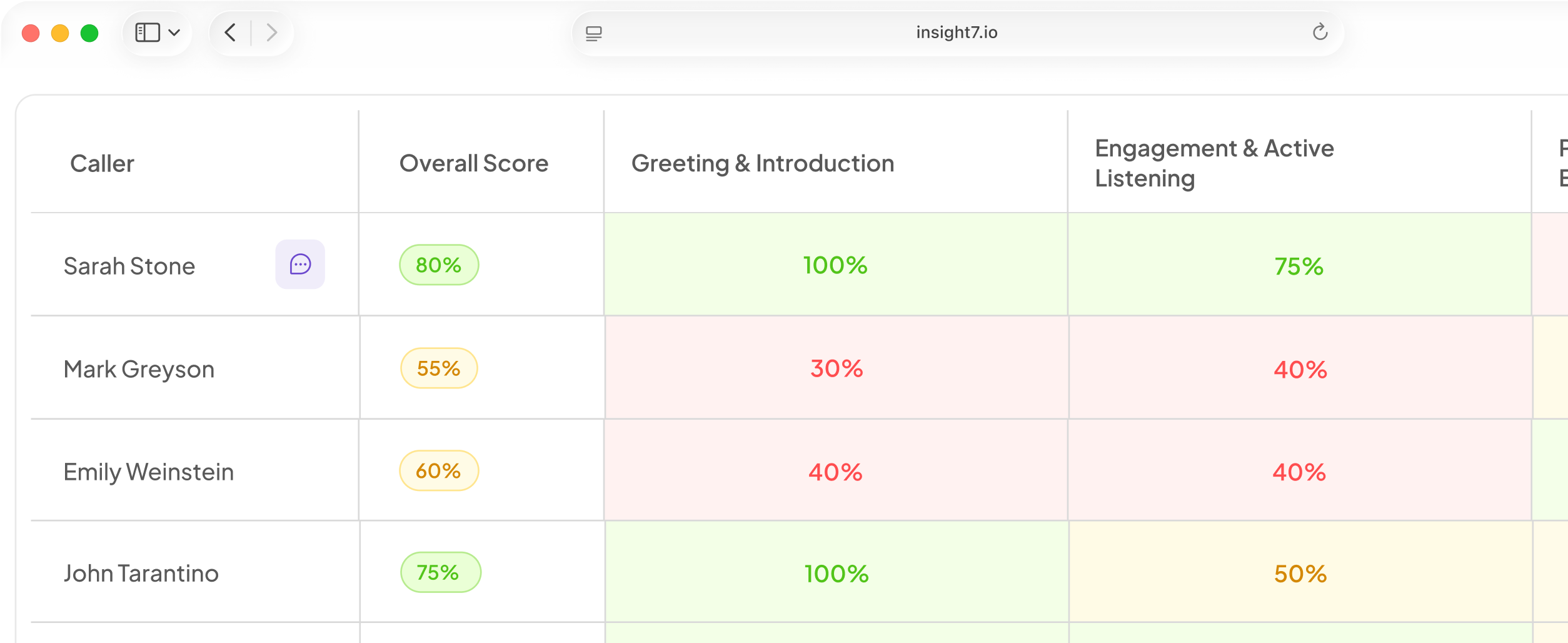

An unanswered-call follow-up is a rule that sends a text, WhatsApp message or email when an AI call ends with no live conversation. To follow up unanswered AI calls with SMS, WhatsApp and email, tie each message to the call outcome and a timer.
Define what counts as unanswered
Start by listing the call outcomes that fire a message. A trigger is only as good as the outcome label behind it.
These outcomes usually qualify:
- No answer
- Busy
- Voicemail
- Connected but silent
- Answered by the AI only
- Hung up early
- Repeated carrier refusal (conditional, see below)
The last four are easy to miss. A call can connect and still never reach a person. Insight7's campaigns, in beta, treat this the same way. Calls where only the AI spoke are not counted as reached. Your trigger should do the same.
Carrier refusals need care. A carrier's temporary refusal does not use up one of the contact's retry attempts. Treat a single refusal as a retry case. It joins the trigger list only if the refusal keeps repeating.
Now check the labels. In Insight7's beta dashboard, a reviewer can read each transcript when the call ends, and call outcomes are pulled from the transcript. Read a few "unanswered" calls each week. Look for a short hello followed by a hang-up. That is a different case from a ring that nobody picked up.
Then add the guardrails. A campaign has consent marking, calling hours, retry rules and a do-not-call list. Messages should obey the same limits.
Finish the call retries before messaging
Send the first message only after the last call attempt has failed, unless the contact asked for no calls. A text that lands between two redials makes the second call feel like harassment. It also gives the person a reason to ignore the phone.
Set the retry rules first. You choose how long to wait after a failed call, and a maximum number of tries. The message trigger then reads "attempt count reached the maximum" or "attempt count reached N with no live conversation."
How many tries is enough? Our advice is three to four. Many lenders find people answer on the second or third try, and that mornings and evenings beat midday. Treat those numbers as a starting point and test your own list.
Here is the setup to copy:
- Retry gap: a few hours between tries, spread across different times of day.
- Max attempts: three or four, then the message trigger fires.
- Calling window: apply the same window to your messages (see the timing step below).
Run a small test round before you scale. Compare answer rates by hour, then move the window to the best slots.
Pick the channel by contact and consent
Choose the channel from what you hold on file and what the person agreed to. A phone number does not give you an email address, and consent for one channel does not cover another.
| Channel | Fits when | Consent and rules | Hold on file |
|---|---|---|---|
| SMS | Fast nudge, short reminder | Consent should name texts | Mobile number, text opt-in |
| Customer already uses it | Opt-in needed, approved template to start | Number, WhatsApp opt-in | |
| Longer detail, links, documents | Consent should name email | Email address, email opt-in |
Some customers ask for no calls and prefer WhatsApp or app messages. For them, a message may be the better first route. Mark consent per channel in the campaign.
Rules differ by region. In the US, AI-voice calls already need consent under the TCPA, per the FCC's 2024 ruling. In the UK, the ICO's PECR guidance sets out the consent rules for electronic mail marketing, including how people can withdraw consent. For WhatsApp, collect opt-in and plan on approved templates, as Meta's template guidelines describe. In the EU and Nigeria, GDPR, ePrivacy and the NDPA apply, so check each regulator's page first.
Write one short template per channel
Write one template per channel, each with one ask. Name who you are, say why you called, give one next step and add an opt-out line. Put the AI disclosure in the first line.
SMS (keep it short enough to read at a glance):
Hi {first_name}, this is {company}'s AI assistant. We tried to call about {reason}. Reply YES and a person will call you. Reply STOP to opt out.
WhatsApp (submit as a template):
Hi {first_name}, {company}'s AI assistant tried to call you about {reason}. Reply with a time that suits you, or reply YES for a call from a person. Reply STOP to opt out.
Email:
Subject: Sorry we missed you, {first_name}
Body: Hi {first_name}, {company}'s AI assistant tried to call about {reason}. Click here to pick a time, or reply YES and a person will call. Prefer no messages? Use the unsubscribe link. Send it as plain text with the link written out, so it still reads if images are blocked.
Change only the {reason} line by campaign type. Insight7's beta campaigns come in four types: customer survey, lead follow-up, cold outreach or win-back. For a survey, write "a two-minute survey." For a win-back, write "an update on your account." For a payment reminder, write "your payment due on {date}."
Three rules sit behind these templates:
- Disclosure: In the EU, any AI that talks to people, including automated phone systems, must say it is AI from the first interaction. The US rule to say so at the start of a call was still not final as of mid-2026. Disclose anyway.
- Handoff: Always offer a person. 87% of 3,566 customers say a company using GenAI for service must offer a way to reach a human.
- WhatsApp approval: Meta sorts templates into marketing, utility and authentication. Meta's template guidelines explain the categories. Keep the text to the follow-up only.
Set the timing, stop rules and handoff
Use this schedule as our suggested starting point, then test it on your own list. Send the first message soon after the last failed attempt, then space the rest out:
| When | Channel | Purpose |
|---|---|---|
| Soon after the final attempt (our suggestion: within 15 minutes) | SMS or WhatsApp | "Sorry we missed you" plus one next step |
| Next day, at a different time of day | Second message or email | Add detail or a link |
| Day 3 to 5 | Last nudge, then stop |
Compare reply rates for each step and move the gaps to where people answer most. Apply your calling window and quiet hours to messages too. A text at 11pm breaks trust like a late call.
Stop the sequence on any of these:
- A reply
- A link click
- An opt-out
- An answered call
- A do-not-contact entry
Route replies to a person or a callback queue. Buyers raise handover design on their own. They ask whether it is polite, how sensitive issues or disputed amounts are handled, and whether anyone chases a missed handover. Name an owner and a deadline for every reply.
Track reply, callback and opt-out rates for each channel. If SMS and voice run in parallel, hold back a small group that gets calls only. Without it you cannot tell which channel drove the conversion.
In Insight7, managers set a goal, an audience, the AI caller and the rules for a campaign. The dashboard pulls call outcomes from the transcript. Your CRM or messaging tool needs that outcome data for the trigger. Insight7 writes transcripts and performance analytics back to Salesforce and HubSpot, or exports them via API. Confirm in a demo how outcomes reach your CRM or messaging tool.
Related reading: Best Times to Make Outbound Customer Calls by Day and Hour With Calling Window Guidelines, How to Build an Automated Escalation Call Tree for On-Call and Incident Response Teams and 6 Fallback Designs for When an AI Voice Agent Can’t Answer a Customer’s Question.
Questions people also ask
How long should I wait before sending a text after a missed AI call?
Start soon after the final failed attempt, while the missed call is fresh, and test from there. If that falls outside your calling window or quiet hours, hold the text until the window opens.
How many times should an AI voice agent retry a call before sending a message?
Three to four tries is a good starting point, because many people answered on the second or third dial. Test it on your own list.
Do I need consent to text or WhatsApp someone after an unanswered AI call?
Usually yes. Consent to a call does not cover a text, a WhatsApp message or an email. In the US, AI-voice calls already need consent under the TCPA. Record the date, wording and channel for each contact.
Should I follow up with SMS, WhatsApp or email first?
Use the channel the person agreed to. With no preference on file, SMS is the quickest nudge. Use WhatsApp for people who ask for no calls or already message you there. Keep email for longer detail.
Can I send a WhatsApp message to a customer who has not messaged me first?
Only with their opt-in, and the first message must be an approved template. Once they reply, you can usually answer in free text for a short window. Check the template guidelines linked above.
Does a follow-up message need to say the call came from an AI?
Say it, even where no rule forces you. In the EU, AI that talks to people must say it is AI from the first interaction. The US start-of-call rule was only proposed.
How do I stop follow-up messages once the customer calls back or replies?
Check status before every send. A reply, click, opt-out or answered call should end the sequence. Keep your do-not-contact list synced between the dialer and the messaging tool.
Check consent before you send
Every follow-up message should obey the same consent, calling hours and opt-out rules as the call. Before you start, check that every contact has recorded consent for each channel.