
AI voice agents are software that phones a customer, talks in plain speech and logs the outcome. For onboarding drop-off, call the people who stalled at one named step, such as KYC or first funding, instead of blasting every sign-up.
Find the drop-off segment worth calling
Start by cutting your funnel into steps. A typical fintech funnel runs: signed up, started KYC, verified, funded, first use. For each step, count how many people stopped there and how long ago they last acted. Your CRM or product event data already holds both.
Rank the segments by recoverable value, not by size. Someone who finished KYC but never funded is close to revenue. Someone who signed up eight months ago and never opened the app is not. A person who stalled yesterday is easier to win back than one who stalled last quarter. Score each segment on value per customer and on how recent the stall was. Call the top one first.
Next, split customer-caused drop-off from product-caused drop-off. A voice agent can fix the first kind. It cannot fix a broken verification screen. A digital lender we spoke with tracked small wins, such as app download and early KYC, apart from full conversion. That showed which losses were the customer's and which were the product's.
Fintech, investment and lending teams tend to leak at the same few points. People sign up and never fund. They start KYC and never finish. Emails alone are not fixing it.
Pick one step and one time window. "Started KYC, no activity for 24 to 48 hours" is a good first segment.
Set one call goal per segment
Give each campaign one goal that matches the one stalled step. "Finish KYC" or "make the first deposit" works. Attach one number to it, such as the share of called customers who finish the step within seven days.
Next, choose the campaign type. Win-back suits people who went quiet after a step. Lead follow-up suits people who never finished sign-up.
Then set the trigger and the delay. Trigger the call from an event, such as no KYC progress, not from a calendar. A day after the drop-off is a sound starting delay. Many people stop for small reasons, such as a failed upload or an app closed in frustration. A prompt, helpful call can fix those on the spot.
Fix the pass condition before launch. A call passes if one of three things happens:
- The customer completes the step.
- The customer books a callback.
- The customer gives a clear reason for leaving.
Each one can be counted. A goal like "ask how they are doing" fails because it produces nothing to count.
Write a short, honest call script
Keep the script short, because the call is a rescue, not a sales pitch. It has six parts, in this order.
- Opening line. Greet the person by first name and ask whether you are speaking to them. The agent must confirm it has the right person before it says anything about their account. A wrong person gets an apology and the call ends.
- AI disclosure. Say in the first sentence that this is an AI assistant calling for your company. The EU AI Act has required any AI that talks to people to say so since 2 August 2026. Colorado's Chatbot Safety Act takes effect on 1 January 2027, and disclosure rules are spreading across the EU, US states and other regions.
- One question per stall reason. Ask "What got in the way?" and then branch. Upload failed, ID did not match, no time, changed my mind. Give each branch one fix and one next step.
- The offer to text the link. Some customers prefer a message to a call, so let the agent send the step link by text.
- Do-not-say rules. List what the agent must never do. It should not quote balances, guess at loan terms or answer questions outside its brief. Add a plain rule for how it should sound.
- Human handover. Say how a customer reaches a person. Buyers ask whether the handover is polite, what happens to a disputed amount, and who chases a handover nobody picked up. Gartner found 87% of surveyed customers expect a route to a human when a company uses GenAI for service.
Test the script by talking to the agent yourself before any customer hears it.
Set retry rules for the calls
Set five retry rules before you press go: the number of attempts, the gap between them, the calling window, a do-not-contact list and consent marking.
A consumer lender we spoke with settled on three to four attempts, because many customers only picked up on the second or third try. After testing, it shifted its start to the evening, since mornings and evenings answered better than midday.
As an example setup, one demo ran Monday to Saturday, 8am to 8pm, with three attempts: the second about 2 hours after the first and the third 8 hours after that. Adjust from your own answer rates.
Two counting rules keep your numbers honest. A carrier's temporary refusal should not use up an attempt, and a call where only the AI spoke should not count as reached.
Consent comes first. In the US, AI-voice calls already need consent under the FCC's 2024 ruling. Mark consent per contact and keep a do-not-contact list that every campaign checks.
Launch small and measure recovery
Launch on a small sample first. Banks will not pay to find out whether it works. They want a short pilot on a small sample, with payment only after a measured lift. Run it in a few small rounds and apply what you learn before scaling.
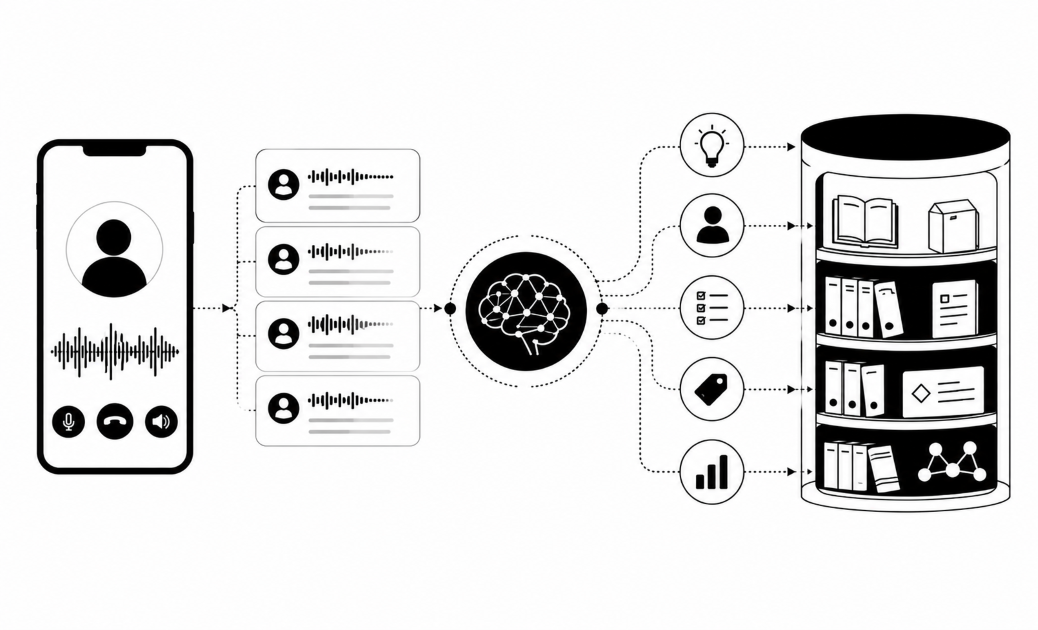
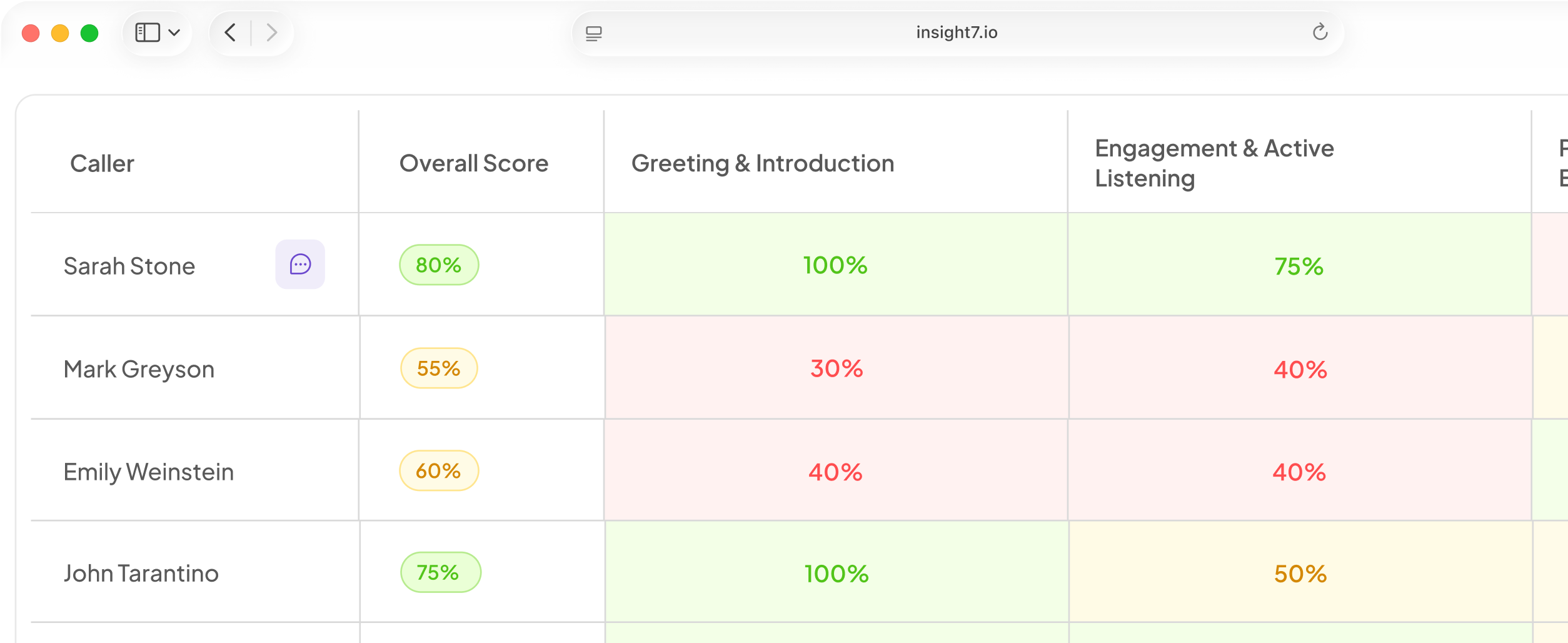
Insight7 supports this in beta, and the beta is switched on per organisation. Managers set a goal, an audience, the AI caller and the rules, and each call is scored when it ends. A campaign can be a customer survey, lead follow-up, cold outreach or win-back, and it carries consent marking, calling hours, retry rules, a test call to your own phone and a do-not-call list. Contacts come in by CSV upload or typed in directly. A dashboard shows calls in progress, lets a reviewer read each transcript, and pulls call outcomes from it.
Now measure against a holdout group: a random slice of the stalled segment that gets no call. Recovery rate is the customers who finished the stalled step within a set window after the call, divided by the customers you targeted. Compare it with the holdout's rate. The gap is what the calls added.
You need the holdout because other channels run at the same time. If SMS or email also nudge these people, many would have finished anyway. Without a holdout you cannot tell whether the calls earned their cost.
Track the call funnel in order:
- Reached
- Real conversation (not AI-only)
- Step completed
- Callback booked
- Reason for leaving
Tag each reason for leaving. Send product-caused reasons, such as a failing upload, to the product team.
Finally, divide campaign cost by customers recovered, then set that against your cost to acquire a customer. Champions need that comparison to make the case upstairs.
Related reading: How to Reduce Support Tickets Caused by Incomplete KYC With Automated Outbound Calls, AI Outbound Call Script Templates for Abandoned Signups and Incomplete Applications and How to Recover Failed Payments and Expired Cards With AI Outbound Calls.
Questions people also ask
What is an AI voice agent for onboarding recovery?
It is a phone agent that calls customers who stopped partway through sign-up, asks what blocked them and helps them finish. It also records the reason, so your product team learns why people leave.
How soon should you call after a customer drops off?
Start about a day after the stall, then test shorter and longer delays on separate groups. Early calls catch small, fixable problems. Late calls reach people who have already forgotten the app.
How many times should an AI voice agent retry a call?
Three or four attempts is a sound start. Spread them across different times of day, and do not count a carrier refusal as an attempt. Stop at once when someone asks not to be called.
Do AI voice calls need consent?
Often yes, and the rules differ by region. Beyond recording consent per contact, check whether your region also requires a calling-hours limit or a recorded opt-out, and ask counsel before dialling a new market.
Does the agent have to say it is an AI?
In many places, yes. EU rules have required it since August 2026, and Colorado follows in 2027. Put it in the first sentence so no customer feels tricked.
What counts as a good recovery rate?
There is no universal figure. Judge your rate against the holdout group and against your cost to acquire a new customer. If recovery costs less than replacing the customer, the campaign pays.
Should I use voice or SMS to win customers back?
Use voice when the message is urgent, you need an answer, or the customer likely has questions. Use text for simple links. Run both against a holdout to see which one moves your numbers.
Which onboarding step will you call first?
Recovery comes from calling one stalled step with one clear goal, then comparing against people you did not call. Insight7, used by more than 1,000 businesses, has campaigns in beta, including a win-back type, switched on per organisation. Which single onboarding step loses the most winnable customers?