
Whether you sign for an AI voice agent or walk away depends on two weeks of clean evidence. This template gives you a day-by-day AI voice agent pilot plan, with roles, data and review checkpoints. Fill it in before the first call.
Fill in this pilot sheet first
Goal and pass line. Write one sentence on what the pilot must prove. Then set the pass/fail line before day 1. Pick from reached rate, qualified outcome rate, handover rate and cost per outcome against your current channel. Banks want a short, low-risk pilot on a small sample, with payment only after a measured lift.
Roles
| Role | Decides |
|---|---|
| Sponsor (budget holder) | Signs or walks away |
| Pilot owner | Scope, schedule, final scorecard |
| Ops or CX lead | Script, handover rules |
| Compliance or legal reviewer | Consent, disclosure, stop rule |
| IT or CRM contact | Fields read and written |
| QA reviewer | Transcript checks |
| Vendor contact | Fixes and setup |
Data checklist
- A small contact sample with consent status.
- Your do-not-contact list.
- The script or knowledge the agent may use.
- CRM fields to read and write.
- A baseline from the current channel (human or SMS) on the same audience.
- Calling hours, retry rules and the escalation path.
The day-by-day two-week plan
Use ten working days. The flag (⚑) marks a review checkpoint.
| Day | Action | Owner | Output |
|---|---|---|---|
| 1 | Kickoff. Lock the goal and pass line. | Pilot owner, sponsor | Signed pilot sheet |
| 2 | Hand over the contact sample, do-not-contact list and baseline. Grant CRM access. | IT or CRM contact | Data loaded, access confirmed |
| 3 | Sign off the script, the AI disclosure line and escalation rules. | Ops lead, compliance | Approved script |
| 4 | Test in the browser, then by a call to your own phone. | QA reviewer, vendor | Test transcripts, fix list |
| 5 ⚑ | Checkpoint 1: go or no-go on launch. | Sponsor, pilot owner | Launch decision |
| 6 | Soft launch on a very small sample. Read transcripts live. | QA reviewer | Transcript notes |
| 7 ⚑ | Checkpoint 2: fix script and rules from the transcripts. | Ops lead, compliance | Script v2 |
| 8 | Run the main pilot wave. | Pilot owner | Calls completed |
| 9 | Review retries and hand-offs. Match outcomes to CRM records. | IT contact, QA reviewer | Clean outcome table |
| 10 ⚑ | Checkpoint 3: score results against the pass line and baseline. Decide. | Sponsor | Scorecard, decision |
Day 4, test the awkward paths. Test them as well as the happy one. Ask for a human, say "stop calling me", stay silent and give a wrong answer. Your compliance reviewer should watch at least one of these tests.
Day 6, keep the sample tiny. A script fault that reaches a handful of people is a lesson. One that reaches thousands is a complaint.
Day 9, count carefully. A call where only the AI spoke is not a reached call. A carrier's temporary refusal should not use up a retry. Wrong counts skew your reached rate. Also tag each call with its outcome and its CRM record, so the sponsor can trace any number on the scorecard back to a call.
Review checkpoints
Day 5, launch readiness. The sponsor, pilot owner and compliance reviewer read the test-call transcripts. They check consent, the do-not-contact list and the handover to a human. Ask whether the handover is polite, what happens to a disputed amount, and who chases a handover nobody picked up. Decision: launch or hold.
Day 7, mid-pilot. The ops lead and QA reviewer read a transcript sample. They look for dropped or silent calls and complaints. One critical error fails a call, even if the checklist score looks fine. Decision: fix, continue or stop.
Day 10, results. The sponsor sees outcomes against the pass line and baseline. Decision: sign, extend or walk away.
Stop rule: any compliance breach or complaint pauses the campaign.
How to use this plan
Run the pilot in your own live account, on a small sample. Keep your own data, your own phone numbers and your own CRM in the test. Judge the pilot on measured lift, not on a polished demo. One insurer runs every proof of concept in its own live environment, because past vendors promised a lot and delivered a limited product after purchase.
Count results the hard way. Your reached rate is only as honest as your counting rules. Write the Day 9 rules on the pilot sheet before Day 1. Then compare against a baseline from the same audience. Run it in parallel if you can. If a human or SMS group runs alongside the AI group, a difference can be traced to the channel and not to the list. If you run them one after the other, a holiday or a payday can skew the comparison.
Keep the human option in the design. A pilot that traps people will look good on containment and bad on complaints. A Gartner survey of 3,566 customers found that 87% say companies using GenAI for service must offer a way to reach a human. So test the handover on Day 4, and read every handover transcript on Day 9.
Where Insight7 fits. Insight7's outbound voice campaigns are in beta. A manager builds a campaign with a type, consent marking, calling hours, retry rules and a do-not-call list. Contacts load by CSV upload or can be typed in. They can talk to the agent in the browser with no phone number needed. They can also place a test call to their own phone. During the pilot, a dashboard shows calls in progress and lets a reviewer read each transcript when the call ends. A campaign scorecard at the end of a campaign is described in the product spec. Confirm in the app that it is live before you build your Day 10 checkpoint around it.
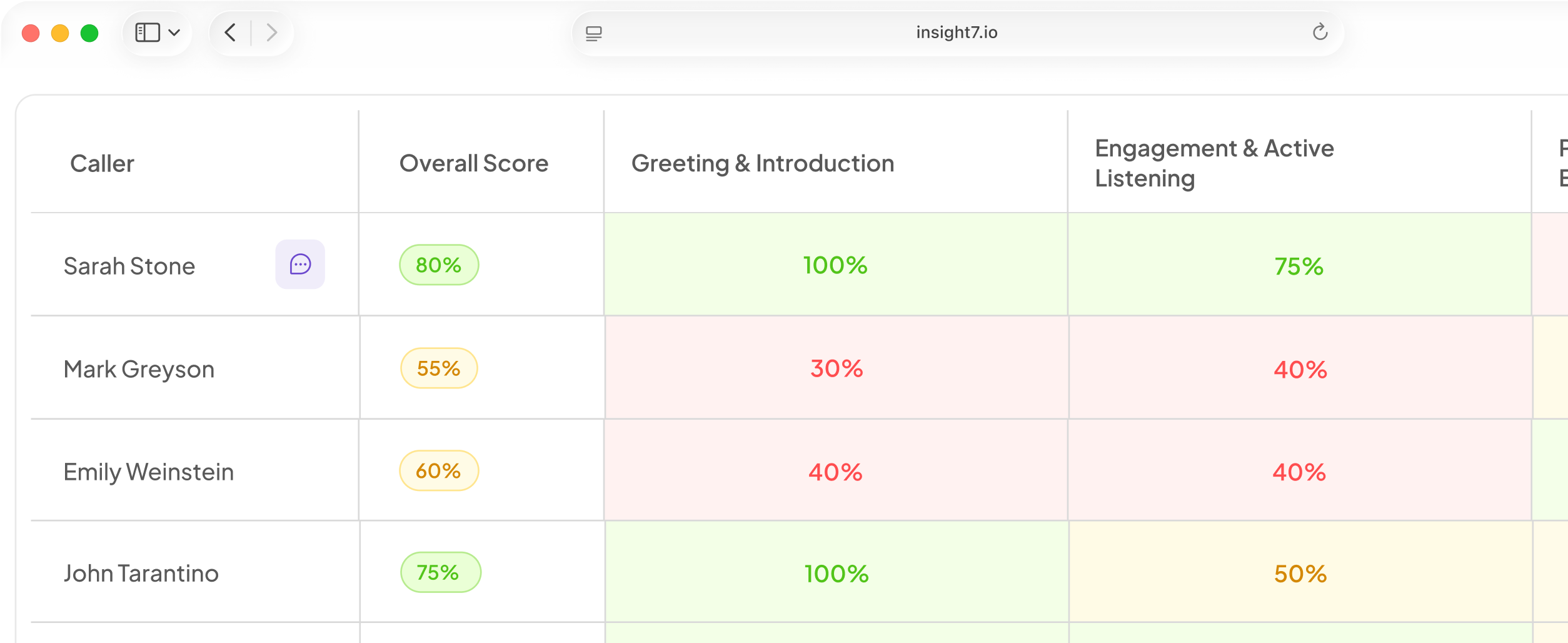
For a second opinion on tone and call quality, upload pilot recordings or transcripts to the free Call Quality Monitor. It gives automated scorecards against quality standards.
How to adapt it
Change the pass line for the job. A survey campaign cares most about reached rate and completed answers. A lead follow-up cares about qualified outcomes. A win-back or collections call cares about cost per outcome and complaints. Pick two main measures and one guardrail, and drop the rest.
Stretch the middle, not the ends. If your approvals are slow, add days between Day 3 and Day 5, not after Day 8. Never skip Checkpoint 1.
Add roles for regulated work. A bank or lender may need a data protection officer on Day 3 and a risk lead at Checkpoint 3. Add them to the roles table and name what each one decides.
Related reading: AI Voice Calls vs SMS vs Email for Customer Reactivation Campaigns Compared by Response and Conversion and AI Voice Agent ROI Calculator With Worked Examples for Customer Service and Collections.
Questions people also ask
How long should an AI voice agent pilot last?
Two weeks, or ten working days, is enough to test, fix and run a main wave. Longer pilots let holidays and paydays blur the result. Extend only if the sample was too small to compare.
How many calls do you need for a voice AI proof of concept?
No fixed number fits every team. Choose a volume your QA reviewer can read transcripts for. Give the baseline group the same audience size. The gap against your pass line must be clear.
How do you test an AI voice agent before going live?
Talk to the agent in the browser first. Then call your own phone. Try awkward cases: a wrong number, "stop calling me", silence and a request for a human. Fix the script before any customer hears it.
What metrics show a voice AI pilot worked?
Judge reached rate, qualified outcome rate, handover rate and cost per outcome against your baseline. Add opt-outs and complaints as guardrails. A strong rate with rising complaints is not a pass.
Does an AI voice agent have to say it is AI on a call?
In some regions, yes. In the EU, Article 50 of the AI Act has applied since 2 August 2026 and requires AI that talks to people to say so. Colorado in the US requires disclosure from 1 January 2027. Say it in the first line anyway.
Do you need consent for AI outbound calls?
In the US, yes. The FCC ruled in 2024 that AI-generated voices count as "artificial" under the TCPA. Callers need at least prior express consent, unless an exemption applies. Other regions, including the EU and UK, set their own rules, so ask your compliance reviewer.
Who should be on the team for a voice AI pilot?
Use the seven roles on the pilot sheet. Never drop the sponsor or the compliance reviewer. Keep transcript review with your own QA reviewer, not the vendor.
Write the pass line first
A pilot proves something only when the pass line is written before the first call. Sign it on Day 1 and judge Day 10 against it. Before you start, check one thing: every contact has recorded consent, and the do-not-contact list is loaded.