
A build vs buy AI voice agent decision framework is a way to choose between engineering your own phone agent and licensing one. Score four things (urgency, core expertise, cost and risk) with set weights before anyone starts debating tools.
Score urgency before anything else
Give urgency a score from 1 to 5 and a default weight of 30 out of 100. It gets the biggest weight because time is the one cost you cannot buy back.
A build is a chain of parts. Your engineers connect telephony, speech to text, an LLM and text to speech. Then they tune the delay between each hop. A demo can run in days. In our judgement, an agent that handles real callers takes months of tuning and testing.
Rule: if you must launch within a quarter, score 4 or 5, toward buy.
| Score | When you need it live | Leans |
|---|---|---|
| 1 | After 12 months or more | Build |
| 3 | In two to three quarters | Hybrid |
| 5 | Within one quarter | Buy |
Teams that built their own apps and chatbots still say voice is too hard to build in-house, and when you need it "yesterday", building is the wrong choice. Our advice is to weigh urgency, fit to the core business and cost together. Buy the customer-ops tools and keep your engineers for the product itself.
Test whether voice is core expertise
Score this by asking one question: will the agent be a product you sell, or a tool you use? Weight it 25 out of 100. If you sell it, score 1 and lean toward build. If you only use it, score 4 or 5.
Then count your people. A build needs engineers who know telephony, speech recognition and prompt evaluation. A strong chatbot team does not have these skills yet. Text waits for the user, but a phone call does not. The agent must know when a caller has finished a thought, stop talking when the caller cuts in, and cope with carriers that drop or delay audio.
Accents are a hidden cost. Buyers ask for local accents, Pidgin and native languages, and staff tune out voices that sound foreign. Test each language yourself with real callers, and budget time to tune each one.
Finally, count the upkeep. Models change, carriers change and scripts drift, so someone must own the agent every month after launch.
| Score | Your voice skills | Leans |
|---|---|---|
| 1 | A voice product is your business, with a dedicated team | Build |
| 3 | Some speech skills, no one owns voice | Hybrid |
| 5 | Chatbots and apps only | Buy |
Price the full cost, not the licence
Weight cost at 25 out of 100, and compare three-year totals for both routes. A licence fee shows one line. A build hides most of its cost in people and upkeep.
Use this formula for each route:
Three-year cost = people + usage minutes × per-minute rate + QA and monitoring + compliance work + upkeep.
Per-minute rates differ by provider, plan and model, and they change often. Get a written quote from each provider at your volume.
Worked example (all numbers are illustrative assumptions, so replace them with yours):
- Volume: 20,000 minutes a month, or 720,000 over three years.
- Build: two engineers at $180,000 loaded cost a year ($1.08M), plus $0.10 a minute for the stack ($72,000), plus $60,000 a year for QA, compliance and upkeep ($180,000). The total is about $1.33M.
- Buy: $0.15 a minute all in ($108,000), plus $60,000 a year for integration and QA ($180,000). The total is about $0.29M.
Build only wins when volume is very high or voice is your product.
Then divide each total by resolved calls, not minutes. Gartner found that of 432 AI service use cases, only a quarter show positive ROI, and 42% cannot be measured.
Score 5 if buy costs under half of build. Score 3 if the totals are close. Score 1 if build is clearly cheaper.
Buyers ask for a price range early and want it in writing. They also set vendor cost against their own cost to serve a customer.
Score risk before you sign
Weight risk at 20 out of 100. Ask whether your team can carry four risks alone: compliance, data, handover and a rogue agent. Regulated buyers, banks first, name the rogue agent as the main blocker. They want proof from real deployments, not a better demo.
Check each risk in turn:
- Compliance: consent, calling hours, and telling callers they are speaking to AI. Who tracks the rules as they change?
- Data: where recordings live, which models touch them, and who owns them.
- Handover: buyers ask whether the move to a human is polite, and what happens to a disputed amount.
- Rogue agent: who stops a bad call, and how fast?
| Score | Your ability to carry the risk | Leans |
|---|---|---|
| 1 | Legal, security and voice QA staff in house, with a live handover design | Build |
| 3 | Some of these in place, with gaps you can fill | Hybrid |
| 5 | No owner for compliance, data or handover | Buy |
A risk score of 5 is a hard stop on building, as the tie-break below shows.
Fill the scoring matrix and decide
Score each criterion from 1 (favours build) to 5 (favours buy), multiply by its weight, and add the results. The weights below are defaults. Tune them to your company.
| Criterion | Weight | Question to ask | 1 = build, 5 = buy |
|---|---|---|---|
| Urgency | 30 | When must it be live? | 1 = a year or more, 5 = within a quarter |
| Core expertise | 25 | Is voice our product, and do we have the skills? | 1 = yes, 5 = no |
| Cost | 25 | Is the three-year buy total lower? | 1 = build is cheaper, 5 = buy is under half |
| Risk | 20 | Can we carry compliance, handover and data risk alone? | 1 = yes, 5 = no |
Thresholds: a weighted total of 3.8 or more means buy. From 2.5 to 3.8 means hybrid or pilot. Below 2.5 means build. Tie-break: a risk score of 5 means you buy, whatever the total says.
Worked example. An engineering lead and a CX lead at a 300-agent lender score together. Urgency is 5, since collections reminders must start next quarter. Expertise is 4, because the team has chatbot skills only. Cost is 4. Risk is 3. The sum is 1.5 + 1.0 + 1.0 + 0.6, which gives 4.1, so they buy. Where the two leads disagree by two points or more, talk it through. That gap usually shows a hidden assumption.
Hybrid rule: buy now, then build later the one layer you own best, such as your scripts or data pipeline.
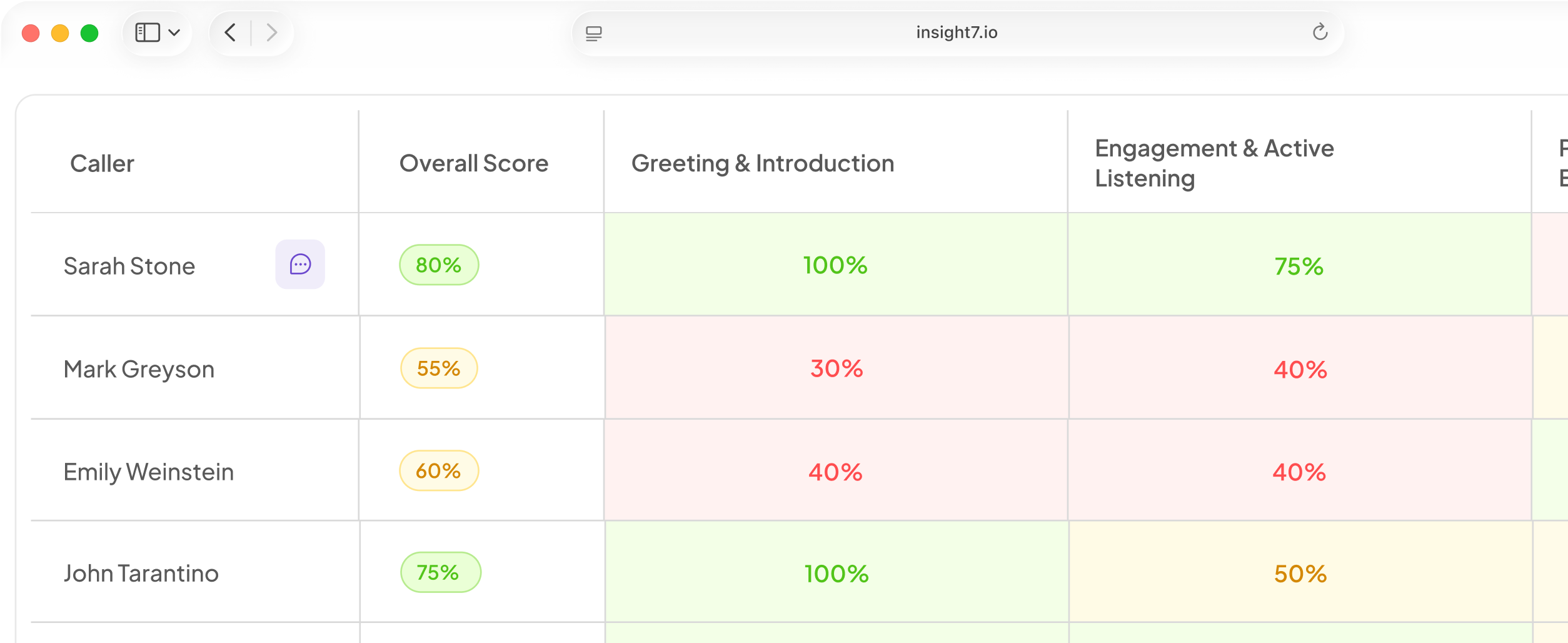
Insight7 is one buying route. Managers can set up outbound voice campaigns, now in beta, with a goal, an audience, an AI caller and rules. Campaigns have consent marking, calling hours and retry rules, and you can test the agent in the browser. Check what is switched on for your organisation. After launch, Insight7 can score every call for QA instead of a 2% sample.
Banks want a short pilot on a small sample, paid for only after a measured lift. Use that data to re-score the matrix. Then re-score every six months, because prices, skills and rules all move.
Related reading: How to Write an RFP for AI Call Center Software With a Free Template and Knowledge Base Readiness Checklist for AI Customer Service Agents.
Questions people also ask
How much does an AI voice agent cost?
There is no single price, because cost depends on call volume and on whether you build or buy. Ask each vendor for a written range at your volume. Gartner says customer-service AI spending rose 38% while overall service budgets rose 2%, so finance will want proof.
How much does an AI voice agent cost per minute?
Vendors usually quote per minute. Ask whether the rate covers speech, model, voice and phone line, or only one layer, and whether a platform fee sits on top. A low headline price can hide extras.
How much does AI voice agent development cost?
Most of the cost is people and upkeep, not API usage. A prototype is cheap. The bill grows with tuning, testing, accents, compliance work and maintenance, so budget for three years.
How much does an AI voice agent cost per month?
Multiply monthly minutes by the all-in per-minute rate, then add any platform fee. At the example's 20,000 minutes and $0.15 a minute, usage is $3,000. Ask how pricing scales with volume.
How do you build an AI voice agent from scratch?
Connect telephony, speech to text, an LLM and text to speech, then tune turn-taking and interruptions. Test the conversation in a browser before you attach a phone number, so you fix logic problems before carrier problems.
How do you build a voice agent with safety guardrails?
Limit the agent to approved answers, log every transcript, and design the human handover before launch. Buyers ask whether handover is polite and how disputed issues are treated. Regulated buyers fear a rogue agent, so show test results.
Is there an AI voice agent cost calculator?
Build one in a spreadsheet with one column per route, the five cost lines from the formula, and a three-year span. Add your current cost to serve a customer as the baseline.
Let the score decide
Treat build vs buy as a weighted score, then test it with a short pilot on real calls. Rule of thumb: if it is urgent, not core to your product, and risky to get wrong, buy.