
Between 50 and 60% of all knowledge work is communication. It's how deals get closed, how angry customers get calmed down, how hard feedback lands or doesn't. And almost nobody gets a real opportunity to get better at it. Training happens once - an onboarding week, an annual workshop, a manager who happens to be good at coaching - and then everyone goes back to learning on live calls, at the customer's expense.
Coaching Programs fixes that.
Coaching Programs let you set up recurring communication practice for your team and then see who's actually doing it. You define what you want people to get better at, how often they practice, and who takes part. Insight7 delivers the sessions on schedule and tracks participation across the business. It's built around three things:
Programs - the container for what you're teaching. Give it a title, set a goal, pick the use case, and choose the specific areas you want the team to work on. For service teams, that's de-escalation and handling difficult situations. For sales, it's objection handling and closing. For leadership, it's showing empathy at work, giving difficult feedback, and leading through change.
Cadence - how often practice happens. Set a start and end date, a delivery time, and a frequency. Run a program for a quarter or for the entire year, delivered weekly at 9:00 a.m., and it just runs. Practice stops depending on whether a manager remembers to schedule it.
Participation - who's actually showing up. Select the people who should take the training, and from there you can see engagement across the program. Not who was invited to a session eighteen months ago, but who is practicing this week.
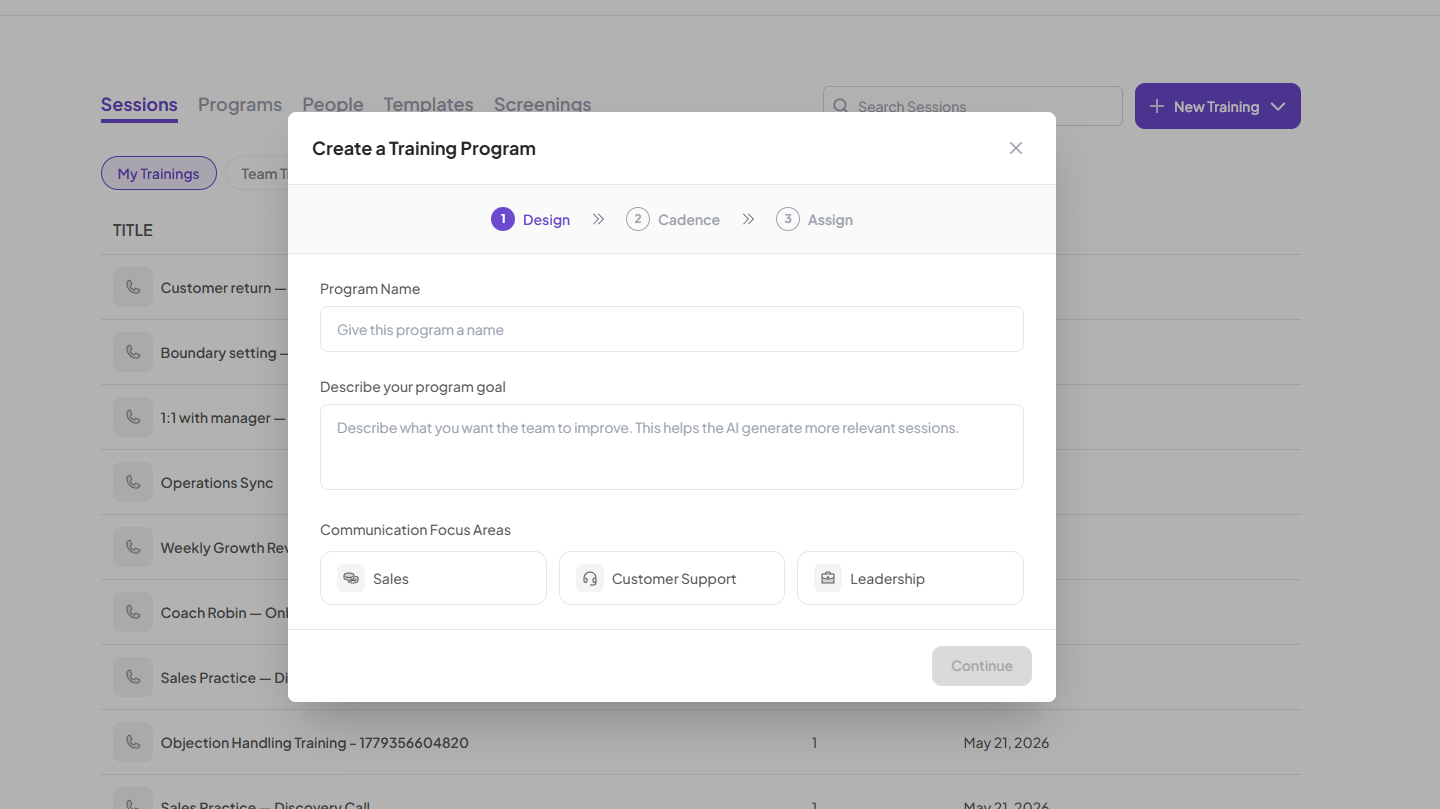
Build a year-long training plan in about two minutes. Create the program, pick your focus areas, set the dates and cadence, select all participants, done. The setup cost of continuous communication training is the reason most teams never run it. That cost is now near zero.
Give service teams reps on the calls they dread. De-escalation and difficult situations are exactly the skills people can't practice on the job without a customer paying for the mistake. Weekly practice sessions mean the first hard call of the month isn't the first time someone's said those words out loud.
Make objection handling a weekly habit instead of a QA note. Reps hear the same five objections all year. A recurring sales program turns those into scheduled practice, so improvement compounds across the team instead of resetting with every new hire.
Develop managers on the conversations they avoid. Difficult feedback, change, empathy at work. Leadership programs run as internal training, so your managers get structured practice on the conversations that shape whether people stay.
Prove training adoption instead of assuming it. Participation monitoring gives you visibility into what's actually happening across the business - which teams are engaged, which programs are being ignored, and where to intervene before the quarter ends.
Communication skill is the largest untrained variable in most businesses. It decides revenue, retention, and whether people want to work for you, and it's usually left to chance, or to whoever happened to get a good manager. The teams that get this right don't run better workshops. They run practice continuously, the way any skill actually gets built, and they can see who's putting in the reps. Coaching Programs is how you set that up once and let it run.
Create your first communication training program in Insight7, give it a title and a goal, choose your focus areas and cadence, and add your team. It can be live before your next stand-up.
